
This super moist cornbread recipe melts in your mouth and has real sweet corn kernels mixed in for extra flavor and texture. Simple to make with cornmeal, buttermilk, honey, and eggs, and ready in 30 minutes or less.
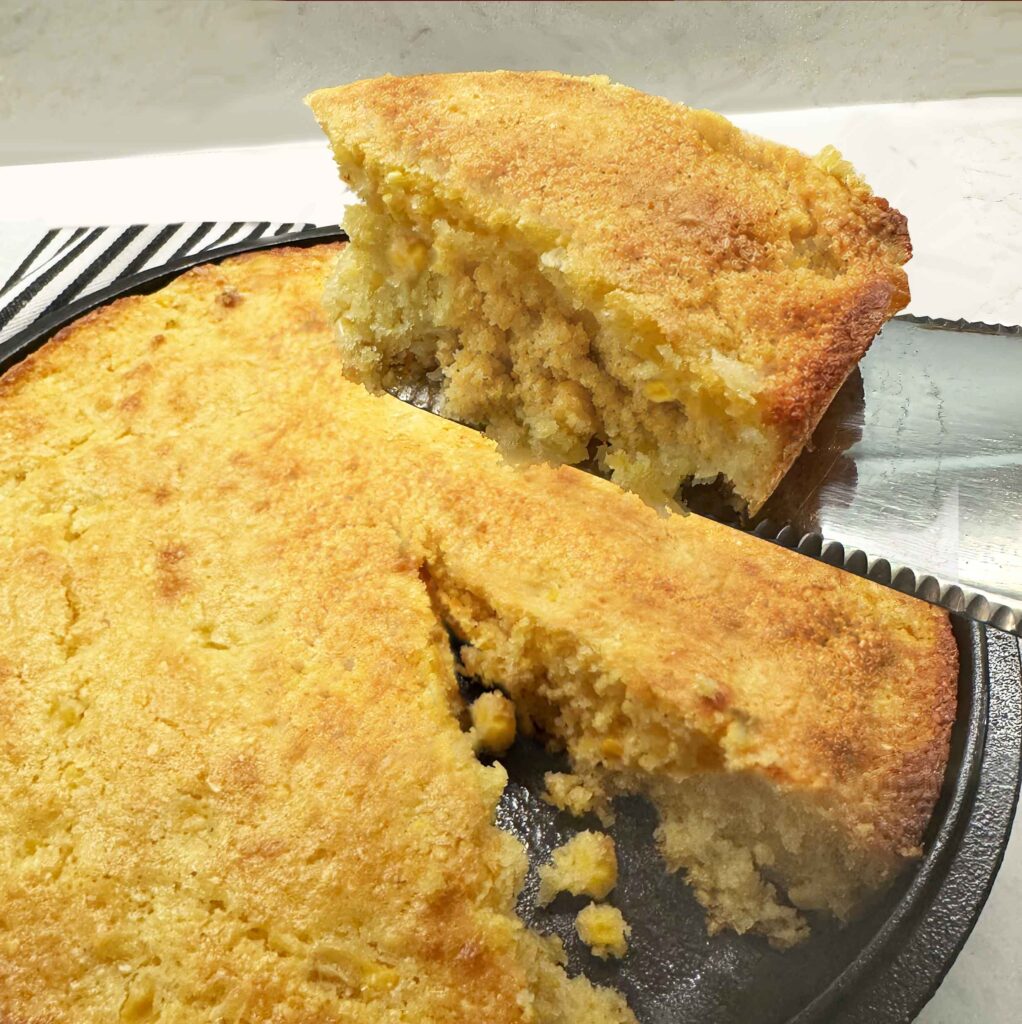
Cornbread is a great side for so many meals, and we love baking it here on Maker Farm. But it’s so disappointing when it’s tough, dry, and hard to swallow. That’s why this moist cornbread recipe is my favorite one ever and is often made around here. It’s soft, lightly sweet, and filled with tasty little kernels of corn that add moisture and little juicy bits in every bite. This is a well-tested homestyle cornbread that I think you and your family will love as much as mine!

Want to Save This Recipe?
Enter your email below and we’ll send it straight to your inbox! Plus you’ll get new recipes each week!
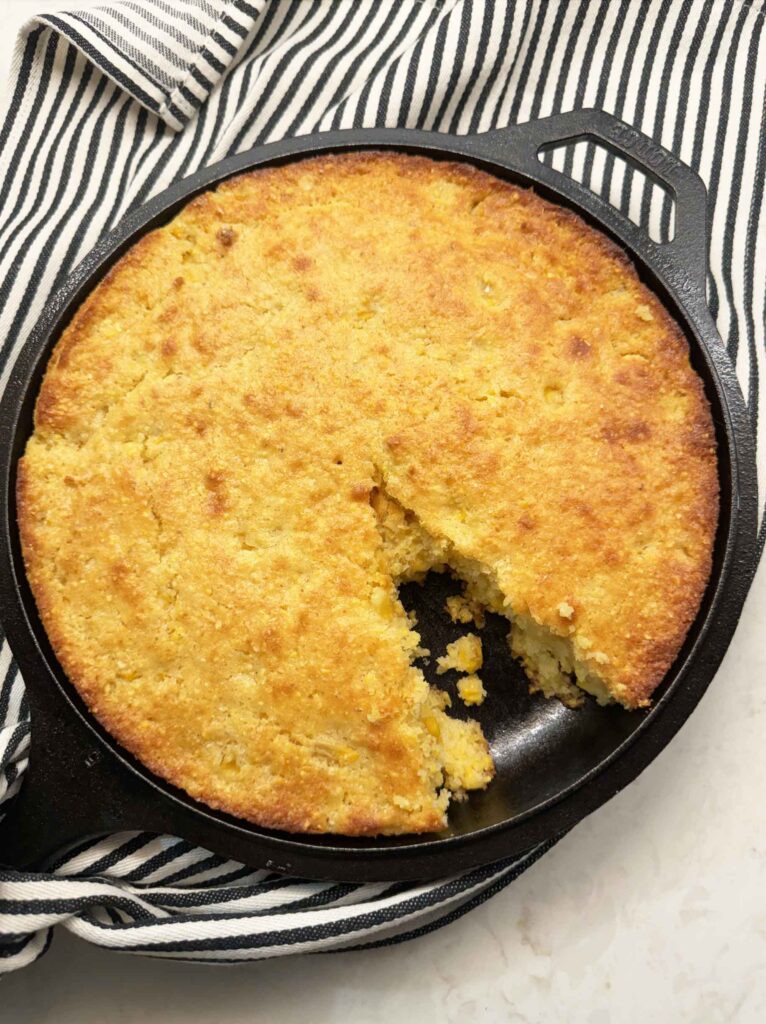
My recipe is a Northern-style sweet cornbread, which is more cake-like than the Southern-style savory cornbreads. It has a tender, moist crumb and a little sweetness from sugar and honey.
What You Need
This cornbread is made with simple pantry ingredients, plus optional real corn kernels for extra sweetness and texture.
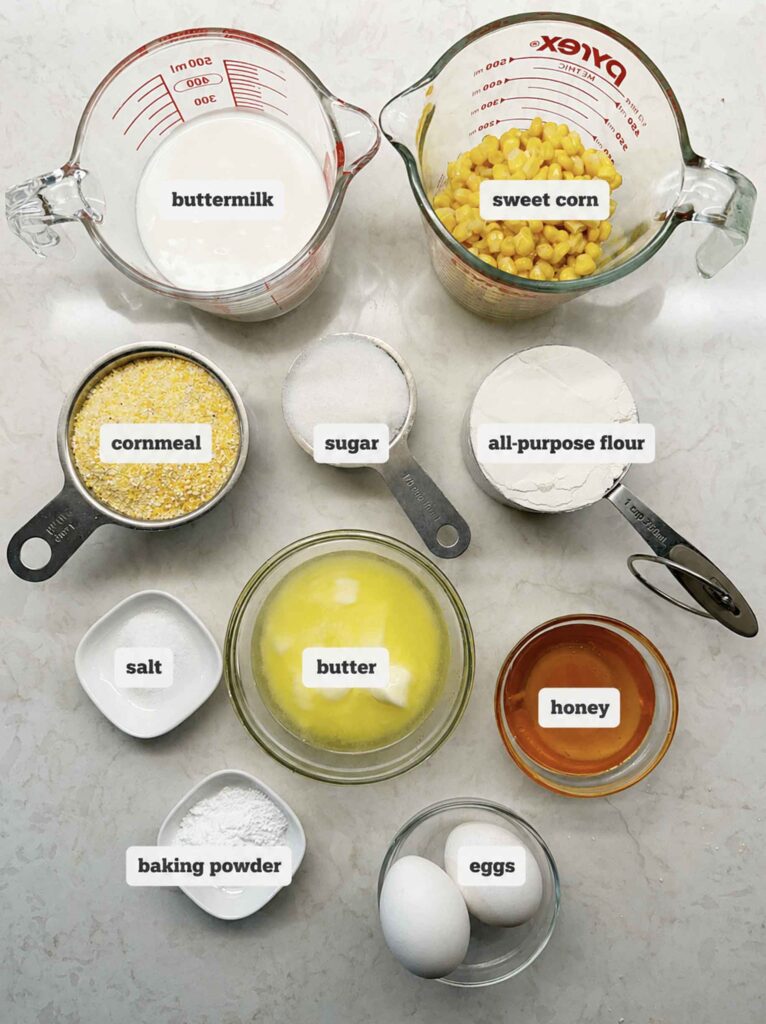
Cornmeal is the main ingredient that gives cornbread its classic flavor and slightly hearty texture. I use yellow cornmeal for the traditional golden color, but white cornmeal will also work (it just won’t look like typical golden cornbread). I recommend medium grind or stone ground cornmeal for the best results, as both fine and coarse grind can create a crumblier cornbread.
All-purpose flour helps soften the crumb so the cornbread is tender instead of gritty or crumbly. I like using equal parts cornmeal and flour for a moist, sliceable cornbread. You can substitute white whole wheat flour or whole wheat pastry flour for a slightly heartier flavor, though the cornbread may be a little denser. Regular whole wheat flour can also be used, but I would start by replacing only half of the all-purpose flour so the cornbread does not become too heavy.
If you need a gluten-free option, use a 1:1 gluten-free baking flour blend in place of the all-purpose flour. Choose a blend meant to replace regular flour cup-for-cup, preferably one that contains xanthan gum. The texture may be slightly more delicate, but it should still work well.
I would avoid using almond flour, coconut flour, or plain cornmeal as a direct replacement for the all-purpose flour. They absorb liquid differently and can make the cornbread crumbly, dry, or too dense without other recipe adjustments.
Sugar and honey add sweetness and help balance the cornmeal. You can use just the sugar for a less sweet cornbread, or include the honey for a softer, sweeter version. If you prefer a more savory cornbread, reduce the sugar to 1/4 cup and skip the honey.
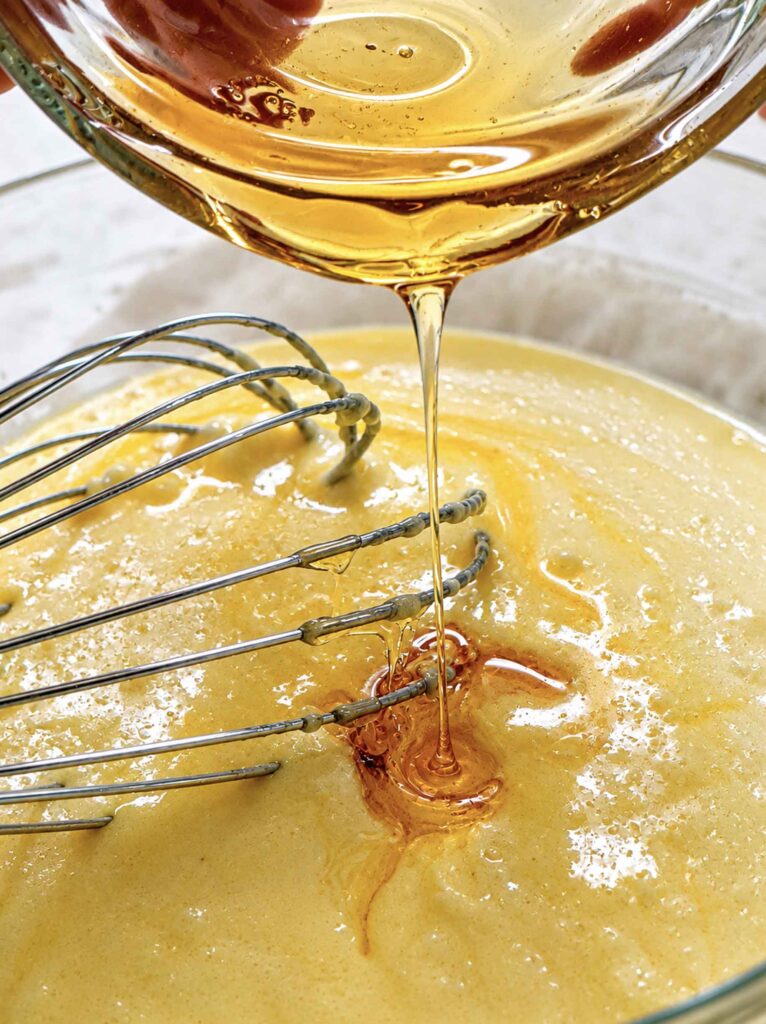
Buttermilk (full fat) gives the cornbread a tender texture and a slight tang. If you do not have buttermilk, no problem — you can use regular milk, or make a quick substitute by stirring 1 tablespoon of lemon juice or white vinegar into 1 cup of milk and letting it sit for 5 minutes. For a richer substitute, use 3/4 cup milk plus 1/4 cup sour cream.
Kitchen Tip

I like to keep a bag of powdered buttermilk in my pantry for those times I don’t have fresh buttermilk, which is frequent. Many people don’t realize you can get powdered buttermilk, but it works great for this recipe and means you always have it available.
Eggs help hold the cornbread together and give it structure.
Butter adds flavor, moisture, and richness. Melt it first, then let it cool slightly before mixing it with the eggs and buttermilk.
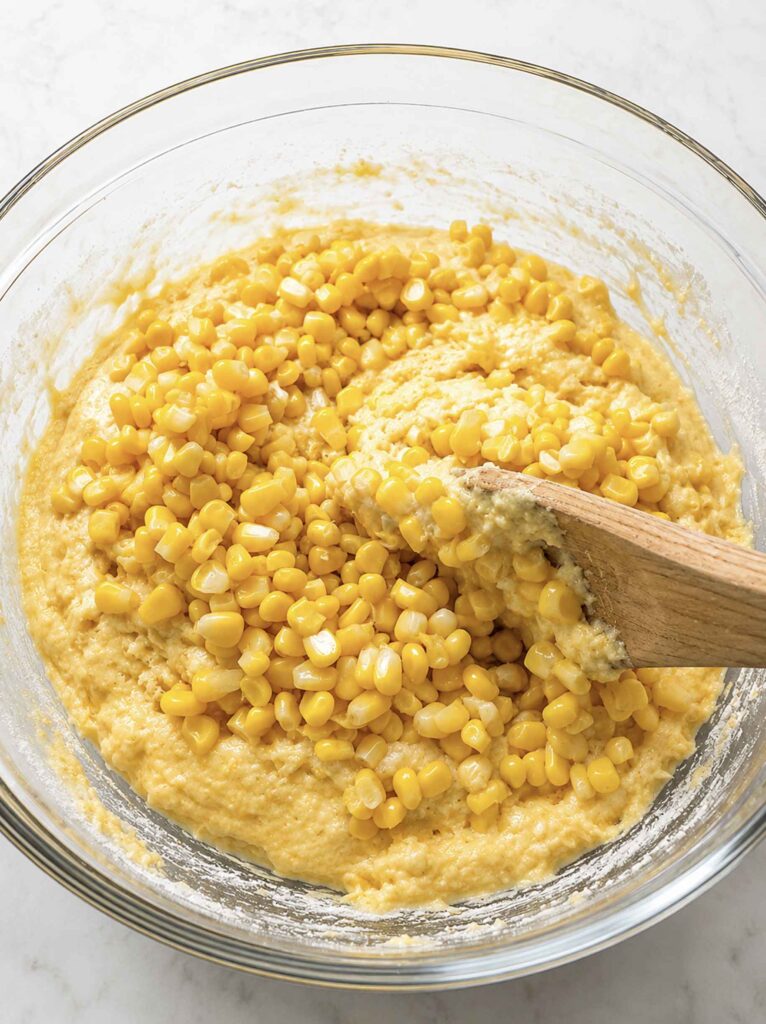
Corn kernels are optional, but they make this cornbread extra moist and give it little bursts of sweet corn in every bite, and I HIGHLY recommend them. You can use fresh corn, frozen corn that has been thawed, or canned corn that has been well drained. Leave the corn out if you prefer a smoother, more traditional cornbread.
HOW IT TASTES

If you have never had corn kernels in cornbread before, the little bites of sweet, buttery corn tucked inside taste so good and really elevate this otherwise “boring” bread. The kernels soften as the cornbread bakes, adding moisture, texture, and a gentle sweetness that makes each slice way more interesting. People are always so delighted when they take a bite of this cornbread and discover them!
Baking powder is what makes the cornbread rise and turn fluffy instead of dense and heavy., so make sure yours is fresh. Baking powder is required unless you are using a self-rising cornmeal mix that already includes leavening and salt. Be sure to use baking powder, not baking soda.
What Pan Should I Use?
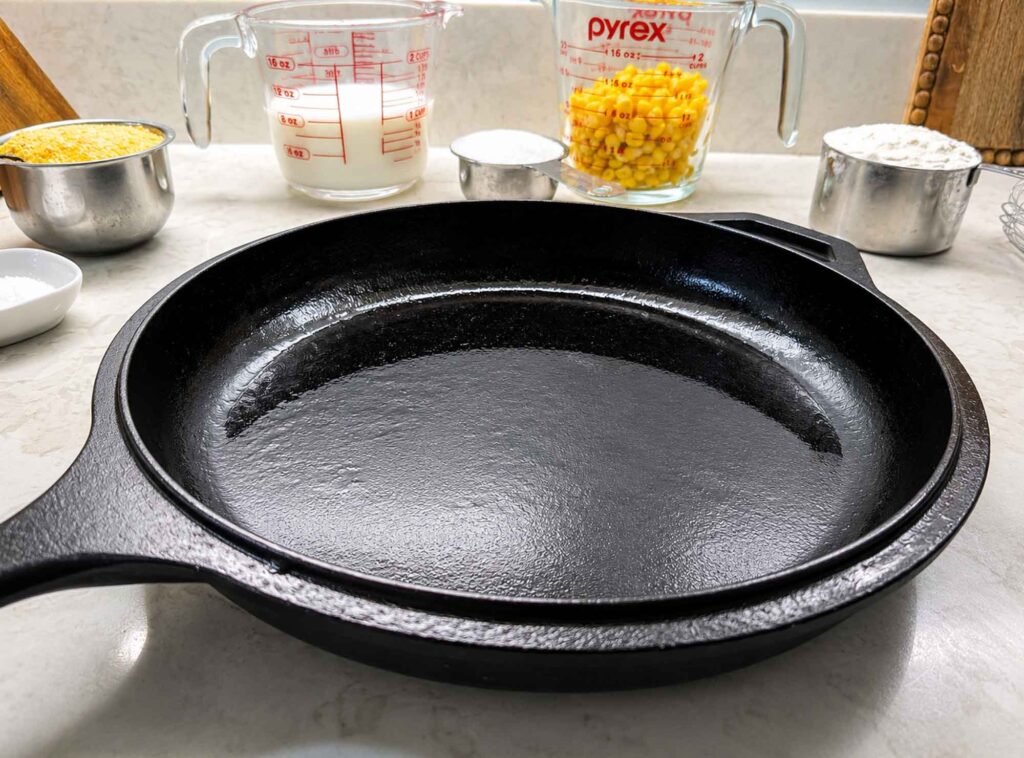
I recommend a cast-iron skillet or aluminum baking pan. Cast iron is best if you want golden edges, a lightly crisp crust, and that classic skillet-cornbread look. It holds heat well, so the edges brown beautifully. The best size skillet is a 10-11″ one — any smaller and it won’t fit, any bigger and you’ll have very thin cornbread. I am actually using the skillet from this combo set, which is one of my all-time favorites.
An aluminum or light-colored metal pan is probably the best casserole-style option if you want even baking and reliable results. It heats quickly and evenly, so the cornbread bakes nicely without staying too pale or taking forever in the center. The best size baking dish is a 9″x9″ square, but other possible options are 11″x7″, 8″x8″, or even a 9″ round cake pan. I would not use a 9″x13″ dish as your cornbread would be a lot thinner and dry out more easily, but if that is all you have, double the recipe.
Kitchen Tip

Greasing your skillet or pan with butter or bacon grease will help seal in moisture and give you that beautiful, deep gold crust we love.
A ceramic baking dish works, but it heats more slowly than metal or cast iron. The cornbread may take a few extra minutes, and the edges may be softer rather than crisp. It is still a good choice, especially if you want to serve it right from a pretty dish.
A glass baking dish can work, BUT it is my least favorite for cornbread. Glass holds heat differently and can sometimes brown the bottom and edges faster while the center still needs more time. If using glass, I’d lower the oven temperature by 25°F and start checking near the normal bake time.
How to Make Moist Cornbread
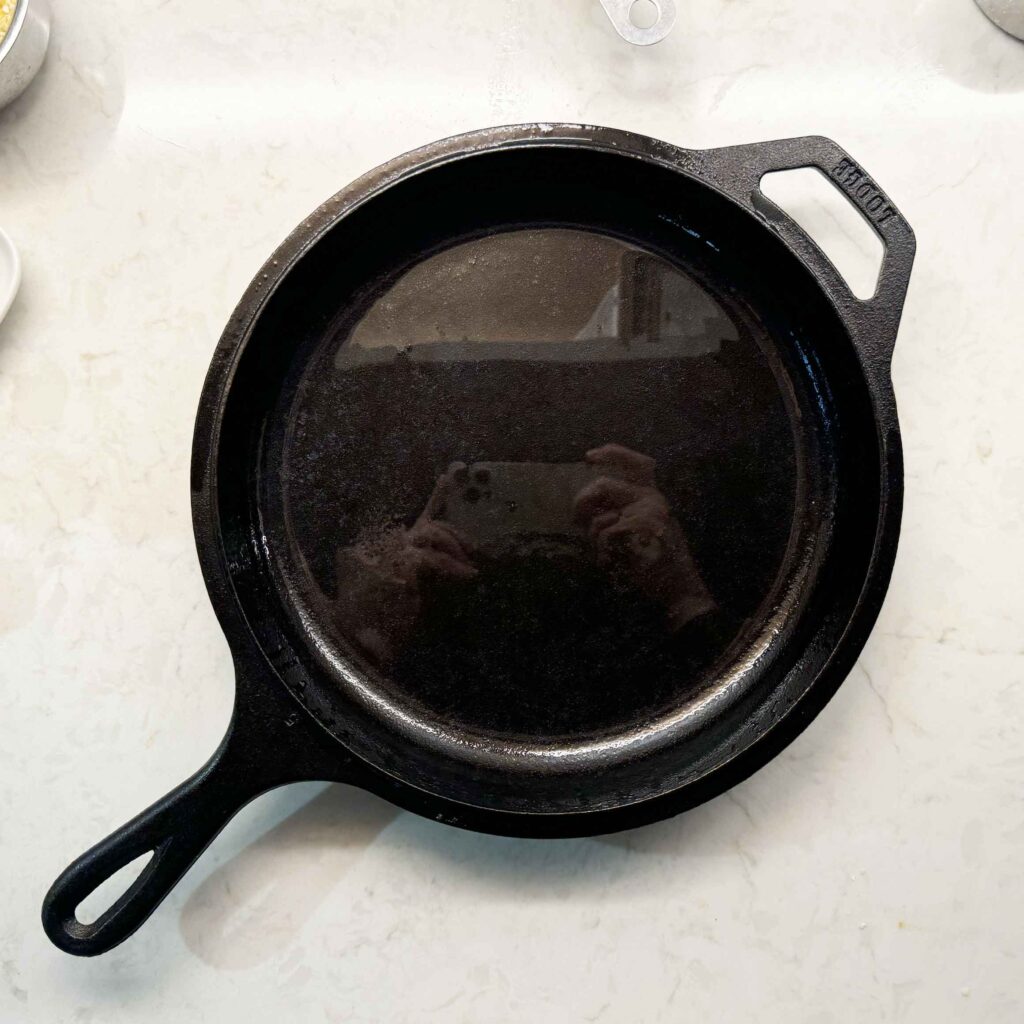
Step 1: Start by greasing your skillet or pan generously with butter or bacon grease so the edges can brown and the cornbread releases cleanly after baking. Then place the greased pan in the oven and pre-heat it to 400°F so your pan is hot when you pour the batter in later.
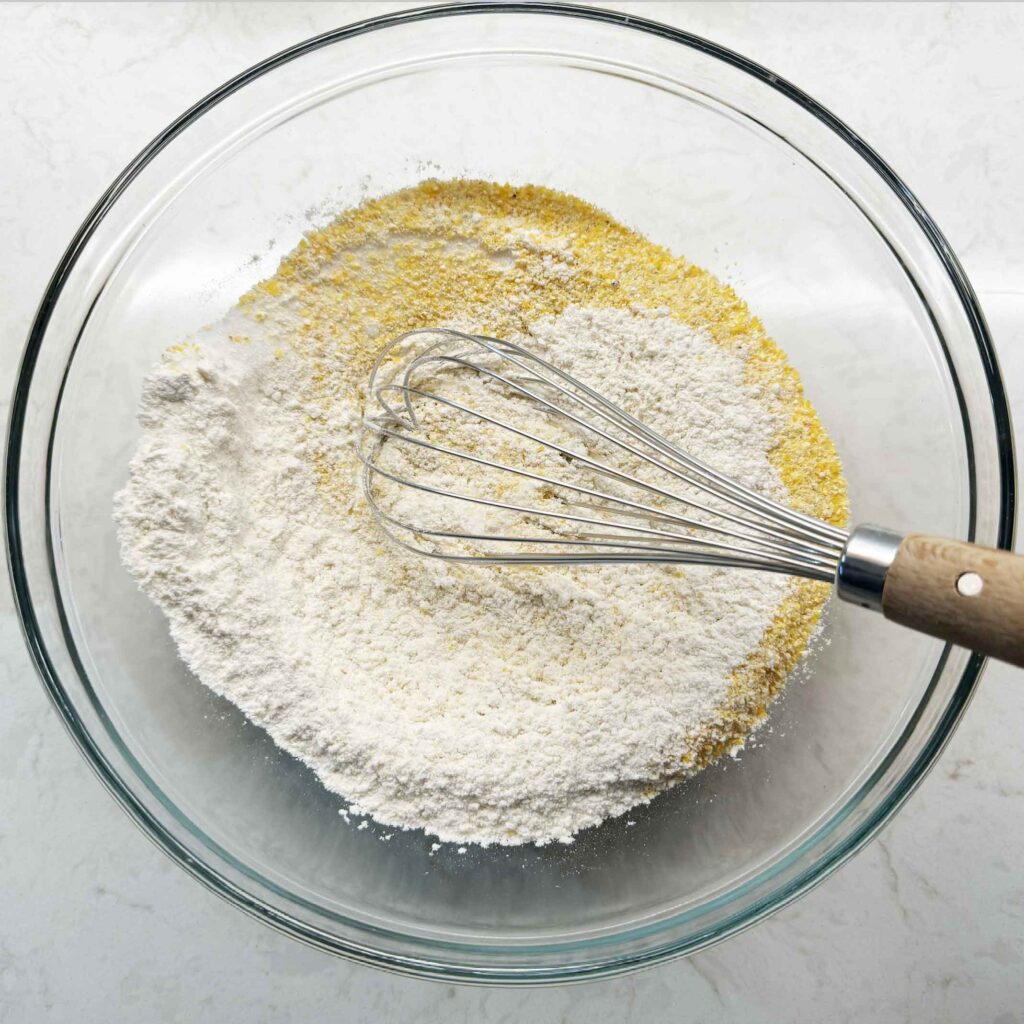
Step 2: Mix the dry ingredients in one bowl. Whisking the cornmeal, flour, sugar, baking powder, and salt together first helps distribute the leavening evenly, so the cornbread rises well and does not have salty or powdery spots.
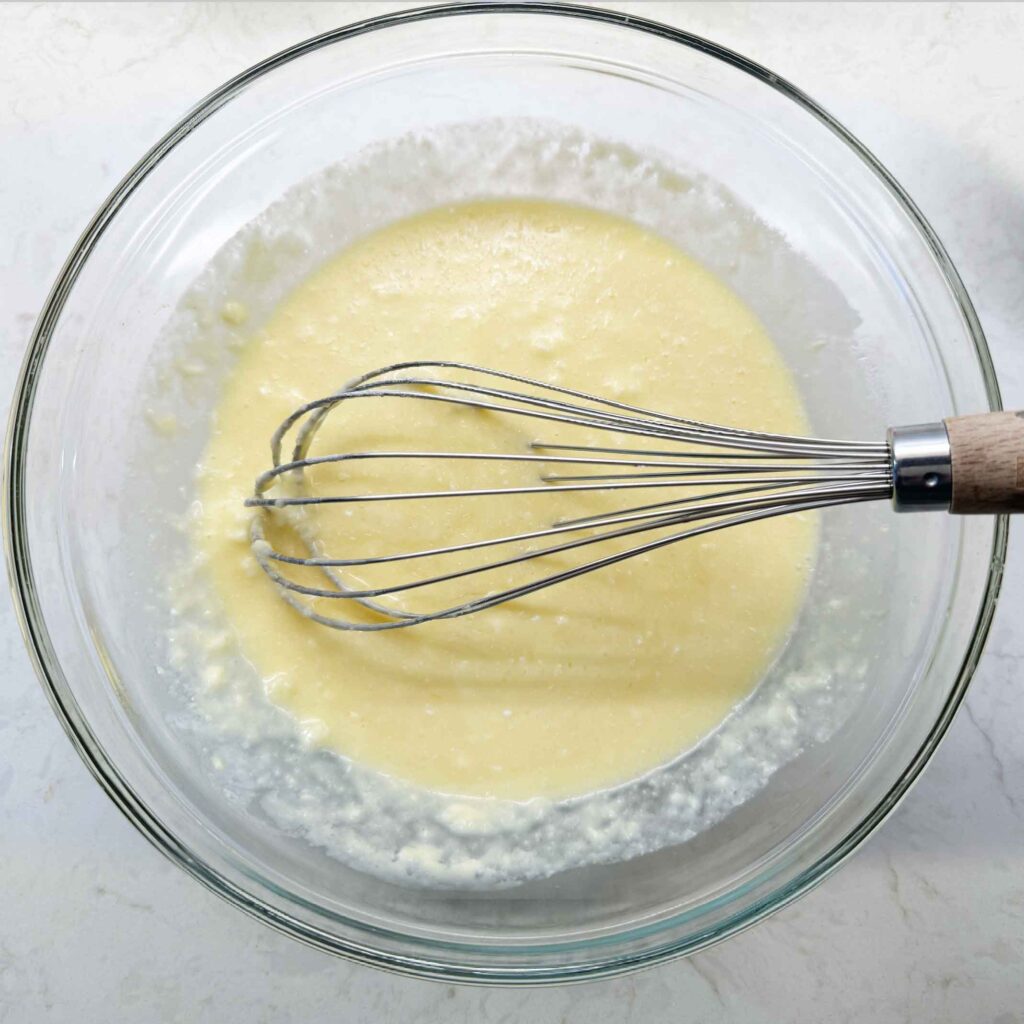
Step 3: In a separate bowl, mix the wet ingredients. Make sure the melted butter has cooled slightly before adding it to the eggs and buttermilk. If the butter is too hot, it can start to cook the eggs. The mixture may look a little separated or lumpy at first, but that is okay – if you used buttermilk, it may look slightly curdled, and it’s not a problem.
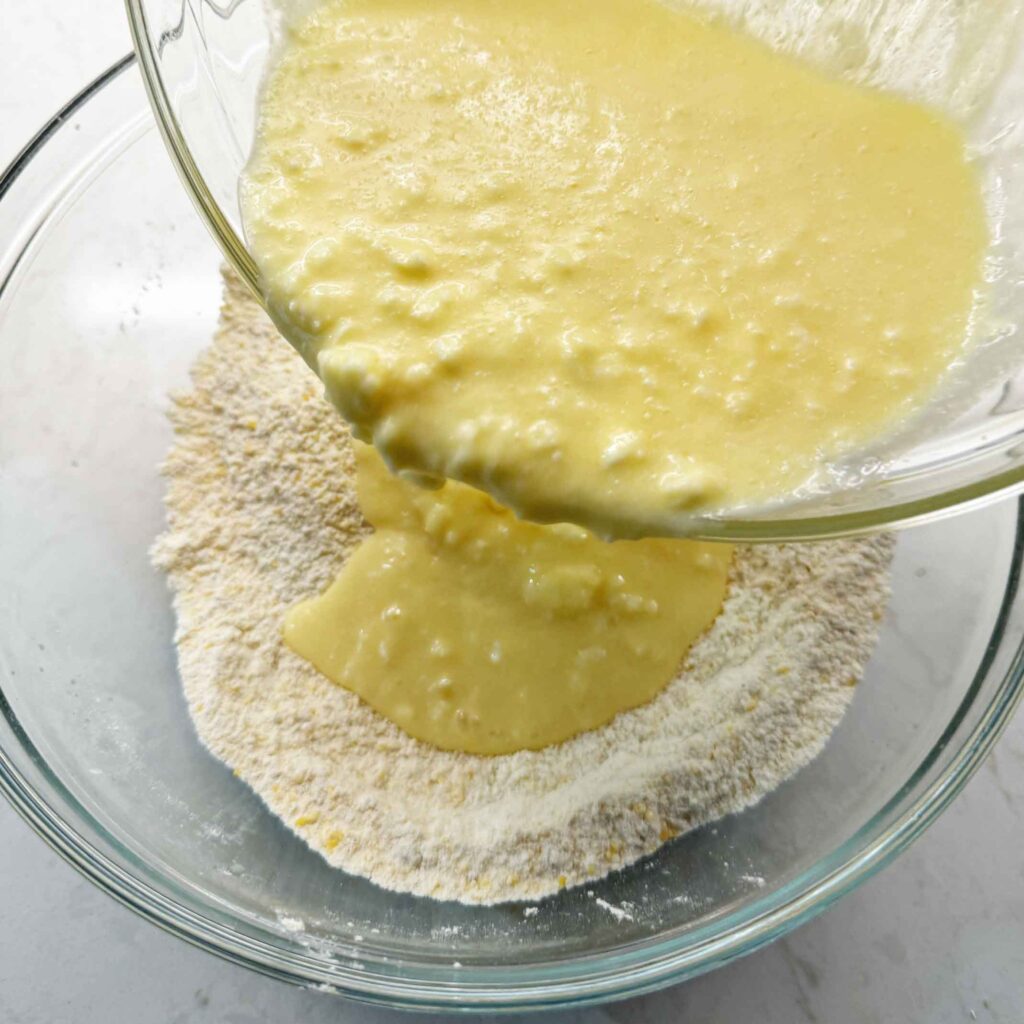
Step 4: Pour the wet ingredients into the dry ingredients and stir gently. This is one of the most important steps for tender cornbread: mix only until the flour and cornmeal are moistened. A few small lumps are fine. Overmixing can make the cornbread tougher and less soft.
Step 5: Fold in the corn kernels last, if you are using them. Fresh, thawed frozen, or well-drained canned corn will all work. The kernels add little pockets of sweetness and moisture, but you can leave them out for a smoother, more traditional cornbread.
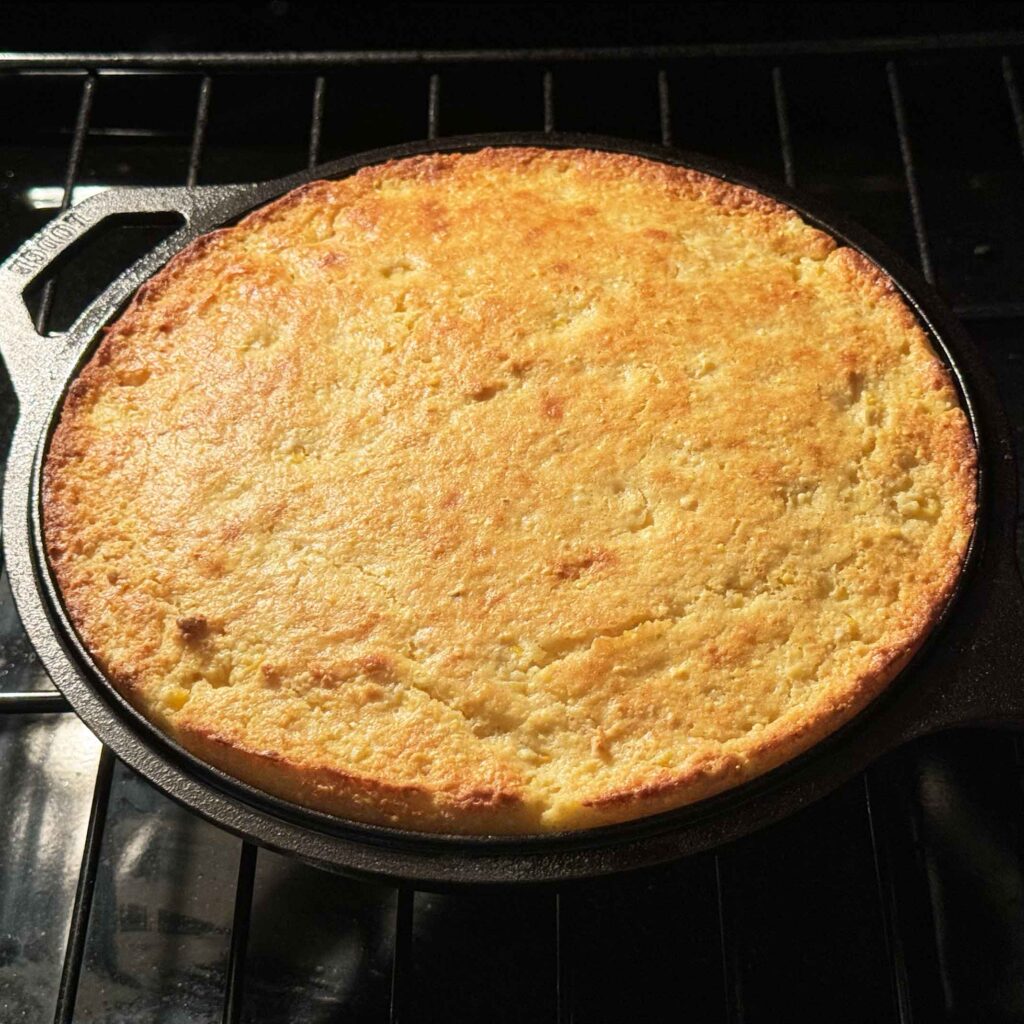
Step 6: Spread the batter into the prepared and heated skillet or baking pan and bake for 20 to 25 minutes until the top is golden and the center is set. Try not to over bake it. Cornbread is done when a toothpick inserted in the center comes out clean or with a few moist crumbs, not wet batter.
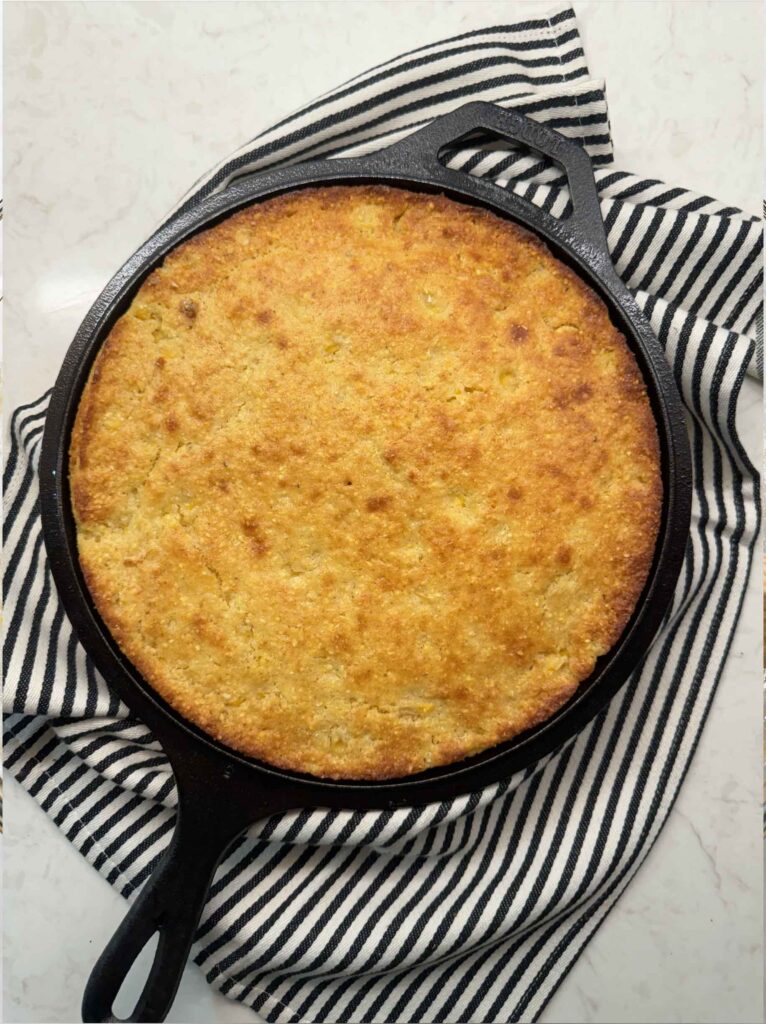
Step 7: Let the cornbread rest for a few minutes before slicing. This short rest helps the crumb finish setting, so the pieces hold together better while still tasting warm, soft, and moist.
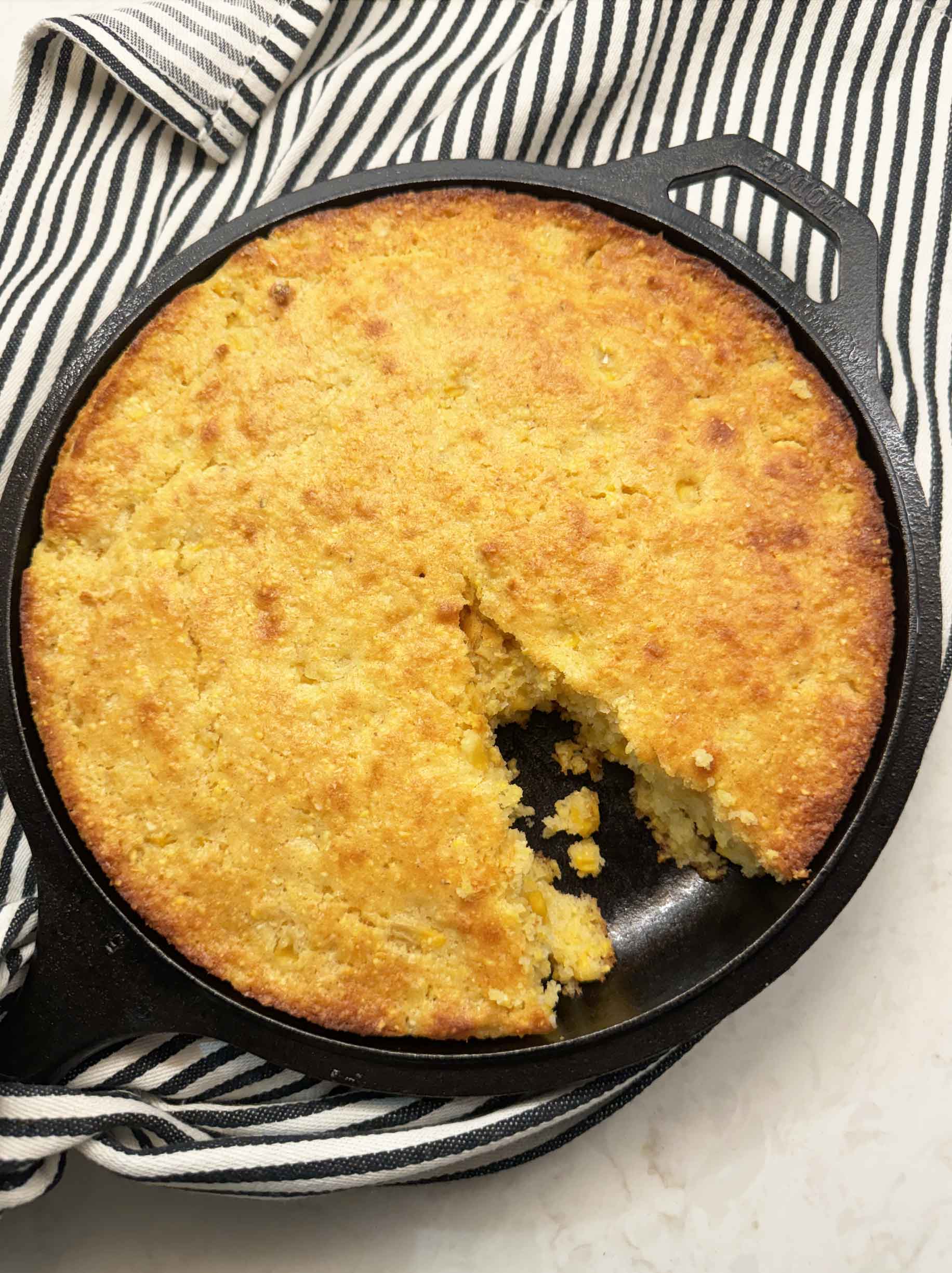
Super Moist Cornbread Recipe
Equipment
- 1 10-11" cast-iron skillet or 9"x9" aluminum baking pan
- 2 mixing bowls
- 1 whisk or fork
Ingredients
- 1 cup yellow cornmeal
- 1 cup all-purpose flour
- 1/3 cup granulated sugar
- 1 tablespoon baking powder
- 1 teaspoon salt
- 1 cup buttermilk
- 2 large eggs
- 1/2 cup melted butter slightly cooled
- 1/4 cup honey optional but recommended for a sweeter cornbread
- 1 cup corn kernels drained if canned or thawed if frozen, optional, but recommended for flavor and texture
Instructions
- Preheat oven to 400°F. Grease an 8-inch square baking dish, 9-inch round pan, or cast iron skillet.
- In a large bowl, whisk together the cornmeal, flour, sugar, baking powder, and salt.
- In a separate bowl, whisk together the buttermilk, eggs, melted butter, and honey.
- Pour the wet ingredients into the dry ingredients and stir just until combined. Do not overmix.
- Fold in the corn kernels, if using.
- Spread the batter into the prepared pan.
- Bake for 20 to 25 minutes, or until the top is golden and a toothpick inserted in the center comes out clean or with a few moist crumbs.
- Let cool for 10 minutes before slicing.
Nutrition
Video
Notes
Answers to Common Questions
Why does my cornbread fall apart?
This happens when there isn’t enough gluten or fat to hold it all together. If you find your cornbread is crumbling too much, try increasing your all-purpose flour by the same amount that you decrease your cornmeal. You can also try switching to a medium grind or stone-ground cornmeal rather than a fine or coarse grind. And be careful not to over mix your wet and dry ingredients, as that can create a tougher, crumblier cornbread.
How do I know when my cornbread is done baking?
Cornbread is done when the top is golden, the center looks set, and a toothpick inserted into the middle comes out clean or with a few moist crumbs. If the toothpick has wet batter on it, bake it a few more minutes and check again.
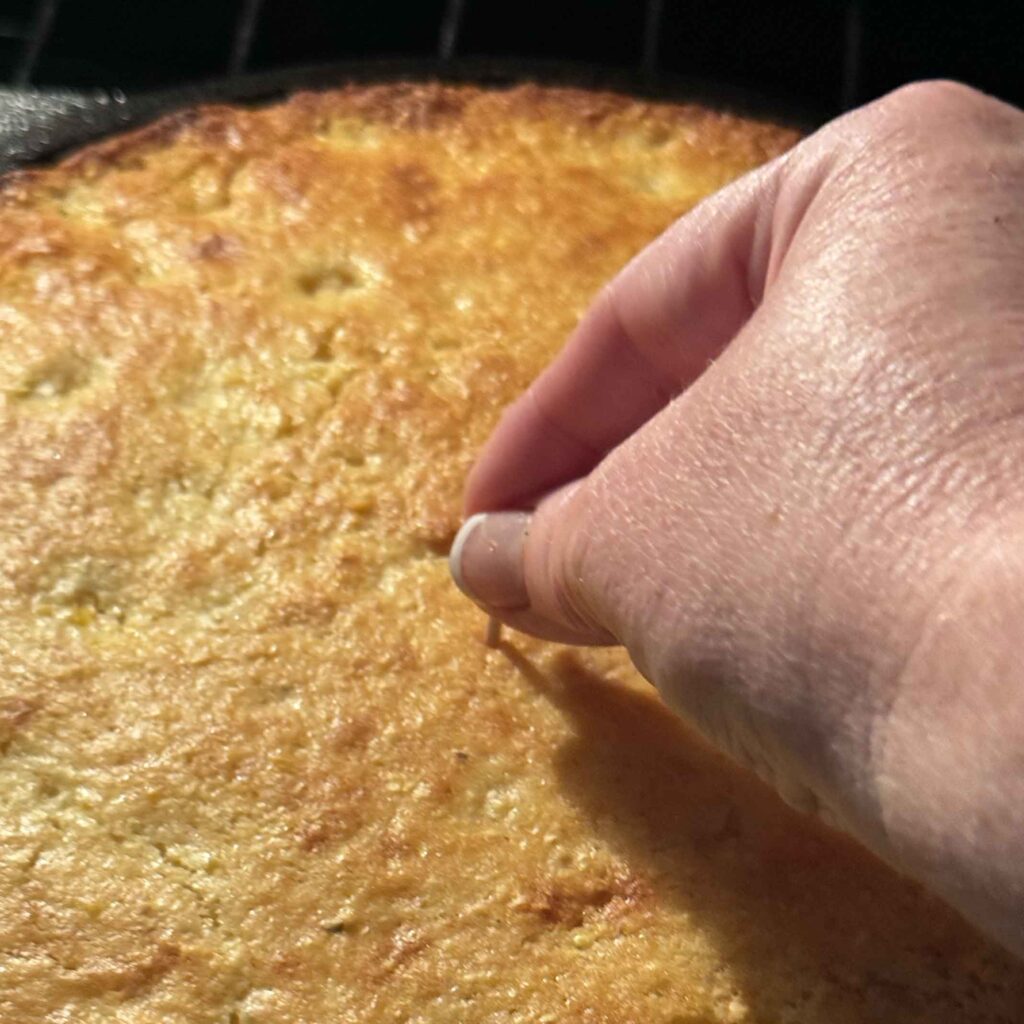
You can also gently press the center with your finger. It should feel set and spring back lightly, not sink or jiggle. Try not to overbake it, because cornbread can dry out quickly once it goes past done.
How to Store Cornbread
Store leftover cornbread in an airtight container or wrap it tightly once it has cooled completely. It can be kept at room temperature for up to 2 days, as long as your kitchen is not too warm or humid. (I recently let mine go to 3 days at room temperature and I could tell it was just starting to go off at the end of day 3… and I was so bummed as I wanted that last piece!)
For longer storage, it’s best to refrigerate the cornbread for up to 5 days. The refrigerator can dry cornbread out a little, so I like to wrap individual pieces or keep them in a covered container.
To reheat, warm individual slices in the microwave for about 10 to 20 seconds, or place several pieces in a covered baking dish and warm them in a 300°F oven until heated through. A little butter, honey, or extra drizzle of melted butter can help bring back that fresh-baked texture.
Cornbread also freezes well. Wrap slices tightly in plastic wrap or foil, then place them in a freezer-safe bag or container. Freeze for up to 3 months. Thaw at room temperature or in the refrigerator, then reheat before serving.
What to Serve It With
Oh, gosh, what can’t you serve cornbread with? Seriously, we love it around here. It’s simple and quick to make, as it requires no rise time unlike many other breads. Here’s what we often to make cornbread to go with (this is going to be a long list, because this is how much we love cornbread):
Chili — turkey chili (our fav), beef chili, white chicken chili, or meatless chili. The cornbread balances the spices and is perfect for scooping up the sauce.
Beans — brown beans, pinto beans, baked beans, black beans, red beans and rice, or ham and beans. This is one of the most traditional and budget-friendly ways to serve cornbread.
Barbecue — oven-baked ribs, pulled pork, BBQ chicken, brisket, smoked sausage, or barbecue meatballs. The sweet corn flavor goes really well with smoky BBQ sauce.
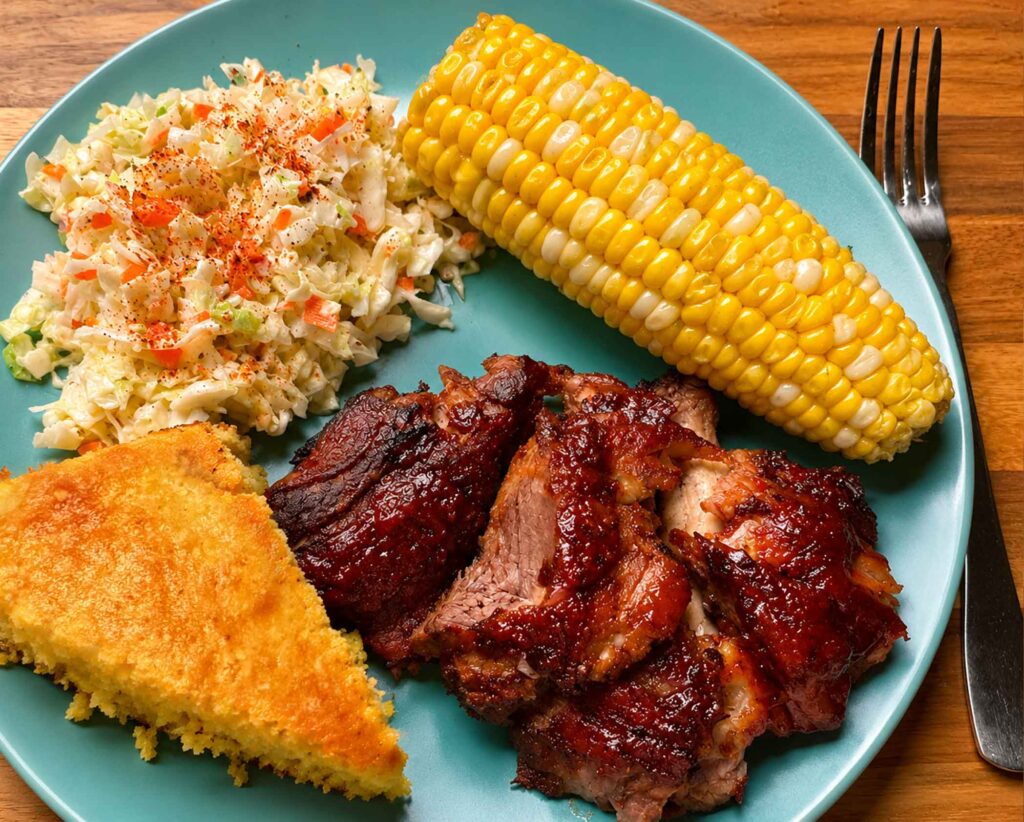
Soups and stews — vegetable soup, chicken stew, beef stew, beef tips, taco soup, ham and potato soup, or chicken tortilla soup.
Fried or roasted chicken — especially with green beans, mashed potatoes, coleslaw, or a simple salad on the side.
Comfort-food casseroles — chicken pot pie casserole, hamburger casserole, creamy chicken and rice, or sausage and bean casseroles.
Greens and vegetables — collard greens, turnip greens, fried cabbage, roasted sweet potatoes, corn chowder, fried dandelions, or a big pot of green beans.
And of course, you can also serve warm cornbread on its own with butter, honey, honey butter, maple syrup, maple butter, or jam. The corn kernels make it flavorful enough to enjoy as a snack or breakfast-style treat, too.
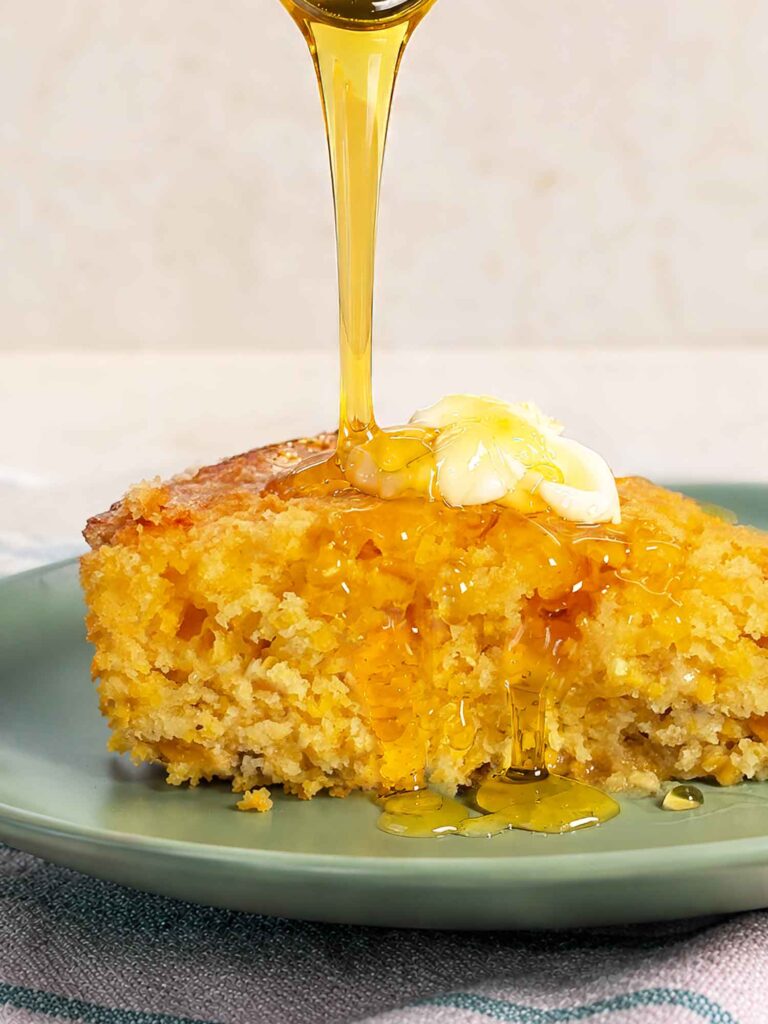
I wasn’t kidding … we LOVE cornbread and often make it. It stretches out for several meals and just rounds out all the corners. I can’t recommend this recipe highly enough if you enjoy cornbread.
Tried this recipe?
Tap the stars in the recipe card to leave a quick rating. Your rating helps other home cooks know this recipe works in a real kitchen, not just mine.
And as a thank-you for your feedback, you will receive a free printable copy of my Maker Home Companion Cookbook, featuring my most popular recipes, each one formatted on a SINGLE, easy-to-use page, a perfect kitchen companion for easy meal prep. Click here to learn more about this cookbook and how you can get your copy!


Meet Jennifer
Jennifer cooks and experiments in the kitchen at Maker Farm, where she focuses on simple pantry cooking, homemade staples, and practical recipes that make everyday meals easier. Over the years she has tested many ways to make cooking simpler and more dependable, and shares the methods that work best in her own kitchen, occasionally showing them on her Heart to Home at Maker Farm vlog.