

This easy American goulash recipe combines ground beef, elbow macaroni, petite diced tomatoes, and simple seasonings into a hearty one-pot meal everyone will love. Inspired by the classic goulash my mom made when I was growing up, this ultimate comfort food version has rich tomato flavor and plenty of beef. It’s an affordable, comforting dinner that’s ready in about 40 minutes.
GOULASH At A Glance
Prep
10 min
COOK
30 min
Total
40 min
Serves
4
Pan
Large pot or Dutch oven
What it tastes like: Savory, tangy, and hearty, like a rich tomato and beefy macaroni meal!
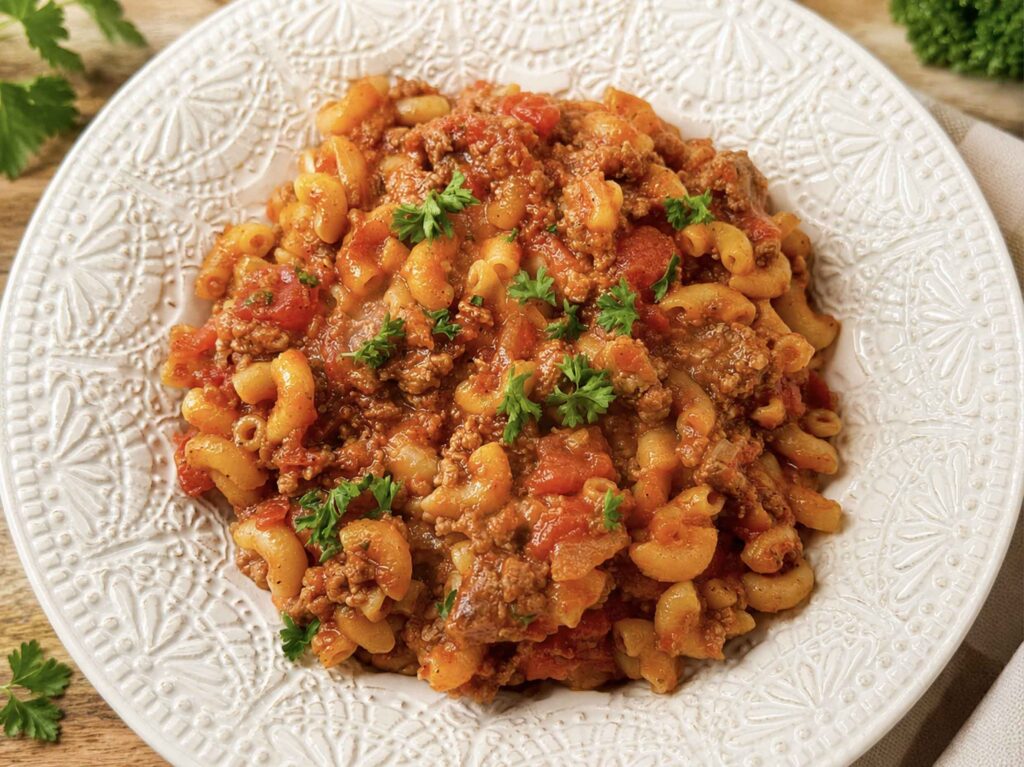
This! This one right here! I had been looking for a recipe that compared to my mom’s goulash, and this is the ONE! Took me right back to 1975, standing at the stove with my bowl, asking for another helping! Thanks for this one Jennifer, it’s so darn tasty and brought one of my happiest childhood memories!
Stephanie
Why Tomato Paste Makes This Goulash Better
When I asked my mom about the goulash she made when I was a kid, she immediately pointed to tomato paste as the secret ingredient. She said it gave the dish more body and richer flavor, and I think she was right. A few tablespoons of tomato paste help bring everything together, creating a heartier sauce that clings to the macaroni and beef instead of settling into the bottom of the pot.
VINTAGE TIPS FOR MODERN KITCHENS

Recipes like goulash were used to make a small amount of meat go further, and this version does that for us with macaroni and a hearty tomato sauce that makes it filling enough for a full family dinner. What always surprise me isn’t how far the meat stretches, it’s how filling the pasta and tomato base make the meal feel even the next day.

Want to Save This Recipe?
Enter your email below and we’ll send it straight to your inbox! Plus you’ll get new recipes each week!
American Goulash vs Hungarian Goulash
Even though they share the same name, American goulash and Hungarian goulash are very different. This recipe is the American version I grew up with: a hearty one-pot meal made with ground beef, tomatoes, and elbow macaroni. Hungarian goulash is more of a beef stew with paprika and doesn’t include macaroni pasta the way this one does. So if you’re expecting the simple, comforting pasta dish many of us grew up eating, this is the perfect recipe for you.
Ingredient Notes and Substitutions
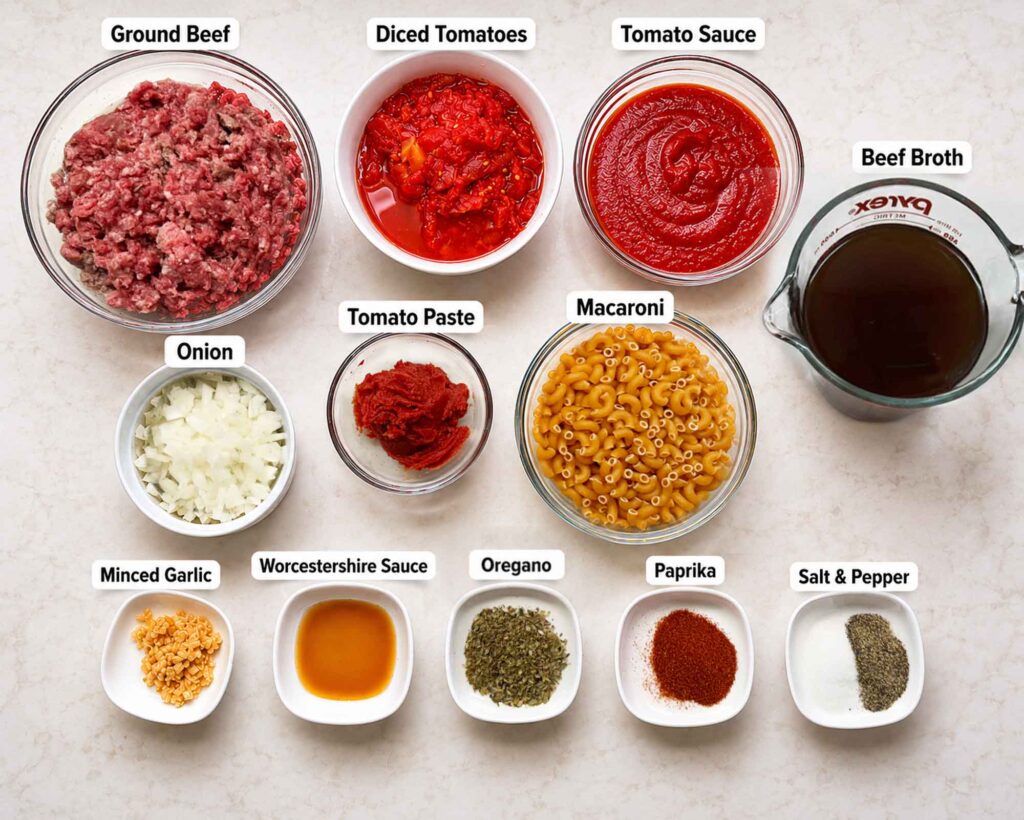
Here’s what you need to make this easy recipe.
Ground Beef
I use 85/15 ground beef because it provides plenty of flavor without making the dish overly greasy. If you prefer a leaner option, you can use a 90/10 ground beef. Ground turkey also works well and was one of the variations my mom sometimes made. If using very lean meat, you may want to add a tablespoon of olive oil when browning.
Swapping to Ground Venison

A venison goulash is a classic here in Michigan! And while you CAN just swap ground venison for ground beef one to one, there’s a better way to make it. I have a whole ground venison goulash recipe that adds back in the missing fat, removes any gamey taste, and is truly amazing.
Tomato Paste
Tomato paste is one of the key ingredients, adding body, richness, and concentrated tomato flavor that helps create the signature goulash sauce. If you don’t have tomato paste, you can substitute about ½ cup tomato sauce, though the finished dish will be thinner and less robust.
Petite Diced Tomatoes
Petite diced tomatoes give this goulash plenty of tomato flavor without the large chunks found in traditional stewed tomatoes. If you prefer a more classic version, substitute an equal amount of stewed tomatoes. Regular diced tomatoes work well too. For a smoother sauce, use crushed tomatoes. If you don’t have tomatoes, or just don’t like the texture of tomatoes, substitute about 1 cup of tomato juice.
Tomato Sauce
Tomato sauce helps create a smooth, cohesive sauce that coats the macaroni and beef. If needed, substitute an equal amount of crushed tomatoes or tomato puree. The texture may be slightly different, but the flavor will remain similar.
Onion
A yellow onion provides sweetness and depth to the sauce. White onion works just as well. If you don’t have fresh onion, substitute 1 tablespoon onion powder.
Garlic
Fresh garlic adds flavor and aroma that complement the tomatoes and beef. If needed, substitute ½ teaspoon garlic powder for each clove of garlic called for in the recipe.
Beef Broth
Beef broth adds savory flavor and provides the liquid needed to cook the macaroni directly in the sauce. Chicken broth, vegetable broth, or even water can be used instead. Water works surprisingly well since the tomatoes, beef, and seasonings provide plenty of flavor on their own.
Worcestershire Sauce
Worcestershire sauce adds a subtle savory depth that enhances the beef flavor without making the dish taste like Worcestershire sauce. If you don’t have it, simply omit it or substitute a teaspoon of soy sauce.
Oregano
Dried oregano adds a classic savory note that pairs well with tomatoes and beef. If you don’t have oregano, substitute an equal amount of Italian seasoning, dried basil, or dried thyme.
Paprika
Paprika adds color and mild warmth. Regular paprika, sweet paprika, or smoked paprika all work well. If you don’t have paprika, you can simply leave it out.
INGREDIENT VARIATIONS

Some people add diced green bell peppers along with the onions, while others stir in shredded cheddar cheese at the end for a richer, creamier dish. For a little heat, try adding crushed red pepper flakes or a pinch of cayenne. You can also substitute ground turkey for the beef and gluten-free pasta for the macaroni.
How to Make This Pasta Recipe
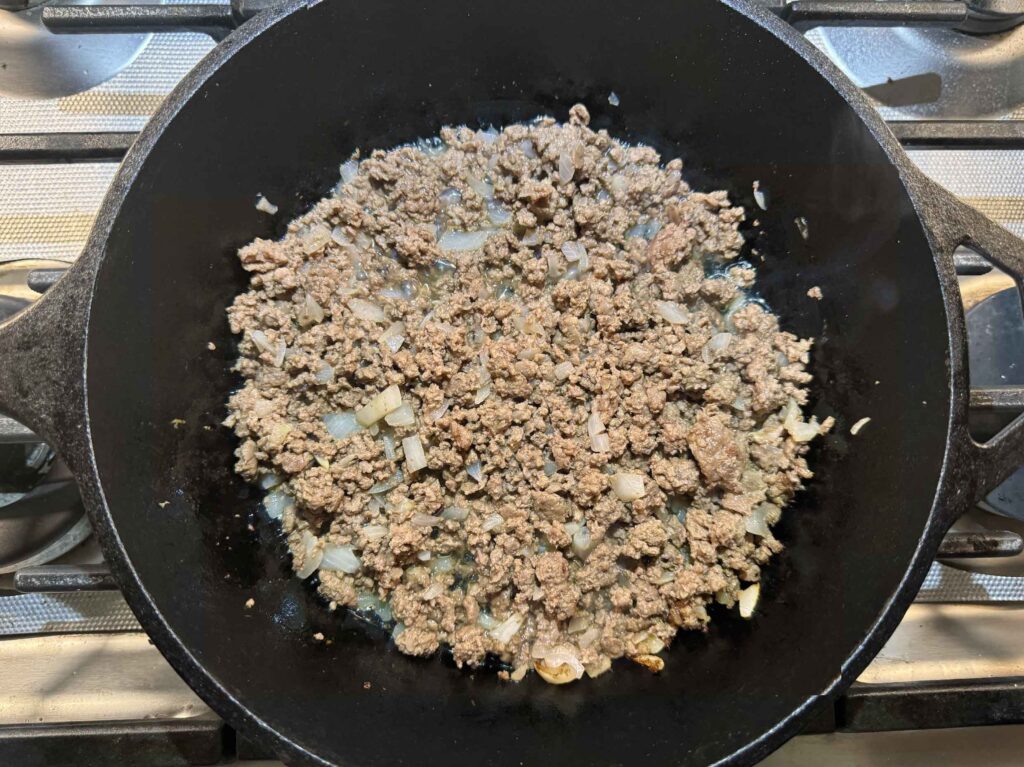
Start by browning the ground beef with the onion until the meat is fully cooked and the onion has softened. This creates the savory foundation for the entire dish. Once the beef is browned, stir in the garlic and cook just long enough for it to become fragrant.
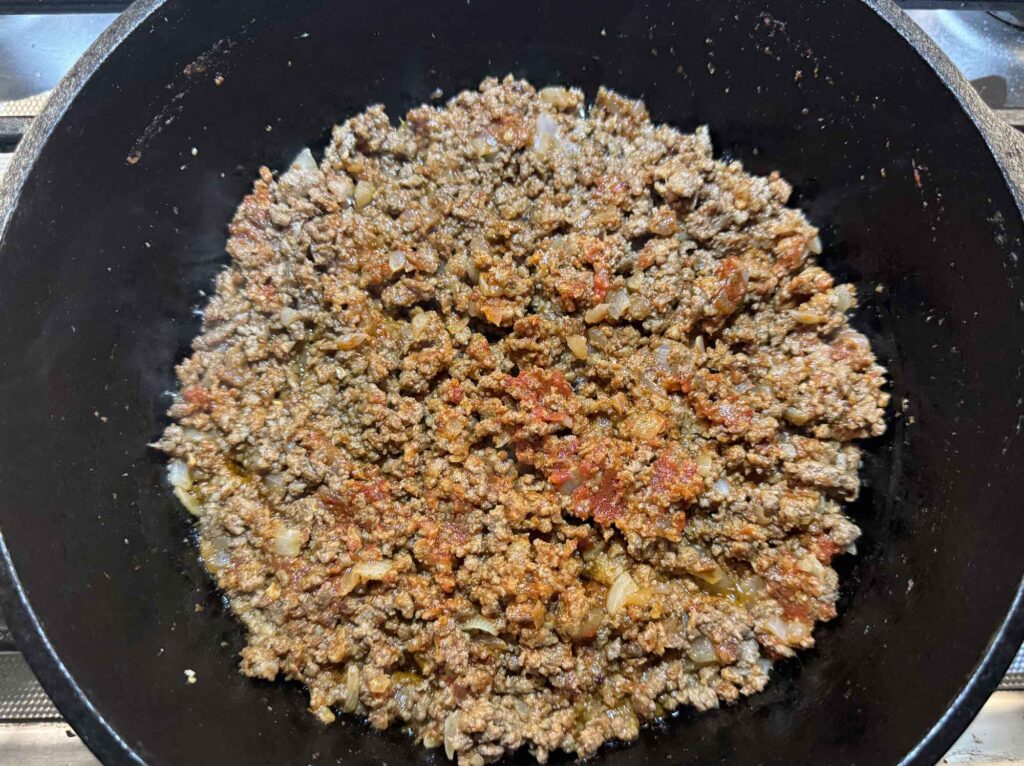
Next, add the tomato paste and cook it briefly before adding the remaining liquids. This simple step deepens the tomato flavor and gives the finished goulash a richer, more robust sauce.
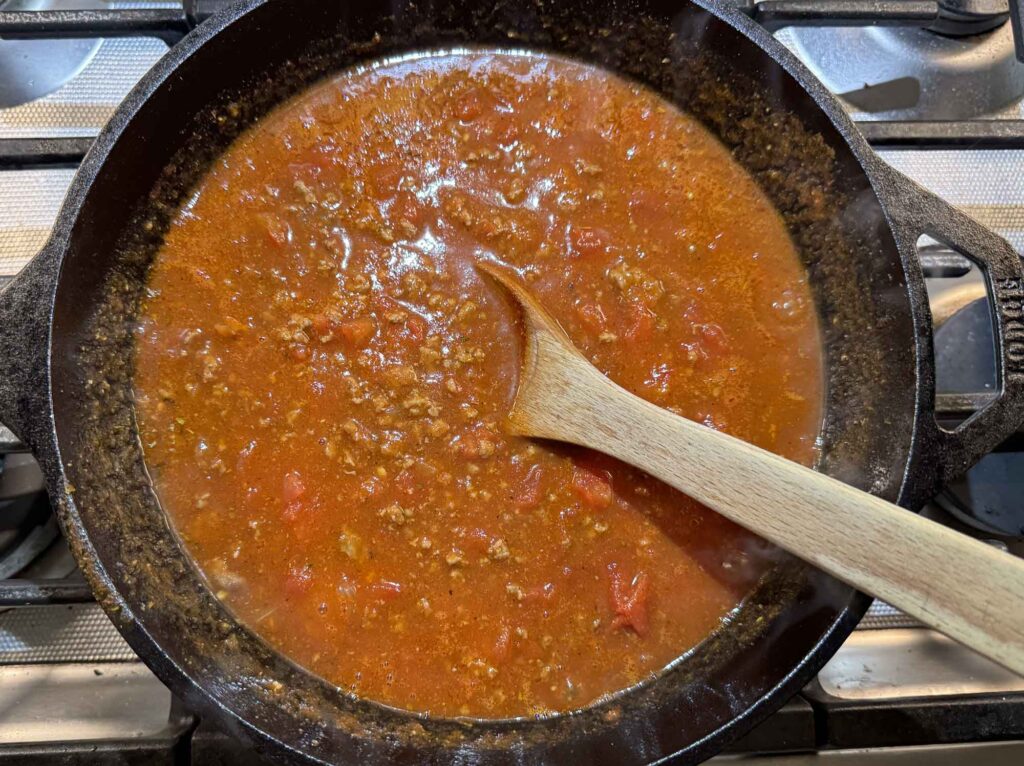
Stir in the diced tomatoes, tomato sauce, beef broth, Worcestershire sauce, and seasonings, then allow everything to simmer for a few minutes so the flavors can begin to meld together.
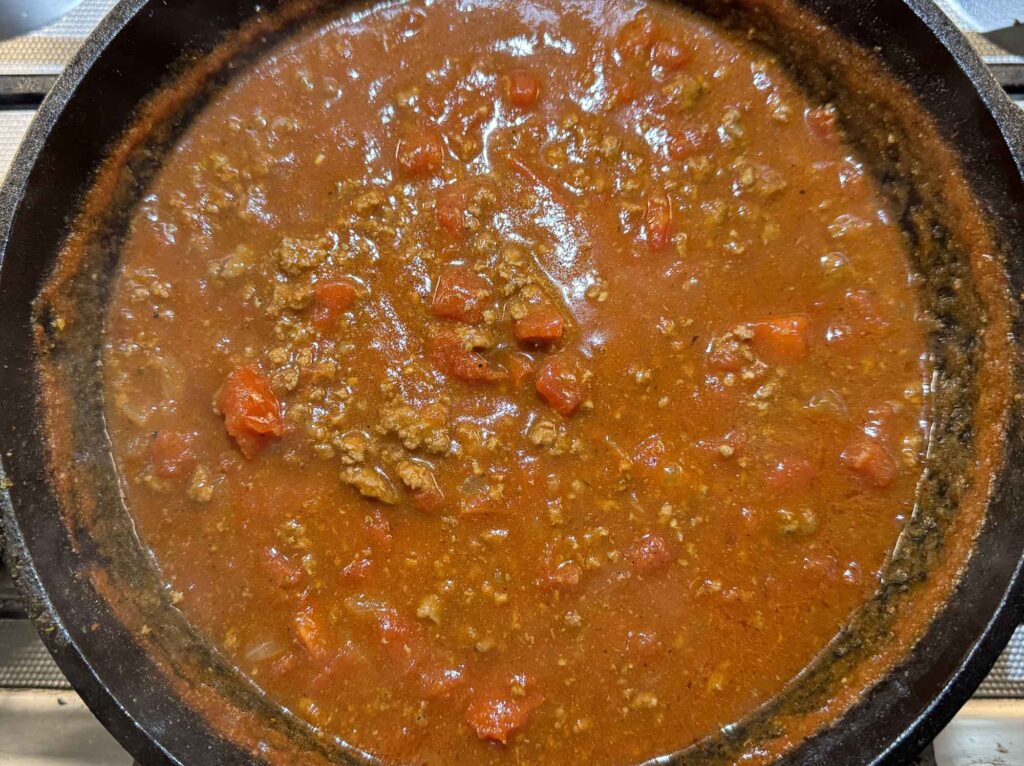
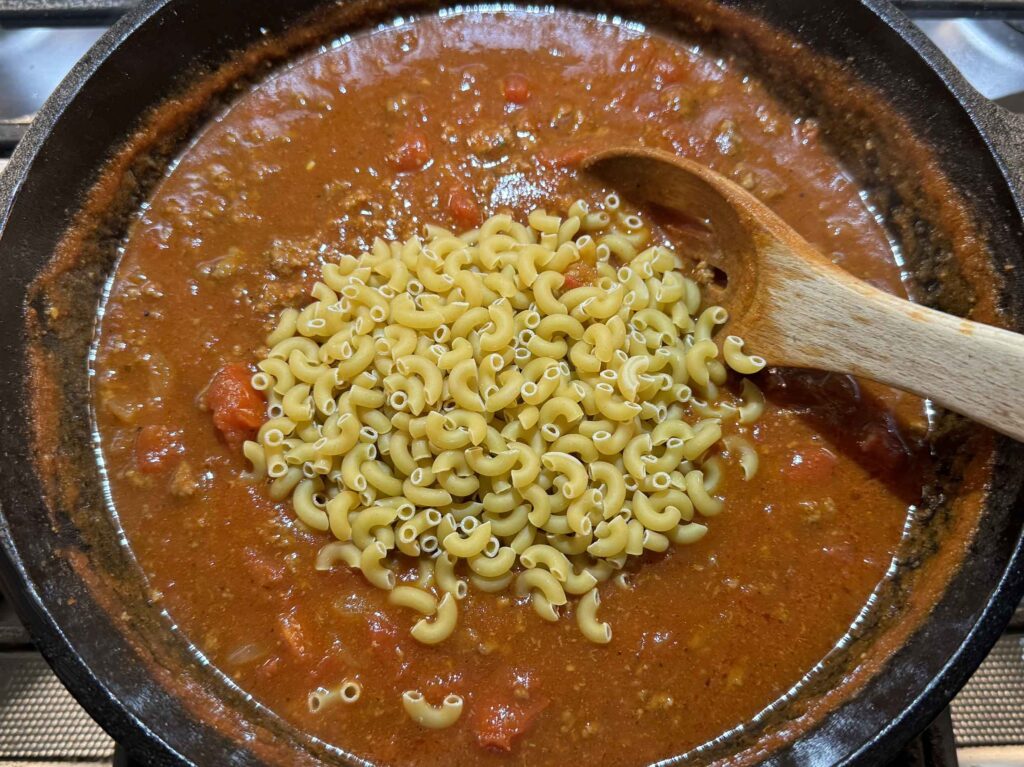
Once the sauce is bubbling gently, add the uncooked macaroni directly to the pot. Cooking the pasta in the sauce allows it to absorb all of those savory tomato and beef flavors while naturally thickening the mixture as it cooks.
Stir occasionally to prevent sticking and keep an eye on the consistency. If the goulash becomes thicker than you’d like before the pasta is tender, simply add a splash of broth or water.
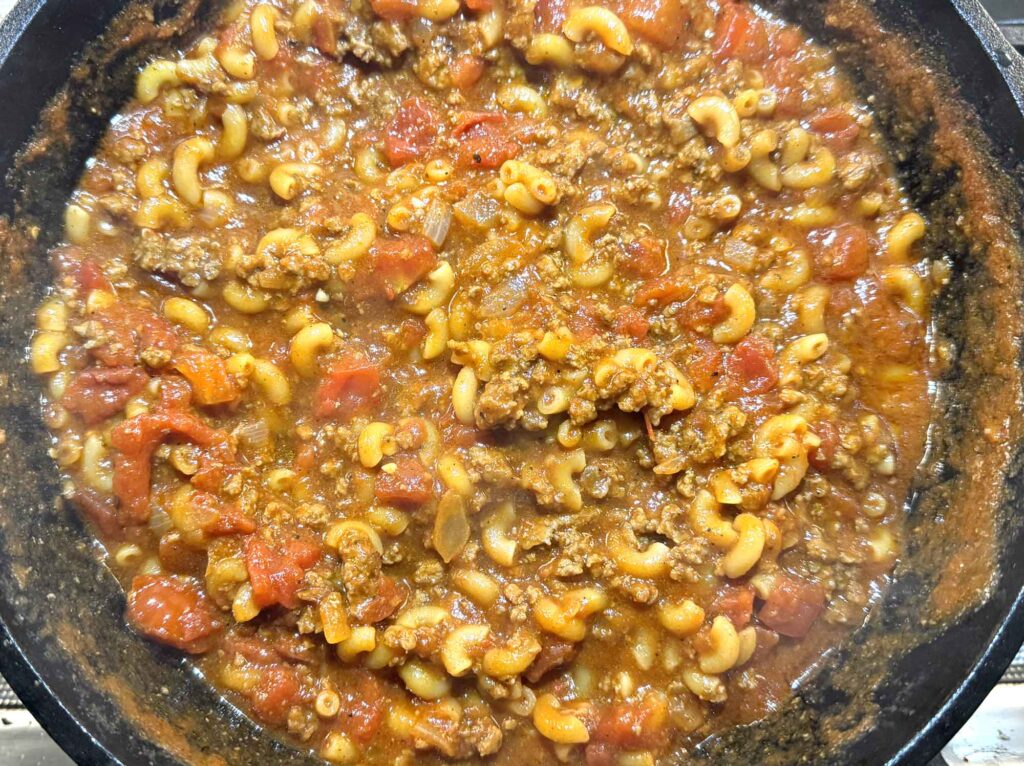
When the macaroni is cooked through, remove the pot from the heat and let the goulash rest for a few minutes before serving. This gives the sauce time to settle and thicken slightly. The result is a hearty, comforting bowl of American goulash with tender pasta, rich tomato flavor, and plenty of savory beef in every bite.
Notes from the Maker Farm Kitchen
Don’t rush the tomato paste.
Once it hits the hot pot, give it that full minute to cook before adding the liquids. It should darken slightly and smell richer. That quick step is what keeps the sauce from tasting flat.
Leave a little fat in the pan.
If your beef gives off a lot of grease, drain the excess, but don’t wipe the pot completely clean. A little fat helps carry the onion, garlic, tomato paste, and seasonings through the whole dish. I’ve also just left all the fat in when making this, and it really tastes great.
Add the macaroni while the sauce still looks a little loose.
The pasta will absorb more liquid than you think. If the sauce looks perfect before the macaroni is fully cooked, it will probably be too thick by the time dinner hits the table.
Taste at the end.
Tomato-based pantry meals sometimes need one final adjustment. After the pasta is tender, taste the goulash and add a little more salt, pepper, or Worcestershire sauce if it needs more depth.

Easy Goulash Recipe
Equipment
- 1 large pot or Dutch oven
Ingredients
- 1 pound 85/15 ground beef
- 1 medium yellow onion diced
- 2 cloves garlic minced
- 1 14.5-ounce can petite diced tomatoes, undrained
- 1 8-ounce can tomato sauce
- 3 tablespoons tomato paste
- 1¼ cups beef broth
- 1 teaspoon Worcestershire sauce
- 1 teaspoon paprika
- 1 teaspoon dried oregano
- 1 teaspoon salt or to taste
- ½ teaspoon black pepper
- 1 cup elbow macaroni uncooked
- fresh parsley for garnish (optional)
Instructions
- Brown the beef and onionsIn a large pot or Dutch oven, cook the ground beef and onion over medium-high heat until the beef is browned and the onion has softened, about 6–8 minutes. If there is an excessive amount of grease, drain some off, but leave a little behind for flavor.1 pound 85/15 ground beef, 1 medium yellow onion
- Add the garlicStir in the garlic and cook for 30 seconds, just until fragrant.2 cloves garlic
- Build the sauceAdd the tomato paste and cook for 1 minute, stirring constantly. Stir in the diced tomatoes, tomato sauce, beef broth, Worcestershire sauce, paprika, oregano, salt, and pepper.1 14.5-ounce can petite diced tomatoes, undrained, 1 8-ounce can tomato sauce, 3 tablespoons tomato paste, 1¼ cups beef broth, 1 teaspoon Worcestershire sauce, 1 teaspoon paprika, 1 teaspoon dried oregano, 1 teaspoon salt, ½ teaspoon black pepper
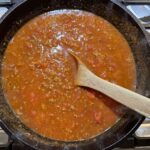
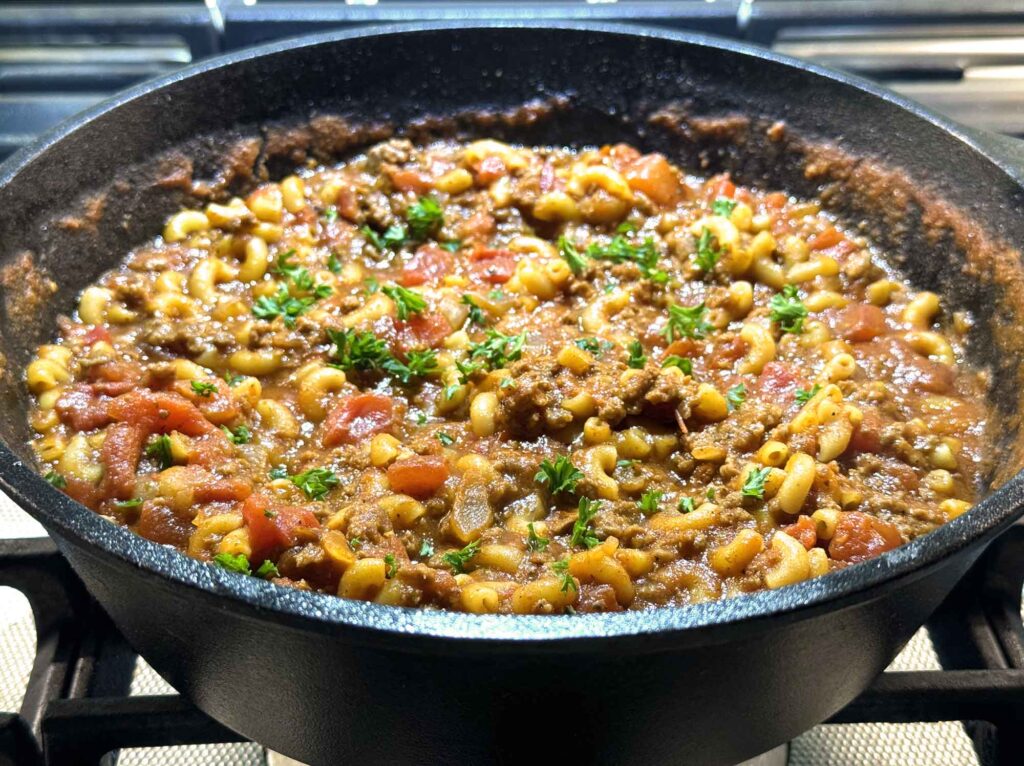
- SimmerBring the mixture to a gentle boil, then reduce the heat and simmer for 10 minutes. This gives the tomato paste time to dissolve and develop a richer flavor.
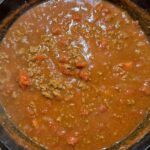
- Cook the macaroniStir in the uncooked macaroni. Cover and simmer for 10–12 minutes, stirring occasionally, until the pasta is tender and has absorbed much of the sauce.1 cup elbow macaroni
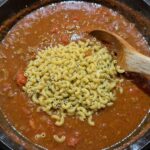
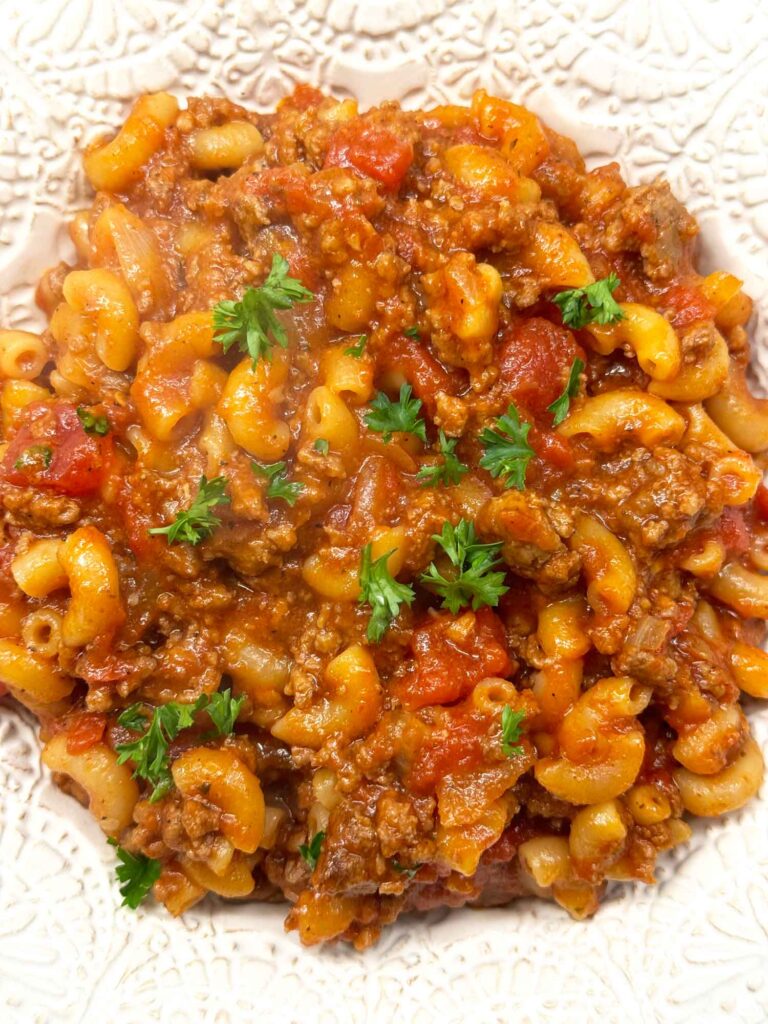
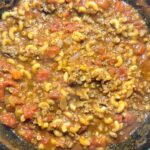
- Rest and serveRemove from the heat and let the goulash rest for 5 minutes. The sauce will thicken slightly as it sits. Add fresh parsley, if desired, and serve warm.fresh parsley
Nutrition
Notes
- If the goulash becomes thicker than you’d like while the pasta cooks, add a splash of beef broth or water.
- If you enjoy a little heat, add ¼ to ½ teaspoon crushed red pepper flakes along with the seasonings.
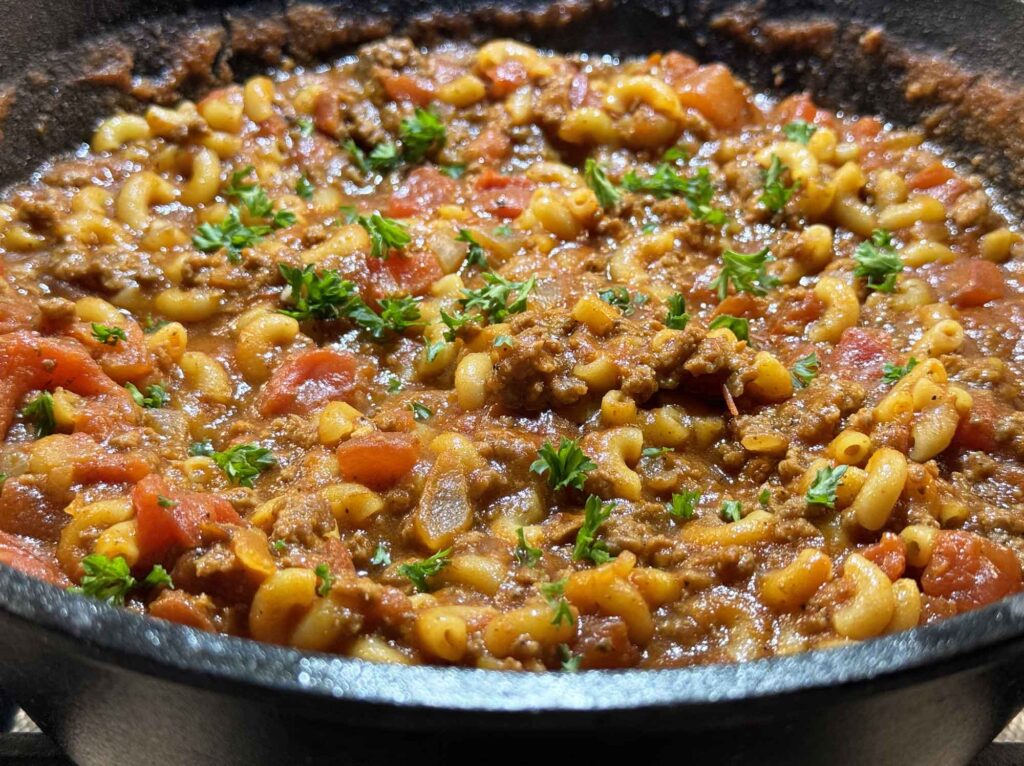
Serving Suggestions
This beef goulash is delicious topped with some shredded cheddar cheese, sour cream, and parsley or green onions! This goulash is usually a full meal for us, so I don’t typically serve it with anything else. It’s hearty enough on its own, especially with the pasta, beef, and rich tomato sauce all in one pot – pretty much the perfect dinner. If you wanted to add something on the side, garlic toast or a green salad would pair well.
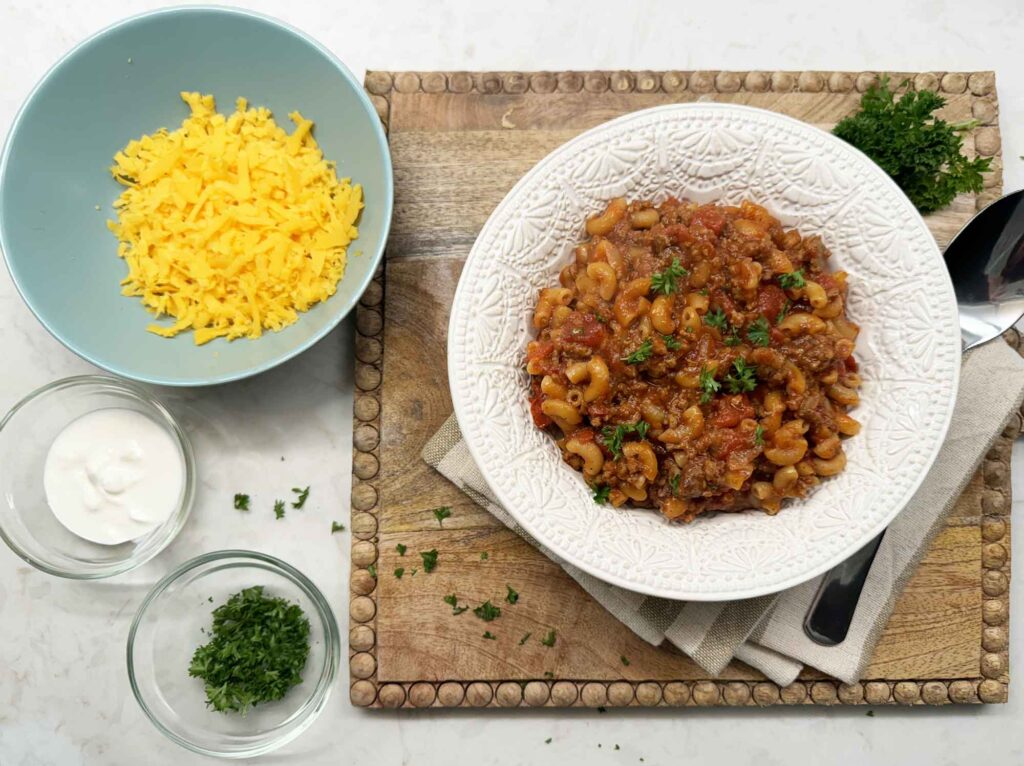
Storage
Allow the leftover goulash to cool completely before transferring it to an airtight container. Store it in the refrigerator for up to 4 days. As it sits, the macaroni will continue to absorb some of the sauce, so the leftovers will be a bit thicker than when freshly made.
Freezing
Freeze cooled goulash in freezer-safe containers for up to 3 months. For best quality, thaw overnight in the refrigerator before reheating. Keep in mind that the macaroni may soften slightly after freezing and thawing, but the flavor remains excellent.
Reheating
Reheat individual portions in the microwave, stirring halfway through, until heated through. For larger amounts, warm the goulash in a saucepan over medium-low heat, stirring occasionally. If it seems too thick, add a splash of beef broth or water to loosen the sauce and restore its original consistency.
In my experience, goulash is one of those dishes that tastes even better the next day after the flavors have had time to meld together in the refrigerator.
Goulash FAQs
Can I make goulash ahead of time?
Yes. In fact, many people think goulash tastes even better the next day after the flavors have had time to meld together.
How do I keep goulash from getting too thick?
Because the macaroni continues to absorb liquid as it sits, goulash naturally thickens over time. If it becomes too thick, simply stir in a splash of beef broth or water while reheating until it reaches your desired consistency.
What pasta can I use instead of elbow macaroni?
Elbow macaroni is the traditional choice, but other small pasta shapes work well too. Try small shells, rotini, ditalini, medium shells, or cavatappi. Just be aware that different pasta shapes may require slight adjustments to the cooking time.
What is the difference between beefaroni vs. goulash?
Beefaroni and American goulash share many of the same ingredients, and some people use the terms interchangeably, but they aren’t quite the same dish.
Beefaroni is typically more pasta-intense, with elbow macaroni coated in a tomato-based meat sauce. The sauce is usually smoother and more heavily tomato-flavored, similar to a simple spaghetti sauce. The canned version made famous by Chef Boyardee is what many people think of when they hear the name (no shame if you like it, because I do, too!)
American goulash tends to be heartier and more rustic. It usually contains more beef, less sauce, and often includes onions, peppers, or additional seasonings. The tomatoes are often more noticeable, especially in older recipes that use canned diced tomatoes.
Tried this recipe?
Tap the stars in the recipe card to leave a quick rating. Your rating helps other home cooks know this recipe works in a real kitchen, not just mine.
And as a thank-you for your feedback, you will receive a free printable copy of my Maker Home Companion Cookbook, featuring my most popular recipes, each one formatted on a SINGLE, easy-to-use page, a perfect kitchen companion for easy meal prep. Click here to learn more about this cookbook and how you can get your copy!


Meet Jennifer
Jennifer cooks and experiments in the kitchen at Maker Farm, where she focuses on simple pantry cooking, homemade staples, and practical recipes that make everyday meals easier. Over the years she has tested many ways to make cooking simpler and more dependable, and shares the methods that work best in her own kitchen, occasionally showing them on her Heart to Home at Maker Farm vlog.
I made this recipe a second time but didn’t have any tomato paste (well I did but it was hiding from me). So I added ketchup instead and it was still very tasty, but the tomato paste added such a great flavor. It received a thumbs up from my husband and has been added to our favorite meals. Thanks Jennifer
I think my mom knew what she was doing when she added the tomato paste! Happy to hear you are enjoying the goulash. 🙂
This! This one right here! I had been looking for a recipe that compared to my mom’s goulash, and this is the ONE! Took me right back to 1975, standing at the stove with my bowl, asking for another helping! Thanks for this one Jennifer, it’s so darn tasty and brought one of my happiest childhood memories!
Oh my goodness, hooray!! Thank you for letting me know, Stephanie! You made my day! And I will be sure to tell my mom, too — she was making this for me circa 1975, too! <3
I cooked this the other night. It came out great! Easy one pot meal. We just ate that, nothing else. Very hearty and was a lot better the next day!
Wonderful!! Thank you for letting me know, Ginger!
This was absolutely delicious (used ground turkey)! We pared it with Cheesy Garlic Texas Toast and loved every bite. Thanks so much for the great recipe.
SO happy to hear this, Judy! Thank you!
I made this for dinner a few night ago. It was fabulous. And the leftovers were even better. I will definitely be making this again.
Wonderful, Sandy! Thank you for letting me know!!
A great and flavorful recipe. I used chicken broth with a splash of soy sauce and it was really delicious. And I love a one pot meal.
Thank you Jennifer. I am going to make two other recipes this week and I will let you know how we liked them.
Hooray! Thank you, Janet, for trying out my recipes!!
Love me some goulash!