
This sourdough bread recipe for beginners uses just 4 ingredients and a simple stretch-and-fold schedule. Plan for a 3 to 5 hour bulk rise plus an overnight fridge proof, then bake in a hot Dutch oven at 450°F.
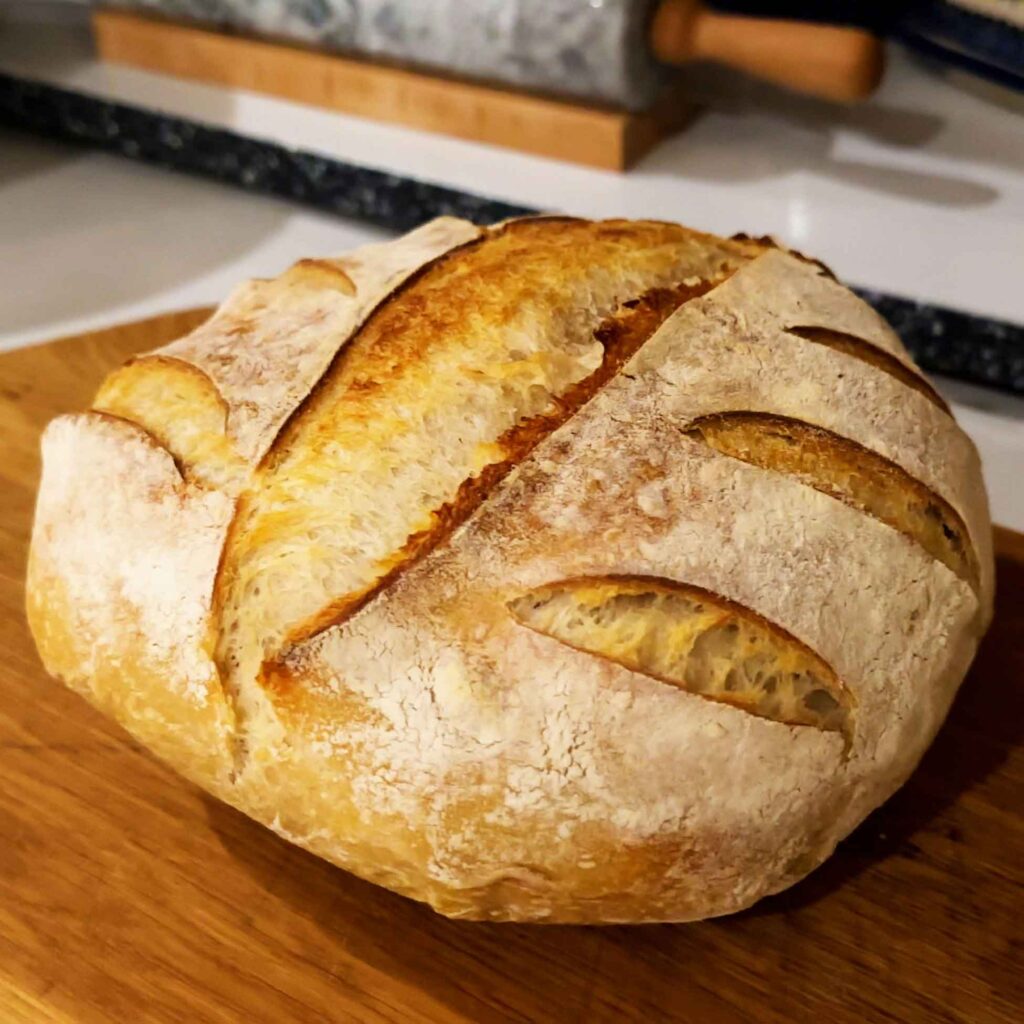
This is the Most Beginner-Friendly Way I’ve Found to Make Sourdough

For a long time, sourdough bread felt like something other people knew how to do. I’d see beautiful loaves online with crackling crusts and airy interiors, and the process always looked complicated.
But once I slowed down and paid attention to the rhythm of sourdough, to feed the starter, mix the dough, let time do the work, it turned out to be much simpler than it first appeared.
I’ll show you the beginner method that finally worked for me so you can bake a reliable sourdough loaf using just four ingredients: flour, water, salt, and an active starter.
Let’s dig in!

Table of Contents

Want to Save This Recipe?
Enter your email below and we’ll send it straight to your inbox! Plus you’ll get new recipes each week!
What Is Sourdough Bread?
Many people, including myself, prefer sourdough bread to regular white bread because the flavor is much more interesting. Sourdough bread is a traditional, naturally-leavened bread made with wild yeast and bacteria from an active starter instead of commercial yeast. The longer fermentation is what builds the distinctive tangy flavor and affects rise time. It has a chewy texture surrounded by a crispy crust. I also believe the fermentation process makes the bread easier to digest.
Sourdough baking has become one of my favorite kitchen routines. After working on it for a year, I eventually settled on a straightforward process that works reliably for me as a beginner. It doesn’t require a long prep period, during which your enthusiasm can wane … just a healthy starter and time for the dough to ferment naturally. Every loaf I’ve made with this method rises beautifully and tastes ah-mazing.
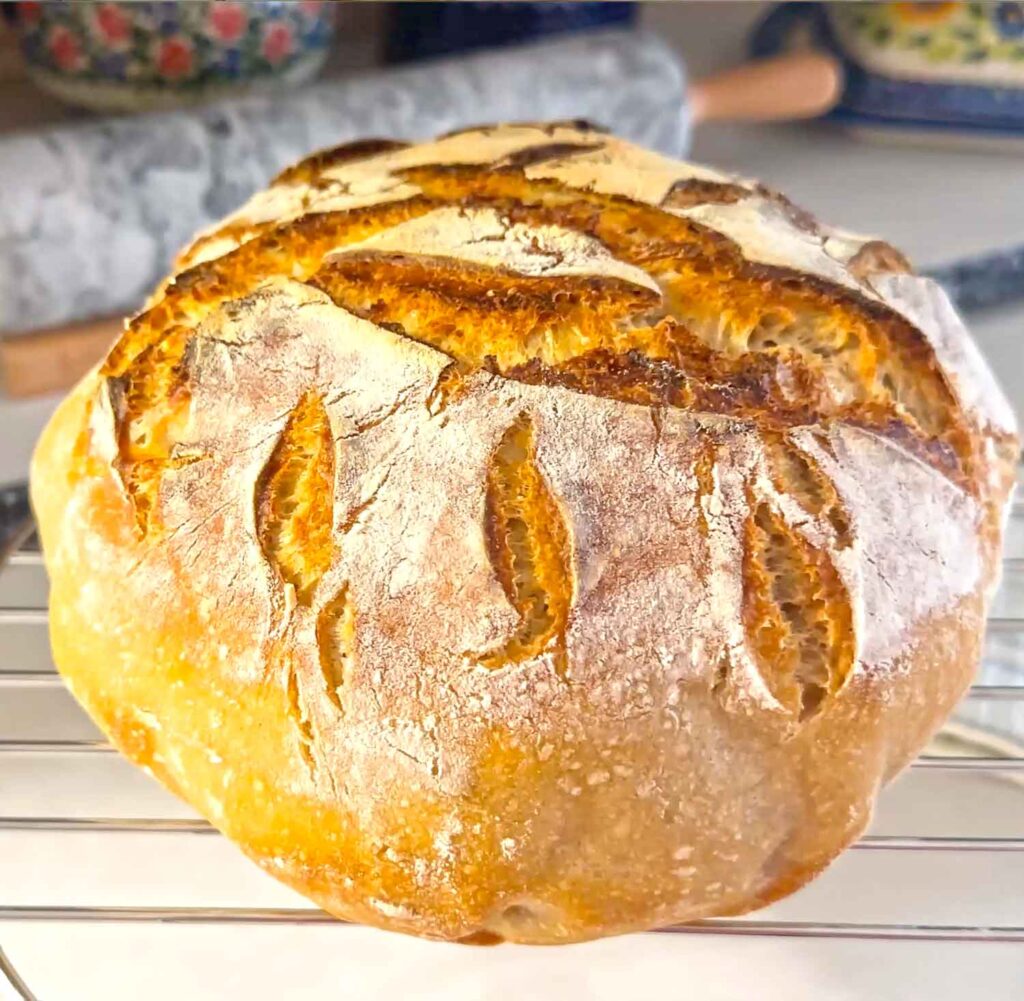
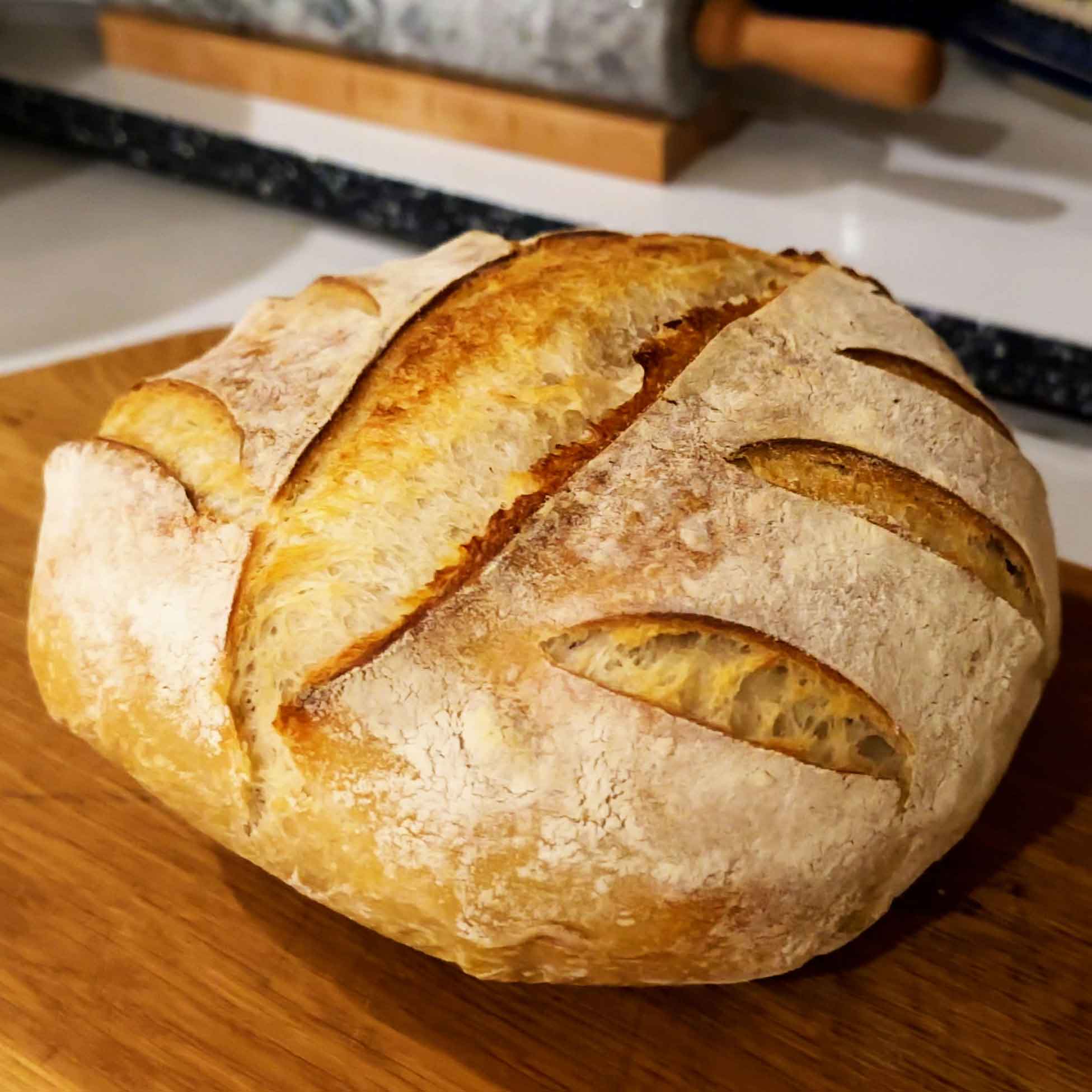
Here is my very first loaf made with this recipe:
If you’re new to sourdough, I also created a free beginner guide with my personal sourdough notes and tips to help you get your first successful loaf.
Download my free guide:
It covers starter basics and the simple steps that makes sourdough bread easier, along with the seven things that actually made the difference for my first loaf!
Sourdough Terminology
The vocabulary is the part that turned me off sourdough for the longest time. Once I actually learned what these few words meant, though, the whole thing stopped feeling like a secret club and started feeling like something I could do. Here are the terms you’ll see most often, in plain language.
Sourdough Starter
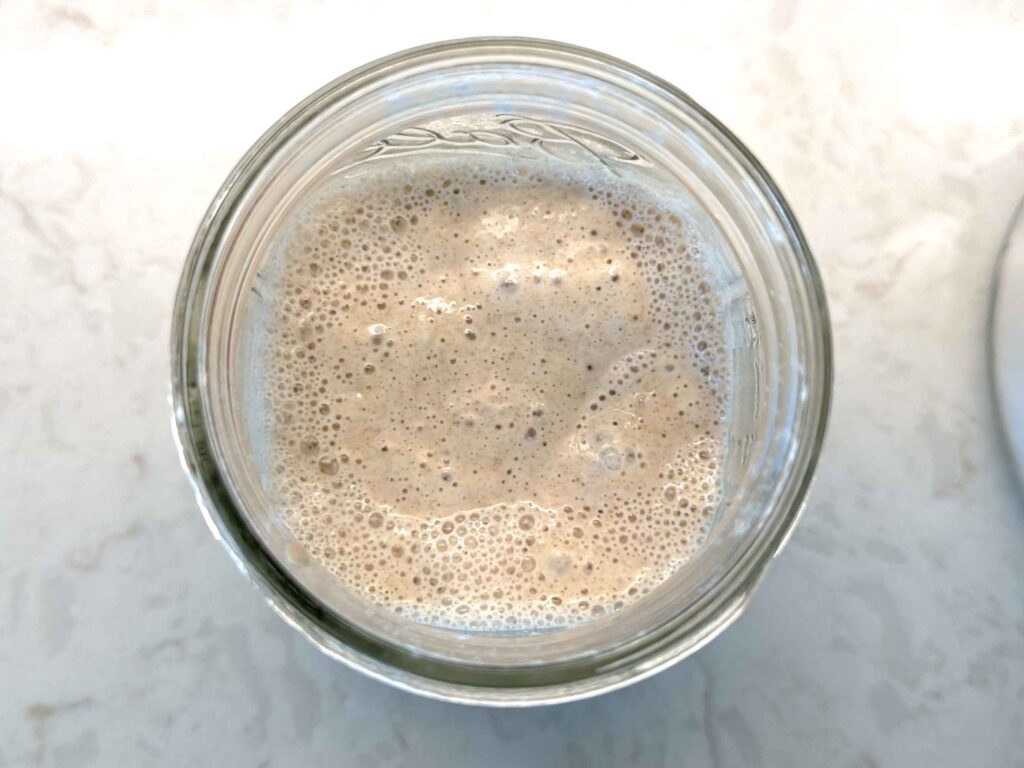
A sourdough starter is a living mixture of flour and water that captures natural wild yeast and beneficial bacteria from your environment. Instead of using store-bought yeast, this starter becomes what helps your bread rise. When it is active, bubbly, and recently fed, it is ready to use in your dough.
Sourdough Discard
Discard is the portion of starter you remove before feeding your sourdough starter again. This keeps the starter healthy and manageable in size. It is called “discard,” but it does not have to be thrown away. It can be used in plenty of other recipes instead of going in the trash.
Autolyse
Autolyse is a resting period after mixing flour and water, before adding salt and starter. This short rest allows the flour to fully absorb the water and helps gluten begin developing naturally. It makes your dough easier to handle and improve the final texture of the bread.
Bulk Fermentation (Bulk Rise)
Bulk fermentation is the first major rise after all the ingredients are mixed together. During this stage, the dough ferments, develops flavor, and gains strength. This is usually the longest part of the sourdough process and often takes several hours, depending on the temperature of your kitchen.
Proofing
Proofing is the final rise after the dough has been shaped. During this stage, the dough relaxes and expands before baking. Proper proofing helps create good oven spring and a better crumb structure inside the finished loaf.
Score
Scoring means making shallow cuts in the top of the dough just before baking, usually with a sharp knife or bread lame. This gives the bread a controlled place to expand in the oven instead of cracking unpredictably. It also creates the beautiful rustic look many people love in sourdough bread.
Oven Spring
Oven spring is the quick burst of rising that happens during the first part of baking, when the dough hits the hot oven. The heat causes trapped gases inside the dough to expand rapidly, helping the loaf rise taller and develop a lighter texture. Good proofing, strong dough structure, and a properly preheated Dutch oven all help create better oven spring.
Crumb
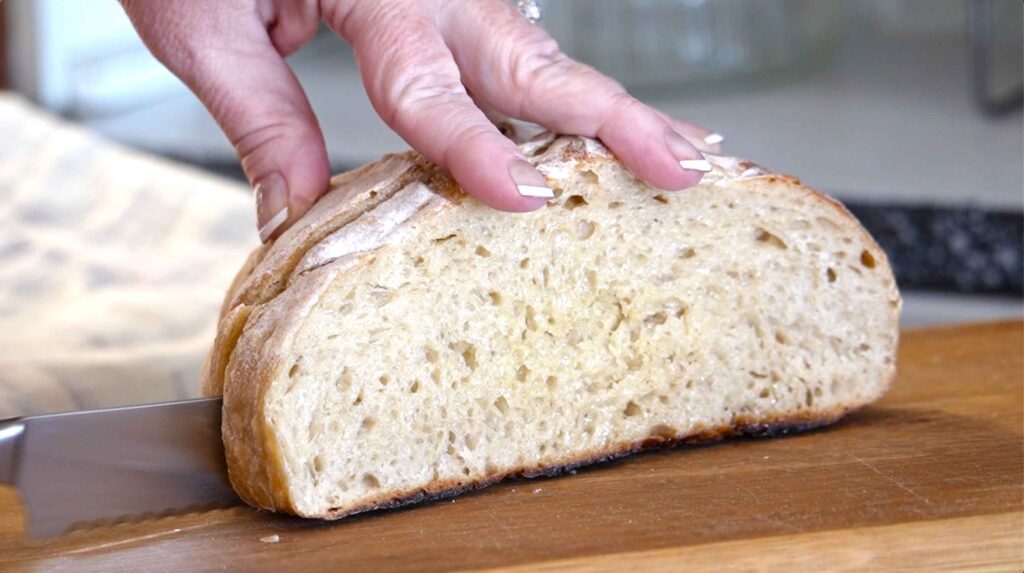
Crumb refers to the inside texture of the bread once it is sliced open. It describes how tight or open the interior structure is, including the size and shape of the air pockets. A soft sandwich loaf usually has a tighter crumb, while artisan sourdough often has a more open crumb with larger holes. The crumb helps tell you a lot about how well the dough fermented and proofed.
How Long Does It Take For Sourdough Bread to Rise?
Bulk fermentation often takes 3 to 5 hours at room temperature, but cooler kitchens take longer. That can be confusing for beginners, and it certainly was for me. So instead, use dough cues (it will be puffy, airy, and slowly springing back when poked) instead of the clock, then do the overnight fridge proof I call for in my recipe for a more forgiving and reliable method.
Ingredients and Tools Needed
One of the things that stops many people from trying sourdough bread is the idea that it requires a lot of special tools. If you look online, you’ll see beautiful photos of baskets, scoring blades, proofing boxes, and all sorts of specialized equipment.
But sourdough bread was baked for hundreds of years with very simple tools. In fact, many home bakers start with nothing more than a bowl, a spoon, and a pot for baking.
If you’re just beginning, focus on the essentials. You can always add specialized tools later if you find that you enjoy baking sourdough regularly.
These are the only things you truly need to make a good loaf of sourdough bread.
Sourdough Starter
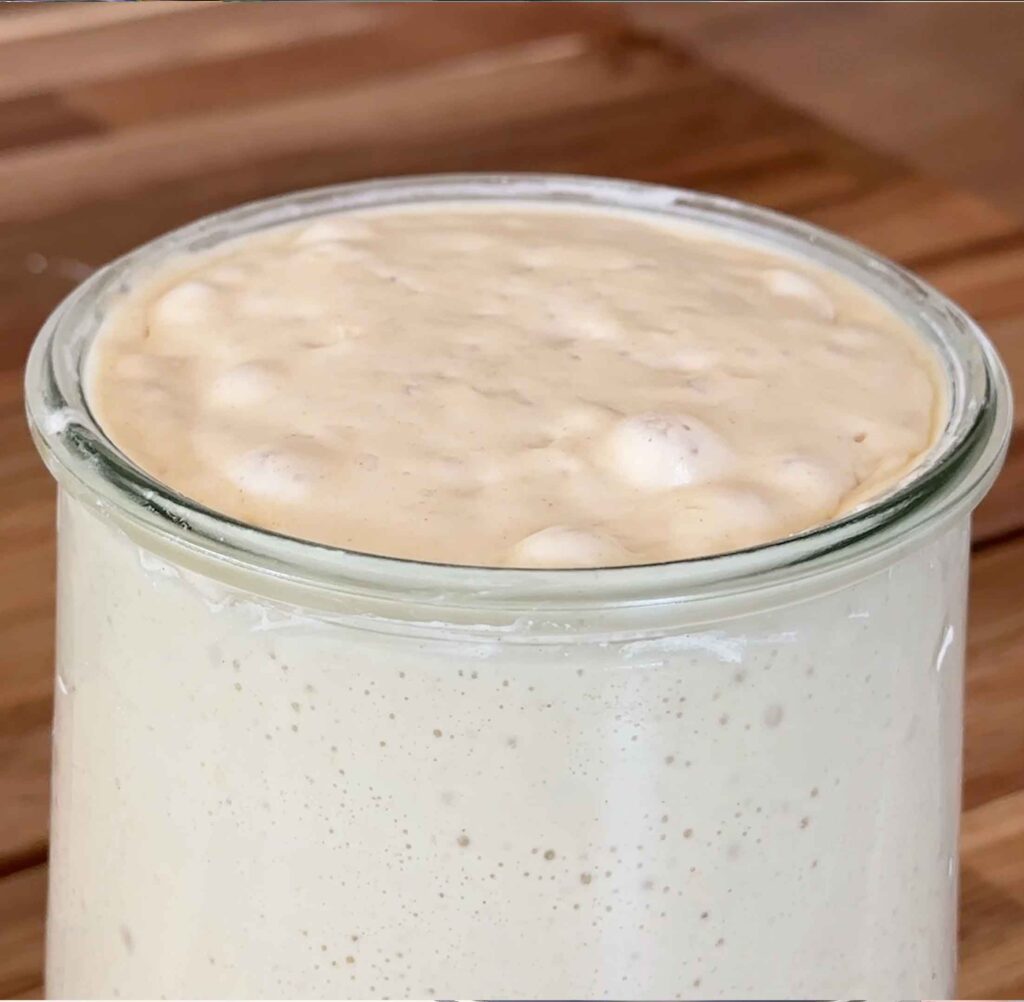
If you don’t have a starter yet, you can make one at home (it takes several days), get one from a friend, or buy one online. My full walkthrough is right here: Active Sourdough Starter for Beginners. You’ll want it fully active before you bake, meaning bubbly, airy, and doubled after a feeding.
Flour
Bread flour works best for beginners because it has higher protein, which helps create structure in the dough. All-purpose flour can also work.
DOES IT MATTER?

Many people successfully bake sourdough with all-purpose flour, and the dough may simply feel a little softer. I use bread flour most of the time, however, as I prefer how it results in a chewier loaf of bread.
Water
Use filtered, bottled, or regular tap water. If your tap water has a strong chlorine smell, filtered water may work better, as it can weaken or even kill the yeast and beneficial bacteria needed for fermentation.
I also recommend you use warm water, not cold and not hot, but warm (ideally 80°F–90°F / 24°C–32°C) as it will aid in fermentation. Be careful not to go too hot, as water over 120°F will kill the yeast.
Salt
Salt strengthens the dough and enhances flavor. Most basic sourdough recipes use about 2% salt by weight of the flour. The best salt for sourdough bread are non-iodized, fine-grade salts, such as kosher salt or fine sea salt, as they will dissolve better.
Large Mixing Bowl
A sturdy glass, ceramic, or food-safe plastic bowl about 4-6 quarts will work for mixing and fermenting the dough. I do not recommend a metal bowl such as aluminum or copper as the acid in the dough can produce a metallic taste.
Kitchen Scale (Recommended)
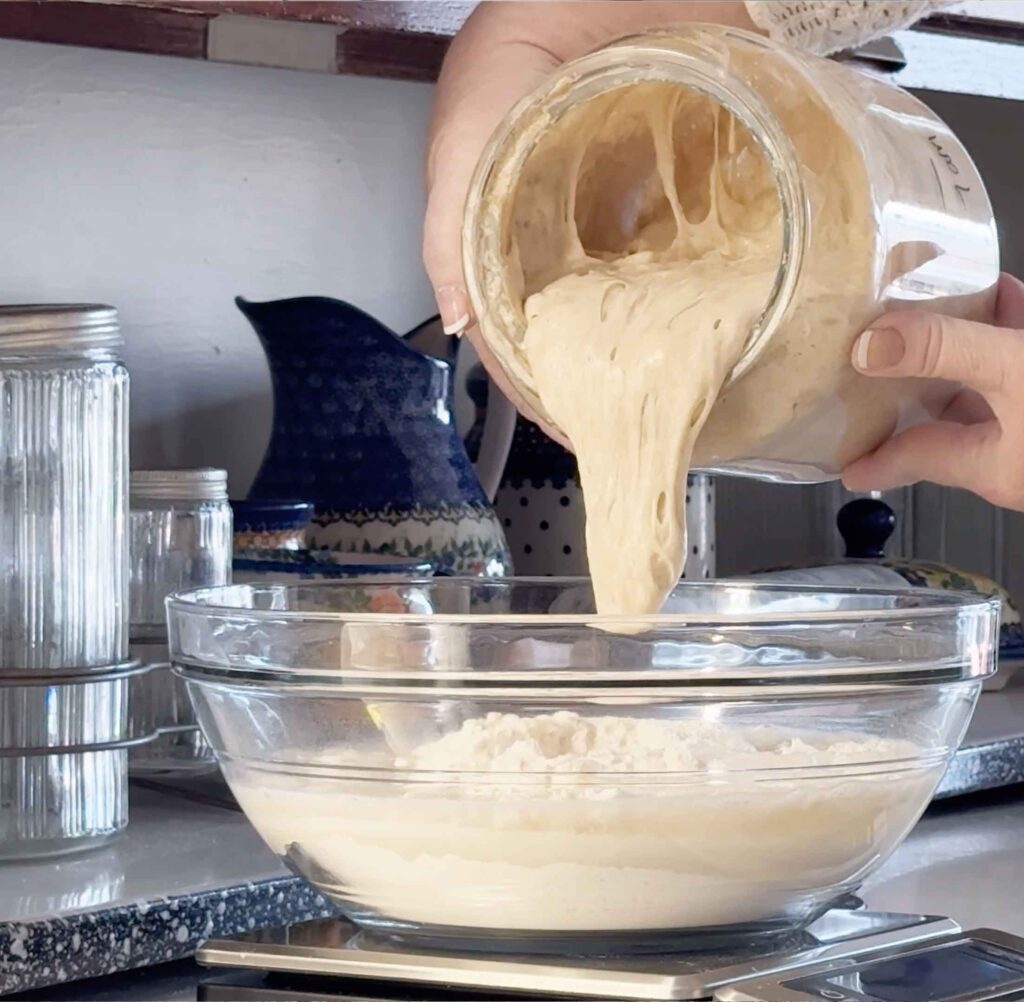
Bread baking is most consistent when ingredients are measured by weight rather than volume. A simple digital kitchen scale makes this easy.
Baking Vessel
I bake sourdough in a Dutch oven because it traps steam and helps create a beautiful crust. I find the best size Dutch oven for this recipe to be 3.5 quarts, as it allows enough room for your bread to rise yet is small enough to trap the steam in the right places. If you don’t have a Dutch oven, you can use a covered oven-safe pot or even a baking sheet with a tray of water in the oven for steam.
Parchment Paper
This makes it easier and safer to transfer the dough into a hot baking vessel.
Helpful but Optional Tools
These tools can make the process easier, but they are not required to bake good bread.
Banneton (Proofing Basket)
This is a basket designed to hold shaped dough during its final rise. The ones made of a breathable material (like wood pulp, rattan, or cotton rope) also wick away moisture for a crispier crust. A bowl or colander lined with a smooth, thin, floured towel works almost as well.
Lame or Scoring Blade
A small razor blade used to score the dough before baking. A sharp knife can work too.
How Sourdough Bread Actually Comes Together
Before you jump down to the recipe card, it helps to understand what’s actually happening at each stage, because sourdough is really more about time and cues than exact minutes on a timer. Once the rhythm makes sense, the steps feel a whole lot less mysterious.
The simplest way to picture it: we’re working in two stages. First we wake up the starter and bring the dough together, then we let time do the slow work of fermenting, shaping, and proofing. You’re not muscling your way to a good loaf… you’re just giving wild yeast the hours it needs.
It all starts with the starter. Feed it about 4 to 8 hours before you plan to mix, so it has time to rise and get fully active. This matters because the starter is the only thing making your bread rise, so if it’s weak and sluggish, the dough will be too.
When you mix the dough, you won’t knead it at all. Instead, you’ll do a few gentle stretch-and-folds during the bulk rise. The reason is that those slow folds build gluten strength over several hours, without the heavy work (or the toughness) of traditional kneading. Don’t worry if the dough feels loose and sticky at first… that’s totally normal, and it firms up as it ferments.
The bulk rise is where the real fermentation happens, and it’s the part that’s hardest to put a clock on. Warmer kitchens move faster and cooler ones move slower, so you’ll watch the dough, not the timer. You’re waiting for it to look puffy, airy, and a little jiggly.
After shaping, I almost always do a cold overnight proof in the refrigerator. This helps because the cold slows the fermentation down, which develops more flavor and, honestly, makes the dough far easier to handle and score the next day. It’s the single most forgiving thing a beginner can do, so I really recommend it for your first loaf.
Right before baking, you’ll score the top with one shallow cut. That gives the loaf a controlled place to open up as it springs in the hot oven, instead of bursting somewhere you didn’t plan. Then it bakes covered in a screaming-hot Dutch oven so the trapped steam can build that crackly crust we’re all after.
That’s the whole arc. For the exact ratios, timing, and step-by-step, everything you need is right in the recipe card below.
Baking Schedule
Here’s what a typical sourdough baking day might look like … this is now my personal schedule (my times are in parentheses):
Early Morning (8:00 am): Feed your starter.
Midday (1:00 pm): Mix the dough once the starter is active and rest for 30 minutes
Early Afternoon (1:30 pm): Start three sets of stretch and folds, 30 minutes apart
Late afternoon (2:30 pm): Allow the dough to ferment
Evening (10 pm): Shape the loaf, then put in the refrigerator to proof.
The following day (anytime): Bake the bread.
Another common approach is to keep the shaped dough at room temperature in the afternoon and bake it that evening.
Beginner Sourdough Bread Recipe
Equipment
- 1 large mixing bowl
- 1 Dutch oven optional, but strongly recommended — use a 3.5 quart Dutch oven with a tight fitting lid for one loaf
- 1 digital scale optional, but strongly recommended
Ingredients
- 100 g active sourdough starter
- 350 g water
- 500 g bread flour
- 10 g salt
Instructions
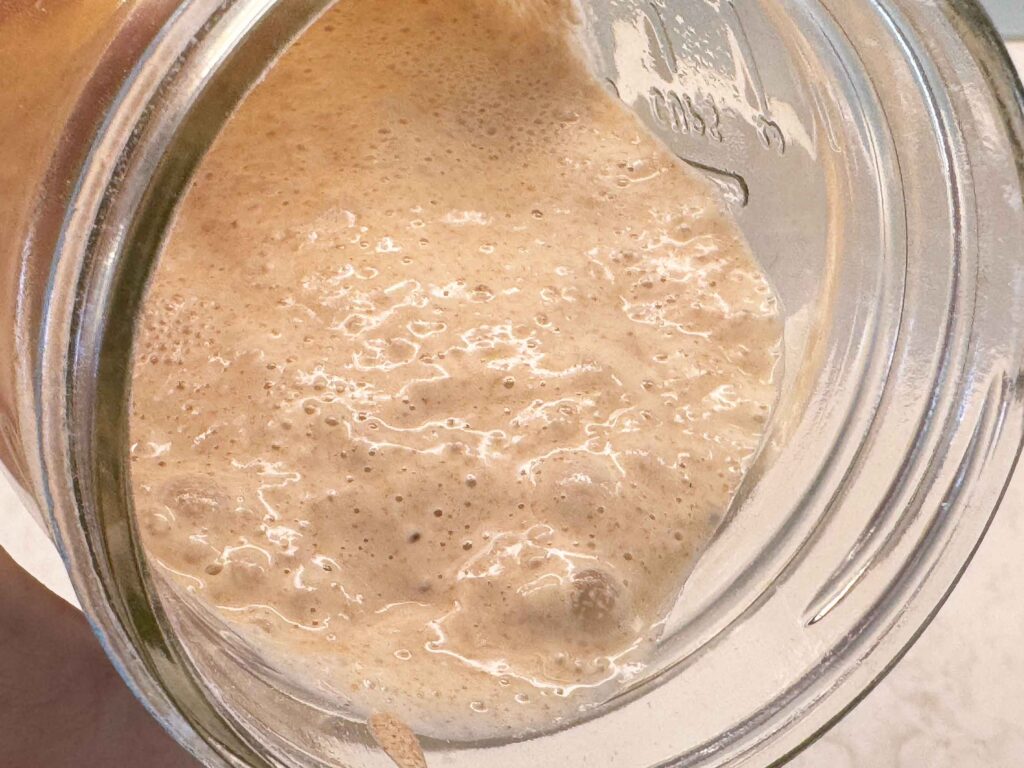
- Feed your starter before you intend to bake by giving it an equal amount of bottled water and flour in a 1:1:1 ratio and use it soon after it doubles. You want to use it when it is bubbly and airy, and can pass a float test (a small spoonful floats in water).

- Mix starter, flour, water, and salt until all combined, cover with a damp towel, and rest for 30 minutes for the flour to absorb the moisture.
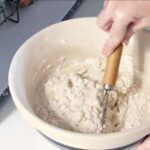
- Stretch the dough upward from the bowl and fold the dough in toward the center, then rotate the bowl 90 degrees, and repeat. Do this a total of four times. Rest for 30 minutes.
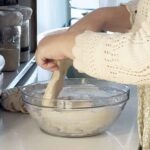
- Repeat the stretch and fold sets 2-3 more times, with 30 minutes in between.
- Cover the dough with a damp cloth or cover and allow it to rest at room temperature until puffy, which can take from 3-5 hours depending upon your room's temperature. If your room is too cool, it will take longer.
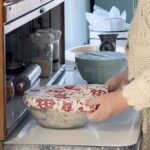
- Gently turn the dough onto a lightly floured surface and shape the dough by rolling it toward you, and then folding the edges inward and tightening the outer surface so it holds its shape. This creates tension on the surface, which helps the loaf rise upward in the oven. Place the shaped dough seam-side up into a floured bowl lined with a tea towel, a banneton, or a proofing basket.
- Cover the bread bowl/banneton/basket with plastic for its final proof. I HIGHLY recommend placing it in the refrigerator overnight for the best results, but you may also be able to leave it out at room temperature for a few hours instead. (Beginners, I recommend the refrigerator proofing step, as I think it is more forgiving.)
- Place your Dutch oven and lid into the oven and pre-heat to 450°F for at least one hour (this is really important for getting your bread to rise properly in the oven, so don't skip it). Keep the dough in the fridge until your Dutch oven is fully preheated.

- Place a piece of parchment paper on your work surface and turn your dough out onto it, seam side down. Dust it with flour (optional) and cut an expansion seam down the middle with a knife or lame. Immediately transfer the bread and parchment paper to the hot Dutch oven (carefully!!) and place the lid back on it and bake for 20 minutes.
- After 20 minutes, remove the lid and bake for another 10-15 minutes until the top is golden brown.
- Cool for at least one hour before slicing, as the bread will continue cooking as it cools and this is important.

Nutrition
Video
Notes
Frequently Asked Questions From Beginners
When you do the float test, do you use cold or warm water?
Use room temperature or slightly warm water, not cold water. The float test is meant to check whether your sourdough starter is active enough to trap gas and help your bread rise. If you drop a small spoonful of starter into very cold water, it can sometimes sink even if the starter is ready, simply because the colder water is denser and can affect the result.

I usually use room temperature water from the tap. Gently drop in a small spoonful of starter – don’t stir it down. If it floats, it usually means the starter is full of air and ready to bake with. That said, the float test is only a guide, not a guarantee. I trust what I see more: if the starter has doubled after feeding, looks bubbly, and has a light, airy texture, it is usually ready whether it floats or not.
Is there any rule about using metal bowls or utensils?
Modern metal bowls and utensils are generally fine for sourdough. A lot of older advice warns against metal because people worried it could react with the acidity of the starter, but with modern stainless steel bowls and spoons, that is usually not a problem at all. The main thing to avoid is reactive metals like aluminum, cast iron, or copper for long-term contact with your starter, since the acid can react with them and affect both flavor and the container itself. Cast-iron Dutch ovens are just fine for baking, however.
For everyday mixing, feeding, and baking of sourdough, glass, ceramic, food-safe plastic, and stainless steel all work well. What matters most is keeping your tools clean and your starter healthy—not whether your spoon is metal.
Why is my dough “soupy” and spreads out when I go to bake it?
A runny or floppy dough usually means the dough has too much hydration for its structure, the gluten is underdeveloped, the flour is too weak, or the dough has been overproofed. Since I follow my recipe closely and use bread flour (which is a stronger flour with better gluten development, and why I recommend it in this recipe for beginners) this usually means I let the dough ferment too long, either on the counter or in the refrigerator.
Can you save overproofed, soupy dough?
Yes, usually, but it depends on how far it has gone. If your dough is very loose, sticky, and spreads like pancake batter, it may be overproofed or simply overhydrated. If the gluten structure has mostly broken down, you usually cannot turn it back into a tall artisan loaf with strong oven spring, but you can still make good bread from it. Here are a few ways to save it:
- Gently reshape it and place it in a loaf pan for support instead of baking it free-form
- Chill it in the refrigerator for a few hours to firm it up and make it easier to handle
- Turn it into focaccia, where a softer dough actually works beautifully
I encounter this when I leave extra dough in the refrigerator for a few days longer than planned. It may not rise as high, but it still bakes into perfectly good bread with great flavor. A loaf pan is usually the easiest rescue.
Why is the bottom too brown and hard to cut?
The most common reason is that the bottom of your Dutch oven got too hot during preheating. Cast iron holds heat extremely well, and when the dough sits directly on that very hot surface, the bottom can brown faster than the rest of the loaf. This can also happen if your oven runs hot, the rack is placed too low, or the bread bakes too long uncovered. A few easy fixes help:
- Move your oven rack to the center instead of the lower third
- Place a baking sheet on the rack underneath your Dutch oven to diffuse some of the direct heat
- Reduce the oven temperature by 15–25 degrees if your oven tends to run hot
- Try a dozen rice kernels under your parchment paper
- Shorten the uncovered baking time slightly if the crust is already well browned
I’ve found that putting a simple sheet pan under the Dutch oven is often the easiest fix. It helps protect the bottom without changing the rest of the recipe.
Why is my sourdough bread dense?
Dense sourdough bread usually means the dough didn’t ferment long enough or the starter wasn’t active enough. The couple of times mine came out dense, it was almost always the starter, I’d gotten impatient and used it before it had really doubled and gone bubbly. Feeding it and actually waiting until it was lively and airy fixed it every time. Make sure your starter doubles in size after feeding and shows plenty of bubbles before using it. Also allow enough time during bulk fermentation for the dough to become puffy and airy before shaping.
Why didn’t my bread rise in the oven?
If your loaf spreads instead of rising upward, a few things could be happening. The starter may have been weak, the dough may not have developed enough strength during fermentation, or the dough may have fermented too long and lost structure. Good shaping and a hot oven also help improve oven spring. For example, I left some shaped dough in the refrigerator for seven days (because I had to go out of town) and when I baked it, it was a bit flatter because it fermented too long.
How do I control how sour my bread is?
The sour flavor comes from the natural acids created during fermentation, so the longer the dough ferments, the more sour it gets. If you want a stronger tang, give it a longer, cooler fermentation, or let it proof in the refrigerator overnight (or even a day or two longer). My seven-day-old dough was noticeably more sour than a fresh batch, just from the extra time. If you’d rather have a milder loaf, shorten the fermentation a bit or bake the same day instead of doing the overnight fridge proof. One thing to watch, though: those times I skipped the refrigerator, the bread came out milder but also softer and less structured, and we actually prefer to really taste the sourdough and have a sturdier loaf. So don’t underproof it just to dodge the tang… give it enough time in the bulk rise either way.
Do I have to bake sourdough every day to keep a starter?
No. If you bake frequently, you can keep your starter on the counter and feed it daily. If you bake only occasionally, you can store it in the refrigerator and feed it about once a week. Simply remove it from the refrigerator and feed it once or twice before baking to restore activity. I keep mine in the refrigerator, then take it out to feed it, using it to mix and shape three dough loaves, which I then keep in the refrigerator and bake throughout the week as needed.
How do I know when my dough is ready to bake?
Well-fermented dough usually looks slightly puffy and airy. If you gently press the dough with a finger, the indentation should slowly spring back rather than collapsing immediately. With experience, these visual cues become easier to recognize. It took me a few loaves before I got the hang of this!
How can I get a more open crumb?
A more open crumb usually comes from a combination of stronger gluten development, proper fermentation, and gentle handling. The three things that have made the biggest difference in my own loaves:
- Make sure your starter is very active and bubbly before you mix the dough
- Allow enough bulk fermentation for a good rise, but don’t let it overproof
- Handle the dough gently when shaping so you don’t press out all the trapped air
Higher hydration dough can also create a more open crumb, but it’s harder to handle and easier to overproof, so I usually tell beginners to focus on fermentation and dough strength first. Sometimes people chase giant holes, but for everyday bread, I care more about a loaf that rises well, slices nicely, and still has a soft, airy interior.
What should I do with extra sourdough starter?
Extra starter can be used in many recipes such as sourdough cinnamon rolls, pancakes, waffles, chocolate chip cookies, crackers, soft buttery biscuits, and pizza dough. Many bakers, including yours truly, keep a small container of starter discard in the refrigerator and use it in these recipes throughout the week.
Will my first loaf be perfect?
Probably not, and that’s completely normal. While my first loaf was really good, I’m sure an experienced baker could have found issues … but I did not care. I was over the moon excited about my first loaf!
Sourdough baking improves quickly with practice. Each loaf helps you learn more about how your starter behaves, how your kitchen temperature affects fermentation, and how the dough should look and feel at each stage.
With a little patience, most beginners find that sourdough becomes easier and more enjoyable with every loaf they bake. I certainly have! Here is my 8th loaf, and the best one yet.
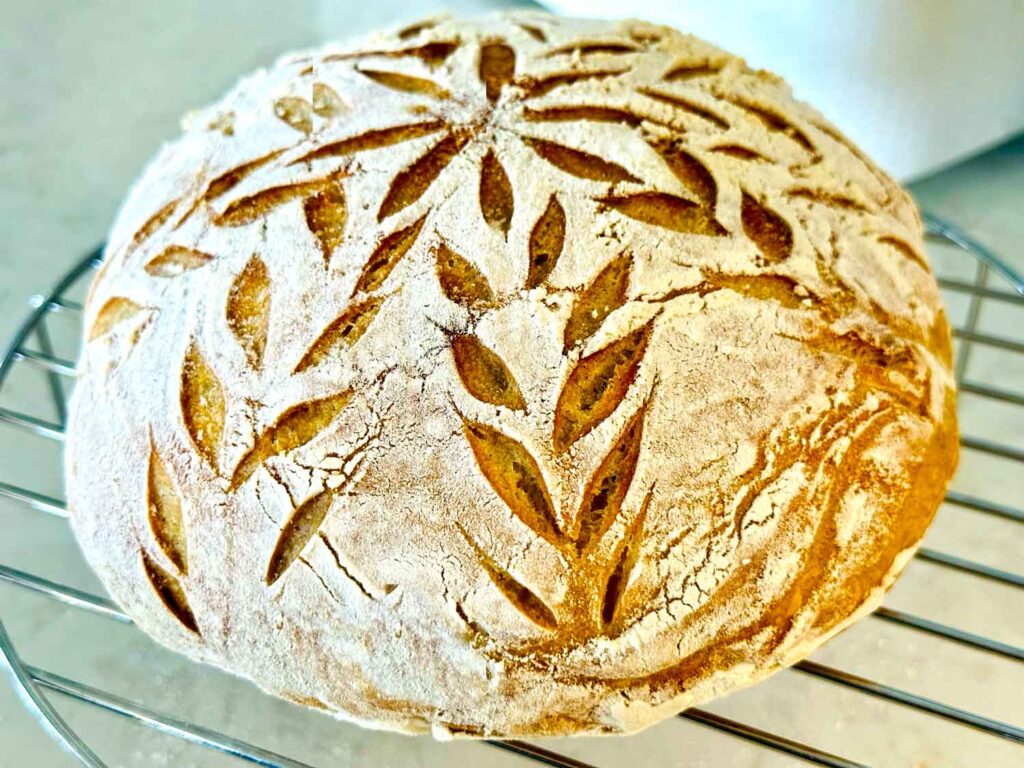
I was so excited about this one that I sent a photo of it to my mom, my aunt, and my sister!
And here is my 12th loaf … this one I am actually taking to family gathering so they can taste it themselves.

September 2026 Update: I’ve now lost count of how many loaves I’ve made.
But I recently entered my sourdough bread into my local fair (yes, this exact recipe)… and it placed!
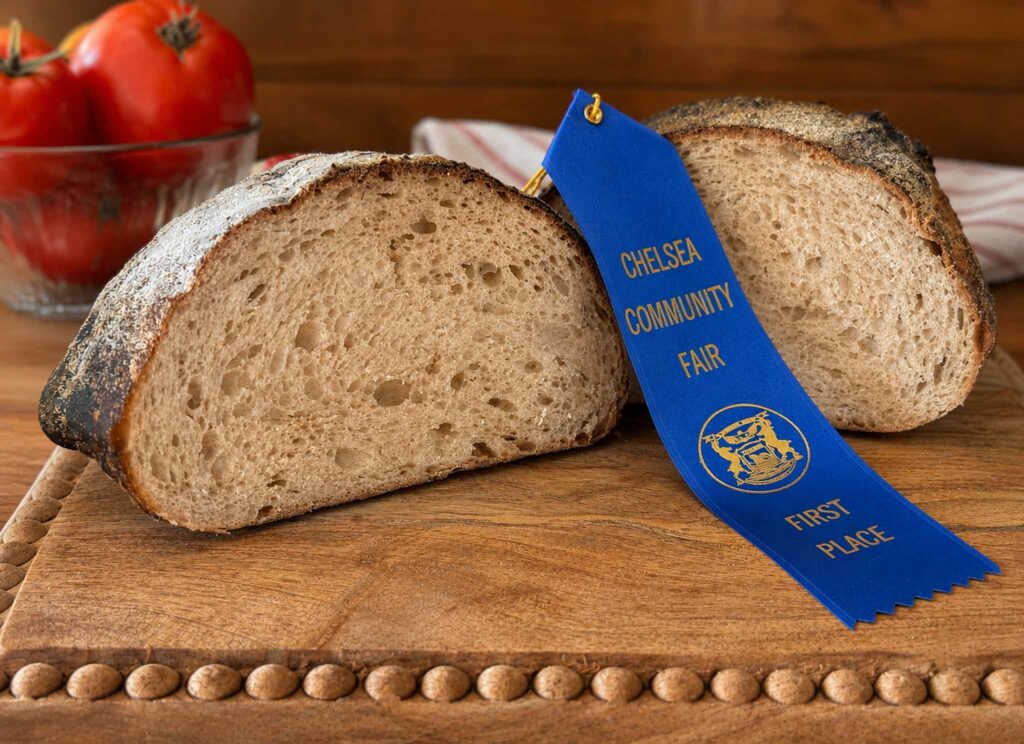
You can do this, too!
Love,
Jennifer
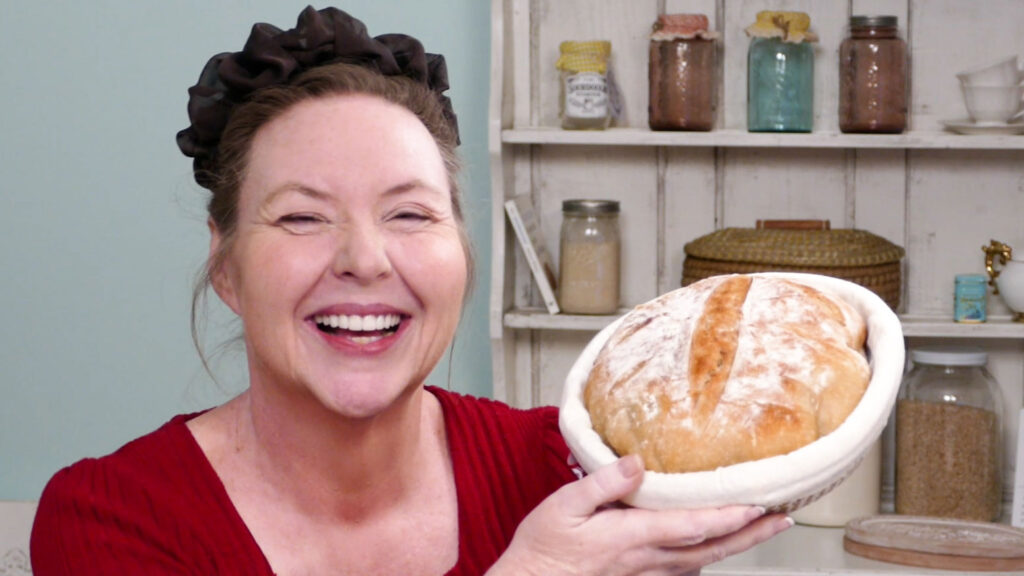
Tried this recipe?
Tap the stars in the recipe card to leave a quick rating. Your rating helps other home cooks know this recipe works in a real kitchen, not just mine.
And as a thank-you for your feedback, you will receive a free printable copy of my Maker Home Companion Cookbook, featuring my most popular recipes, each one formatted on a SINGLE, easy-to-use page, a perfect kitchen companion for easy meal prep. Click here to learn more about this cookbook and how you can get your copy!



Meet Jennifer
Jennifer cooks and experiments in the kitchen at Maker Farm, where she focuses on simple pantry cooking, homemade staples, and practical recipes that make everyday meals easier. Over the years she has tested many ways to make cooking simpler and more dependable, and shares the methods that work best in her own kitchen, occasionally showing them on her Heart to Home at Maker Farm vlog.
I Love this bread. I just made my 6th loaf. Best tasting and looks the best of my previous loaves. You make it so easy to make by following your directions. Always made sour dough with yeast. Much better with packet from kitchen store. Tastes great.
This is the easiest sourdough bread recipe I have ever used. Thank you. I not only enjoy each process of creating a new loaf of bread, but the smell and taste is incredible.
I really appreciate the way you encourage all of us to try new things. It’s not about being perfect, but how much fun we have doing them. Thank you! Love learning from you and trying your other recipes.
I make this on repeat, best recipe I’ve found and really simple instuctions for a beginner getting into the hobby of sour dough baking 🙂
I have made this recipe over and over. I am finally getting a good spring. I have started with inclusions this week and that had to be the best loaf I have made so far.
That’s wonderful progress! Thank you for the update. 🙂
Thank you for the simple, clear instructions. I made my first loaf today and it tasted good.
I used this recipe and my husband isn’t a sourdough fan. LOL I told him the rolls he takes two of on cruises are sourdough. He ate a slice yesterday and said it was good.
Happy to hear he liked it. 🙂
Thank you so much for the detailed instructions, it is so helpful for beginners just like myself! Can you tell me if my 3 quart Dutch oven is too small, or my 5 quart is too large for this sourdough bread recipe? Of course, I do not have a 3.5 quart, lol!
A 3-quart Dutch oven is usually a little too small for a full sourdough boule, while a 5-quart Dutch oven is completely fine and actually what many people use.
For this recipe, I’d choose the 5-quart over the 3-quart every time.
A 3-quart pot can work for a smaller loaf, but with this recipe, the dough may not have enough room to expand properly. It can crowd the sides, limit oven spring, and sometimes create a taller but denser loaf.
A 5-quart Dutch oven gives the bread enough space to rise while still trapping the steam that helps create that crisp crust. It is not too large at all.