

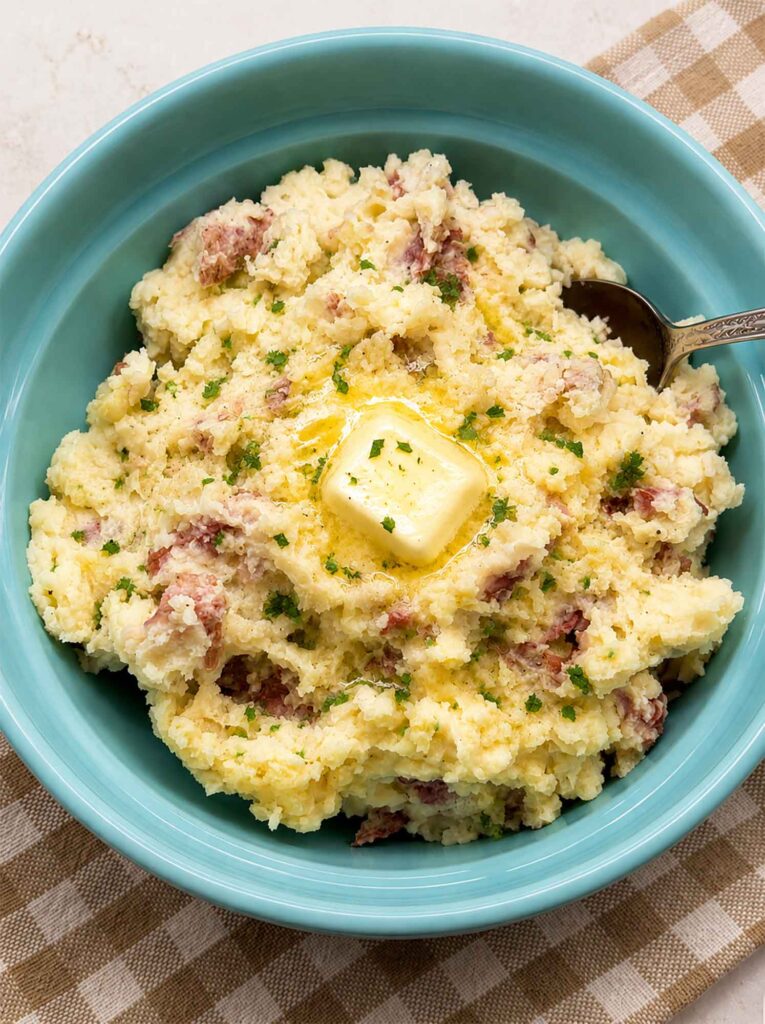
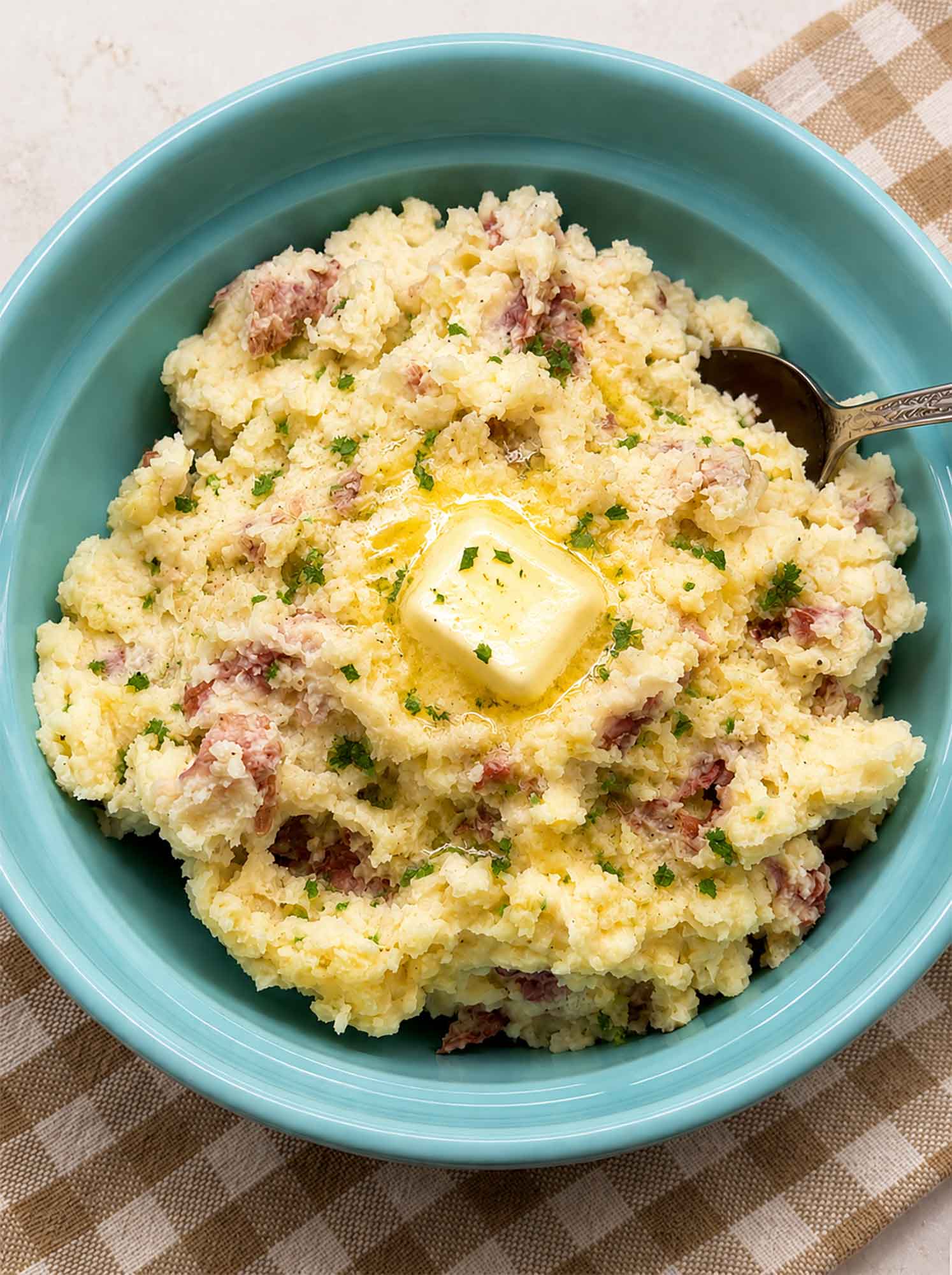
These mashed potatoes are creamy, buttery, and just a little tangy from sour cream and buttermilk. Red potatoes with the skin-on make a naturally rustic mash with tender bits of skin throughout, and the warm butter, milk, and cream help keep them smooth and flavorful. They’re easy enough for a weeknight dinner but good enough for a holiday table, especially with gravy, roasted meat, or a cozy comfort food main dish.
MASHED POTATOES At A Glance
Prep
10 min
COOK
20 min
Total
30 min
Serves
6
Pan
Large pot or Dutch oven
Main Ingredients: Red skin potatoes, butter, milk, and optional half-and-half, cream and/or sour cream
Tastes like: Creamy with a wonderful texture and a stick-to-your-ribs richness that feels very homestyle
My guy Greg adores mashed potatoes. So we’ve made a LOT of mashed potatoes over the years, everything from the easy instant potatoes from a packet to the traditional sort. But THIS mashed potato recipe is my all-time favorite, because it’s so easy to make. This is the recipe I pull out to pair with dishes like oven baked bbq ribs, beef tips and gravy, turkey meatballs, or meatloaf. It’s a winner, and I think you’ll love it, too!
WHY I LOVE THESE

I am not a big fan of peeling potatoes because of how they slip out of my hands so easily, and no peeling is needed with this recipe. Also, my mother instilled in me the idea that potato skins should be eaten, not discarded, and this version keeps all of that nutrition intact. Red potato skins are packed with fiber, concentrated antioxidants, potassium, and vitamin C.

Want to Save This Recipe?
Enter your email below and we’ll send it straight to your inbox! Plus you’ll get new recipes each week!
What You Need
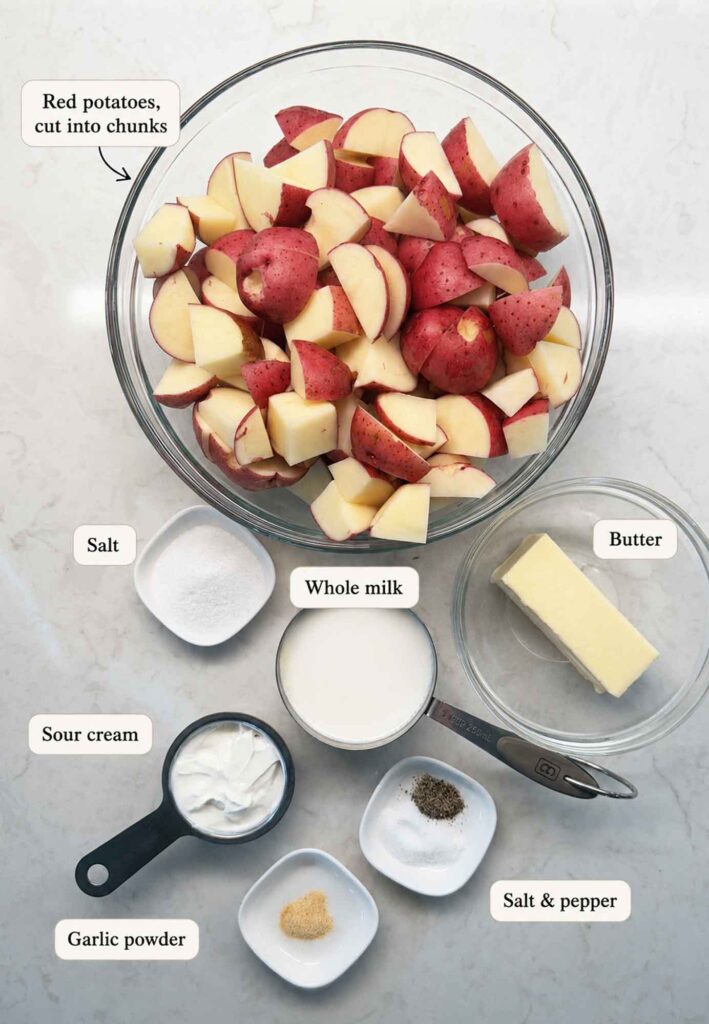
Red potatoes: Red potatoes are ideal for this recipe because their skins are thin and tender, so you can leave them on without the mashed potatoes feeling tough or chewy.
Out of Red Potatoes?

If you do not have red potatoes, Yukon Gold potatoes are the best substitute. Their skins are also thin enough to leave on, and they make a creamy, buttery mash. Russet potatoes can be used, but I would peel them first because the skins are thicker and can be less pleasant in mashed potatoes.
Butter: Butter adds richness and classic mashed potato flavor. I use 6 tablespoons, but you can use a little less if you prefer, or add extra on top before serving.
Whole milk or cream: Milk helps loosen the potatoes and make them creamy. You can use whole milk, half-and-half, or even a little heavy cream in place of some of the milk. Half-and-half or cream will make the potatoes richer, while regular milk keeps them lighter.
Sour cream: Sour cream gives these mashed potatoes a creamy texture and a little tang. It also makes them taste more homestyle and flavorful without needing a lot of extra ingredients.
No Sour Cream?

If you do not have sour cream, plain Greek yogurt can work as a substitute, though it will taste a little tangier. Cream cheese can also be used for a thicker, richer mashed potato, but soften it first so it blends in smoothly.
Salt and pepper: Potatoes need plenty of seasoning, so salt the cooking water and then taste again after mashing. Black pepper adds a simple savory finish.
For Extra Flavor

You can stir in roasted garlic, fresh chives, parsley, shredded cheddar cheese, or a little extra butter. Keep add-ins simple so the potatoes still taste like classic, cozy mashed potatoes.
When You Should Not Eat the Potato Skins
Potato skins are perfectly fine to eat when the potatoes are fresh, firm, and well scrubbed, but there are a few times when it is better to peel them or use a different potato.
Do not eat potato skins that look green, even if the green color is faint or just under the skin. Green potatoes have been exposed to light too long, and while the green color itself comes from harmless chlorophyll, it can also be a sign that natural compounds called solanine and chaconine have increased in that part of the potato. These can taste bitter and may cause stomach upset if eaten in larger amounts, and cooking does not reliably make green parts safe.
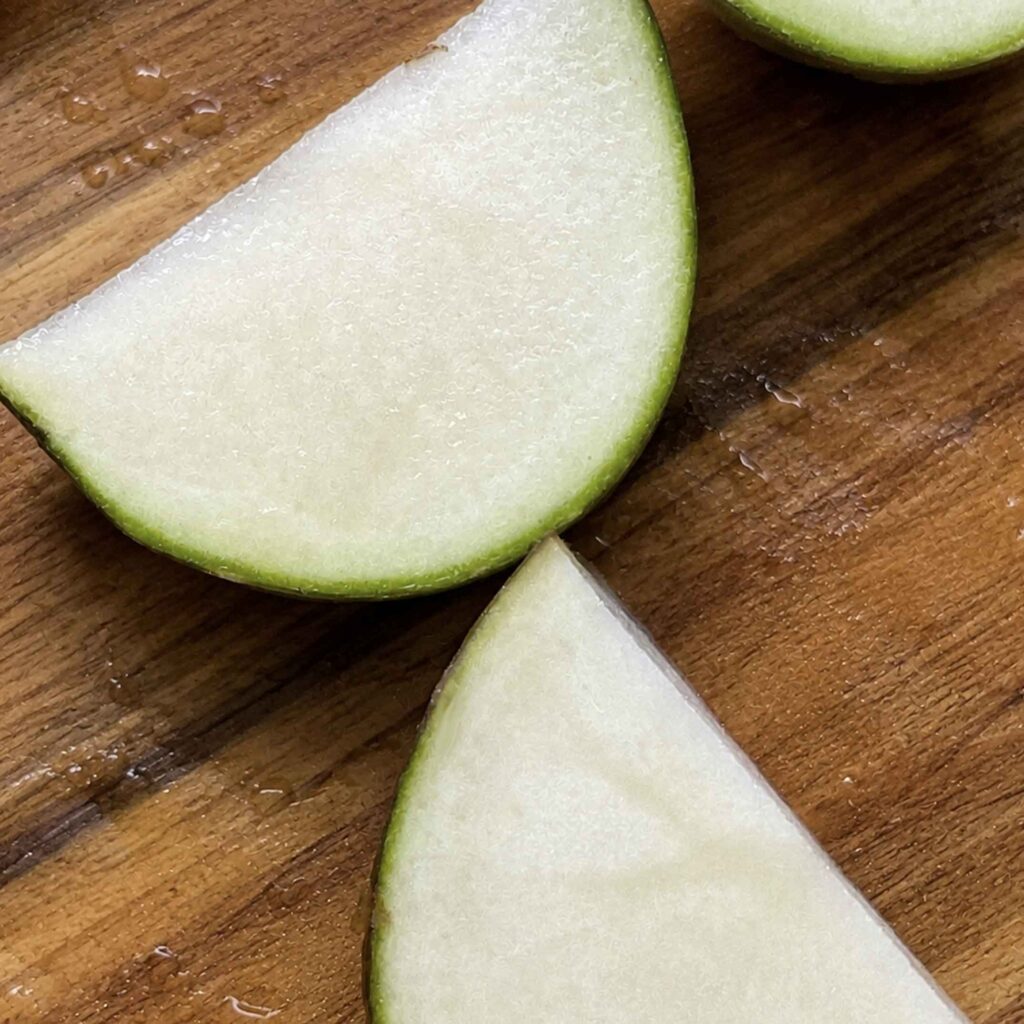
You should also avoid eating the skins if the potatoes are sprouted, soft, wrinkled, moldy, slimy, or smell bad. Small eyes or tiny sprouts can be cut away if the potato is still firm, but if a potato is very green, heavily sprouted, or shriveled, I would throw it out.
How to Prepare Your Potatoes
Start by giving the red potatoes a good scrub under cool running water. Since this recipe leaves the skins on, you want to remove any dirt from the outside before cutting. A vegetable brush works well, but you can also rub them firmly with your hands or a clean kitchen towel.
As you wash the potatoes, check them over carefully. Cut away any eyes, bruised spots, dark spots, or rough patches. If you see any green areas on the skin or just under the skin, trim those away generously.
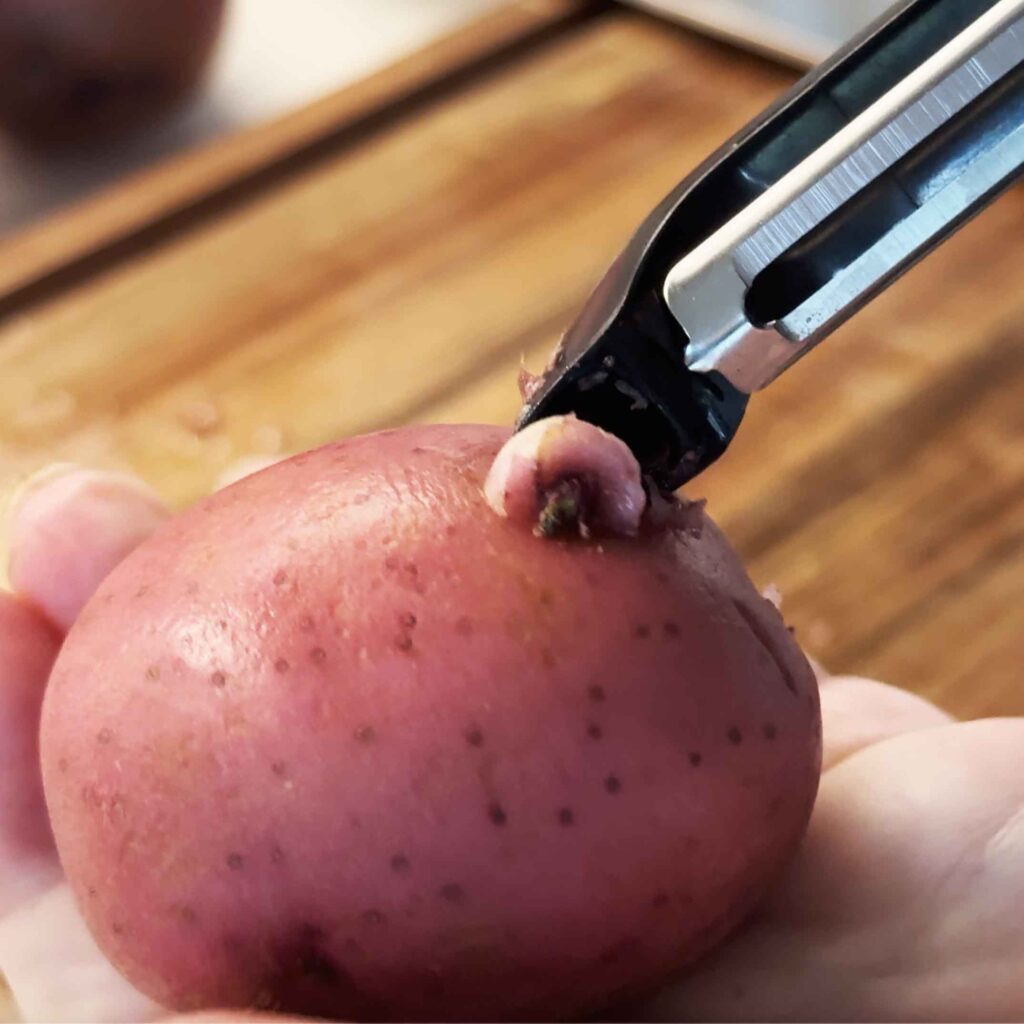
Easy Way to remove eyes

Potato peelers have a special tip with a little pointed scoop. Use it to dig under the eye and twist it out, easy peasy. If you don’t have a potato peeler with the scooped tip, carefully use a paring knife or even the edge of small spoon.
Once the potatoes are clean, cut them into evenly sized chunks, about 1 to 1 1/2 inches. The pieces do not need to be perfect, but keeping them close in size helps them cook at the same rate. If some pieces are much larger than others, the smaller ones may get waterlogged before the larger ones are tender.
How to Make Skin-On Mashed Potatoes
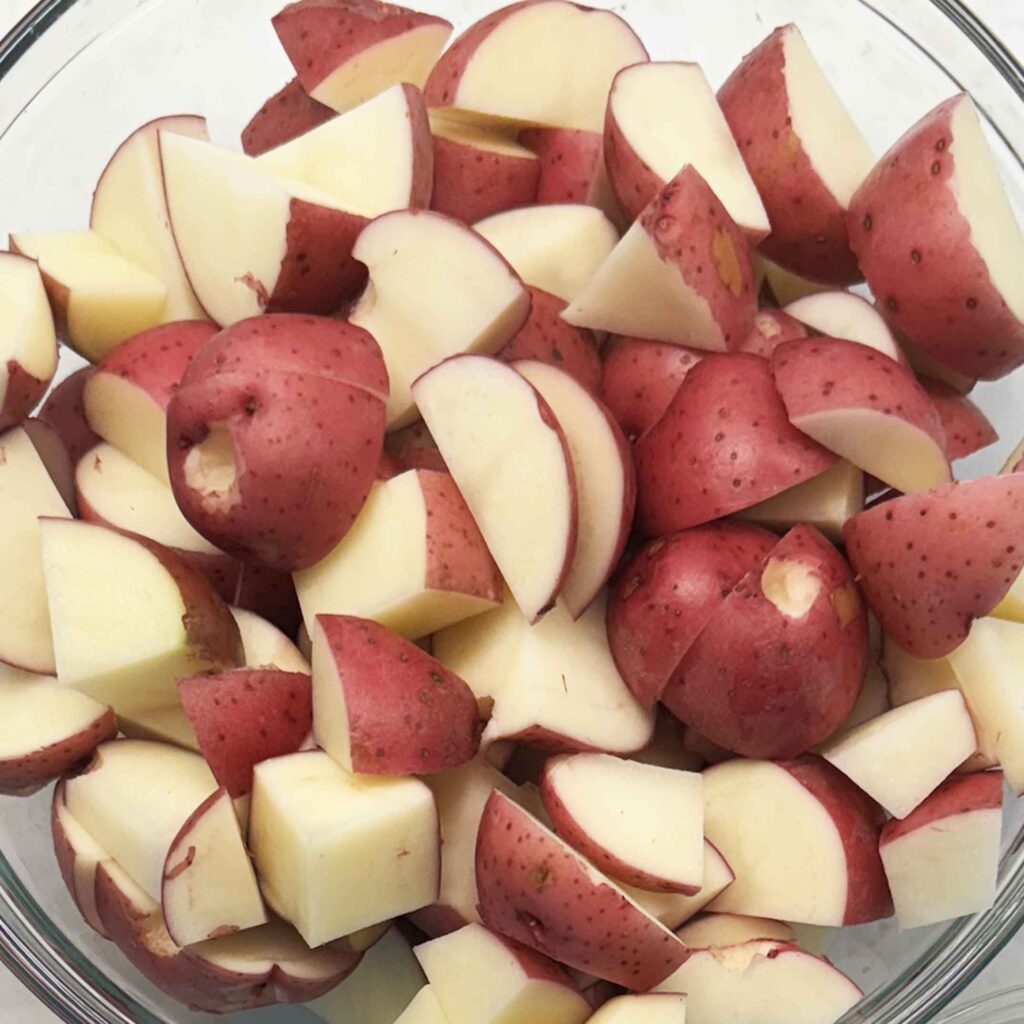
Step 1: Cut the potatoes into chunks
Clean, scrub, and cut the potatoes into similar-sized pieces so they cook at the same rate.
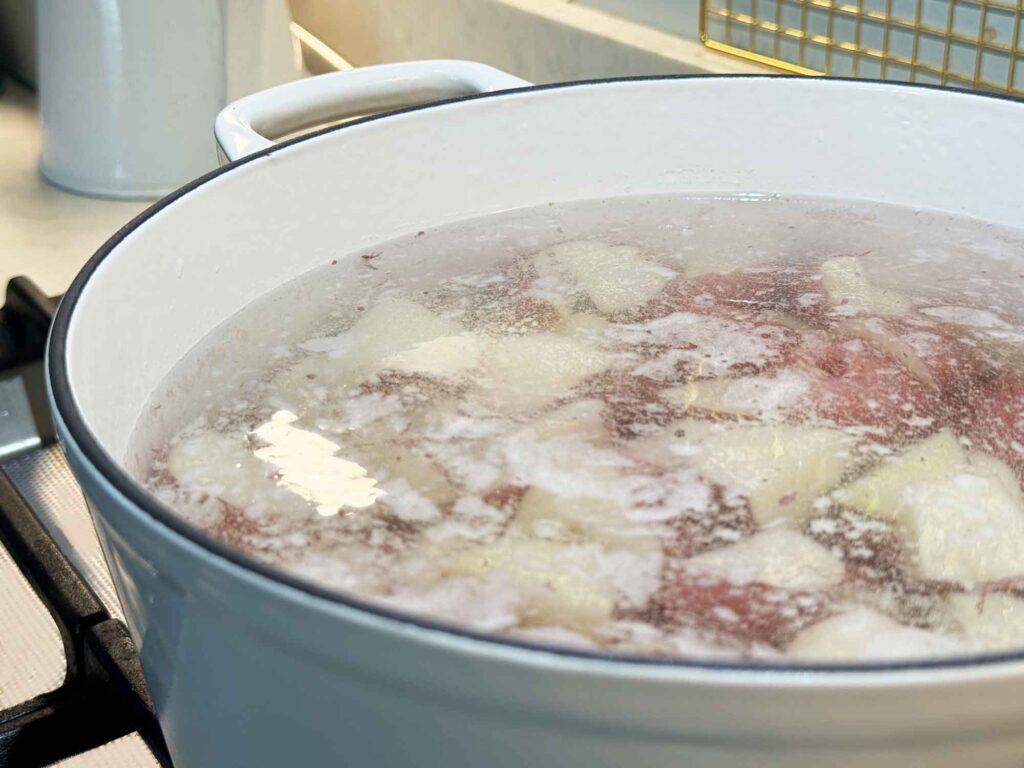
Step 2. Start them in cold, salted water
Add the cut potatoes to the pot, then cover them with cold water. Starting with cold water helps the potatoes cook more evenly, instead of getting soft on the outside while staying firm in the middle. Salt the water before boiling so the potatoes begin absorbing flavor while they cook.
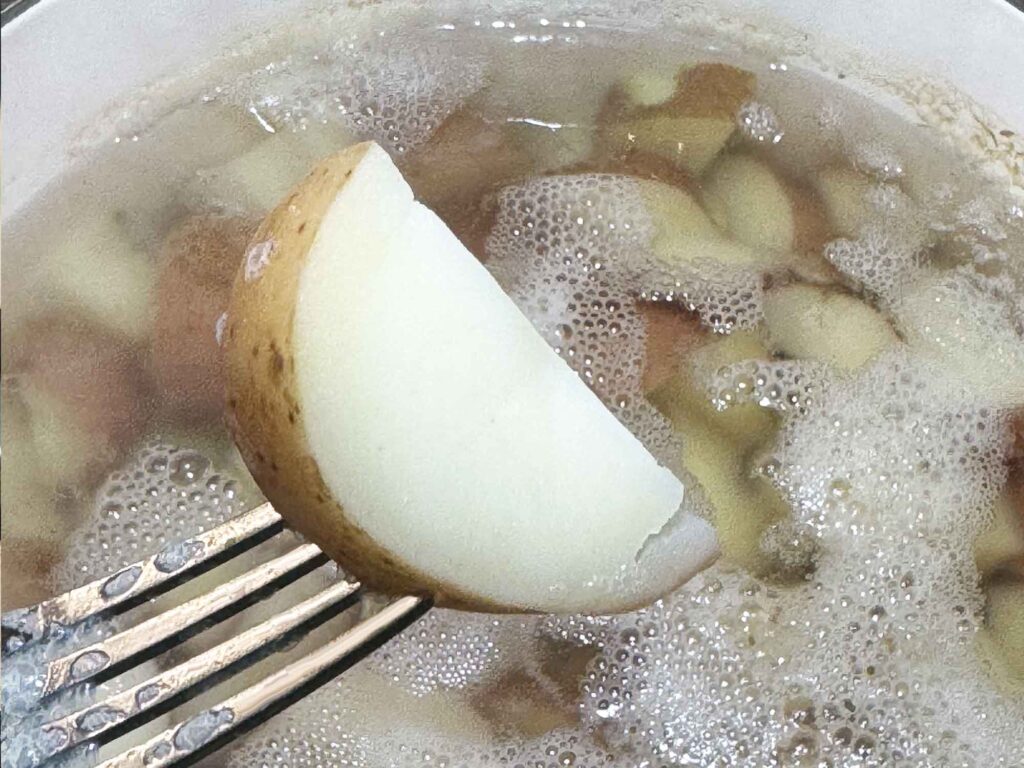
Step 3. Cook until the potatoes are truly tender
Do not drain the potatoes too early. They should be tender enough that a fork slides through the center without resistance. If the potatoes are undercooked, they will be lumpy in a hard, unpleasant way instead of rustic and creamy.
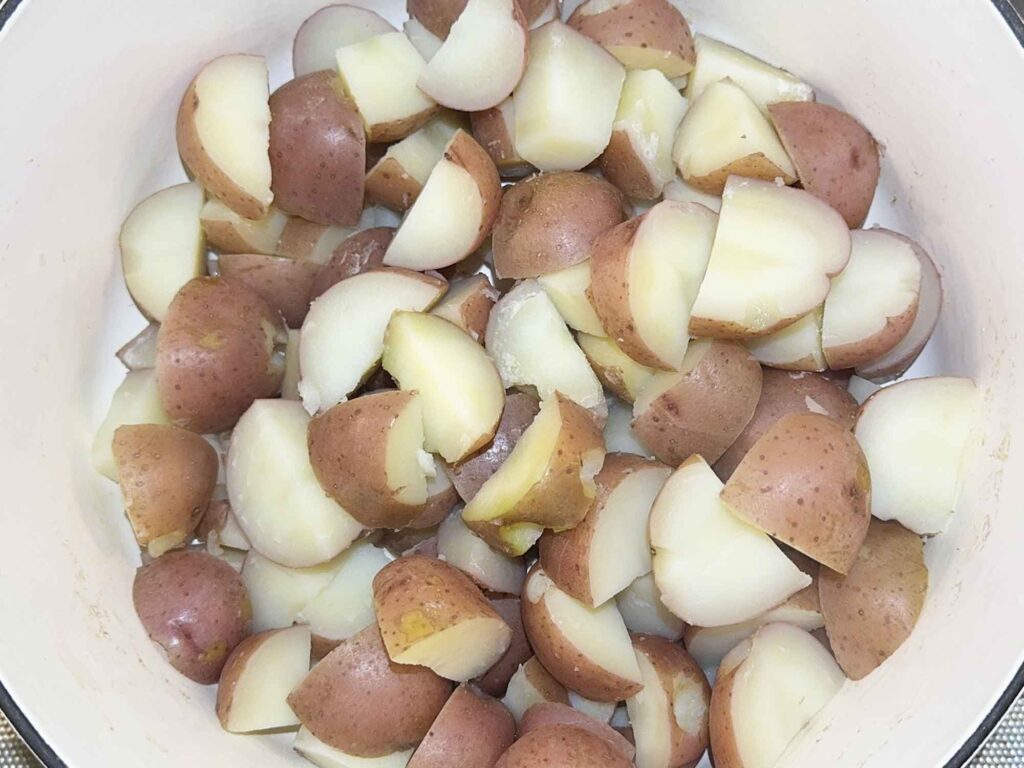
Step 4. Drain well and let the steam escape
After draining, return the potatoes to the hot pot for a minute or two. This helps extra moisture evaporate so the mashed potatoes do not turn watery. This step is especially helpful with red potatoes because they have a naturally creamier, denser texture.
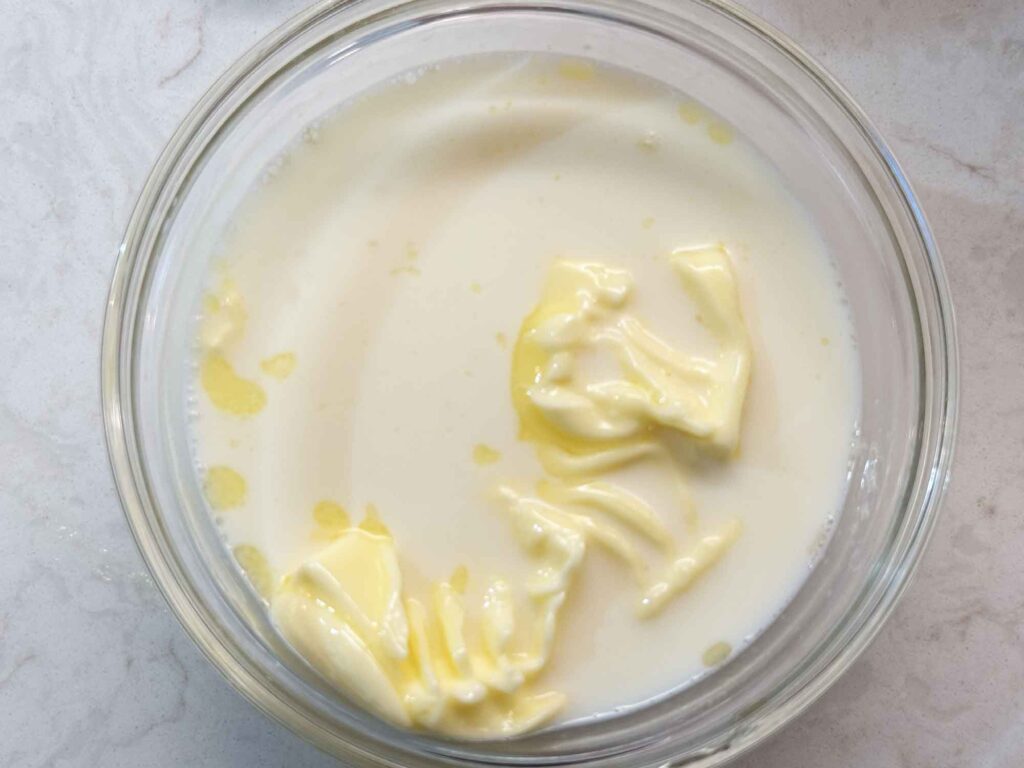
Step 5. Warm the butter and milk first
Warm butter and milk blend into the potatoes more smoothly than cold dairy. This also keeps the potatoes hot and helps prevent overmixing. Add the warm mixture gradually, because potatoes can vary in how much liquid they need.
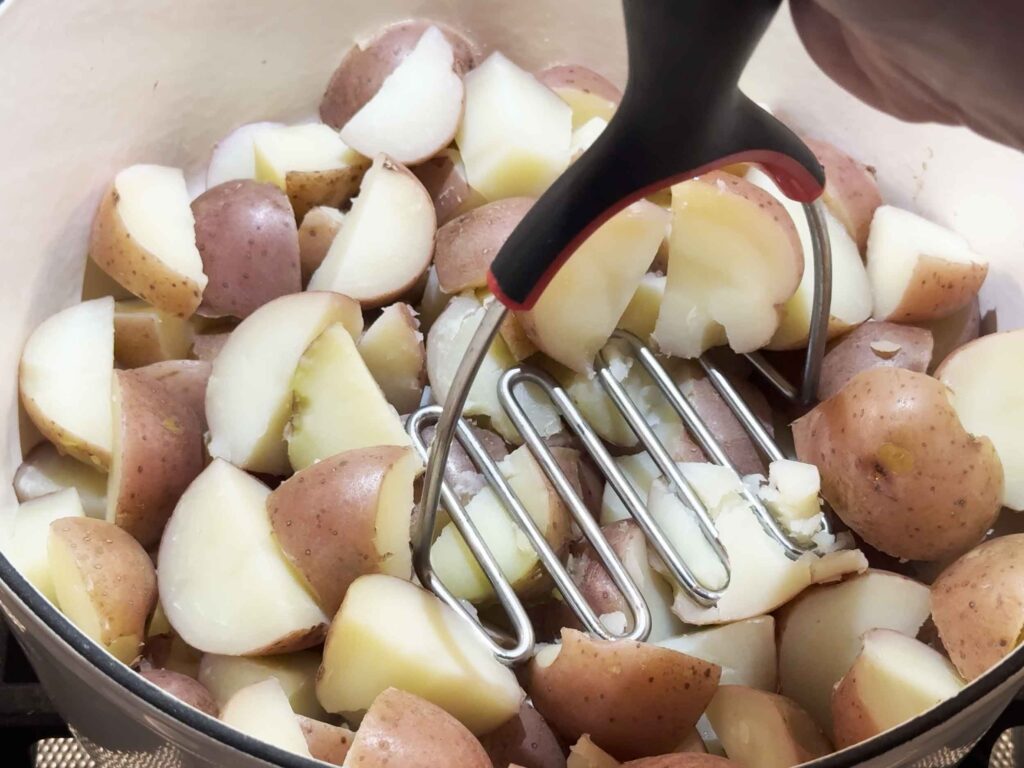
Step 6. Mash by hand for the best texture
A hand masher is the best tool for skin-on mashed potatoes. It breaks down the potatoes while still leaving a little rustic texture from the skins. Avoid using a blender or food processor, which can overwork the potatoes and make them gummy.
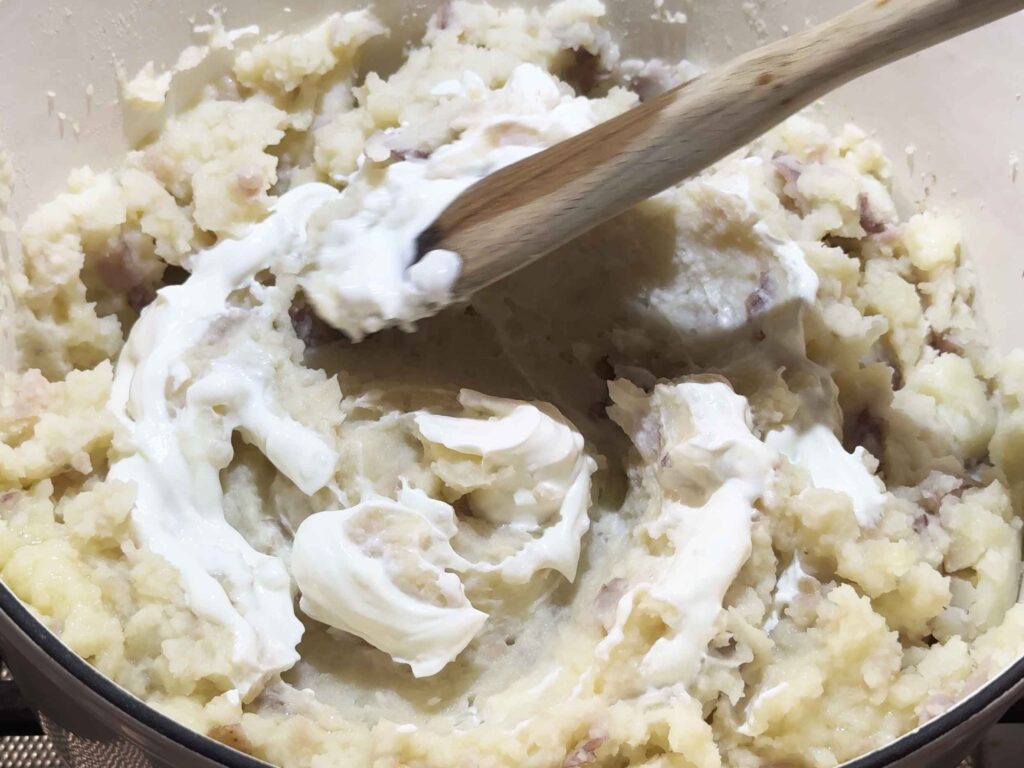
Step 7. Add sour cream at the end
Once the potatoes are mashed and creamy, stir in the sour cream for richness.
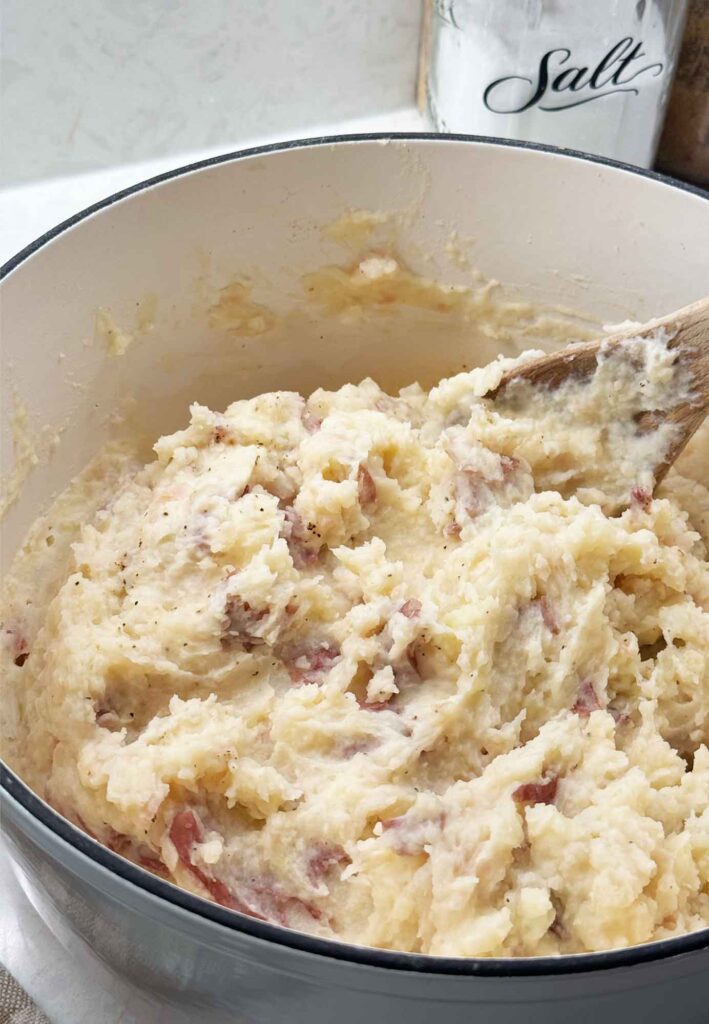
Step 8. Taste before serving
Mashed potatoes almost always need a final taste and adjustment. Add more salt, pepper, butter, or a splash of milk until they taste creamy, seasoned, and balanced. Serve them warm, with extra butter or gravy if you like.
Red Skin Mashed Potatoes Recipe
Equipment
- 1 potato masher
Ingredients
- 3 pounds red potatoes scrubbed well and eyes removed
- 1 tablespoon salt for the cooking water
- 6 tablespoons butter
- 3/4 cup whole milk or half and half or a mix of milk and cream
- 1/4 cup sour cream optional but excellent
- 1 to 1 1/2 teaspoons kosher salt to taste
- 1/2 teaspoon black pepper
- 1/4 teaspoon garlic powder or 2–3 cloves roasted garlic
Instructions
- Scrub the red potatoes well and cut out any eyes, bruises, rough spots, or green areas. Cut the potatoes into evenly sized 1 to 1 1/2-inch chunks. Leave the skins on for a rustic texture.
- Place the potatoes in a 5-quart Dutch oven or large pot. Cover them with cold water by about 1 inch, then add 1 tablespoon salt to the water.
- Bring the potatoes to a boil over medium-high heat. Reduce the heat and simmer for 15 to 20 minutes, or until the potatoes are very tender and a fork slides through easily.
- Drain the potatoes well, then return them to the hot pot. Set the pot over low heat for 1 to 2 minutes, gently shaking or stirring the potatoes, to help steam off extra moisture.
- While the potatoes are drying, warm the butter and milk together in a small saucepan or microwave-safe bowl until the butter is melted. Do not boil.
- Mash the potatoes by hand with a potato masher. Pour in the warm butter and milk mixture a little at a time, mashing gently until the potatoes are creamy but still rustic.
- Stir in the sour cream.
- Season with kosher salt and black pepper. Taste and adjust as needed. Serve warm with extra butter, gravy, or fresh herbs if desired.
Nutrition
Storage and Reheating
These red skin mashed potatoes store and reheat well, especially if you add a little extra milk or butter to bring back their creamy texture.
How to Store Mashed Potatoes
Let the mashed potatoes cool, then transfer them to an airtight container. Store them in the refrigerator for up to 4 days. Because these mashed potatoes contain milk, butter, and sour cream, do not leave them sitting out at room temperature for more than 2 hours.
How to Reheat Mashed Potatoes
Mashed potatoes thicken as they chill, so they usually need a splash of milk when reheating. Add the potatoes to a saucepan over low heat with a little milk and a pat of butter. Stir gently until warmed through and creamy again.
You can also reheat them in the microwave. Place the mashed potatoes in a microwave-safe bowl, add a splash of milk, cover loosely, and heat in 30-second intervals, stirring between each one until hot.
Can You Make Them Ahead?
Yes, these mashed potatoes can be made ahead. For the best texture, make them up to 1 day in advance, store them covered in the refrigerator, then reheat gently with extra milk and butter before serving. Taste again after reheating and add more salt or pepper if needed.
Can You Freeze Mashed Potatoes?
You can freeze mashed potatoes, but the texture may change a little after thawing. The dairy and butter in this recipe help them freeze better than plain potatoes. Freeze in an airtight freezer-safe container for up to 2 months. Thaw overnight in the refrigerator, then reheat slowly with a splash of milk and a little butter, stirring until creamy again.
What to Do With Leftover Mashed Potatoes
Leftover mashed potatoes are great with gravy, roast chicken, beef tips, meatloaf, or shepherd’s pie. You can also use them to make potato cakes by mixing cold mashed potatoes with an egg, a little flour, and seasonings, then pan-frying until golden on both sides.
Tried this recipe?
Tap the stars in the recipe card to leave a quick rating. Your rating helps other home cooks know this recipe works in a real kitchen, not just mine.
And as a thank-you for your feedback, you will receive a free printable copy of my Maker Home Companion Cookbook, featuring my most popular recipes, each one formatted on a SINGLE, easy-to-use page, a perfect kitchen companion for easy meal prep. Click here to learn more about this cookbook and how you can get your copy!




Meet Jennifer
Jennifer cooks and experiments in the kitchen at Maker Farm, where she focuses on simple pantry cooking, homemade staples, and practical recipes that make everyday meals easier. Over the years she has tested many ways to make cooking simpler and more dependable, and shares the methods that work best in her own kitchen, occasionally showing them on her Heart to Home at Maker Farm vlog.
All 12 of the recipes emailed sound so good! The tips you added to the blog will be so helpful!! I look forward to trying many of these recipes!
I like adding Ranch Dressing sometimes instead of sour cream. It gives it a tang and is a good change up. Also, believe it or not, Mayo also works as a substitute. Who would of thought. I was surprised at that one myself but sometimes you just have to improvise in the kitchen.
Potatoes are always a great comfort food. This is an amazing recipe. Thanks for sharing it.
These are fabulous potatoes. If you use cream cheese the potatoes remain hot longer. All the ways you make them, plain, sour cream or cream cheese, they are delicious.