

This easy steak marinade mixes up in 5 minutes with soy sauce, Worcestershire sauce, oil, brown sugar, garlic, and a splash of apple cider vinegar for tender, juicy steak with big savory flavor. It works beautifully for grilling, broiling, a cast iron sear, or steak kabobs.
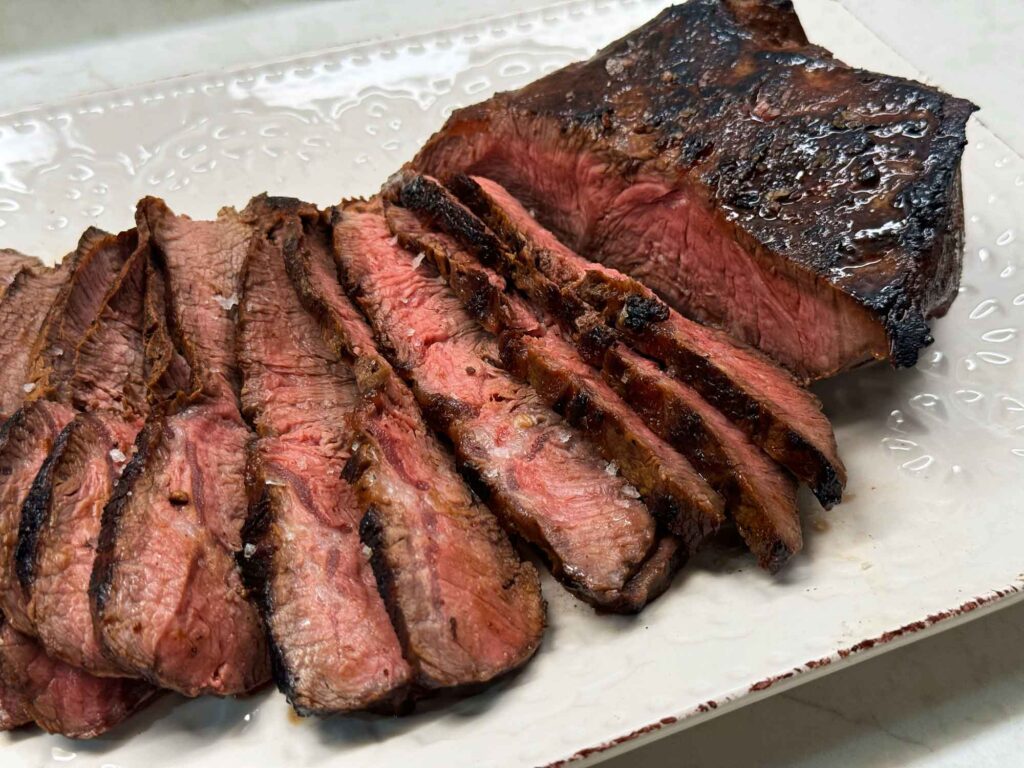
If you have ever stood at the counter wondering how to make a regular weeknight steak taste like something special, this is the recipe for you. It is the kind of thing you can whisk together in the time it takes the skillet to heat up, and it turns budget-friendly cuts into dinner that Greg asks for again. He is a meat-and-potatoes guy through and through, so when he goes back for seconds, I know a recipe is a keeper.
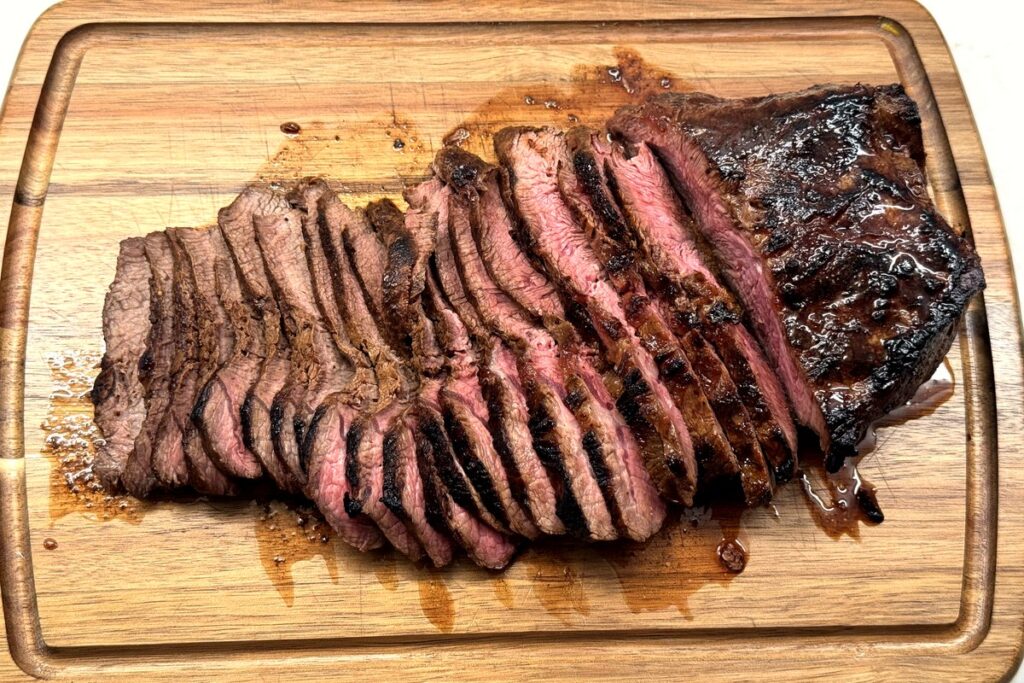
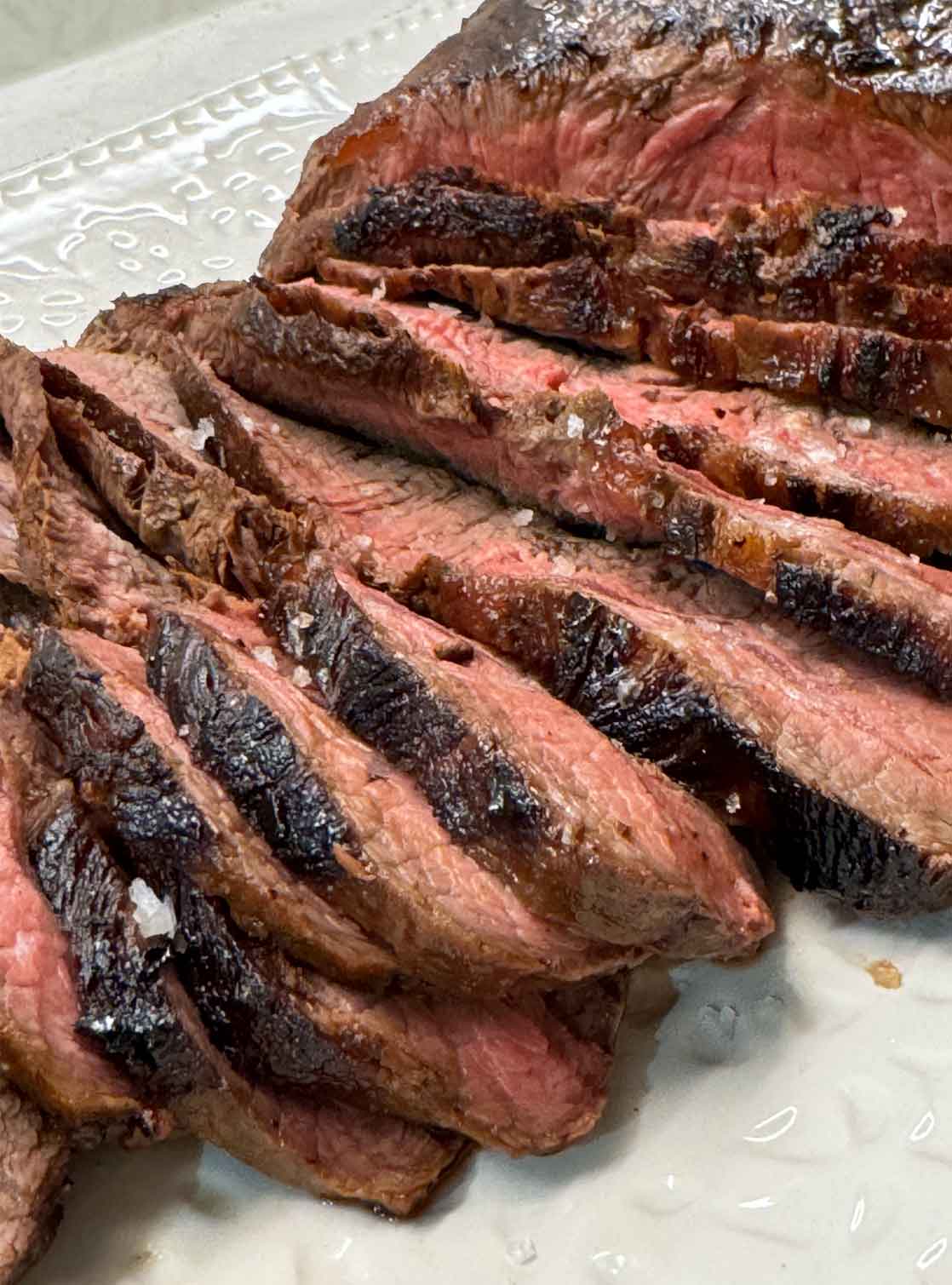
I love to make this easy steak marinade, usually on a busy weeknight when I want big flavor without any fuss. The pictures in this post are a flat iron steak I marinated, then seared in cast iron and finished in the oven… and it was SO GOOD. We’ll walk through the whole thing together: what goes in it, how long to marinate, which cuts to use, and how to cook the steak so it comes out tender every time. I promise it is easier than you think.

Want to Save This Recipe?
Enter your email below and we’ll send it straight to your inbox! Plus you’ll get new recipes each week!
Key Ingredients and Substitutions
Everything in this marinade is a pantry staple, and most of it you probably already have. Here is what each one is doing, plus a few swaps in case you need them:
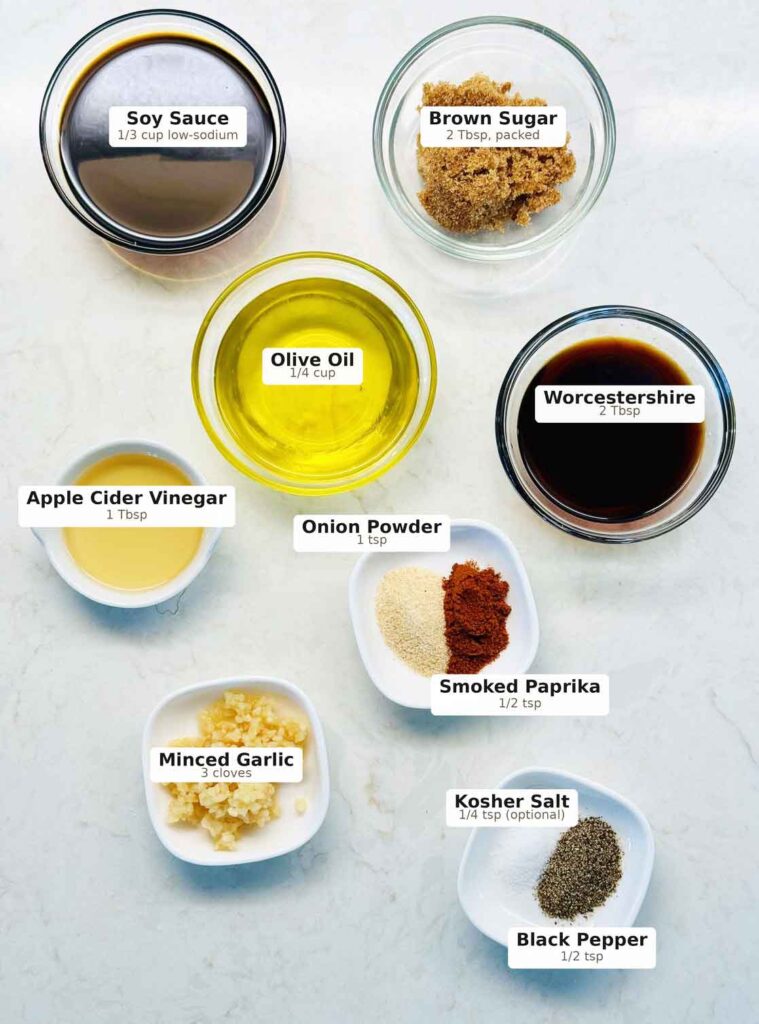
- Soy sauce brings the salty, savory backbone. I use low-sodium so I can control the salt myself. For a gluten-free version, use tamari, and for a soy-free version, coconut aminos works well (it is a little sweeter, so go easy on the brown sugar).
- Oil carries the flavor onto the meat and helps with browning. Olive oil or avocado oil are both great, and any neutral oil like canola works too.
- Worcestershire sauce adds a deep, almost beefy savoriness that makes people think you fussed more than you did.
- Brown sugar balances the salt and helps the steak get those gorgeous caramelized edges when it hits the heat.
- Apple cider vinegar is the acid that gently tenderizes and brightens everything up. You can swap in balsamic vinegar for a richer, slightly sweeter flavor, or lemon juice for something fresher. Just know each one tastes a little different, so use whatever works for you.
- Garlic, onion powder, black pepper, and smoked paprika are the flavor layer. The smoked paprika is my favorite part… it adds a cozy, just-off-the-grill smokiness even when you cook indoors.
BE WARY OF TOO MUCH SALT

One common mistake is reaching for regular soy sauce and then adding the optional salt on top. If you do that, the marinade can turn out too salty, so taste as you go and add salt only if it needs it.
How to Make This Easy Steak Marinade
We’re really doing this in two simple stages: mix the marinade, then let the steak soak up all that flavor before you cook it. Here is the short version, and the full recipe card with exact amounts is further down.
- Whisk the marinade. In a bowl or a large measuring cup, whisk together the soy sauce, oil, Worcestershire, brown sugar, apple cider vinegar, garlic, and spices until the sugar dissolves.
- Add the steak. Put the steak in a zip-top bag or a shallow dish, pour the marinade over it, and turn to coat every side.
- Marinate, then cook. Cover and refrigerate for at least 30 minutes (more on timing below), then pat the steak dry and grill, broil, or sear it.
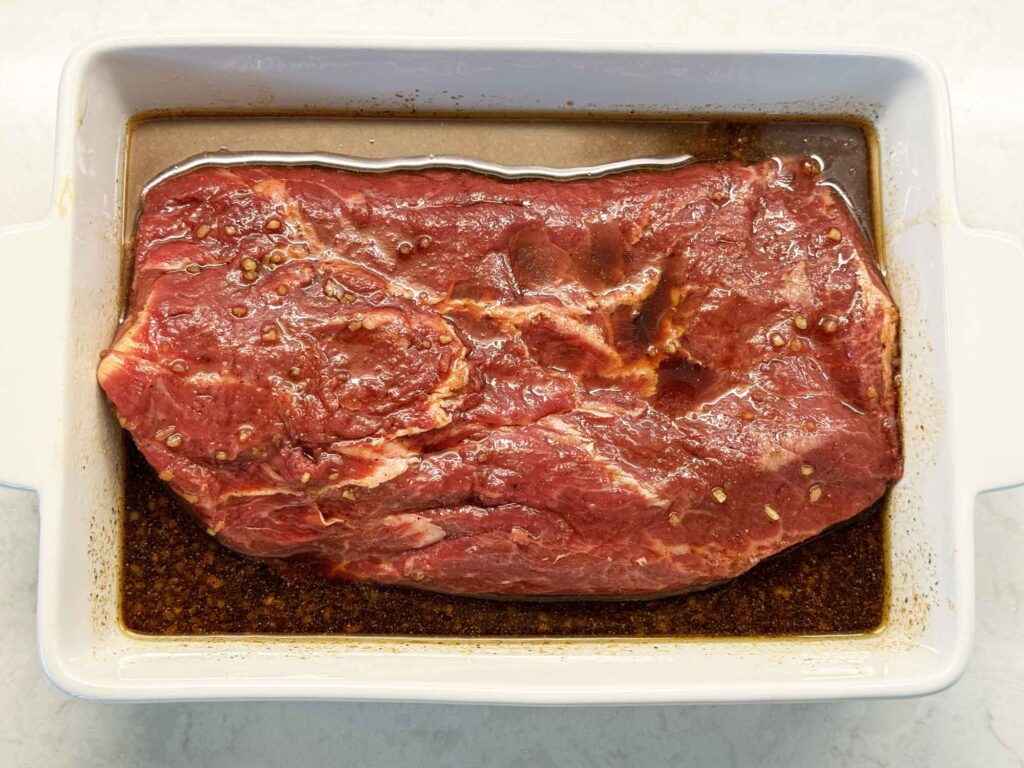
Here is the step a lot of people skip: before cooking, lift the steak out and let the excess marinade drip off, then pat it really dry with paper towels. This helps because a wet steak steams instead of sears, and you lose that beautiful brown crust. Drier meat also means fewer flare-ups on the grill, so do not rush this part (ask me how I know).
How Long to Marinate Steak
This is the question I get most, so let’s make it easy. The right time to marinate steak depends on the cut. Thin, tougher cuts can take a longer soak, while tender cuts need just a short dip. Here is my go-to guide:
| Steak Cut | Minimum Time | Best Time | Maximum Time |
|---|---|---|---|
| Ribeye, New York strip, tenderloin | 30 minutes | 1–2 hours | 4 hours |
| Sirloin, flat iron, tri-tip, steak tips | 30 minutes | 2–6 hours | 12 hours |
| Flank steak, skirt steak, hanger steak, London broil | 1 hour | 4–8 hours | 24 hours |
| Steak kabobs | 30 minutes | 2–4 hours | 8 hours |
Be careful not to marinate steak too long

Because this marinade has vinegar in it, the outside of the meat can start to turn soft or mushy if it sits past the maximum time, and the texture goes a little off. For most everyday steaks, 4 to 8 hours gives you the best balance of flavor and tenderness. If you are short on time, don’t worry… even 30 minutes makes a real difference.
Best Steak Cuts for This Marinade
This marinade really shines on everyday cuts that want a little extra flavor and tenderness. My favorites are sirloin, flank steak, skirt steak, flat iron (that is what I used in the photos), hanger steak, London broil, tri-tip, and steak tips. It is also wonderful threaded onto skewers for steak kabobs.
You can absolutely use it on ribeye or New York strip if you love that marinated flavor, but those cuts are already tender, so they do not need as long a soak. If you are working with a tougher cut, slicing thinly against the grain after cooking does just as much for tenderness as the marinade itself. For a different weeknight steak idea, my pepper steak uses a similar everyday-cut approach, and my skirt steak recipe leans right into that slice-against-the-grain trick.
Cooking Options
Here is something worth knowing: when a marinated steak turns out tough, the marinade usually is not the problem. Overcooking is. So once your steak has soaked, pat it dry and pick whichever method fits your night.
- Grill: Get it hot, sear the steak over high heat, then move it to finish to your target temperature.
- Cast iron skillet: Heat the pan over medium-high to high until it is really hot, add a little oil, and sear both sides. This is how I cook mine most often.
- Broil: Preheat the broiler and cook the steak close to the heat source, watching it carefully.
- Air fryer (no grill, no problem): Preheat to 400°F and cook 8 to 12 minutes depending on thickness, flipping halfway. Use a thermometer to finish, since air fryers vary.
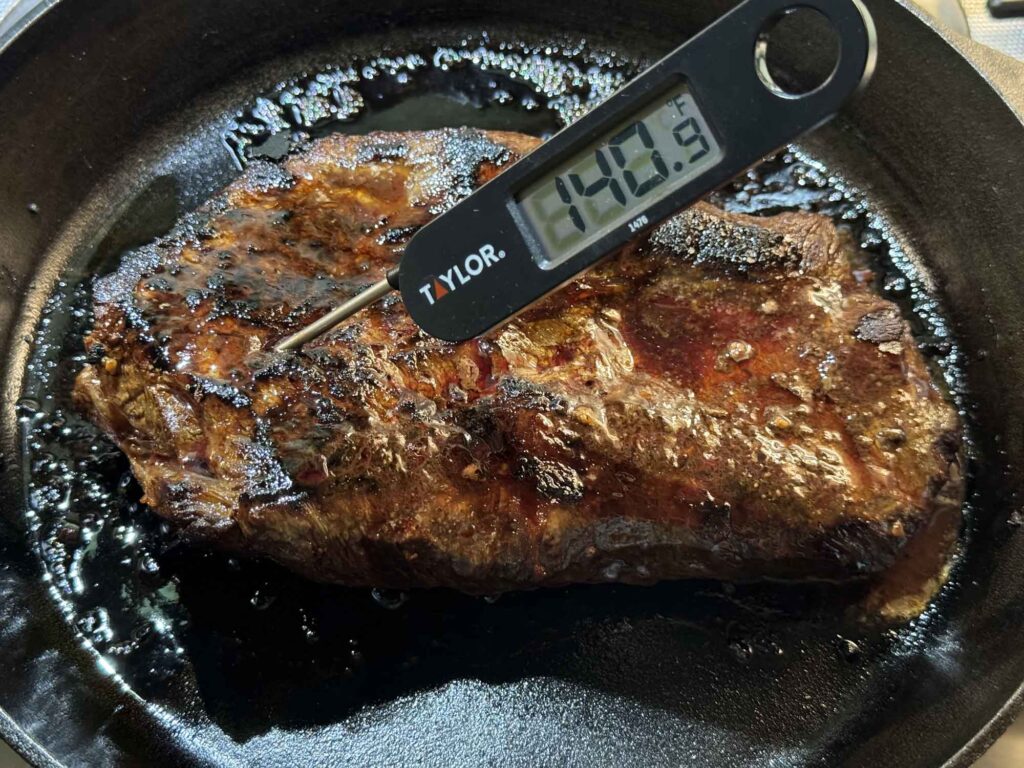
The real secret is cooking to temperature, not to the clock. Pull your steak according to these internal temperatures, and remember it keeps cooking a few degrees while it rests.
Steak Doneness Guide
| Doneness | Pull Temperature |
| Rare | 120–125°F |
| Medium-rare | 130–135°F |
| Medium | 140–145°F |
| Medium-well | 150–155°F |
| Well done | 160°F+ |
When I made the flat iron in the photos, I seared it in cast iron for 4 to 5 minutes one each side, then finished it in the oven at 375°F for about 10 minutes to reach 140°F, because it was thick and we wanted it medium. An instant-read thermometer takes all the guesswork out of it.
Flavor Variations
Once you have the base down, it is fun to play with flavors. I do a lot of that when I am puttering around the kitchen, so here are a few easy twists:
- Garlicky herb: Add a tablespoon of chopped fresh rosemary or thyme along with an extra clove of garlic for a steakhouse feel.
- Balsamic: Swap the apple cider vinegar for balsamic vinegar for a deeper, slightly sweet flavor that is lovely on sirloin.
- Spicy: Stir in a pinch of red pepper flakes or a little hot sauce. I am a “supertaster” (extra taste buds) and so keep mine mild, but you can take the heat as far as you like.
- Citrus: Trade the vinegar for fresh lemon or lime juice for a brighter, summery marinade that is great on kabobs.
Tips and Troubleshooting
If your steak ever comes out tougher or chewier than you hoped, do not blame yourself. It is almost always one of a few fixable things:
- Overcooked: This is the big one. Use a thermometer and pull the steak at your target temperature.
- Wrong cut for the job: Some cuts are just chewier. Tougher cuts like flank and skirt need to be sliced thinly against the grain.
- Skipped the rest: Letting the steak rest 5 to 10 minutes lets the juices settle back in. Cut too soon and they run out onto the board.
- Sliced with the grain: Always slice across those long muscle fibers, not along them, and even a budget cut turns tender.
And if your steak looks a little less than picture-perfect when it comes off the heat? Mine often do, and they still taste amazing. A good marinade is forgiving like that.
Make-Ahead, Storage, and Freezing
This marinade is a meal-prep friend. You can whisk it together and keep it in the fridge for 3 to 5 days before it ever touches raw meat, so it is easy to mix on Sunday and have it ready when you are. You can also freeze the marinade on its own for up to 2 months. Once the steak is actually marinating in it, plan to cook within the times in the chart above.
One important food-safety note: never reuse marinade that has touched raw steak as a sauce, because it carries bacteria from the raw meat. If you want some for basting or drizzling, just set a little aside before you pour the rest over the steak. For a quick finishing sauce instead, my homemade BBQ sauce is a great brush-on once the steak is nearly done.
Steak Marinade Recipe
Ingredients
- 1/3 cup low-sodium soy sauce
- 1/4 cup olive oil, avocado oil, canola oil, or another neutral oil
- 2 tablespoons Worcestershire sauce
- 2 tablespoons brown sugar packed
- 1 tablespoon apple cider vinegar
- 3 cloves garlic minced
- 1 teaspoon onion powder
- 1/2 teaspoon black pepper
- 1/2 teaspoon smoked paprika
- 1/4 teaspoon kosher salt optional
- 1 1/2 to 2 pounds steak (sirloin, flank, skirt, flat iron, hanger, London broil, tri-tip, steak tips, or kabobs)
Instructions
- Mix the marinade. In a bowl or large measuring cup, whisk together the soy sauce, oil, Worcestershire sauce, brown sugar, apple cider vinegar, garlic, onion powder, black pepper, smoked paprika, and salt, if using.
- Add the steak. Place the steak in a zip-top bag or shallow dish. Pour the marinade over the steak and turn to coat it well.
- Refrigerate. Seal the bag or cover the dish and refrigerate for at least 30 minutes, or longer depending on the cut (see notes).
- Remove and dry the steak. Take the steak out of the marinade and let the excess drip off. Pat the steak very dry with paper towels before cooking. This is important because wet steak steams instead of sears.
- Cook the steak. Grill, broil, or sear the steak in a hot cast iron skillet until it reaches your preferred doneness (130 to 135°F for medium-rare, 140 to 145°F for medium).
- Rest and slice. Let the steak rest 5 to 10 minutes before slicing. For flank, skirt, and hanger steak, slice thinly against the grain.
Nutrition
Notes
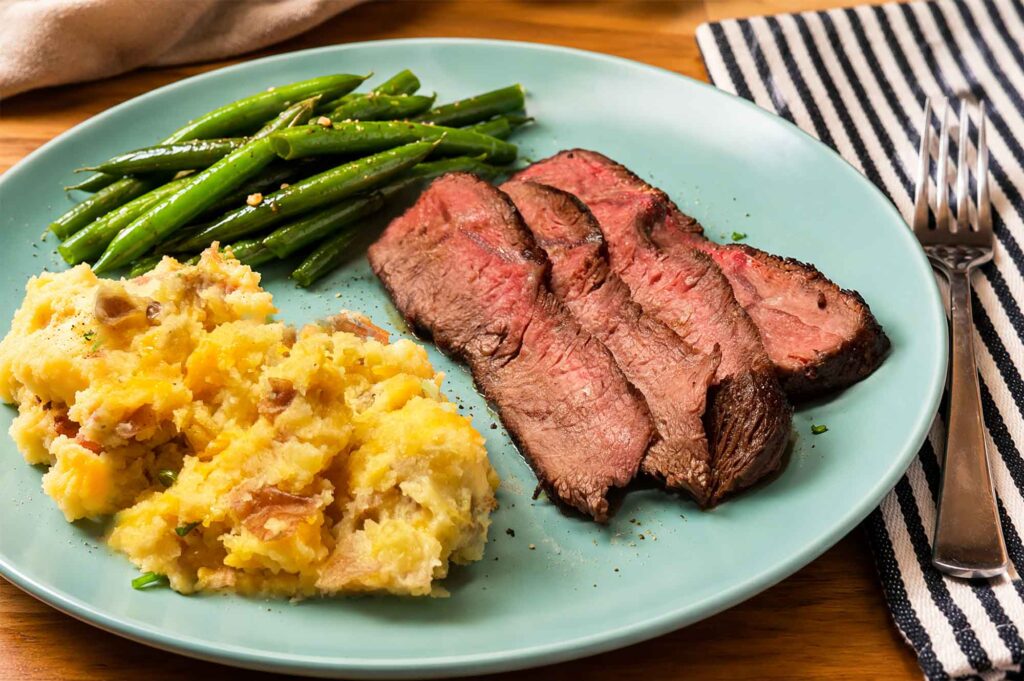
That is all there is to it. Whisk, soak, sear, and you have a steak dinner that tastes like you put in way more effort than 5 minutes of mixing.
And if you are looking for another cozy, beefy dinner to put in the rotation, my beef tips and gravy is a longtime favorite around here.
If you try this easy steak marinade, I would love for you to leave a rating and a comment below and tell me which cut you used. It really helps other readers, and it makes my day.
Love,
Jennifer
Tried this recipe?
Tap the stars in the recipe card to leave a quick rating. Your rating helps other home cooks know this recipe works in a real kitchen, not just mine.
And as a thank-you for your feedback, you will receive a free printable copy of my Maker Home Companion Cookbook, featuring my most popular recipes, each one formatted on a SINGLE, easy-to-use page, a perfect kitchen companion for easy meal prep. Click here to learn more about this cookbook and how you can get your copy!




Meet Jennifer
Jennifer cooks and experiments in the kitchen at Maker Farm, where she focuses on simple pantry cooking, homemade staples, and practical recipes that make everyday meals easier. Over the years she has tested many ways to make cooking simpler and more dependable, and shares the methods that work best in her own kitchen, occasionally showing them on her Heart to Home at Maker Farm vlog.
I tried the steak marinade last night and it was absolutely delicious.
Thank you for sharing!