

This easy chicken stock uses a rotisserie chicken carcass, onion, carrot, celery, and water. It cooks on the stove or overnight in the slow cooker (8–12 hours) with about 10 minutes of prep. Strain, cool, and stash it in the fridge or freezer for soups, rice, gravy, and sauces.
There’s just something magical about a pot of chicken stock or broth simmering away in the kitchen. You know you’re creating something that’ll nourish you from the inside out. I’ve tested a few ways to make stock at home, and this overnight slow cooker method is the one I rely on because it is hands-off and consistently turns out rich and golden. It’s a reader favorite too: 5-star rated!
Why I Love this Recipe
This chicken stock is just so easy to make. I love that it uses a rotisserie chicken carcass (no waste) and cooks overnight while I sleep. It’s also really inexpensive, and this matters when you cook with it often as we do. We can go through a LOT of cans and boxes during a single week, and keeping it on-hand in the pantry can be a challenge. So being able to make it ourselves really helps. But most importantly, this chicken broth tastes so much better than what comes from the store.
And let’s be honest … most store-bought broth tastes like very salty water with a hint of chicken flavor. Ha ha. Homemade broth? That’s a completely different thing. It’s rich, it’s flavorful, and it has actual body to it. Plus, you’re using up chicken parts that might otherwise go to waste.
So forget those cardboard boxes and cans from the grocery stores filled with who-knows-what. When you make chicken broth at home, you control every single ingredient. You know where your chicken came from, you can skip the weird additives, and you end up with something that actually tastes like chicken. SO GOOD.

Want to Save This Recipe?
Enter your email below and we’ll send it straight to your inbox! Plus you’ll get new recipes each week!
What is Chicken Stock?
Chicken stock is a savory cooking liquid made by simmering chicken bones (often with aromatics) to extract gelatin and create a richer, more full-bodied base for soups, sauces, rice, and gravy.
Chicken Broth vs Chicken Stock
People use these terms interchangeably, and honestly, that’s fine for home cooking. When I suggest you use chicken broth in a recipe, you can use this. But technically, there is a difference.
Stock is made primarily from bones with maybe a little meat attached. It simmers longer (sometimes up to 24 hours) and has more body because of all that gelatin from the bones.
Broth is made from meat with maybe a few bones thrown in. It is typically lighter and simmers for less time.
In practice? Make bone-heavy stock and call it whatever you want. That’s what I do. The recipe I’m sharing is really more of a homemade chicken stock, but I also call it broth because that’s what most people are looking for, plus it’s what most recipes mention. The gelatin-rich result in this chicken stock recipe is what you want anyway. It’s way yummier.
Why Bother Making Your Own Stock or Broth?
Look, I totally get it. Life is busy. Opening a box or can is easier than simmering bones for hours. I’ve been there too. But making chicken stock is actually one of the easiest things you can do in the kitchen. It’s almost entirely hands-off time. You throw everything in a pot, turn on the heat, and walk away. Come back hours later to pure magic.
Beyond the ease, homemade stock is cheaper. You’re using bones and scraps that you’d probably throw away anyway. And if you buy whole chickens or rotisserie chickens (which you should, because they’re more economical), you’ve got bones left over after every meal. Toss them in a freezer bag until you’ve got enough for a batch of broth. Boom. Free food.
The health benefits? Off the charts. Real chicken stock is packed with minerals, collagen, and gelatin that support your gut health, joint health, and immune system.
What You Need
The beauty of chicken broth is that it’s forgiving and flexible. You don’t need fancy ingredients or precise measurements to make something delicious.
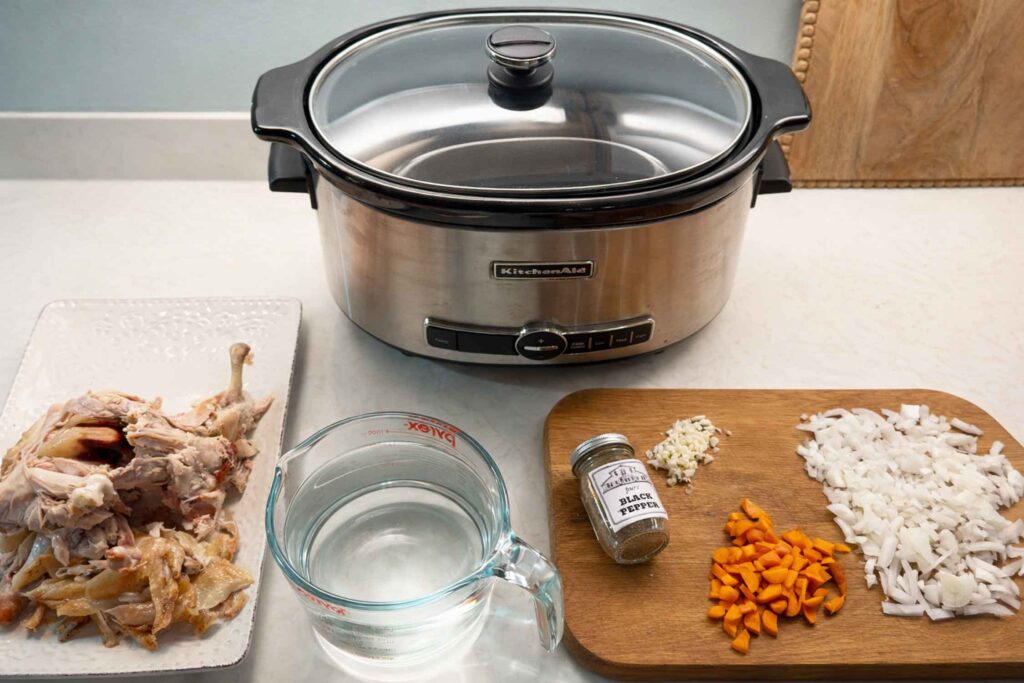
The essential ingredients are chicken bones and water. That’s it. Everything else just makes it better. Use whatever bones you have: backs, necks, wings, or the leftover carcass from a roasted chicken, including a store-bought rotisserie chicken. Raw bones work great, and roasted bones add even deeper flavor. If you’ve been saving bones in the freezer, now’s the time to use them.
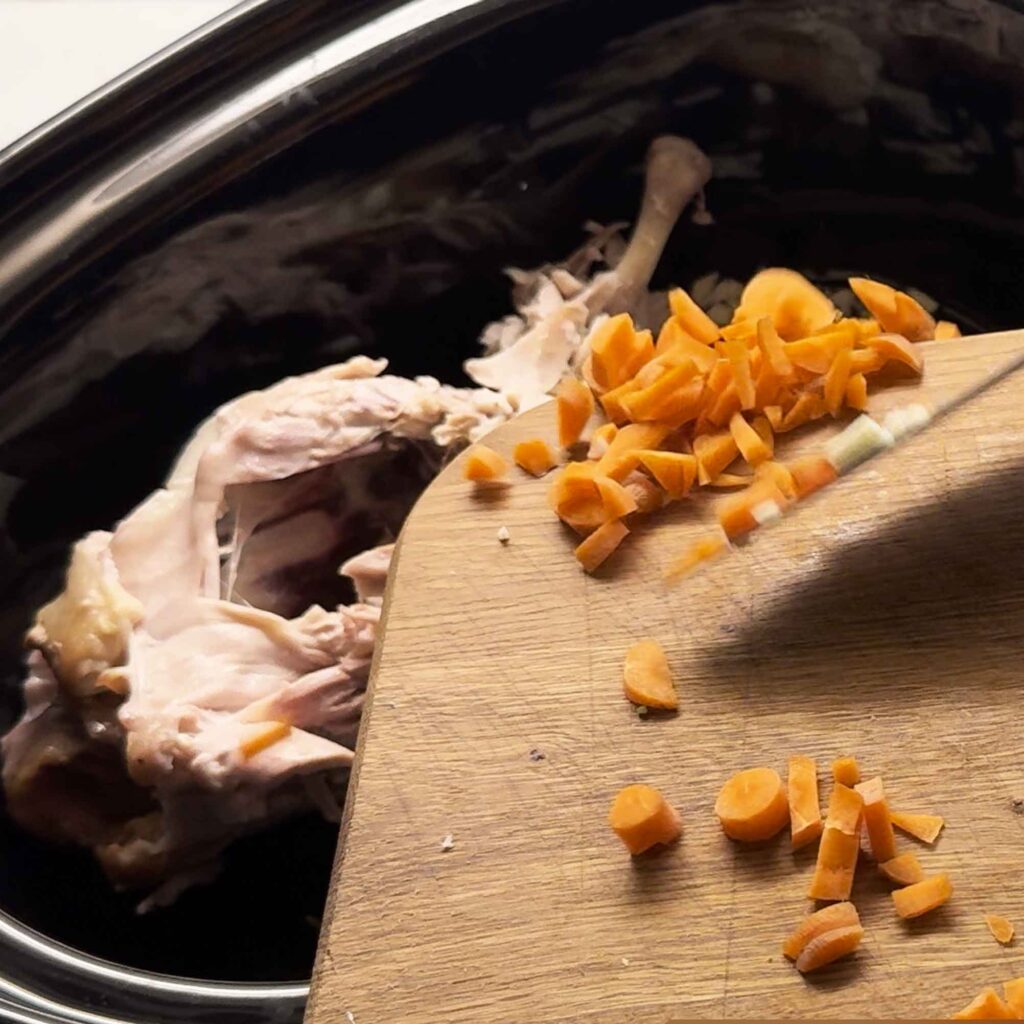
Aromatics are what give your broth character, but you can work with what you have. Onions, carrots, and celery are the classic trio. If you’re missing one of these vegetables, just use more of the others or skip it entirely. Your broth will still be delicious. Also, you don’t HAVE to chop these — it is okay to just toss them in whole or chunked. I prefer to chop mine because you’ll get more particles in the broth and the rich flavor is often better. Use chunks if you want your broth clear, or use chopped if you want maximum flavor.
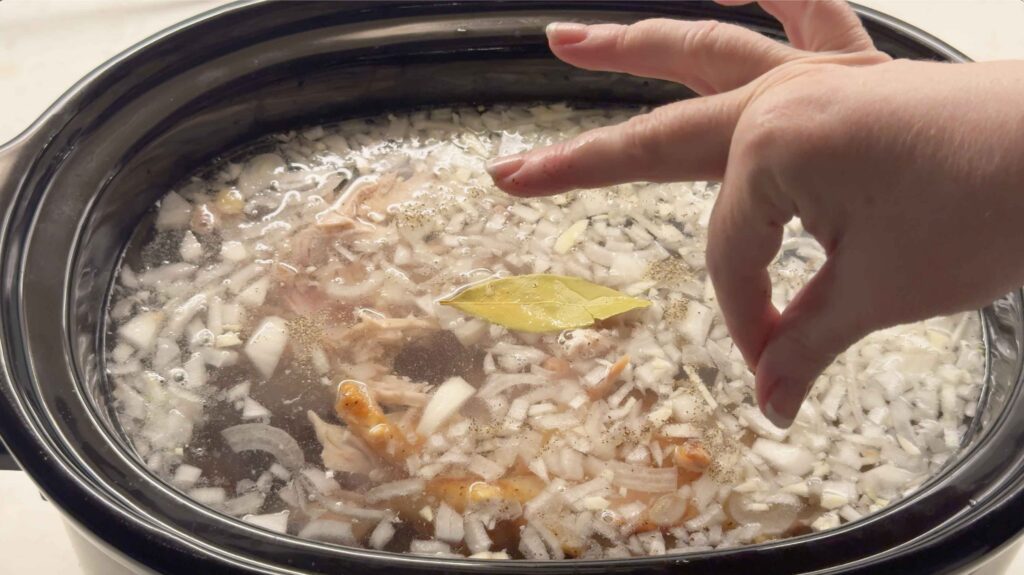
Seasonings are where you can get creative or keep it simple. Bay leaves and peppercorns are classics that add subtle complexity. Fresh herbs like parsley, thyme, and rosemary make your broth smell amazing and add freshness. But if you don’t have fresh herbs, skip them or use a small amount of dried herbs. Just don’t add them too early or they’ll get bitter.
Salt is optional during cooking. Some people prefer to make unsalted broth and season it later depending on how they’ll use it. Others add salt at the end of cooking. Either approach works. If you’re planning to reduce your broth or use it in recipes that are already salty, skip the salt for now.
Acid is good if you want to make chicken stock because it helps extract minerals from the bones. Apple cider vinegar is traditional, but any vinegar works. White vinegar, white wine vinegar, even lemon juice will do the job. You won’t taste it in the final broth. If you don’t have it, though, it’s okay to skip. I usually skip it, because I care more about clean flavor than extraction. It’s more of a tool than a requirement.
What you don’t need: fancy equipment. A large stockpot or Dutch oven works perfectly. If you’re nervous about leaving the stove on for hours, a slow cooker does the same job. No slow cooker? An Instant Pot or pressure cooker can make broth in a fraction of the time, though you’ll miss out on some of that long-simmered depth.
How to Make Chicken Stock
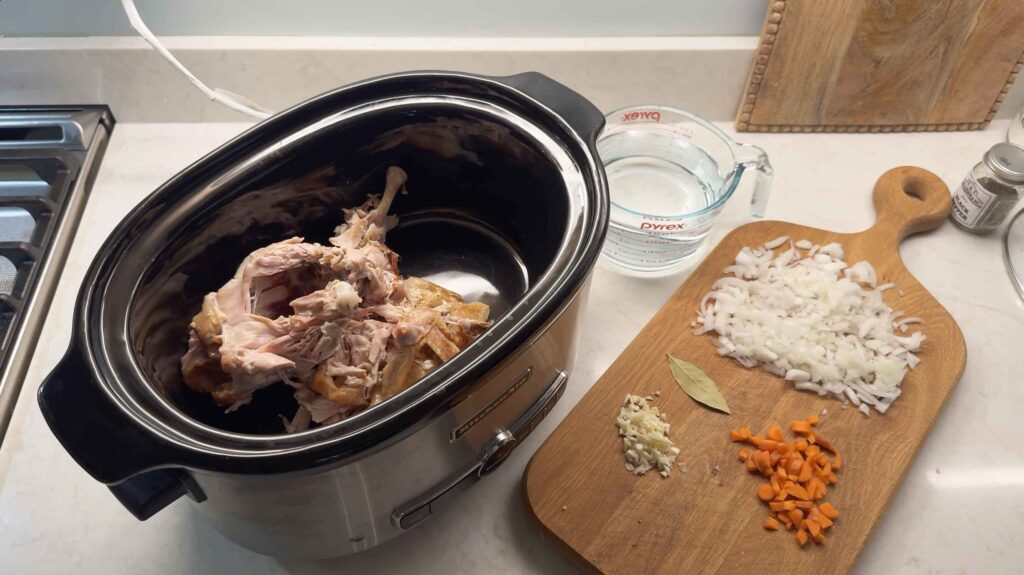
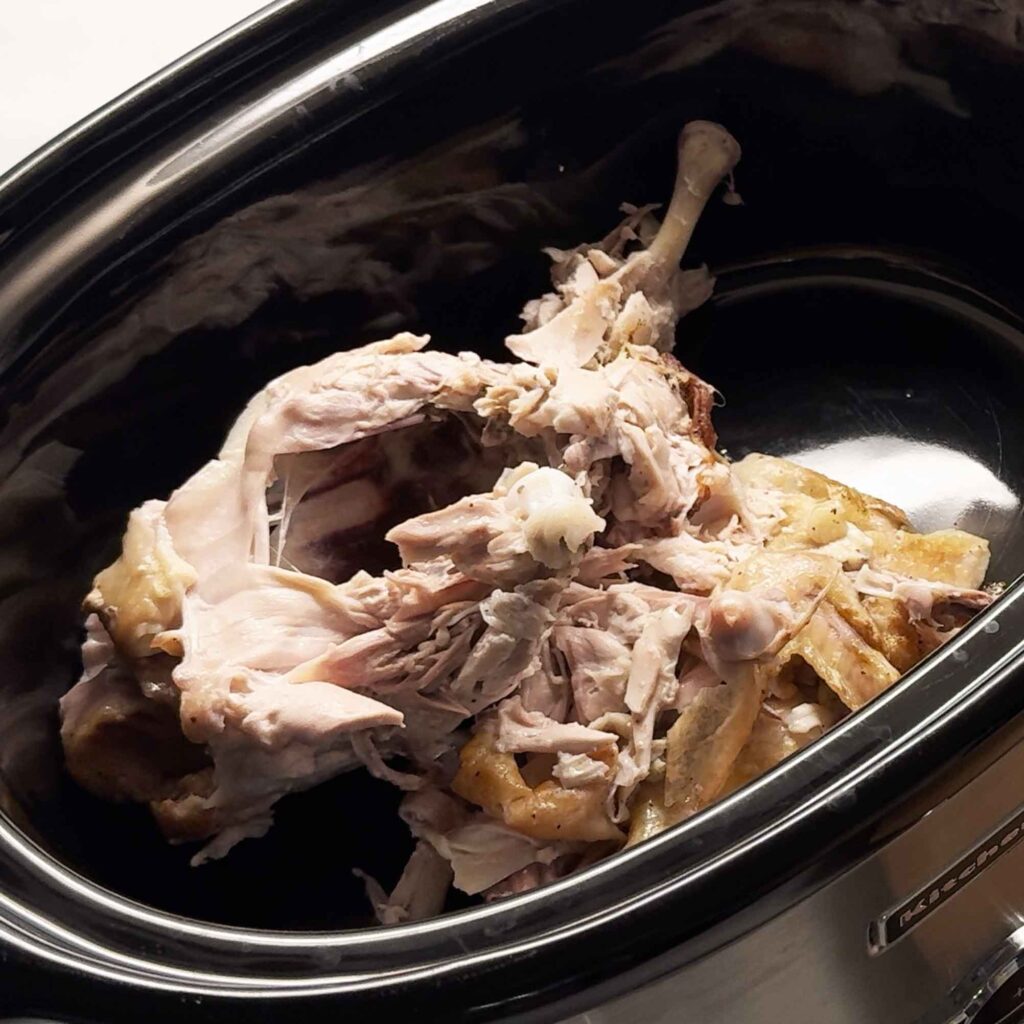
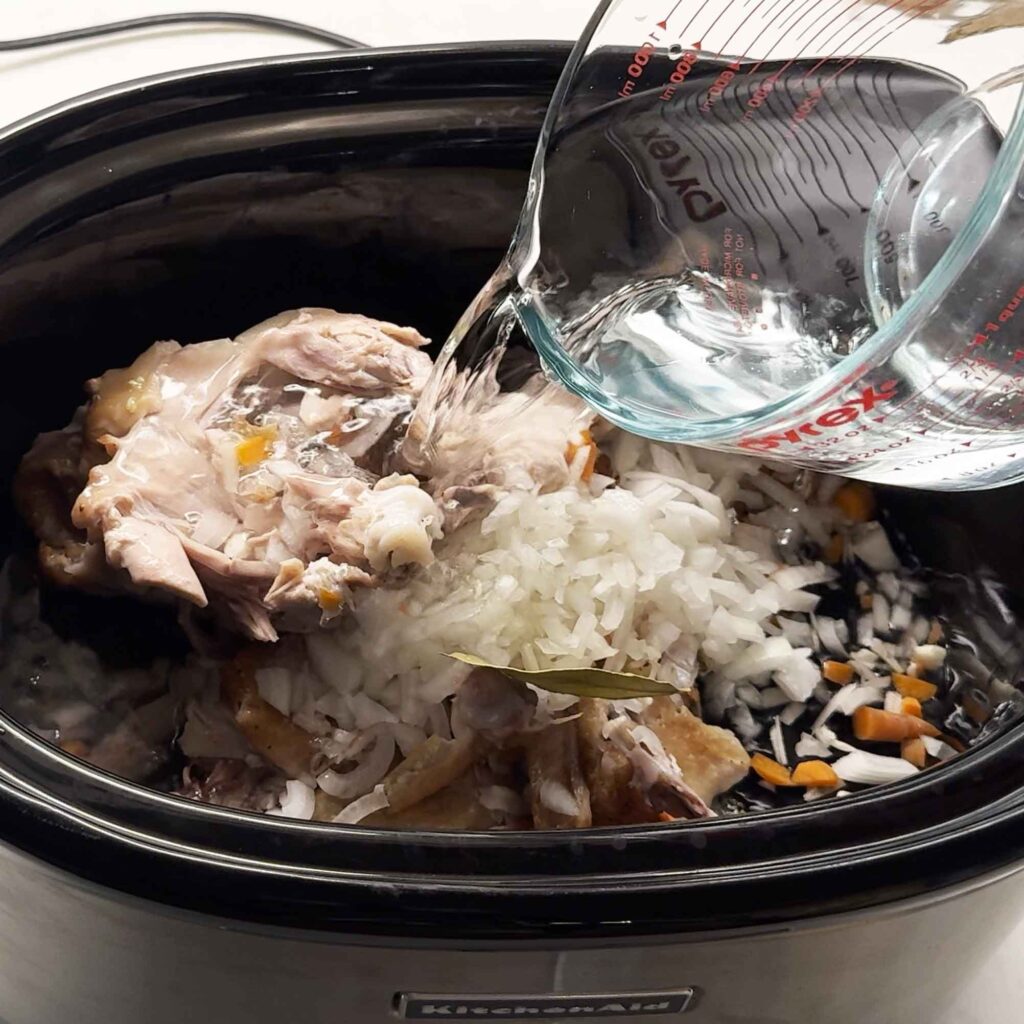
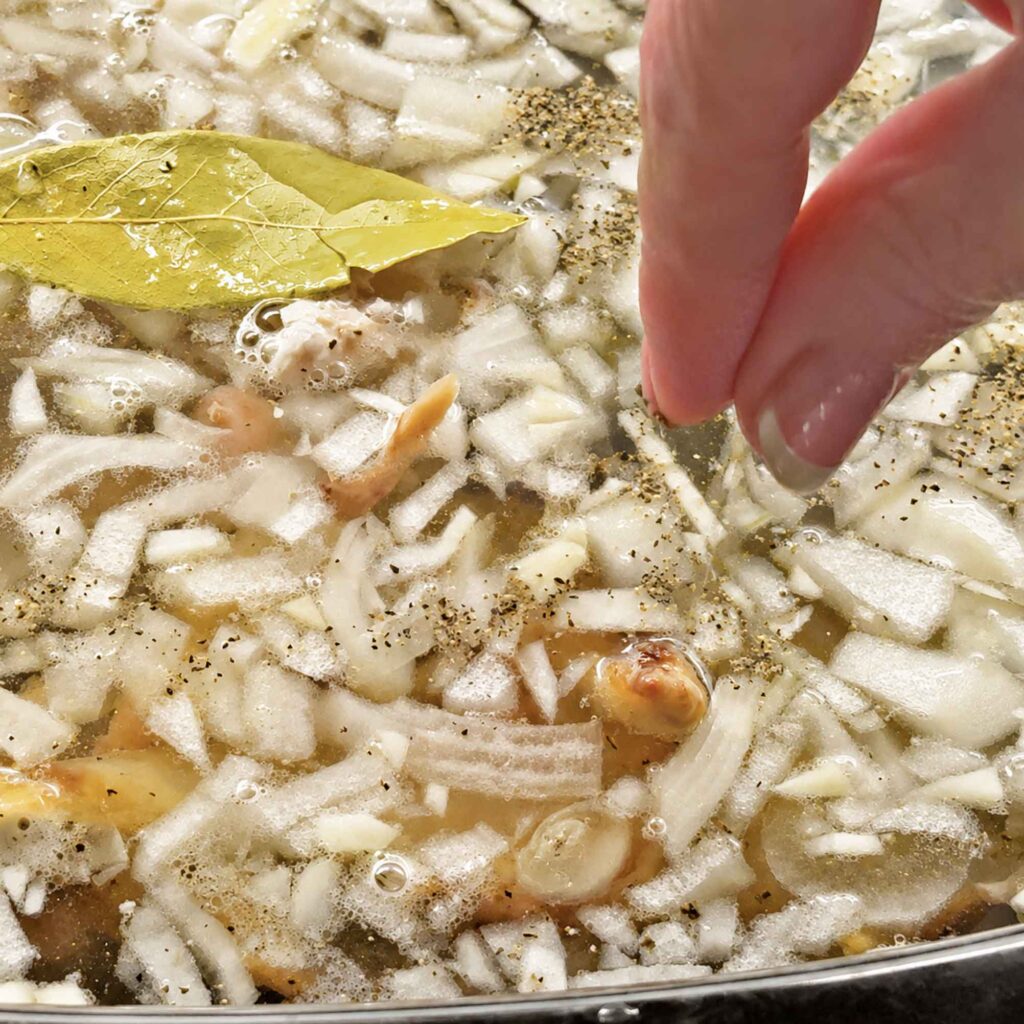
Add bones, vegetables, water, and aromatics from the recipe below.
You might want to adjust your aromatics depending on what you’re using it for. If you’re drinking it straight (which is delicious and nourishing), you might want to add a bit more salt, some fresh cracked pepper, maybe a squeeze of lemon juice.
For soup, fresh or dried herbs are your friend. Thyme, rosemary, and parsley are classics. A bay leaf adds depth. Garlic powder or onion powder can boost the savory notes.
Some people like to add a pinch of turmeric for some anti-inflammatory benefits and a pretty golden color. Ginger is excellent if you’re fighting a cold.
The key is to start with a well-made, unsalted or lightly salted base stock, then season it for its final use. This gives you maximum flexibility. If you over-salt your stock when you make it, you’re stuck with salty stock forever.
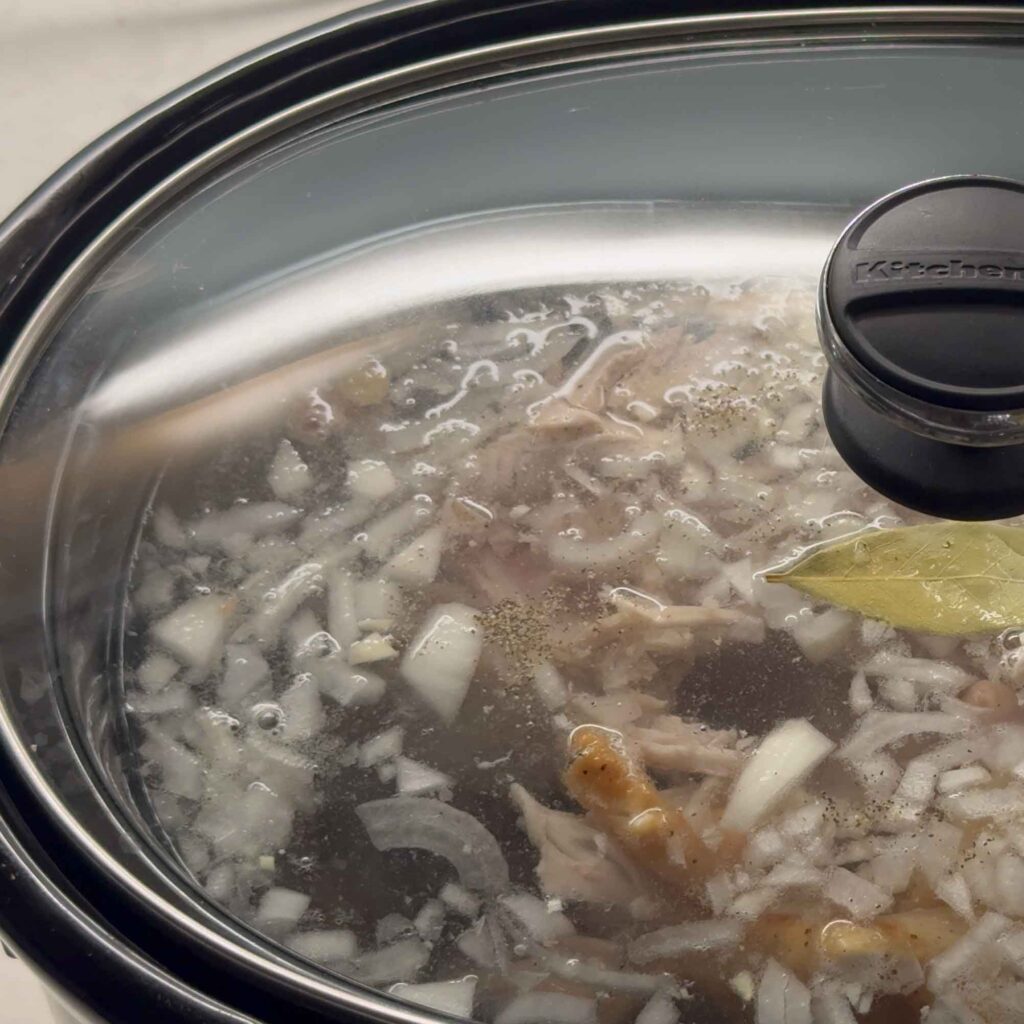
Cover and cook low and slow (overnight). Cool quickly and refrigerate or freeze.
Homemade Chicken Stock Recipe (aka Chicken Broth for Everyday Cooking)
Equipment
- 1 slow cooker or large stock pot
- 1 fine-mesh strainer or mesh screen
- 1-2 glass jars or plastic containers
Ingredients
- 1 Bones + carcass from a 3-4 lb cooked chicken (rotisserie or roasted) skin included is fine
- 8-10 cups water enough to fully cover everything
- 1 onion (optionally quartered or chopped)
- 1-2 carrots (optionally sliced or chopped)
- 1-2 celery stalks (optionally sliced or chopped)
- 1-2 garlic cloves (optionally minced)
- 1/2 teaspoon black pepper optional
- 1-2 teaspoons salt or wait and salt later
- 1 bay leaf optional
- 1-2 teaspoons vinegar optional, good if you want to extract more from the bones
Instructions
Load the slow cooker
- Put everything into the slow cooker. Break the carcass apart a bit so it fits if necessary. Add veggies if you have them (don’t stress if you don’t). Cover with water so it’s fully submerged with a little extra.
Set it and leave it
- Set to LOW. Cook 8–12 hours (overnight). Do not stir.
Strain in the morning
- Remove large bones with tongs. Strain the broth through a colander or fine mesh to remove the chicken pieces.
Cool and store
- Let it cool slightly and pour into glass jars with lids. Refrigerate within two hours.
Nutrition
Notes
Fat will rise and harden on top → skim if you want.
Broth may gel slightly → that’s a good sign. This broth will NOT be super dark or intensely gelatinous like long-simmered raw bones. It WILL be very usable, comforting. perfect for soups, rice, gravy, or sauces.
How It Should Look
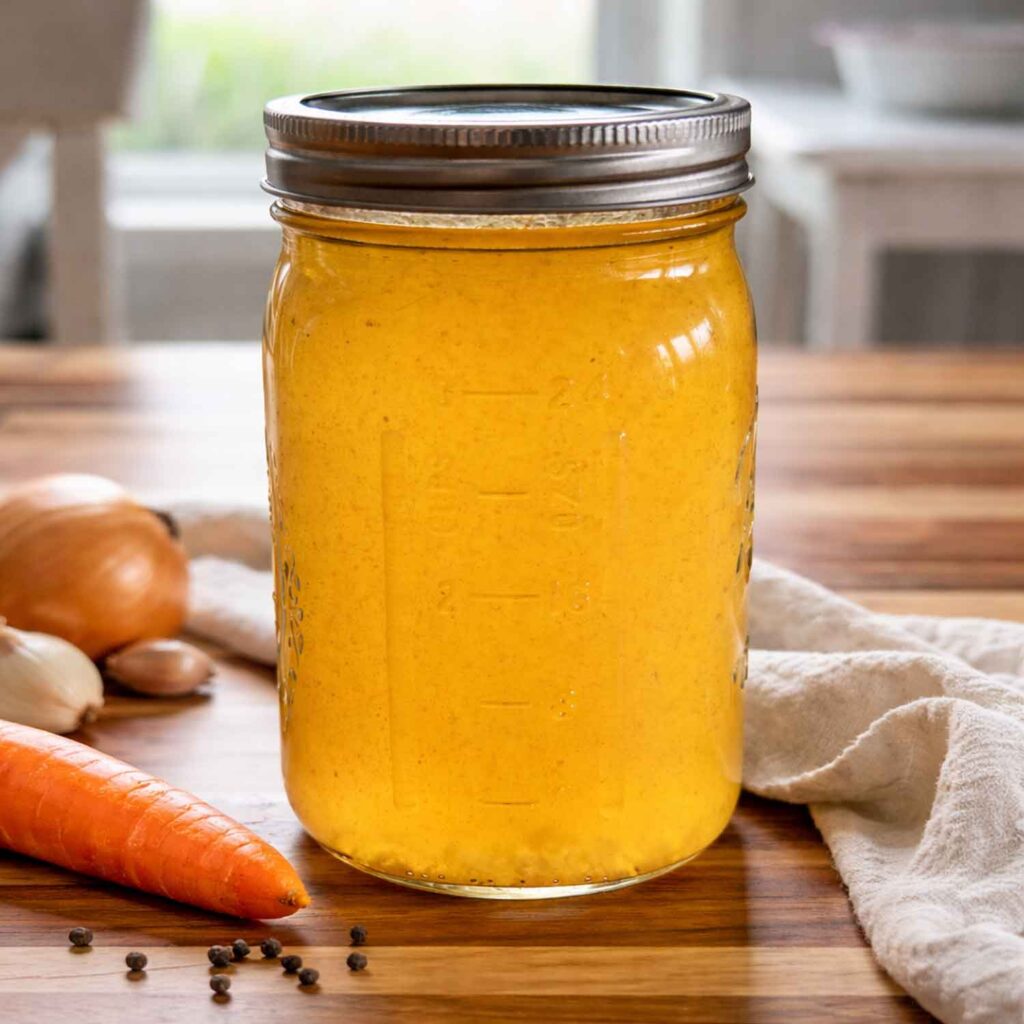
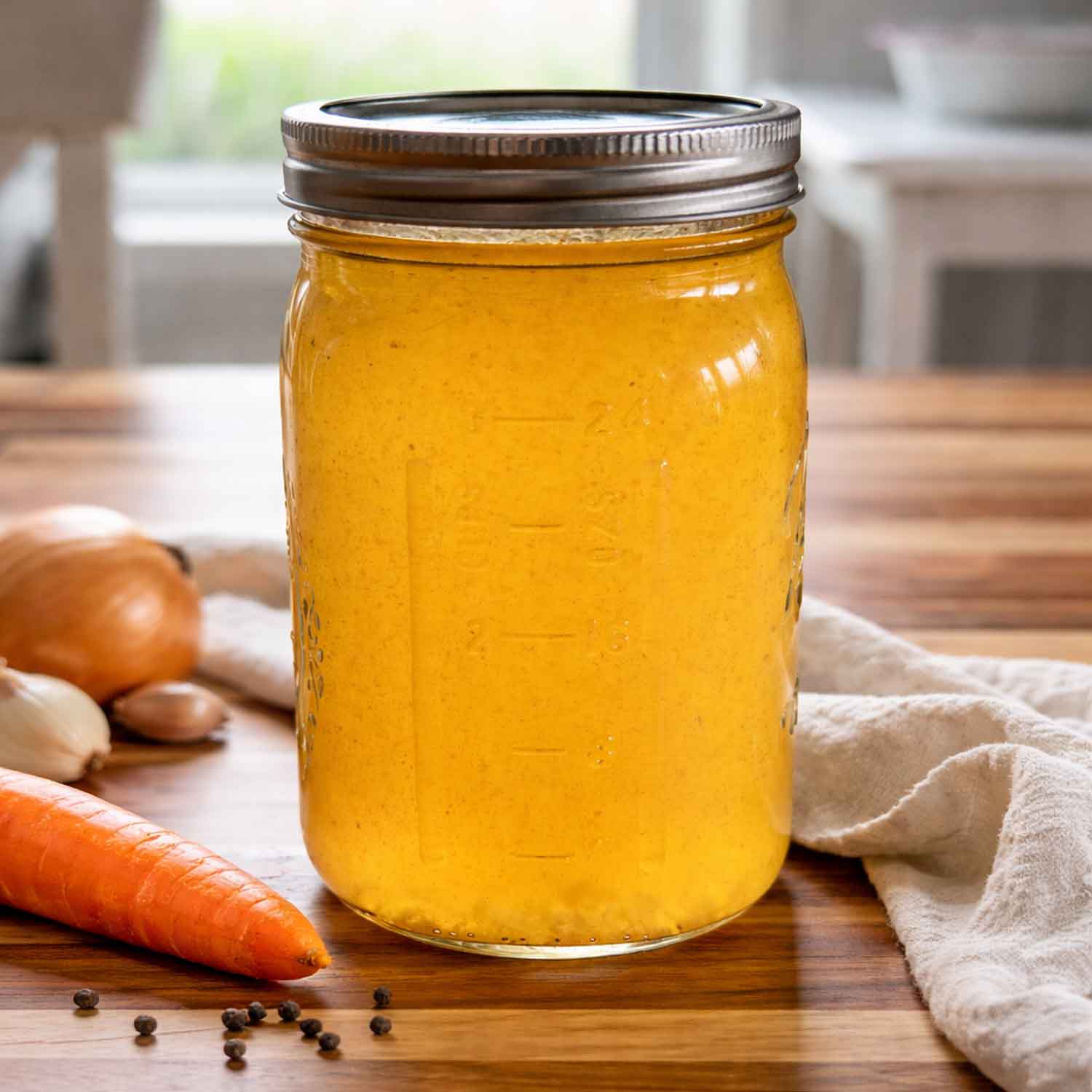
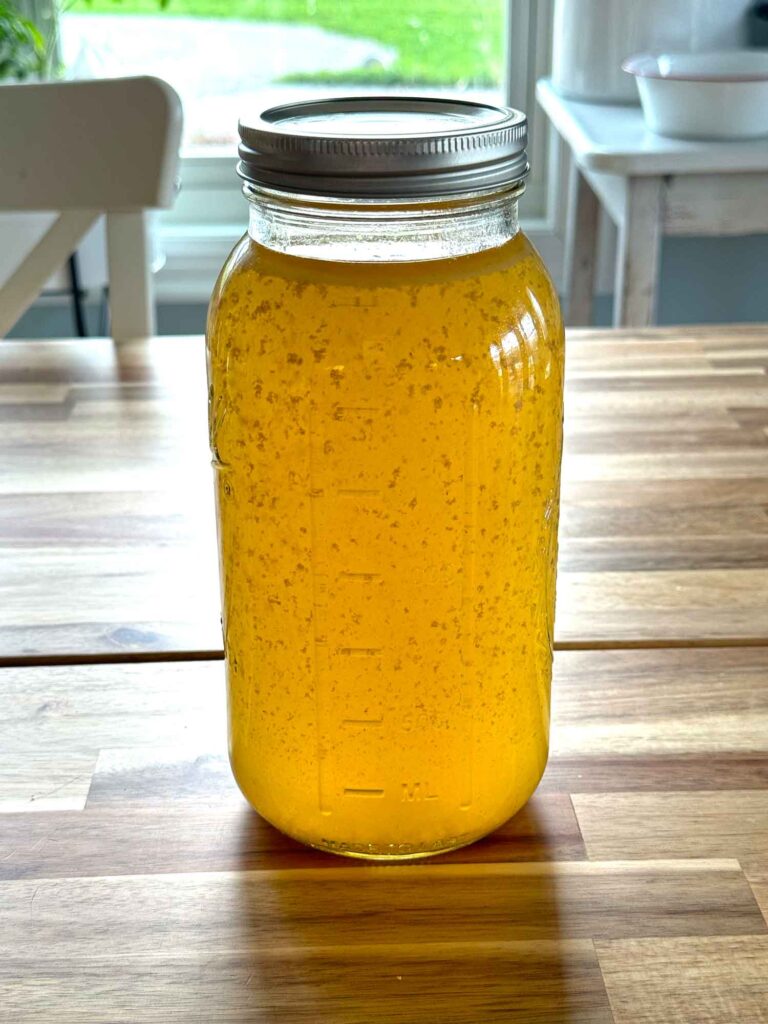
Color: A warm golden tone is exactly what you want from a rotisserie-based broth. Not gray, not overly dark, but right in the middle, like in my photo below.
Clarity: It should be relatively clear, not muddy — this means you didn’t boil it aggressively.
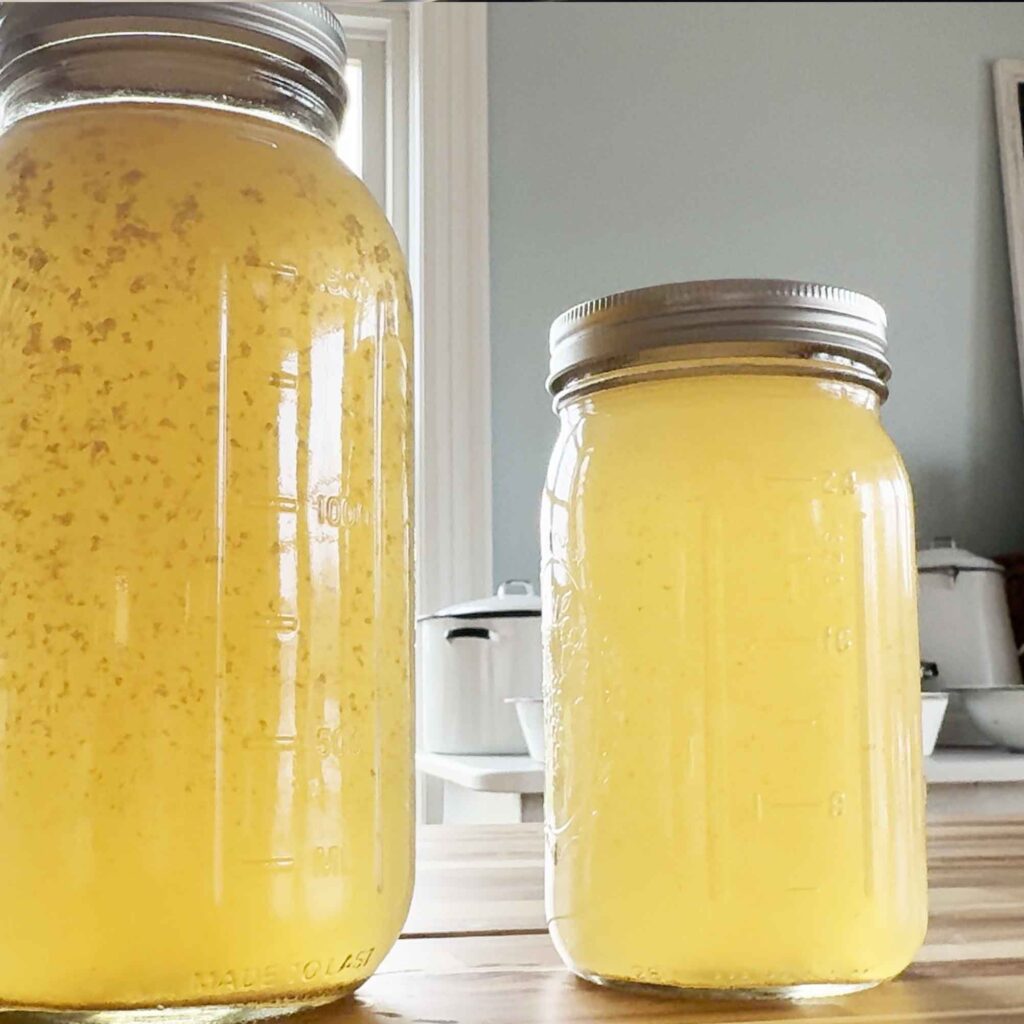
Fat distribution: If you see tiny specks throughout, that means emulsified fat turned to flavor. That’s a good sign for usability (soups, gravy, rice). If you notice a light shimmer on top, that’s exactly what you want — it means your broth will taste full and satisfying, not thin or flat.
Here is what my broth looked like immediately after straining and placing in the jar — those little particles you see were floating and drifting gently down as everything settled.
How to Get a Clear Chicken Stock
If you prefer a clearer, more refined-looking broth, it comes down to keeping things gentle and minimizing particles from the start. The good news is you don’t need anything complicated, just a few small adjustments.
Start by keeping everything larger and intact. Use onion halves, whole or halved carrots, and stuff in big pieces instead of chopping like I did in mine. Smaller pieces break down more and release fine particles that cloud the broth.
Next, keep the heat low. A gentle simmer (or slow cooker on LOW) is key. If the liquid is actively boiling, it agitates the ingredients and pushes fat and proteins into the broth, making it cloudy.
As it cooks, you can skim the surface occasionally to remove foam or excess fat, though this is optional for slow cooker broth since it’s already a gentle process.
When it’s done, strain carefully. Pour the broth slowly through a fine mesh strainer. For an even clearer result, you can line the strainer with cheesecloth or a clean kitchen towel to catch the finer particles.
Finally, let it cool completely in the refrigerator. The fat will rise and solidify on top, making it easy to remove. This not only improves clarity but also gives you a cleaner, lighter-tasting broth.
Clear broth is mostly about technique, not ingredients. If you keep things big, low, and slow, you’ll get a beautiful, golden result every time.
Personally, I prefer flavor over clarity — but it’s entirely up to you.
Can You Substitute Chicken Broth for Chicken Stock?
Absolutely. In most recipes, you can swap them one-for-one without any issues. Stock might give you a richer result in something like risotto or gravy because of its higher gelatin content, but broth works just fine. If you’re substituting broth for stock and want more body, like a homemade stock, you could add a little unflavored gelatin to compensate.
Chicken Broth vs Chicken Bouillon
Bouillon is a completely different animal. It’s a concentrated flavoring that comes in cubes, granules, or paste. It’s basically dehydrated broth with added salt and usually MSG and other flavorings. Some bouillons are decent in a pinch, but they’ll never match real broth for flavor or nutrition.
If you’re using bouillon, remember it’s much saltier than homemade broth, so adjust your seasoning accordingly. And check the ingredients because some brands are basically salt and chemicals with a whisper of chicken flavor.
Q: What if I don’t have bouillon cubes?
No problem, they are not required. This stock gets its flavor from bones and a long, gentle cook.
Q: I added bouillon cubes at the beginning. Did I ruin it?
It’s still usable. Taste after straining, then adjust salt in the final dish since bouillon adds extra sodium.
Want a Stronger Flavor?
If you’d like a richer, more concentrated chicken flavor similar to many store-bought stocks and broths, stir in 1 to 2 teaspoons of chicken bouillon paste during the last 15 minutes of cooking. Start with a small amount, taste, and add more if desired. Keep in mind that bouillon is salty, so you may want to reduce any additional salt until you’ve tasted the finished stock.
How to Substitute Chicken Stock
If a recipe calls for chicken stock (or broth) and you don’t have any, you’ve got options. You can use vegetable broth for a lighter flavor, beef broth for something richer (though it’ll change the taste profile), or even just water with some extra seasoning. Some people swear by using water with a bit of soy sauce, though I can’t say I’ve tried it.
When I’m out of chicken broth, I dissolve some chicken bouillon in water. Just go easy on it. Start with half the recommended amount because bouillon is super salty. You can always add more, but you can’t take it back.
Is Chicken Stock Healthy?
Yes, homemade chicken stock can be a nutritious addition to your kitchen. Long-simmered bones release minerals, gelatin, and natural flavor into the stock, creating a rich cooking ingredient that’s both satisfying and versatile.
Many people also find chicken stock comforting when they’re feeling under the weather. Greg drank plenty of it when he wasn’t feeling well last week, and it was one of the few things that really appealed to him.
Store-bought versions can certainly be convenient, but they often have a different flavor and texture than homemade stock. One of my favorite signs of a well-made homemade stock is that it becomes jiggly like gelatin after refrigeration, a sign that plenty of collagen and gelatin were extracted during cooking.
Storing and Preserving Your Stock
How to Store Homemade Chicken Stock
Let your broth cool to room temperature, but don’t leave it out for more than 2 hours. Transfer it to clean glass jars or airtight containers. Mason jars work great. Leave about an inch of headspace at the top if you’re planning to freeze it, because liquid expands when frozen and you don’t want broken jars.
Label everything with the date. Future you will thank present you for this habit. Store in the fridge if you’re using it within the week, or move to the freezer for longer storage.
Some people like to portion their stock into ice cube trays or muffin tins, then pop out the frozen cubes and store them in freezer bags. This gives you small amounts to use as needed without thawing a whole jar.
Do I need to skim the fat before freezing?
No. You can freeze it as-is, then skim the fat after thawing or after chilling in the fridge. Skim before freezing only if you prefer cleaner flavor or want to save the fat separately.
How Long Does Homemade Chicken Stock Last in the Fridge?
Fresh homemade chicken stock will last about 4-5 days in the refrigerator. Some sources say up to a week, but I tend to err on the side of caution. If we haven’t used it by day five, I either freeze it or make soup.
You’ll know it’s gone bad if it smells sour or off, develops an unusual color, or gets slimy. When in doubt, throw it out. Stock is cheap enough to make that it’s not worth risking food poisoning over.
How to Freeze Chicken Stock
Freezing stock is super easy. Pour cooled stock into freezer-safe containers, leaving that inch of headspace I mentioned. Seal tightly and freeze. That’s it.
For easier thawing, you can freeze broth flat in freezer bags. Fill a gallon freezer bag about halfway, squeeze out the air, seal it, and lay it flat on a baking sheet in the freezer. Once frozen solid, you can stack these bags like files, and they’ll thaw much faster than a solid block in a jar.
Silicone muffin cups work great for making pre-portioned stock pucks. Each standard muffin cup holds about half a cup of strock. Freeze until solid, pop them out, and store in a freezer bag.
How Long Does It Last in the Freezer?
Chicken stock stays good in the freezer for 4-6 months. After that, it’s still safe to eat, but the quality starts to decline. The flavor gets weaker and it might develop some freezer burn.
For best results, use your oldest frozen stock first and keep rotating your stock. And use good freezer bags or containers because stock can pick up freezer odors if it’s not sealed well.
Where to Use Chicken Stock or Broth
- Chicken noodle soup tastes so much more amazing with homemade stock
- Chicken pot pie and chicken pot pie casserole
- Chili (I love Turkey chili and Coffee chili)
- Chicken and dumplings (mm mmm good!)
- Old-Fashioned Brown Beans
Why This Recipe Stays in My Rotation
This chicken stock stays in my rotation because it’s hands-off overnight, uses leftovers that would go to waste, and gives me a rich, reliable base for soups, rice, gravy, and sauces.
One of my favorite things to do is get a rotisserie chicken at a great price, strip off the meat to save it for things Honey Garlic Chicken and Feel-Better Chicken and Rice, and then start a pot of chicken broth.
I suggest you start saving your chicken bones. Keep a bag in the freezer and toss them in after every chicken dinner. When the bag is full, make a batch of broth. Once you taste the difference between real, homemade chicken broth and the boxed stuff, you’ll never go back. Your body will thank you, your wallet will thank you, and your taste buds will definitely thank you.
Tried this recipe?
Tap the stars in the recipe card to leave a quick rating. Your rating helps other home cooks know this recipe works in a real kitchen, not just mine.
And as a thank-you for your feedback, you will receive a free printable copy of my Maker Home Companion Cookbook, featuring my most popular recipes, each one formatted on a SINGLE, easy-to-use page, a perfect kitchen companion for easy meal prep. Click here to learn more about this cookbook and how you can get your copy!



Meet Jennifer
Jennifer cooks and experiments in the kitchen at Maker Farm, where she focuses on simple pantry cooking, homemade staples, and practical recipes that make everyday meals easier. Over the years she has tested many ways to make cooking simpler and more dependable, and shares the methods that work best in her own kitchen, occasionally showing them on her Heart to Home at Maker Farm vlog.
Heavenly! That says it all, frankly. We have always made our own chicken and turkey stock as it is healthier and tastes far better than store bought. We have, however, done it the traditional way, which is lovely, but a lot of work and not so much fun on the cleanup end either. When I saw this recipe, words like ‘slow cooker’ and ‘overnight’ sounded wonderful. I cooked a Capon chicken for dinner Saturday and used Jennifer’s overnight slow cooker homemade chicken stock recipe with the carcass. This morning we have glorious stock that is now in our freezer for future meals. This is definitely going to be our ‘go to’ for making homemade chicken (or turkey) stock. Thank you for bringing ease (and taste) to healthy cooking Jennifer!
Thank you for the feedback, Heather!!
This was easy to make in my multi cooker overnight. It is a great use of what’s left from the rotisserie chicken.
I noted the there was no instruction for the vegetables. Before adding I quartered the onion, cut the carrot and celery in large chunks and peeled the garlic giving them a little smash also.
Happy to hear this was easy to make! The notes on how to prep the vegetables were higher up in the article, but I just added that note to the recipe card as well. 🙂
I love homemade chicken broth. Yours sounds delicious. I will definitely try yours. Thank you so much.
Another great article! I’ve done this all my life as taught by my depression era grandmothers. I do keep the bag of bones in the freezer until I have enough for a big batch. Another tip is if you have any aromatics getting past their prime (soggy celery for example or even just the leaves that normally get tossed) freeze them in a bag. I also save the end cuts of my onions when chopping to throw in. Then I just throw in a couple handfuls from the freezer bag when needed without spending on new and fresh ones.
Amazing as always! I love making my own broths. We love chicken and flat dumplings so I use the slow cooker to cook fatty leg quarters. I strain the slow cooker contents into a stockpot, bring to a boil and add dumplings in batches.
That sounds so good, Judy!
Love all your recipes and ideas.
Thank you so much, Louie!
Very very well explained
Thank you, Audrey!