

If you’ve got a skirt steak and you’re not quite sure how to cook it so it turns out tender and actually worth eating, I will show you exactly what to do. I’ll walk you through how I cooked mine step by step, what worked, what didn’t, and the small details that made the difference between tough and really good.
SKIRT STEAK At A Glance
Prep
10 min
COOK
8 min
Total
18 min
Serves
4
Pan
Large skillet
What it tastes like: Intense, robust “beefy” flavor that is very rich and savory
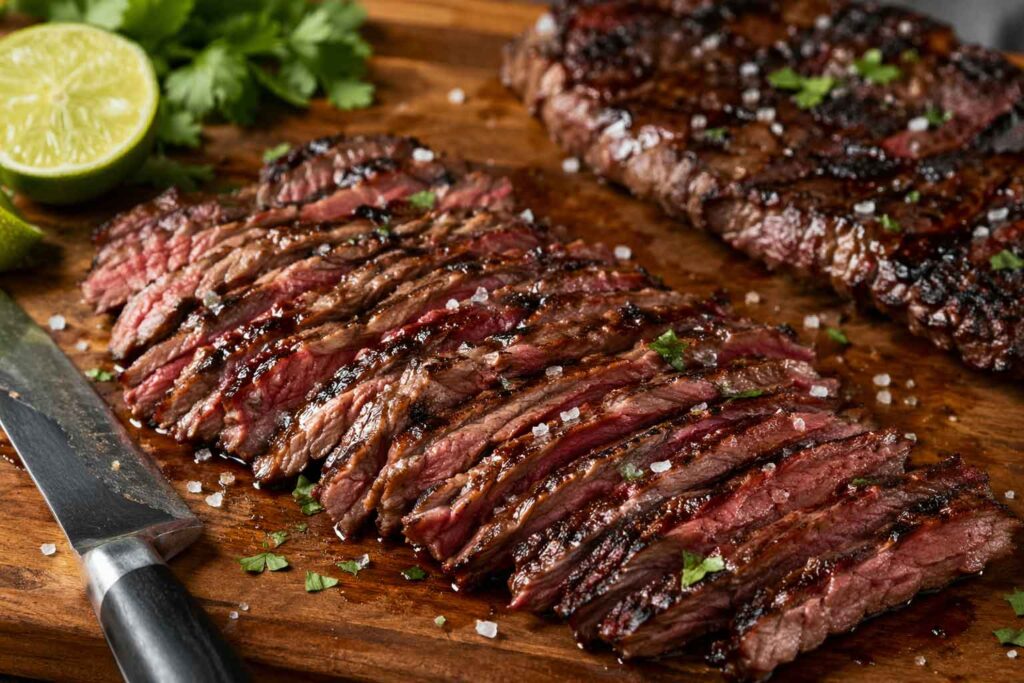
Skirt Steak Is Not Forgiving, So I Tested Every Step

I’ve cooked a lot of meat over the years, and I’ve learned that some cuts give you plenty of wiggle room. Skirt steak is not one of them.
I cooked this skirt steak in my own kitchen using a cast iron pan, paying close attention to the little details that make this cut work.
It cooks quickly, and the difference between tender and tough can come down to heat, timing, and how you slice it. So I tested each step carefully, so you can cook it with confidence instead of guessing.
Let’s dig in!

Looking for more beef ideas for dinner? Check out my beef tips & gravy and oven baked bbq rib recipes.
What is Skirt Steak?
Skirt steak is one of those cuts that doesn’t look like much at first, but it’s full of flavor if you treat it right. It comes from the plate section of the cow, so it has a loose grain and a bit more chew than something like a ribeye, but that’s also what gives it that rich, beefy taste. The key is how you cook and slice it. It can be confused with other cuts, though, so let’s talk about the difference.
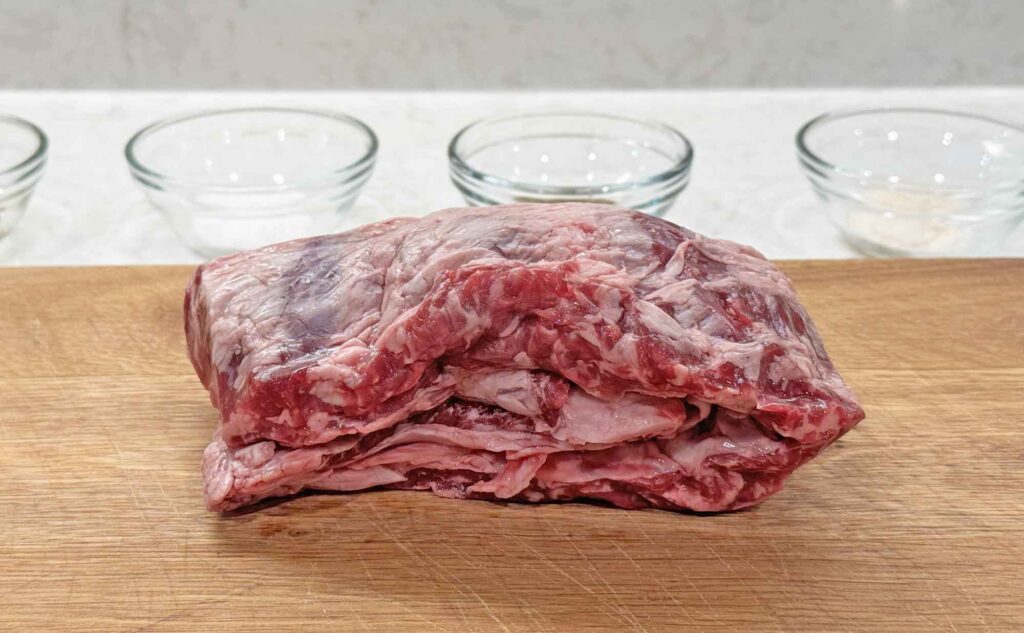
Hanger Steak vs Skirt Steak
I’ve tried both, and they’re similar, but not the same. Hanger steak is a little thicker and more tender on its own, so it’s a bit more forgiving. Skirt steak is thinner, with more pronounced grain, which means it can get tough faster if you overcook it or slice it wrong. Flavor-wise, they’re both rich and beefy, but skirt steak feels a little more intense to me. If I want something easier to work with, I’d choose hanger steak. If I want something fast and full of flavor, I reach for skirt steak, I just pay closer attention to how I cook it.
Skirt Steak vs Flank Steak
These two get mixed up a lot, and I understand why. They look similar and are both long, flat cuts with visible grain. The difference is that flank steak is thicker and a bit leaner, while skirt steak is thinner and cooks much faster. Skirt steak tends to have a stronger flavor and a looser texture, which I actually like, but it also means it’s less forgiving. Flank steak gives you a little more room for error. With either one, slicing across the grain is what makes it tender, but with skirt steak, it feels even more important.
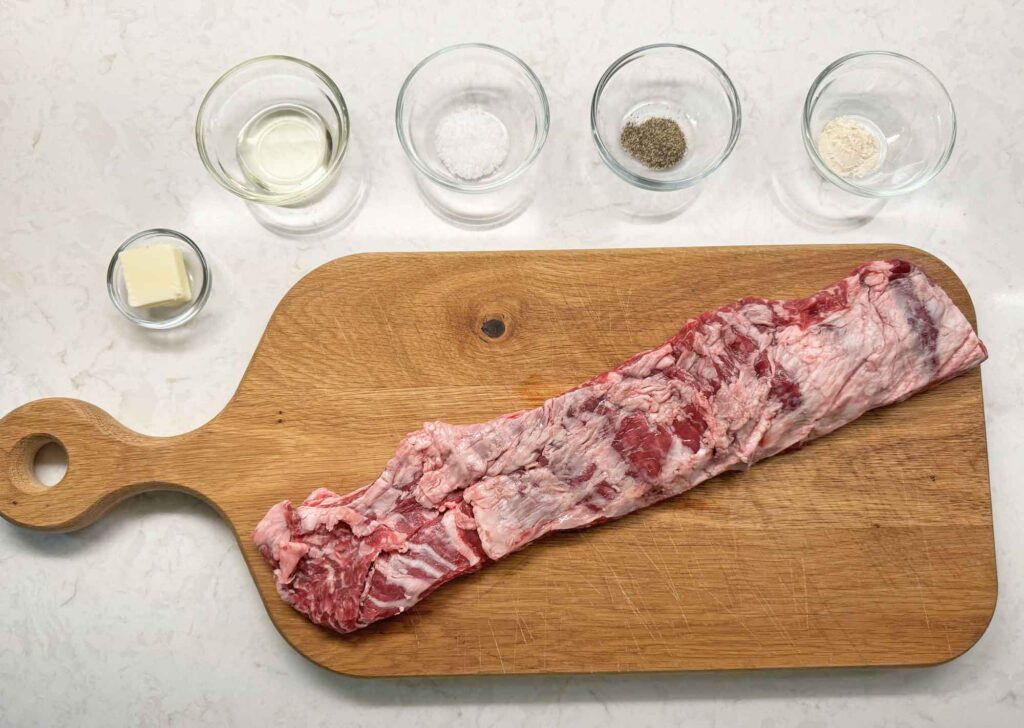
What I Did to Cook My Skirt Steak
I dried it off (this matters more than you think)
I took the steak out and patted it dry really well. Like, more than you think you need to. If there’s moisture on it, it won’t brown properly, and then you just get gray meat instead of that nice crust.
I trimmed some fat off
I trimmed off the larger, thicker pieces of fat so it would be easier to cook and slice. Be sure to remove any tough or rubbery pieces. Do leave a little thin fat, though, as it melts quickly, helps with flavor, and protects the meat while it cooks.
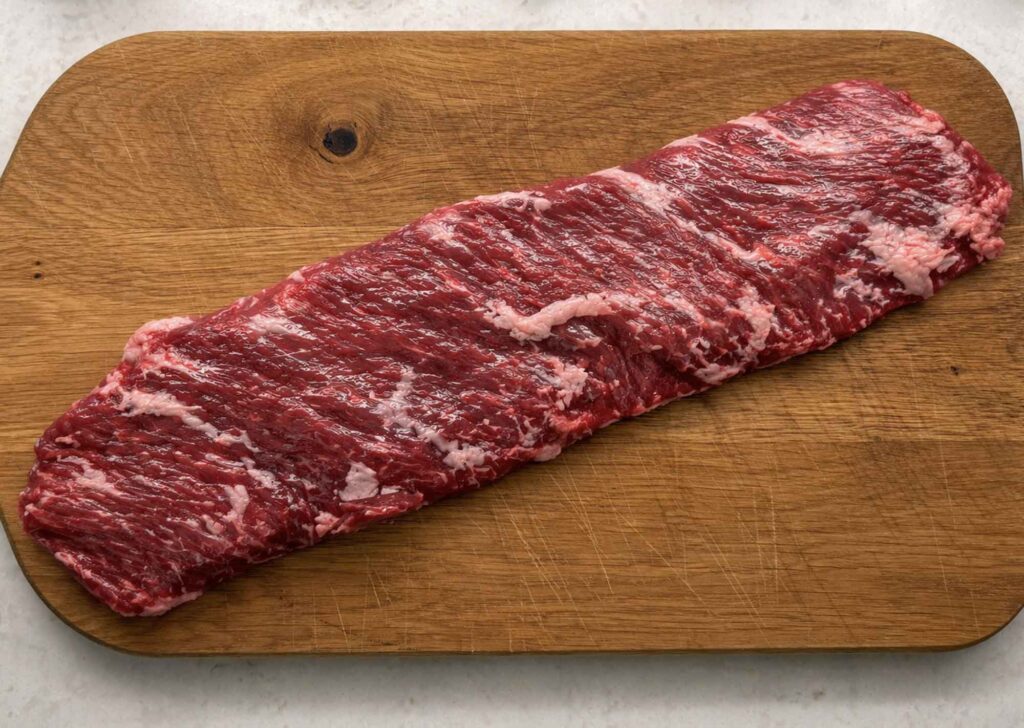
I seasoned it and let it sit
I seasoned it with salt, pepper, and garlic powder. I then let it sit on the counter for about 20–30 minutes while I got everything else ready.
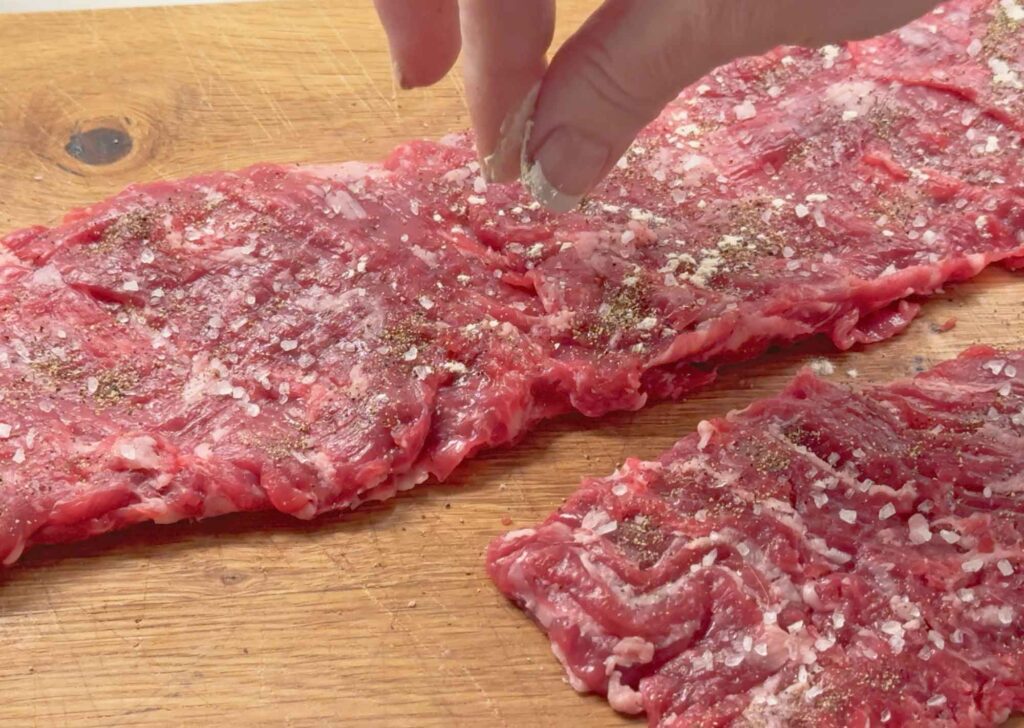
I got the pan HOT
I used my cast iron pan and let it heat up until it was just starting to smoke a little. Not warm. Not medium. But actually hot. Then I added the oil right before the steak went in.
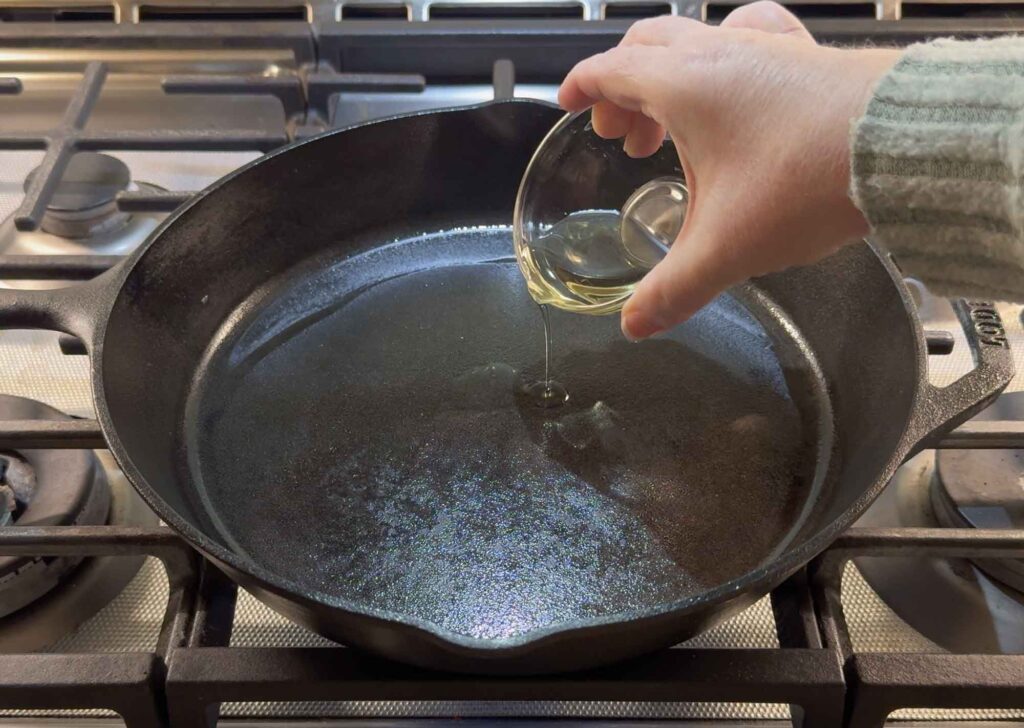
I cooked it fast
I laid the steak down and just left it alone. This part always tempts me to poke at it, but I didn’t. I let it sit so it could form that crust.
- About 2–4 minutes on the first side
- Flip, then another 2–3 minutes
That’s it. It goes quickly.
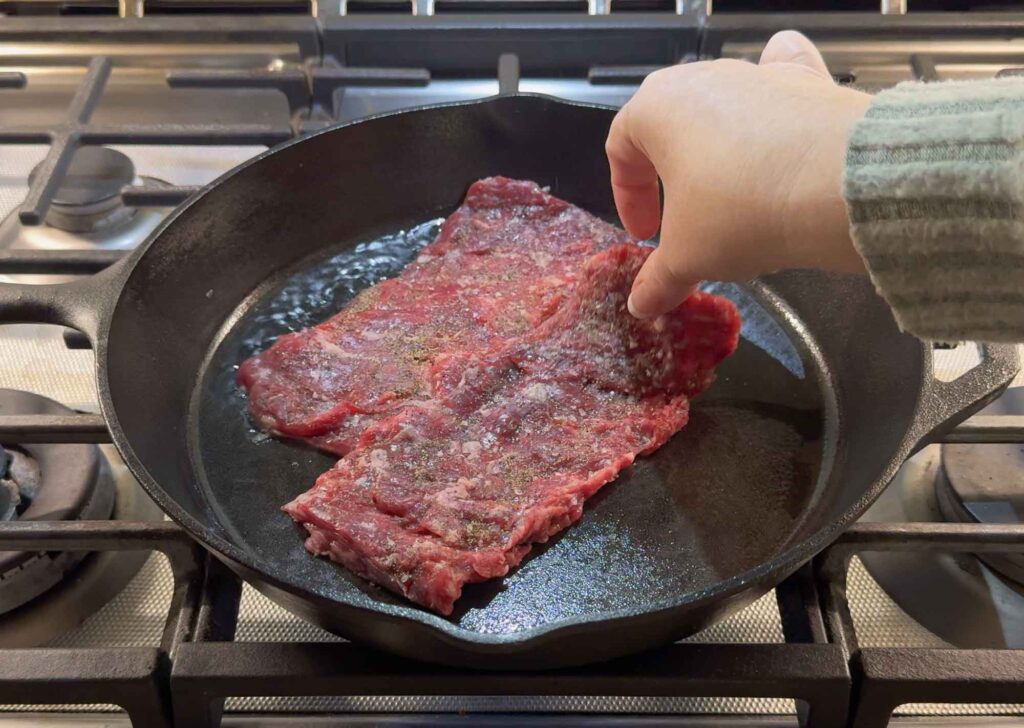
I added butter at the end
In the last minute, I added butter and spooned it over the steak. This is one of those little things that feels unnecessary until you do it and realize… oh, well, THAT is better.
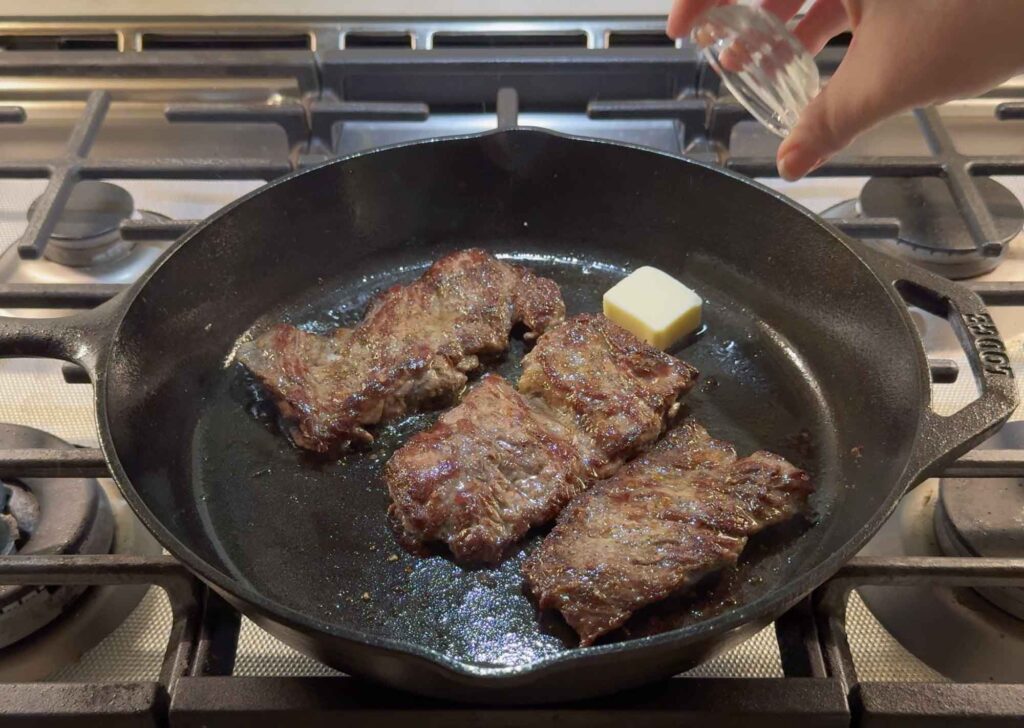
I let it rest
I pulled it off and let it sit for about 5–10 minutes. I know. It’s hard to do when you just want to eat it. But it makes a difference!
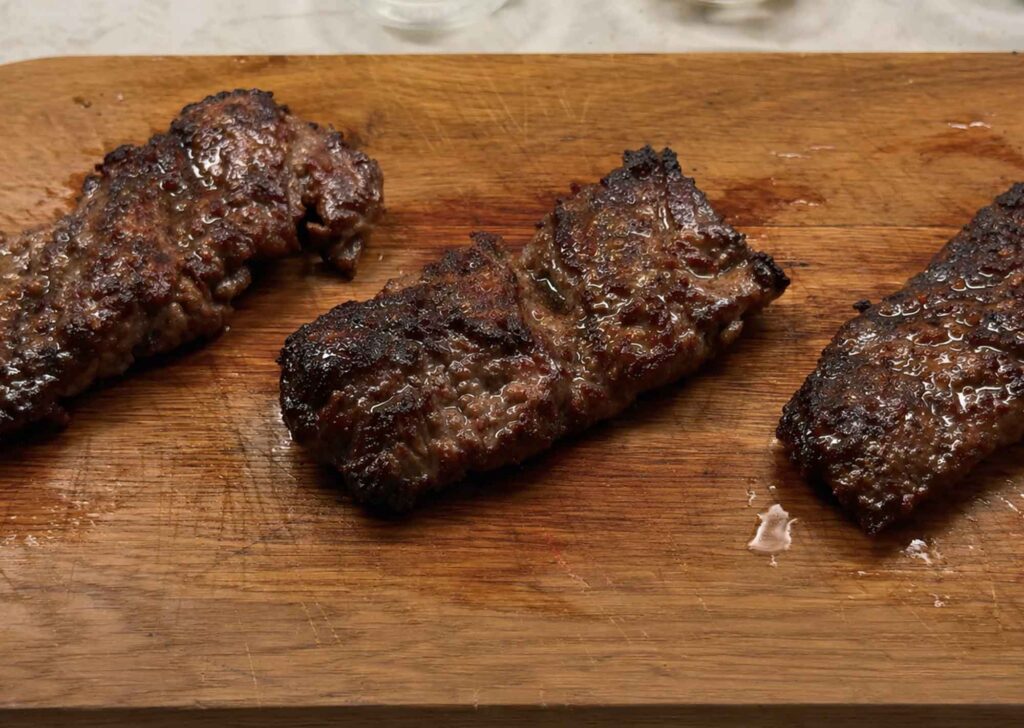
Then I sliced it the RIGHT way
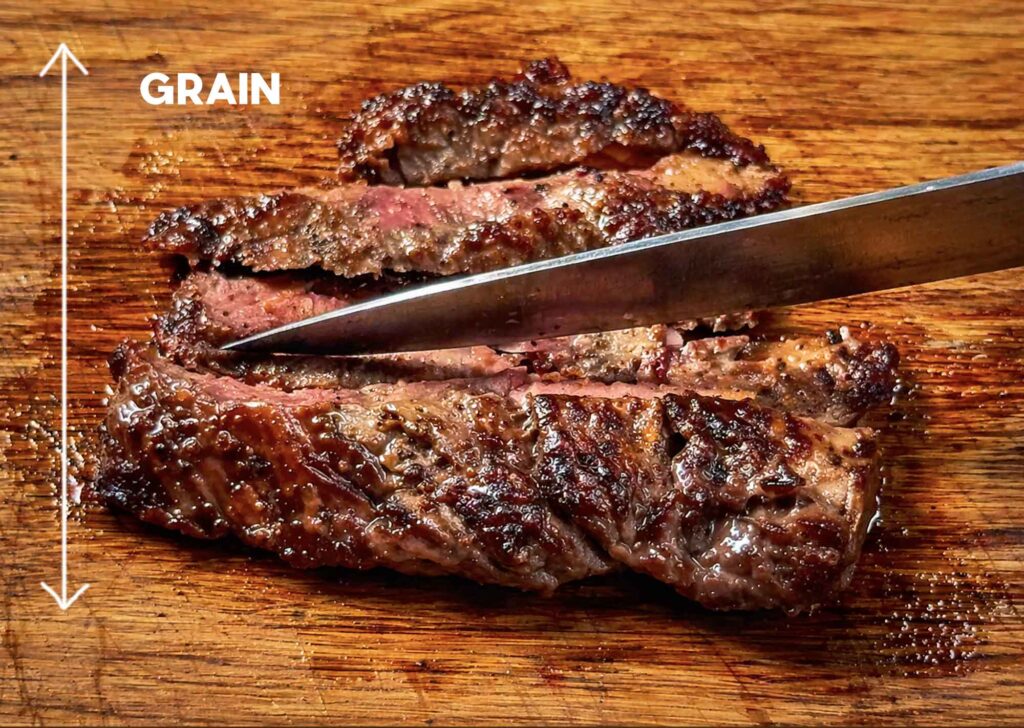
This is the part that really matters. Skirt steak has very long fibers. If you cut it the wrong way, it will be tough no matter how well you cooked it. So I turned it and sliced across the grain, into thin strips. If you’re not sure how to do that, read on!

Want to Save This Recipe?
Enter your email below and we’ll send it straight to your inbox! Plus you’ll get new recipes each week!
How to Slice Skirt Steak Across the Grain
This step that makes or breaks skirt steak. You can cook it perfectly and still end up with something chewy if you slice it wrong. Ask me how I know!
First, look for the grain
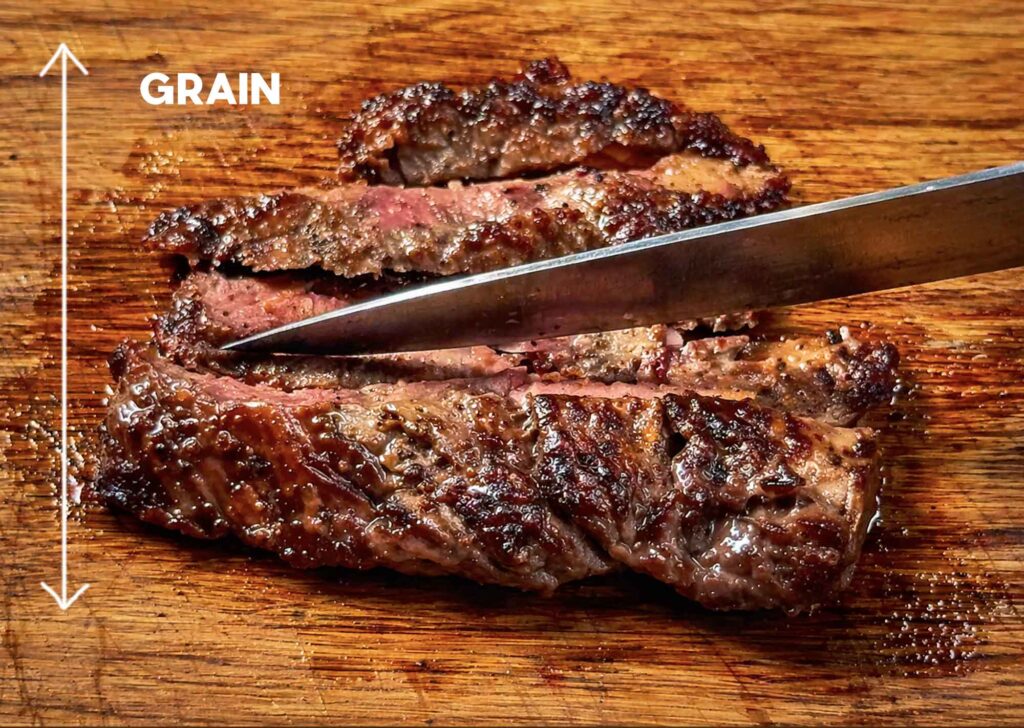
The “grain” is the direction the muscle fibers run. On skirt steak, it’s very obvious. You’ll see long lines running all in one direction, almost like the wood grain on a board.
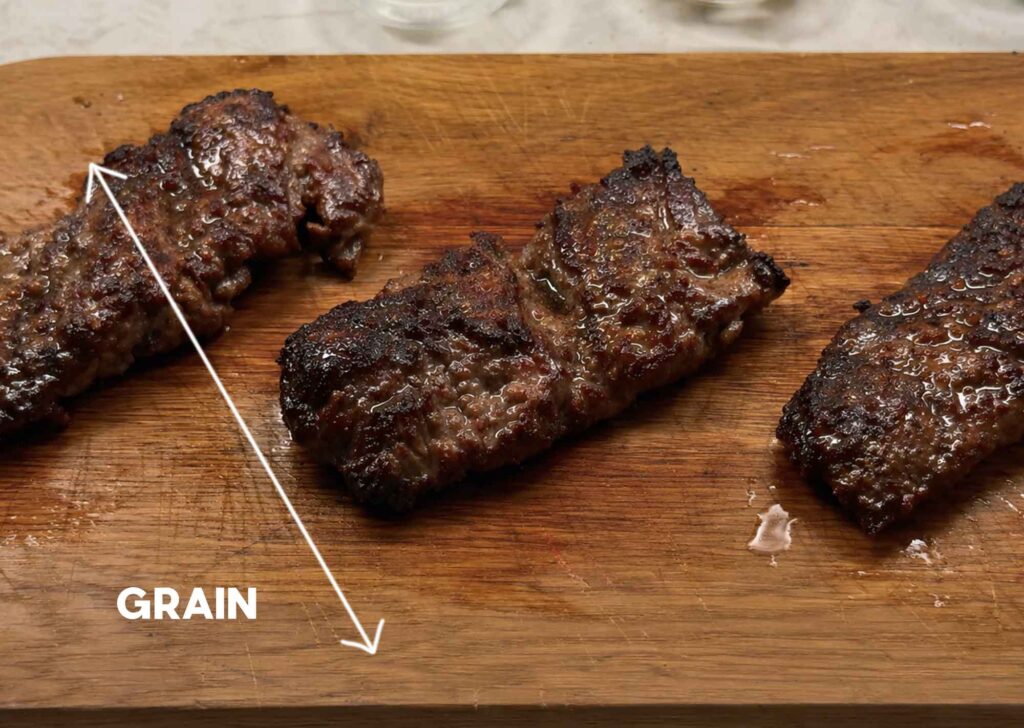
Then, turn the steak
Before you cut, rotate the steak so those lines are running at 90 degrees to how you will cut. This makes it much easier to slice the right way.
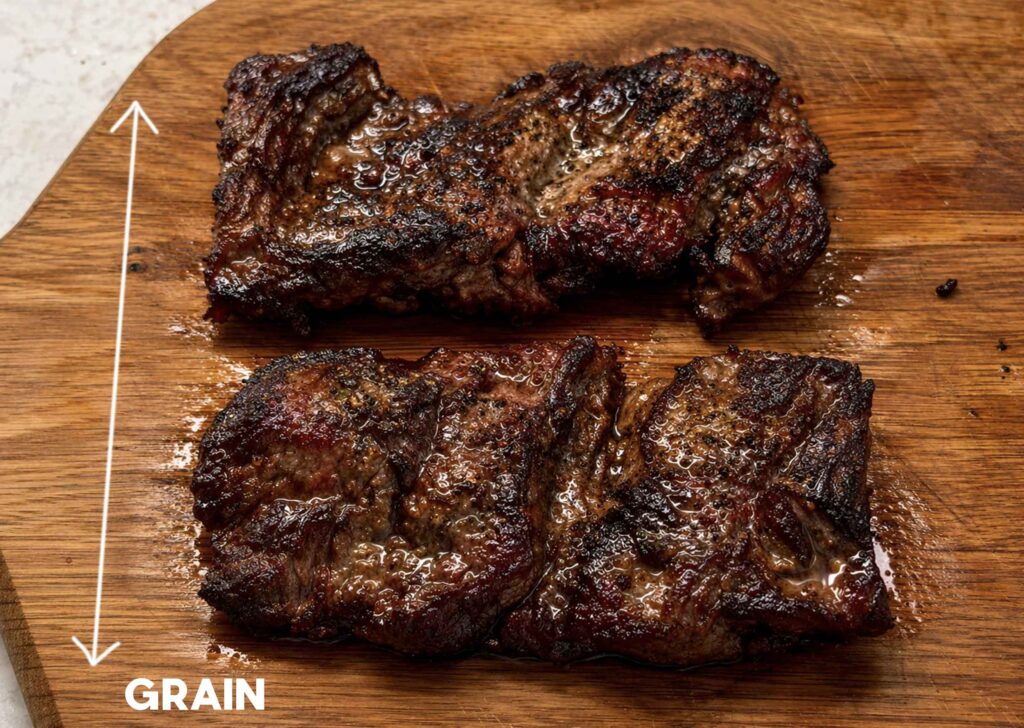
Now slice ACROSS those lines
You want your knife to go perpendicular to the grain. So instead of cutting along the lines, you’re cutting through them. Think of it like this:
- With the grain = long, chewy strands
- Against the grain = short, tender pieces
Slice it thin
Cut into thin strips, about ¼ inch thick or so. Thinner slices = more tender bites. I’ll be honest, I find this hard to do, and mine usually turn out to more like half an inch. So just do your best here.
What it looks like when it’s right
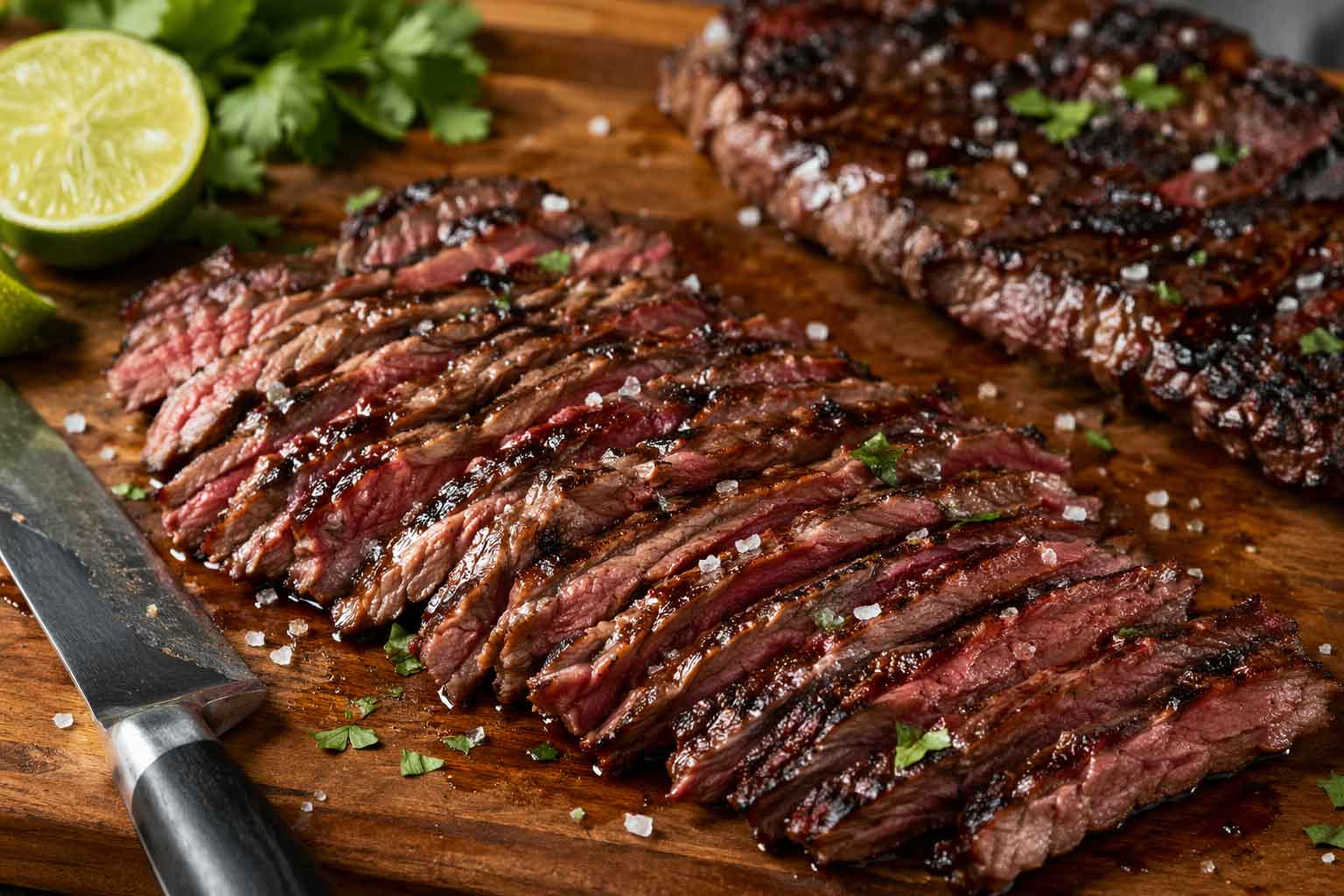
When you look at a slice, you should not see long strands running the length of it. Instead, you’ll see lots of tiny broken fibers, and it will feel tender when you bite into it.
What It Actually Tastes Like
This is a very beefy cut. More flavor than something like sirloin, but it doesn’t have the same built-in tenderness. The outside gets nicely browned and a little crisp at the edges, and the inside stays soft and juicy if you don’t overcook it. The butter pulls it together, gives it a little richness without covering up the meat itself. If you overcook it, though… you will know. It gets chewy fast.
Skirt Steak Recipe
Equipment
- 1 cast iron skillet
Ingredients
- 1-1.5 lb. skirt steak
- 1–1½ teaspoon kosher salt
- ½ teaspoon black pepper
- 1 teaspoon garlic powder (optional but recommended)
- 1 tablespoon oil (high heat, use avocado or canola)
- 1 tablespoon butter
- Optional: squeeze of lemon or splash of vinegar at the end
Instructions
Dry and Season
- Pat the steak very dry (this matters for browning). Season generously with salt, pepper, and garlic powder. Let it sit at room temperature for 20–30 minutes.
Get the Pan Hot
- Use a cast iron skillet. Heat it until it’s just starting to smoke. Not warm… hot. Add oil right before the steak goes in.
Sear Fast
- Lay the steak down and don’t move it. Cook ~2–4 minutes per side. You’re looking for a deep brown crust. Skirt steak is thin, and it cooks fast. Target:* Medium-rare: 125–130°F* Medium: 130–135°F
Butter Finish
- In the last minute, add butter. Tilt the pan and spoon it over the steak.
Rest (Don’t Skip This)
- Rest for 5–10 minutes before slicing.
Slice Against the Grain (Critical)
- Turn the steak so the grain runs left to right. Slice thin across the fibers. This is what makes it tender.
Notes
- Skirt steak cooks very quickly, don’t walk away from it
- For best results, cook to medium-rare or medium
- Always slice across the grain into thin strips for tenderness
How to Tenderize Skirt Steak (What Actually Works)
Here’s the honest answer: skirt steak doesn’t need a complicated process. But it does need the right handling.
If you do nothing else, slice it correctly after cooking and you’ll already be ahead of most people.
That said, here are the ways I actually tenderize it, and when I use each one.
1. The “Do Nothing Extra” Method (when I’m in a hurry)
This is the simplest.
- Salt it
- Cook it hot and fast
- Don’t overcook
- Slice across the grain
That’s enough.
Skirt steak is naturally flavorful, and if you treat it right, it doesn’t need much help.
2. Salt Ahead of Time (what I do most of the time)
If I’m thinking ahead even a little, I salt it 30 minutes to a few hours before cooking.
What happens:
- The salt pulls moisture out, then it reabsorbs
- That helps the meat hold onto juices
- It also loosens things up just a bit
It’s simple, no extra ingredients, and it works.
3. Quick Marinade (Best for Extra Tenderness + Flavor)
If you want it noticeably more tender, marinate it! I have an amazing and easy steak marinade recipe which a full flavor profile. But you can also just use a basic marinade of:
- 2 tablespoons soy sauce
- 1 tablespoon acid (lime juice or vinegar)
- 1–2 cloves garlic
- Optional: a little oil
Let it sit:
- Minimum: 30 minutes
- Better: 2–4 hours
What this does:
- The acid helps break down the surface fibers
- The salt (soy sauce) seasons it deeper
Don’t go overnight. It can get mushy.
4. Baste & Glaze
During the last few minutes of cooking, I will lightly brush a thin layer of my homemade BBQ sauce recipe onto the cooked side of the steak. I also flip the steak and brush the other side as well. The goal is to get the sauce to caramelize a bit without burning.
5. Light Score & Season (Useful, but optional)
Sometimes I’ll take a knife and make very shallow cuts across the surface before seasoning and cooking. Nothing deep, just little lines. This:
- Helps break up the fibers
- Lets things like ranch seasoning or marinades get in a bit more
I don’t always do this, but it can help if the cut looks especially tough.
6. Meat Mallet (Rarely needed)
You can pound it with a mallet. But honestly? I almost never do. It works, but it also:
- Flattens the texture
- Makes it feel a little less like steak
I’d rather control tenderness with cooking and slicing.
USING IN OTHER RECIPES

It’s possible to use skirt steak in other beef recipes, such as my Beef Tips & Gravy recipe, but be sure to cook it as fast as possible. Do not slow-cook or simmer skirt steak in gravy for hours like you might other meats. The key is to sear skirt steak quickly, make your gravy separately, then toss your skirt steak bites back in just before serving.
What Actually Matters Most
If you only remember two things:
- Don’t overcook it
- Slice it across the grain
That’s where the real tenderness comes from. Everything else just helps a little.
If I’m Being Practical About It
Most days, I just salt it, cook it fast, and slice it right. If I’m planning ahead or want something a little more forgiving, I’ll do a short marinade. That’s it. No complicated steps, no special tools, just paying attention to what actually makes a difference.
THOUGHTS

When I made this last night, I trimmed off the thicker, tougher fat before cooking, which made the steak easier to slice and eat. Looking back, I may have gone a bit further than necessary. Leaving some of the thinner fat in place would likely help it stay a little juicier while it cooks, so that’s something I’ll try next time.
What to Serve With Skirt Steak
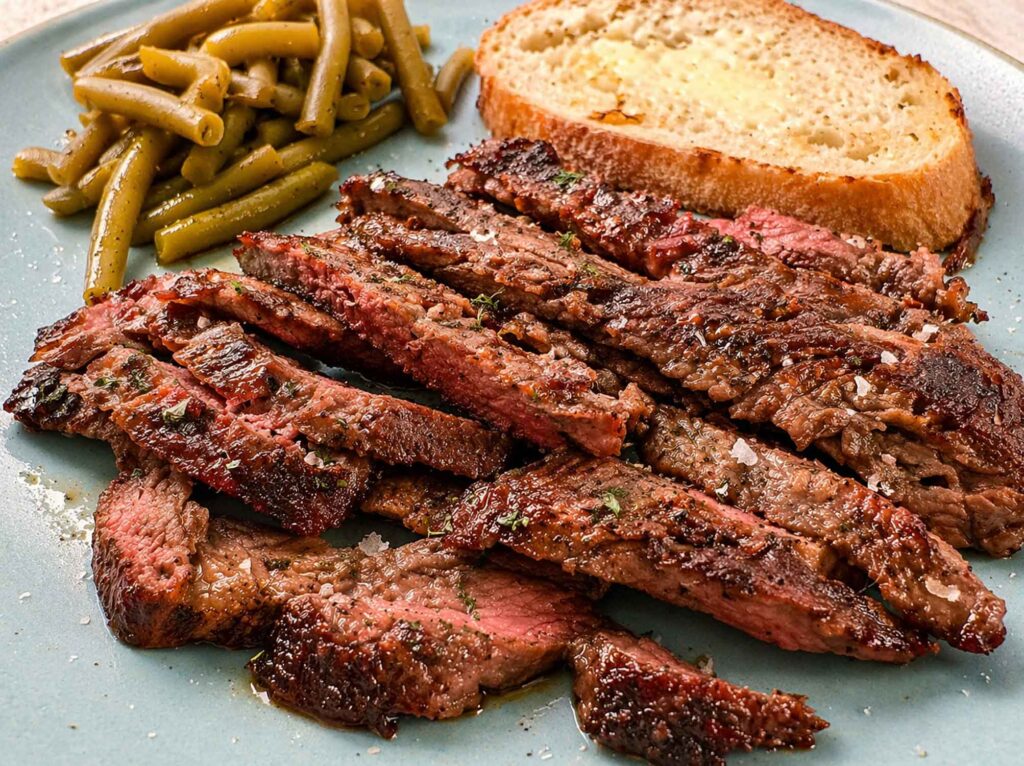
When I make skirt steak, I usually keep everything around it simple, because the steak itself has a lot of flavor and cooks so quickly. I like something that can soak up the juices, like mashed potatoes, rice, or even a slice of good sourdough bread. A fresh vegetable on the side helps balance it out, something like green beans, a simple salad, or sautéed onions and peppers. If I’m being honest, I often just look at what I already have and build around that. Skirt steak doesn’t need anything fancy to feel like a complete meal.
How to Reheat Skirt Steak
Reheating skirt steak can be tricky, because it’s easy to dry it out. I’ve found the best way is to warm it gently, not blast it with heat. I usually put slices in a pan over low heat with a little bit of butter or oil, just until warmed through. You can also cover it to help hold in moisture. The microwave works in a pinch, but I go low power and short bursts so it doesn’t turn tough. Honestly, if I can, I’ll just eat it cold or bring it back to room temperature, it stays more tender that way. We finished this one in a single sitting, so no need to reheat it!
Tried this recipe?
Tap the stars in the recipe card to leave a quick rating. Your rating helps other home cooks know this recipe works in a real kitchen, not just mine.
And as a thank-you for your feedback, you will receive a free printable copy of my Maker Home Companion Cookbook, featuring my most popular recipes, each one formatted on a SINGLE, easy-to-use page, a perfect kitchen companion for easy meal prep. Click here to learn more about this cookbook and how you can get your copy!


Meet Jennifer
Jennifer cooks and experiments in the kitchen at Maker Farm, where she focuses on simple pantry cooking, homemade staples, and practical recipes that make everyday meals easier. Over the years she has tested many ways to make cooking simpler and more dependable, and shares the methods that work best in her own kitchen, occasionally showing them on her Heart to Home at Maker Farm vlog.
Thank you, this was great and easy! I appreciate your simple recipes and clear instructions. I am trying to eat simple home cooked meals and good flavorful recipes and the right steps in the right order make it a lot more delicious.
Happy to hear this, Amy!