

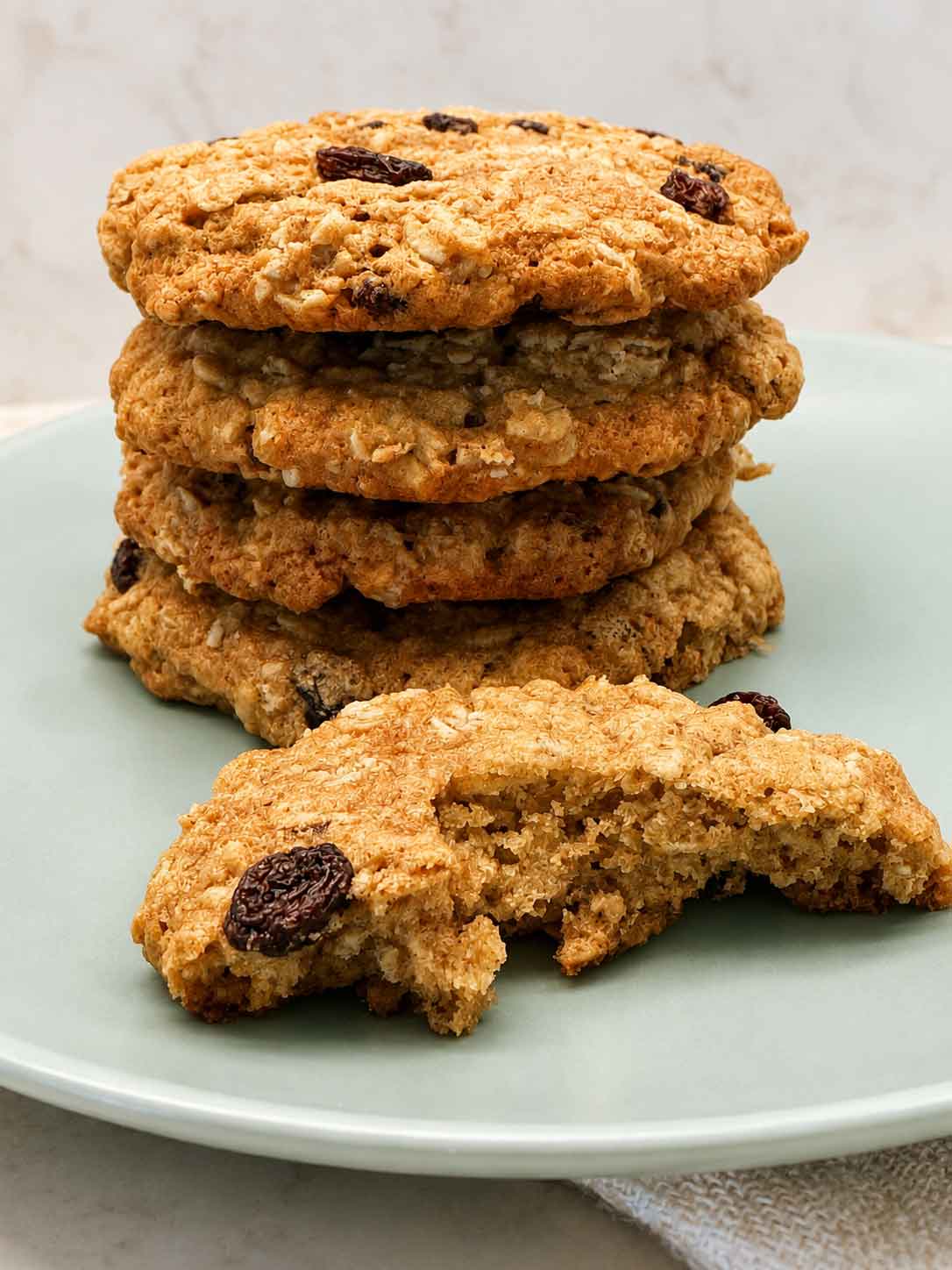
These soft and chewy sourdough oatmeal cookies are made with rolled oats, brown sugar, warm cinnamon, and sourdough starter. Bake them the same day, or cold-ferment the dough for a day or two for softer, more digestible cookies with a deeper, almost caramel flavor. They’re ready in about 12 minutes at 350°F. Ah-mazing!
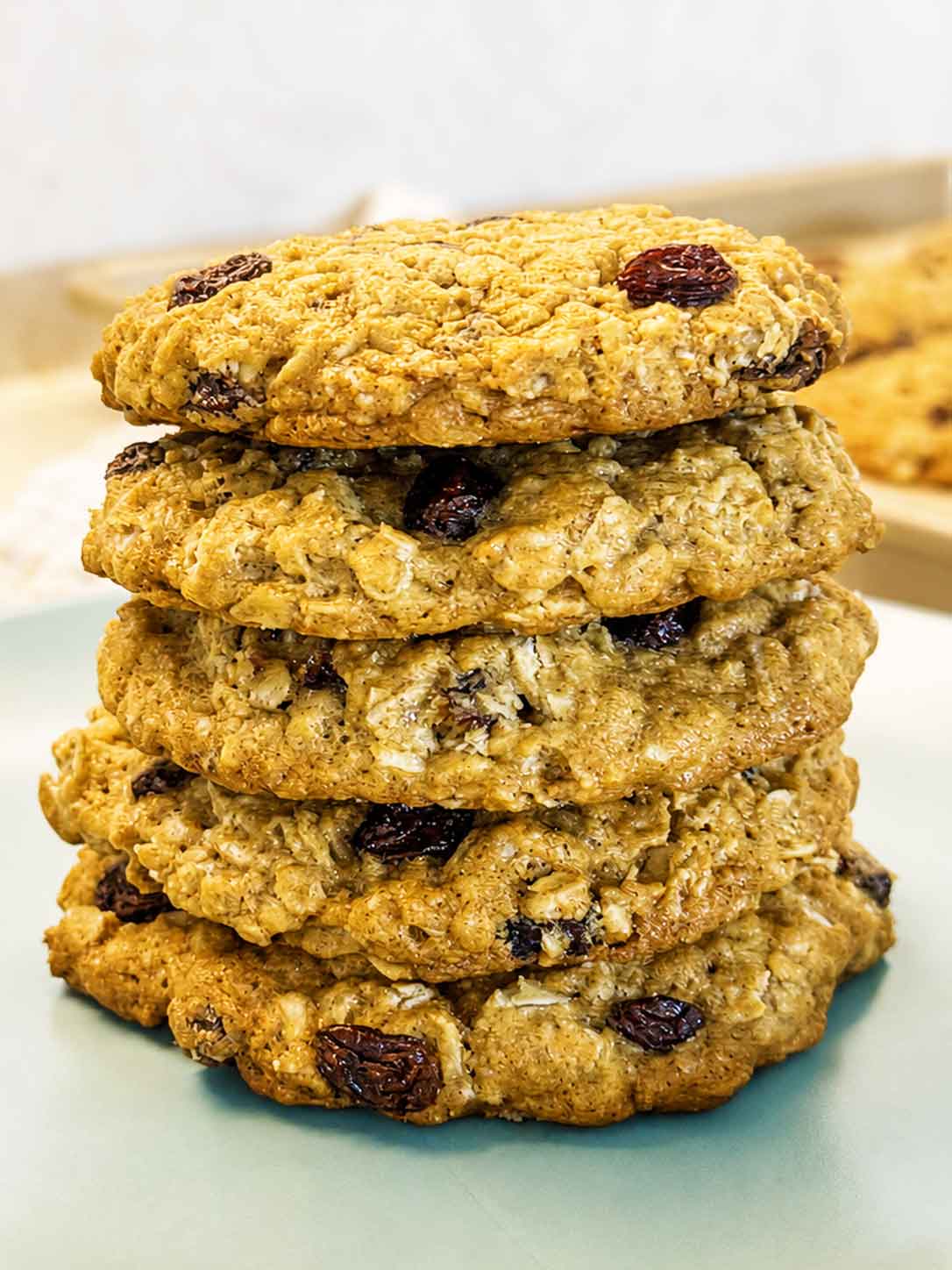
A Better Oatmeal Raisin Cookie

I can’t forget the first time I made Greg oatmeal cookies, about 14 years ago now. He was so happy, and he loved them SO much, that it honestly made me want to make him all the cookies in the world.
This recipe is that same longtime oatmeal cookie, just grown up a little. I moved it over to sourdough to get softer cookies, to make them a bit easier on the tummy, to gentle out the sugar spike, and to coax out those subtle caramel notes I love. It means a treat like this is something we get to enjoy a little more often, and that makes me happy.
Let’s dig in!


Want to Save This Recipe?
Enter your email below and we’ll send it straight to your inbox! Plus you’ll get new recipes each week!
Why I Turned My Oatmeal Cookie Recipe into Sourdough Cookies
I love a soft cookie, and the softer the better. So when I started making sourdough weekly and always had starter on hand, I got curious about what it would do to my cookies. Turns out, it does a lot of lovely things. My sourdough chocolate chip cookies are amazingly soft!
The starter adds moisture, which is the first reason these bake up so soft and chewy instead of dry and crumbly. That is the change you’ll taste right away, even if you bake them the same day.
The bigger magic happens when you let the dough rest in the fridge for a day or two before baking. During that long, cold ferment, the wild yeast and bacteria in the starter slowly work on the flour and oats. Many sourdough bakers find that longer ferment makes baked goods a little easier to digest, and the slow fermentation is thought to gentle the blood-sugar spike you’d get from a regular cookie. I’m not a doctor, so I won’t promise numbers, but I can tell you these sit easier for us than my old recipe did. And the flavor? The rest deepens it into something warm and almost toffee-like, with just a whisper of sourdough tang behind the cinnamon. That caramel note is the part I fell in love with.
So we’re really building in flexibility here. Bake a few tonight for the soft, chewy cookie you already know, or let the dough sit and reward you with all of that. Both are SO good. I’ll walk you through every path.
What’s In This Recipe
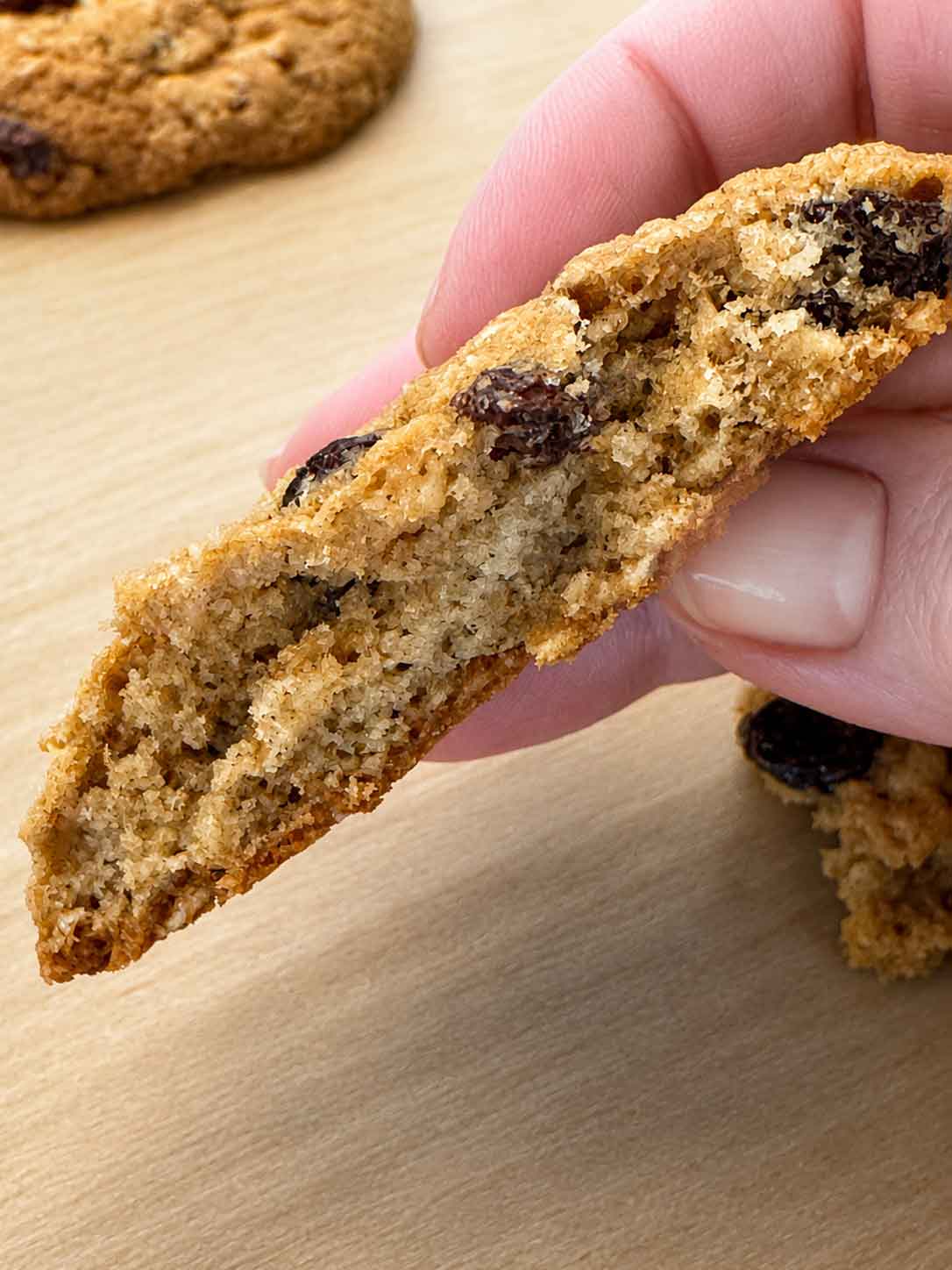
Everything here is pantry-friendly, and if you already keep a starter going, you probably have all of it on hand. The full recipe with amounts is in the recipe card below. Here’s what each thing is doing:
- Unsalted butter, softened. Softened, not melted. You want it soft enough to dent with a finger but still cool to the touch. If it’s too warm or greasy the cookies will spread thin, so don’t rush it in the microwave.
- Sourdough starter. Either unfed discard or active starter works here, cold from the fridge or at room temperature. Just give it a stir if the liquid has settled on top. No starter yet? My beginner starter guide walks you through growing one, and the discard from those very first feedings can go straight into these cookies.
- Dark or light brown sugar and a little granulated sugar. The brown sugar is doing most of the work here, bringing chew, moisture, and that molasses depth that plays so nicely with oats. I reach for dark brown sugar now, because it holds onto even more moisture and leans further into that caramel note. The bit of white sugar just helps the edges set.
- One whole egg plus one yolk. The extra yolk is pure richness, and in an oat dough it earns its keep, adding the fat that keeps all those dry oats from baking up crumbly. Please don’t leave it out, since it’s a big part of the tender, chewy middle.
- Old-fashioned rolled oats. Rolled oats, not quick oats and not instant. The big flakes give you that hearty, chewy oatmeal-cookie texture. Quick oats will work in a pinch, but the cookies come out softer and less toothsome.
- Cinnamon, vanilla, and salt. The cozy backbone of any oatmeal cookie. A full teaspoon of cinnamon sounds like a lot until you taste it against the sourdough tang… trust me here.
- Flour, baking soda. Just enough flour to hold everything together, since the oats do a lot of the structural work. Spoon the flour into your measuring cup and level it off rather than scooping straight from the bag, which packs in extra and is the fastest way to a dry cookie. The baking soda gives you gentle lift and helps the edges brown.
- Raisins, chocolate chips, or nuts (optional). Whatever you love. Greg loves raisins, I lean toward a handful of chocolate chips, and a scatter of chopped walnuts is great, too. Totally your call.
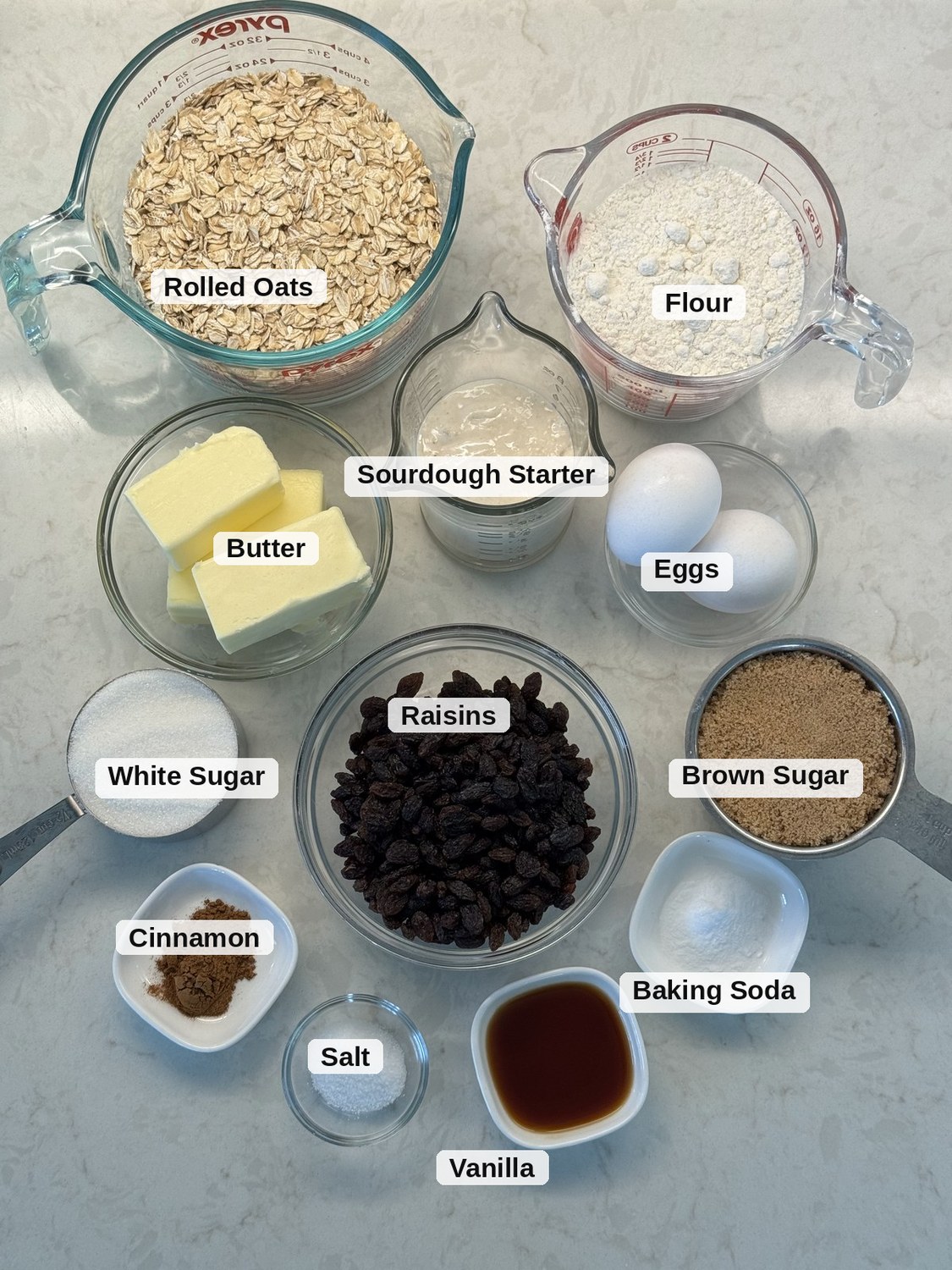
Do I need to feed my starter first?
You don’t, and that’s what makes these such a friendly bake. Unfed discard, the portion you’d normally spoon off and toss before feeding, goes straight in cold from the fridge. No bubbles, no waiting for it to wake up, no fuss. If your discard jar has been quietly filling up all week, this is a wonderful way to use it.
Freshly-fed active starter is welcome too, so use whatever you have going. With the oats in the mix the difference is subtle, but here’s what I notice: fed starter gives a slightly puffier cookie with a milder flavor, while discard sits a touch flatter and brings out more of that cozy sourdough-and-cinnamon warmth. Both are lovely, so pick whichever saves you a step.
How to Make Sourdough Oatmeal Cookies (Step by Step)
I promise this is simpler than a lot of cookie recipes you’ve tried. We’re really making this in two stages: mix the dough, then decide when to bake it.
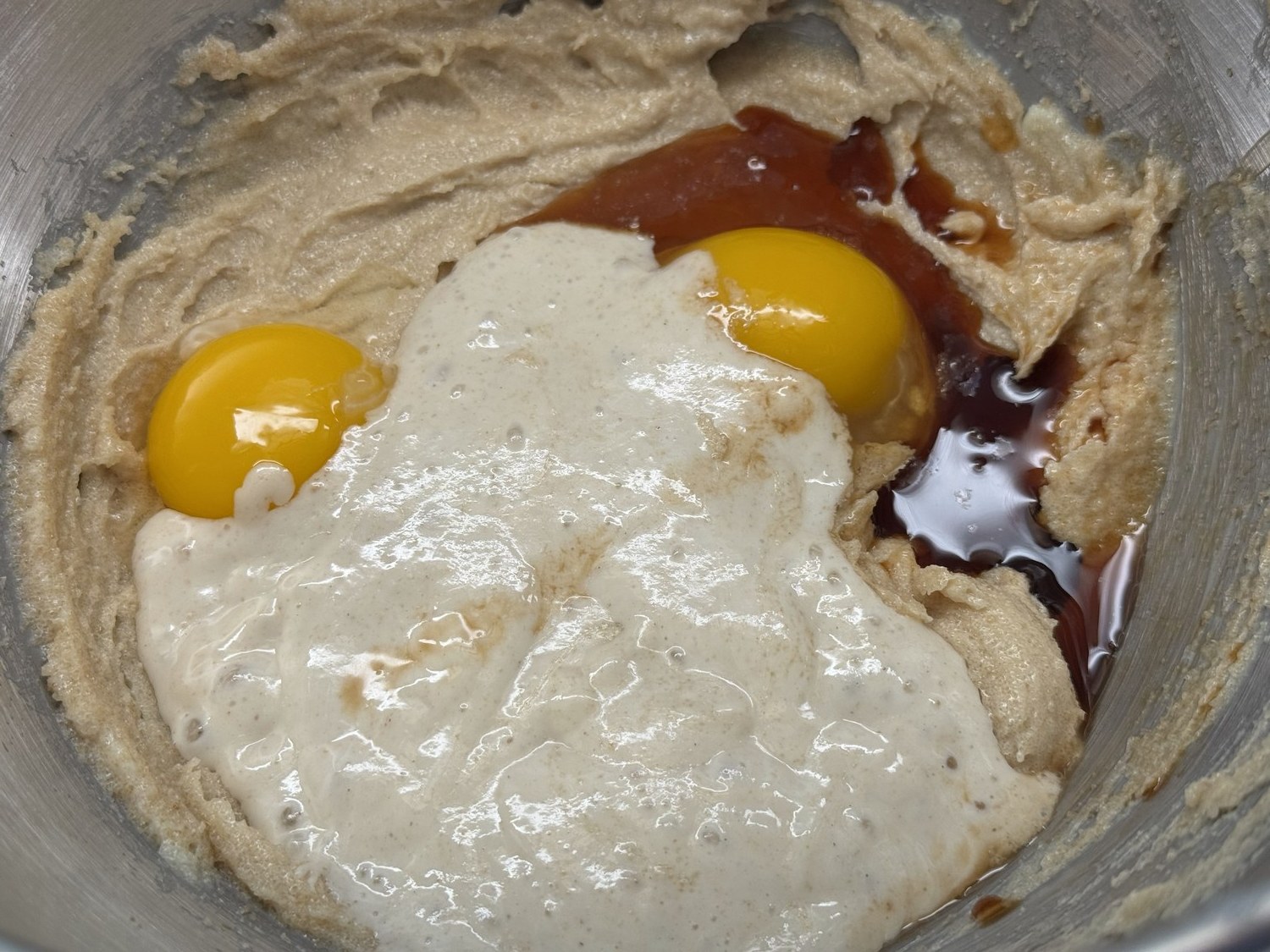
Start by creaming the softened butter with both sugars until the mixture looks light and fluffy, about 2 minutes. You’re not just blending here, you’re beating air in, and that air helps give you a taller, softer cookie. Then add the whole egg, the extra yolk, the sourdough starter, and the vanilla, and mix until smooth. A stand mixer makes quick work of it, but a bowl and a sturdy spoon will do just fine.
In a separate bowl, whisk together the flour, baking soda, cinnamon, and salt so everything is evenly spread. Add the dry ingredients to the wet and mix just until they disappear. One common mistake is overmixing once the flour goes in, which develops the gluten and can make cookies tough, so stop as soon as the dry streaks are gone. Then stir in the oats by hand, followed by any raisins, chips, or nuts you’re using. The dough will be thick and a little sticky, and that’s exactly right.
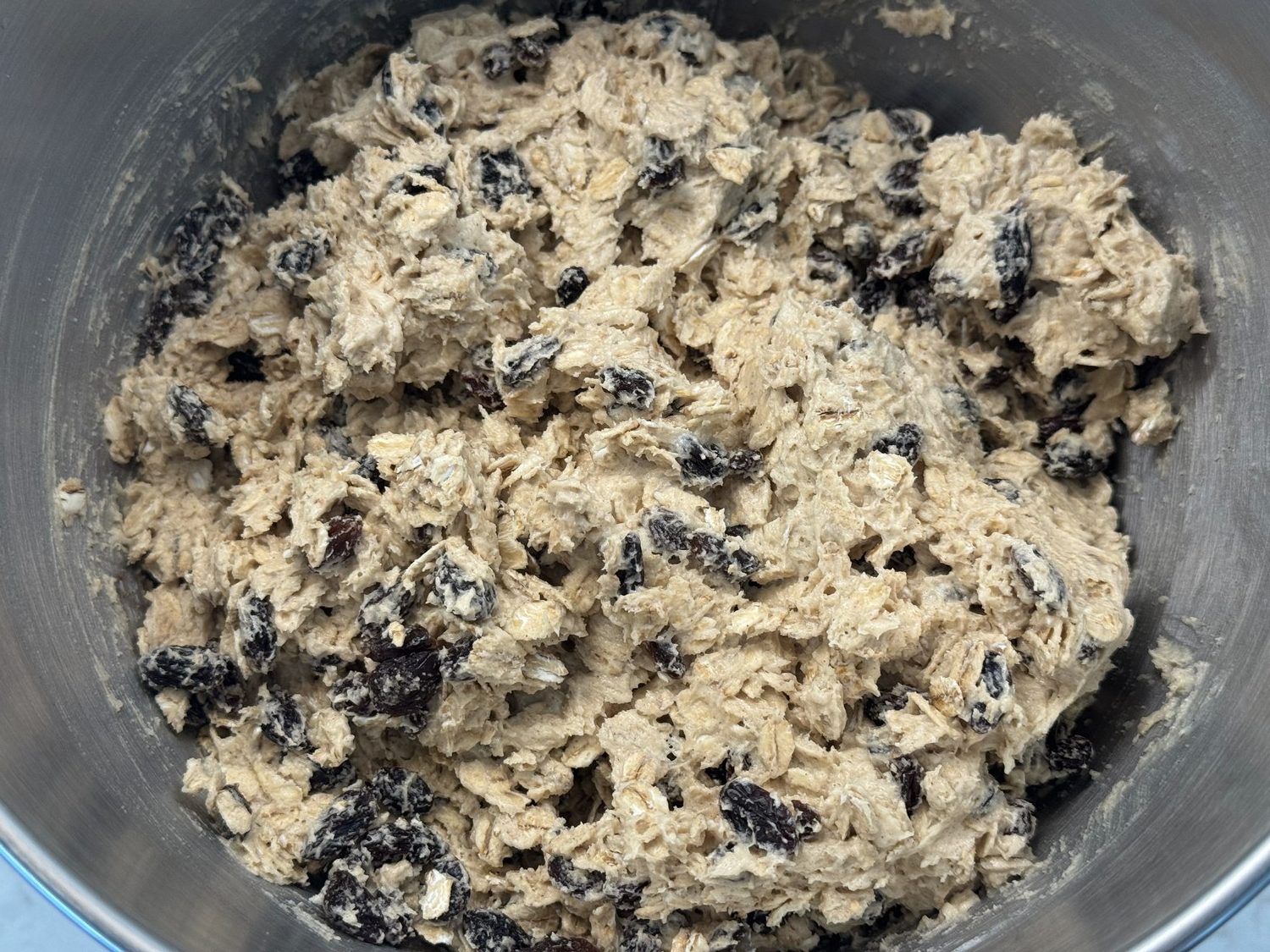
Now comes the one real decision, and it’s a happy one: when do you want to bake? This is where your dough gets to become tonight’s cookies, this weekend’s cookies, or next month’s cookies. Here’s how each path works.
Bake Now, Slow-Ferment, or Freeze?
This is my favorite thing about the recipe, and it’s exactly how I actually use it. I bake a few right away because I have no patience, tuck a batch in the fridge to ferment, and freeze the rest as dough balls for later. One bowl of dough, three kinds of cookies. Here’s each one.
Baking some right away
Want cookies tonight? Give the dough a short rest in the fridge first, at least an hour, though two is better. There are really two reasons to wait even when you’re impatient: the chill gives the oats time to drink up moisture so they aren’t gritty, and it firms the butter so the cookies bake up thick instead of running thin. Then scoop, bake, and you’ll have warm cookies within the hour. This is my no-patience path, and there’s no shame in it.
The long cold ferment (24 to 72 hours)
This is the one I’d nudge you toward if you can wait. Cover the bowl of dough tightly and let it rest in the fridge for anywhere from 1 to 3 days before baking. That slow, cold ferment is where the softer texture, the easier digestion, and that deeper caramel flavor all come from, because the starter has time to actually work on the dough. The longer it sits, the tangier and more complex it gets. Around 48 hours is my sweet spot. Just scoop and bake straight from the cold fridge, adding a minute if the dough is very firm. Be careful not to let it go much past 3 days, though, or the tang can start to get ahead of the sweetness.
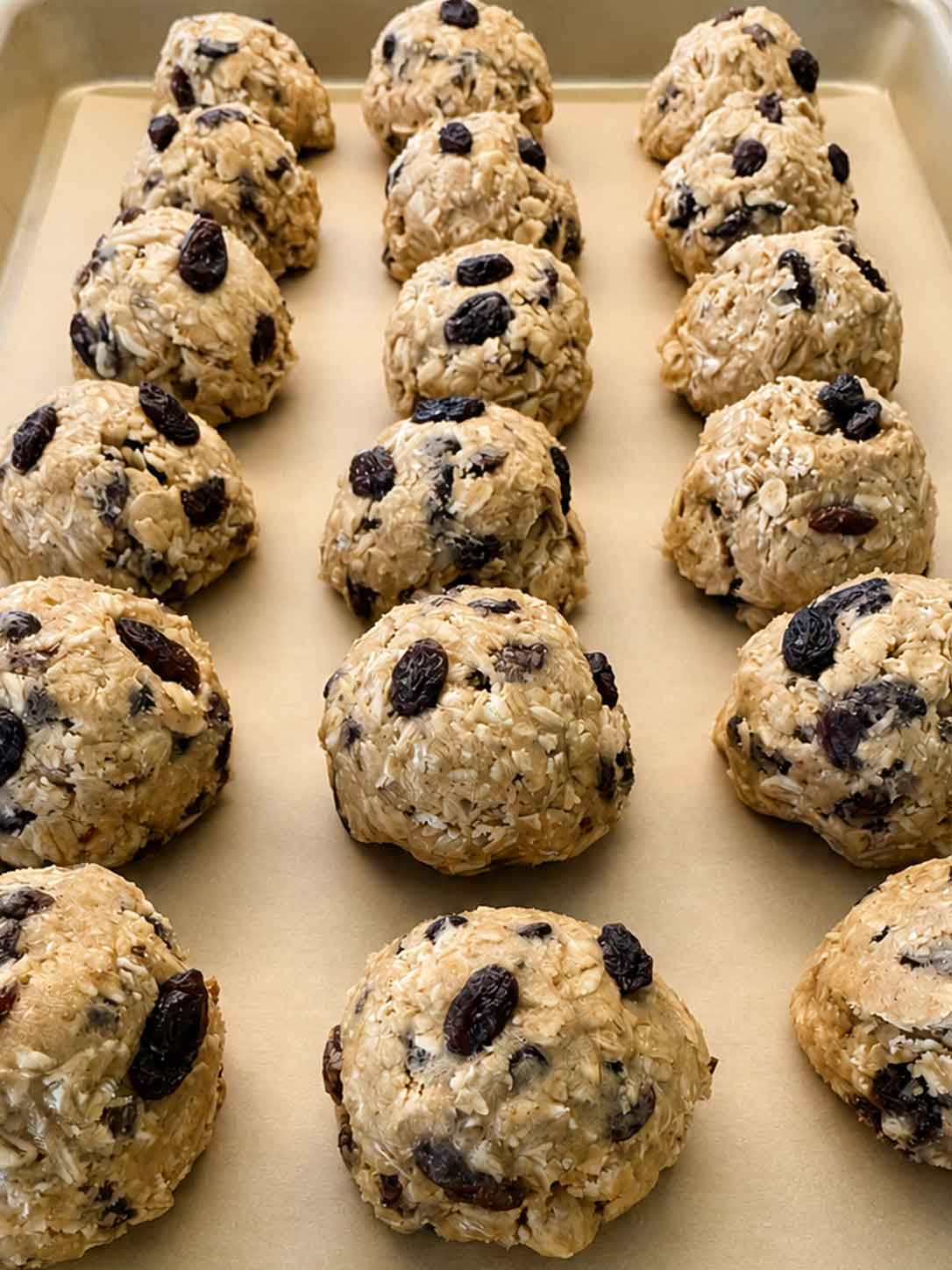
Freezing dough balls for later
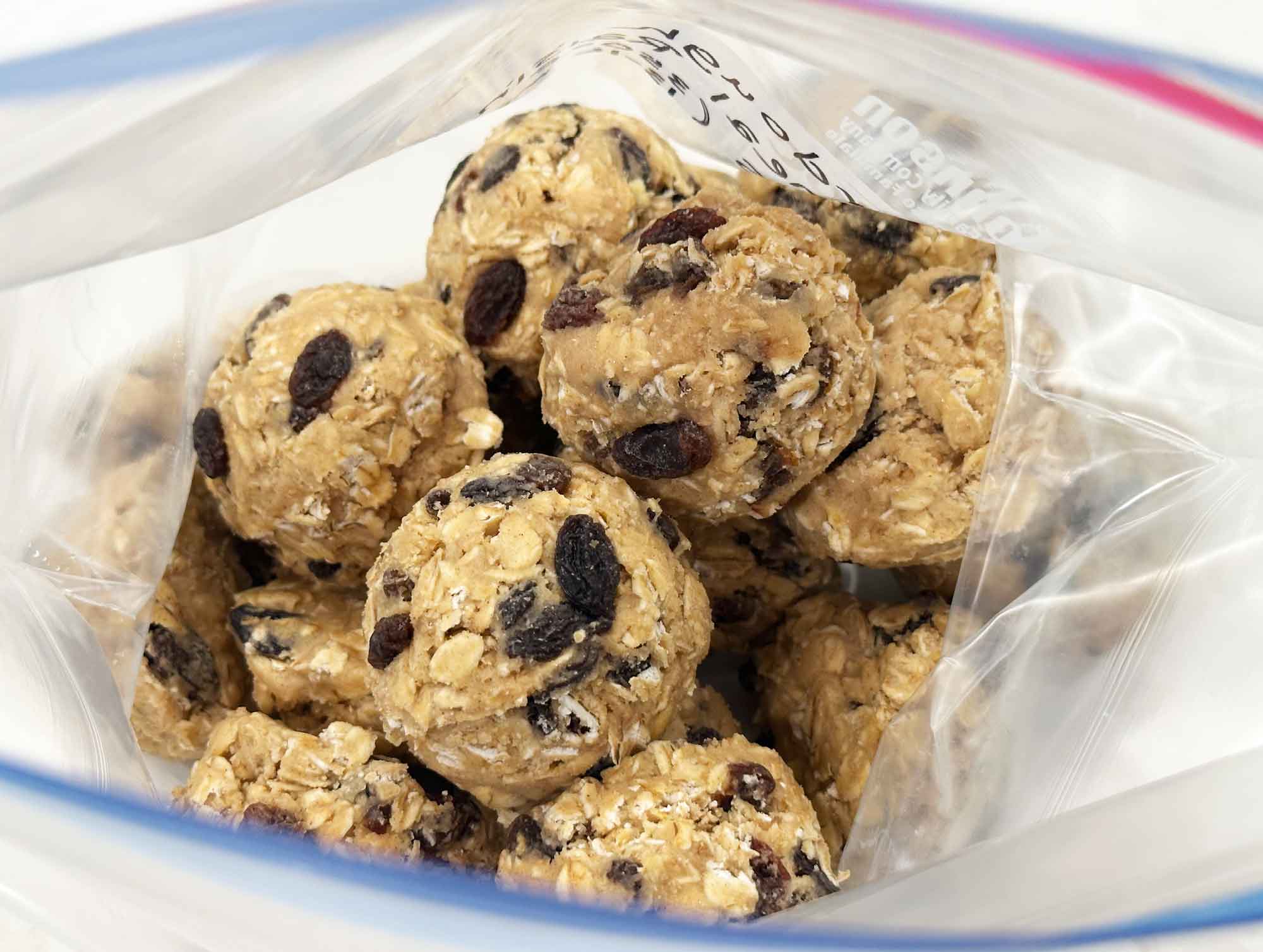
This is how I keep a warm cookie always minutes away. Once the dough has chilled enough to scoop, portion it into big 3-tablespoon mounds and freeze them firm on a parchment-lined tray, about 1 to 2 hours, then tuck them into a freezer bag. From there you have two easy options. You can bake them straight from frozen, adding just a couple of minutes to the time. Or, and this is the trick I love, move a few dough balls from the freezer into the fridge the night before. They thaw slowly and keep fermenting a little as they sit, so they bake up with even more of that deep, mellow flavor. I love that a couple of oatmeal cookies are always one short bake away, without committing to a whole tray or watching leftovers dry out.
How do I bake and cool them?
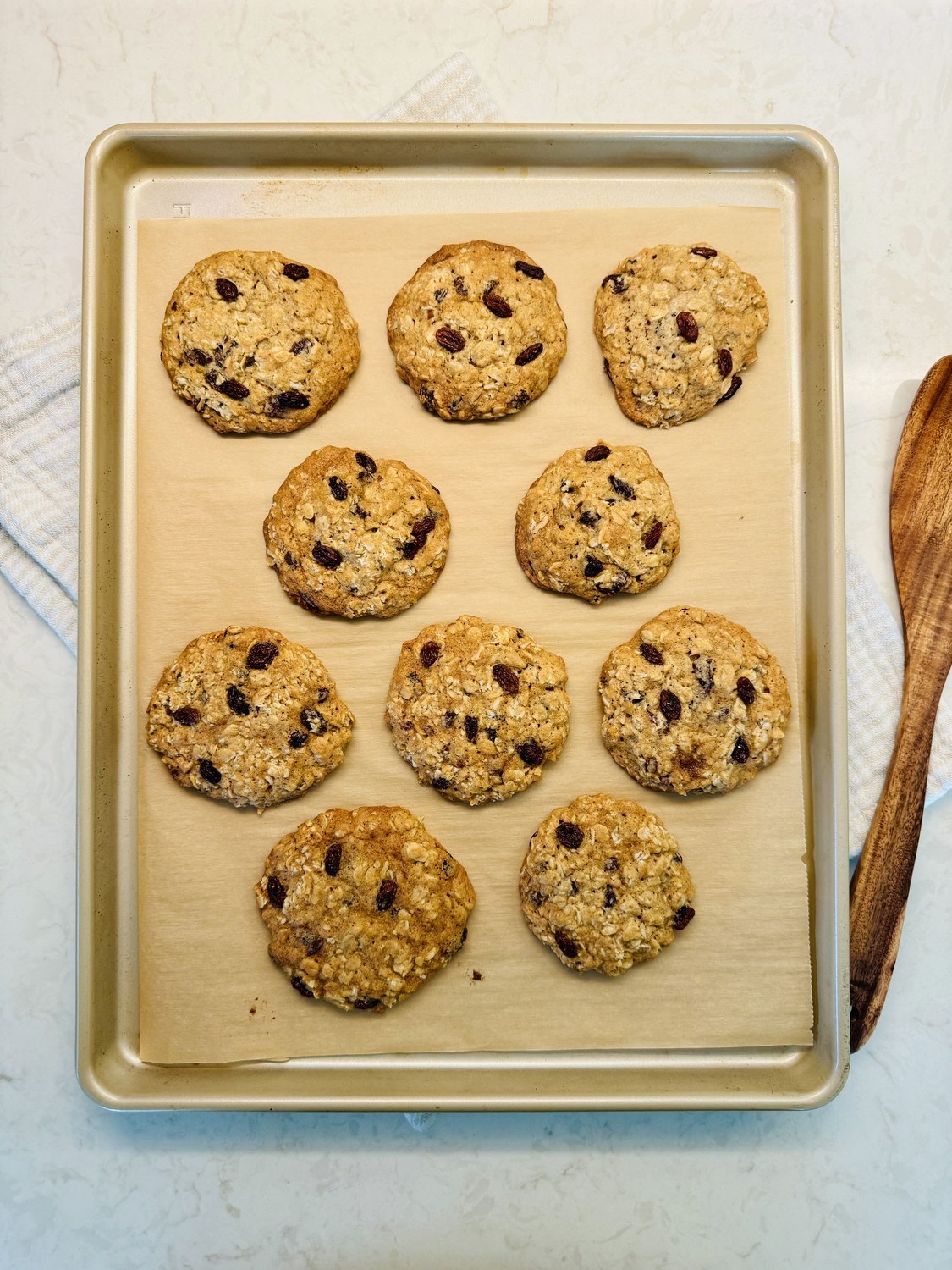
Whichever path you took, the baking is the same. Preheat the oven to 350°F and line a baking sheet with parchment paper. Scoop big mounds, about 3 tablespoons each, spaced a couple of inches apart. Here’s a little thing I do at this point: I press two or three extra raisins onto the top of each mound. It doesn’t change the taste one bit, but once they bake, those raisins peek right out, so the cookies look more tempting and clearly read as oatmeal raisin instead of plain. Keep the mounds tall for thick, chewy cookies, or press them down gently with a spatula for a flatter, more old-fashioned oatmeal cookie. Greg is firmly in the flatter camp, and after years of tall ones I finally get it: pressed a little thinner, the oats toast and the edges crisp into something with real toffee character, while the middle stays soft.
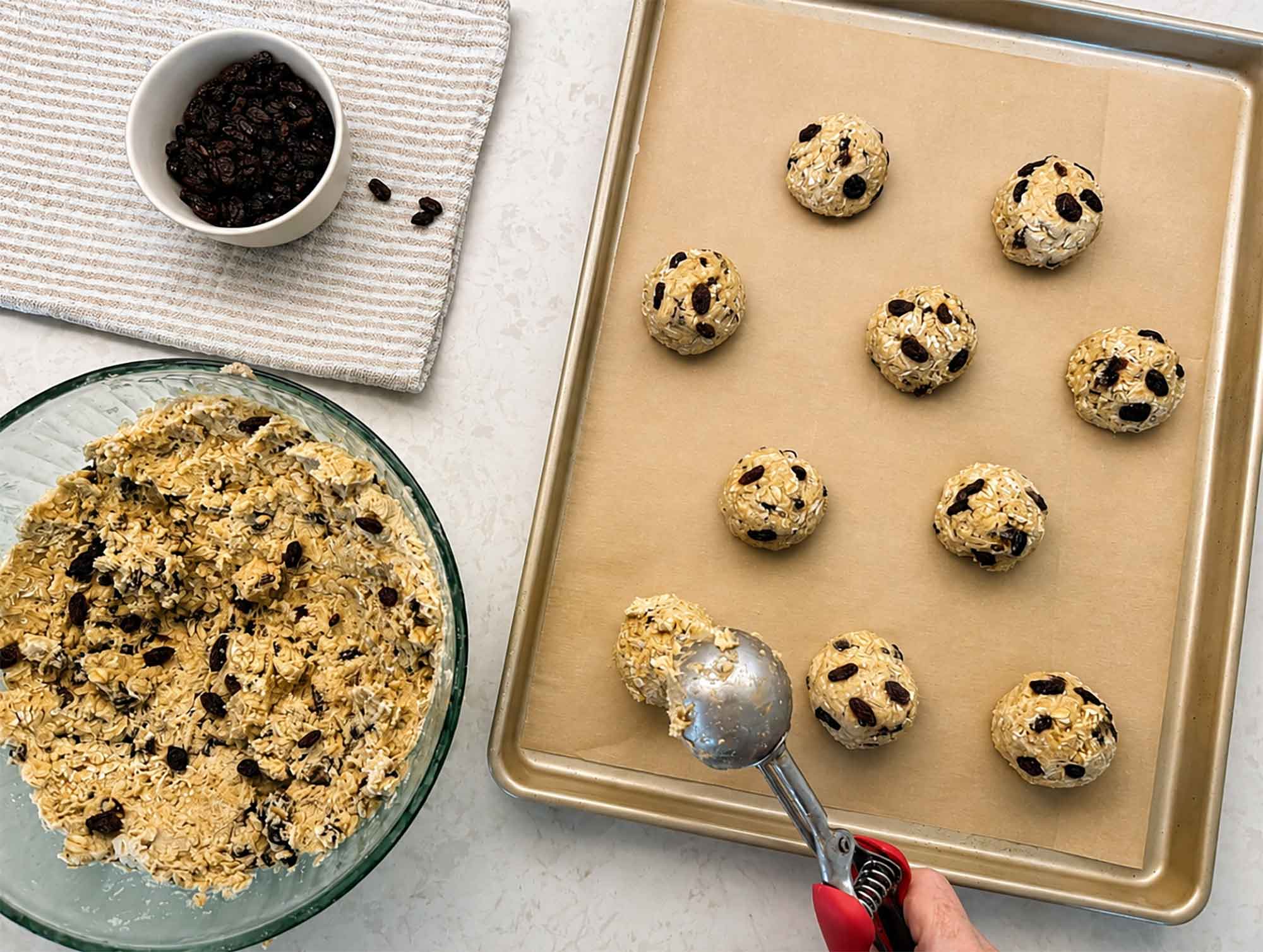
Bake for 10 to 12 minutes, until the edges are just set but the centers still look soft and a little raw. With oats you have to trust this even more than usual, because they firm up a lot as they cool and will turn dry if you wait for them to look done in the oven. Let the cookies sit right on the hot sheet for 10 minutes before moving them, which is when the middles finish setting. Lift one off too early and it can sag or crumble, so give them that resting time.
Sourdough Oatmeal Cookies Recipe
Ingredients
Ingredients
- 1 cup (2 sticks) butter unsalted and softened
- 1 cup brown sugar light or dark brown, packed
- 1/2 cup sugar granulated
- 1 large egg
- 1 large egg yolk
- 1 cup sourdough starter (unfed discard or active)
- 2 teaspoons vanilla extract
- 1 1/2 cups all-purpose flour
- 1 teaspoon baking soda
- 1 teaspoon ground cinnamon
- 3/4 teaspoon salt
- 3 cups old-fashioned rolled oats
- 1 to 1 1/2 cups raisins, chocolate chips, or chopped nuts optional
Instructions
Instructions
- Cream the softened butter, brown sugar, and granulated sugar together until light and fluffy, about 2 minutes.
- Add the egg, egg yolk, sourdough starter, and vanilla. Mix until smooth.
- In a separate bowl, whisk together the flour, baking soda, cinnamon, and salt.
- Add the dry ingredients to the wet ingredients and mix just until combined.
- Stir in the oats by hand, then any raisins, chocolate chips, or nuts.
- Choose your path: to bake soon, chill the dough at least 1 hour (2 is better). For softer, more digestible cookies with deeper flavor, cover tightly and cold-ferment in the fridge for 24 to 72 hours.
- Preheat the oven to 350°F and line a baking sheet with parchment paper.
- Scoop large mounds of dough, about 3 tablespoons each, spaced 2 inches apart. Keep them tall for thick cookies, or press gently with a spatula for flatter, chewier ones.
- Bake for 10 to 12 minutes, until the edges are just set but the centers still look distinctly soft and underdone. Oatmeal cookies dry out fast, so pull them on the early side.
- Let the cookies cool on the baking sheet for 10 minutes before moving them.
Nutrition
Notes
Storing Your Cookies
If you’d rather keep baked cookies than dough, store them in an airtight container at room temperature. The starter really does help them stay soft, so they hold up better than most oatmeal cookies, which can go dry and tough by day two. One low-effort trick keeps them even softer: set a slice of soft bread on top inside the container, and the cookies quietly draw moisture from it instead of giving up their own. They keep well for about 4 days, though they never last that long around here.
Common Questions
What kind of oats should I use?
Old-fashioned rolled oats are the ones you want, for that hearty, chewy texture. Quick oats will work but make a softer, more uniform cookie, and I’d skip instant oats entirely, since they turn a little pasty. If all you have is rolled oats and you want a finer texture, pulse a cup of them in a food processor a few times before mixing.
Why did my cookies spread flat?
Usually the dough or the butter got too warm. If the butter was nearer melted than softened, or the dough went in before it had properly chilled, it loosens and runs before the oats and flour can set the shape. Chill the scooped mounds another 20 minutes and bake the next tray straight from cold… you’ll see a big difference.
My oatmeal cookies came out a little dry. What happened?
Oats are thirsty, and they keep drinking up moisture the whole time the dough chills, so an oatmeal dough can bake up drier than you’d expect, especially after a long ferment. The fix is easy. Make sure you’re using the full 1 cup of starter (or add a couple tablespoons of milk), spoon-and-level your flour instead of scooping, and pull the cookies a minute early while the centers still look underdone. Dark brown sugar or a tablespoon of molasses helps too, and a handful of raisins plumps up and adds moisture as they bake.
How long can the dough ferment in the fridge?
Up to about 3 days is my comfortable range. Somewhere around 48 hours is my favorite for flavor. Past 3 days the sourdough tang can start to overtake the sweetness, and the baking soda loses some of its lift, so the cookies won’t rise quite as nicely. If you need longer than that, freeze the dough balls instead.
Can I make these without a sourdough starter?
The starter is what makes these what they are: the gentle tang, the tender crumb, and the make-ahead ferment all come from it. Still, if you just want a good soft oatmeal cookie and don’t keep a starter, you can leave it out and make up the difference with about 1 cup more flour and 1/2 cup water. You’ll skip the tang and the fermentation benefits, but they’ll still bake up soft and cozy. For a little of that tang back, use plain yogurt or buttermilk in place of the water.
Do the health perks really work if I bake them the same day?
The same-day cookies are softer and lovely, but the easier digestion and gentler sugar spike really come from that long, cold ferment. So if those benefits are your main reason for making them, give the dough its day or two in the fridge. The flavor pays you back for the wait, too.
I’ll be honest, these are really good. I’ve already had two today. Greg has decided they count as breakfast, and as he put it, “these have oatmeal and eggs in them, so as far as I’m concerned, they are a breakfast food.” I’m not going to argue with him. Haha.
These are the cookies I keep waiting in the freezer now, right next to the chocolate chip ones. Bake a couple tonight, let a batch ferment for the weekend, and tell me how they turn out for you and yours.
Happy baking!
Love,
Jennifer
Tried this recipe?
Tap the stars in the recipe card to leave a quick rating. Your rating helps other home cooks know this recipe works in a real kitchen, not just mine.
And as a thank-you for your feedback, you will receive a free printable copy of my Maker Home Companion Cookbook, featuring my most popular recipes, each one formatted on a SINGLE, easy-to-use page, a perfect kitchen companion for easy meal prep. Click here to learn more about this cookbook and how you can get your copy!


Meet Jennifer
Jennifer cooks and experiments in the kitchen at Maker Farm, where she focuses on simple pantry cooking, homemade staples, and practical recipes that make everyday meals easier. Over the years she has tested many ways to make cooking simpler and more dependable, and shares the methods that work best in her own kitchen, occasionally showing them on her Heart to Home at Maker Farm vlog.
I sure got a lot more cookies using my big scoop then I did with the chocolate chip recipe. I learned that in between sheets of cookies to put the dough back in the refrigerator since in Texas my kitchen is 78 and with the butter it wanted to get too soft. delicious