
I’ll show you how to cook bratwurst three ways, with juicy centers and a deep golden outside every single time. You can simmer them on the stove in beer and onions, bake them in the oven and finish under the broiler, or cook them low and slow on the grill and char them at the end. The goal is the same: cook the brats gently to 160°F in the middle, then brown them hard at the finish.
BRATWURST At A Glance
Prep
10 min
COOK
25 min
Total
35 min
Serves
5
Pan
Cast iron skillet (stovetop & oven) or foil pan (grill)
Tastes like: Juicy and a little sweeter, a little richer, with almost caramelized notes on the outside
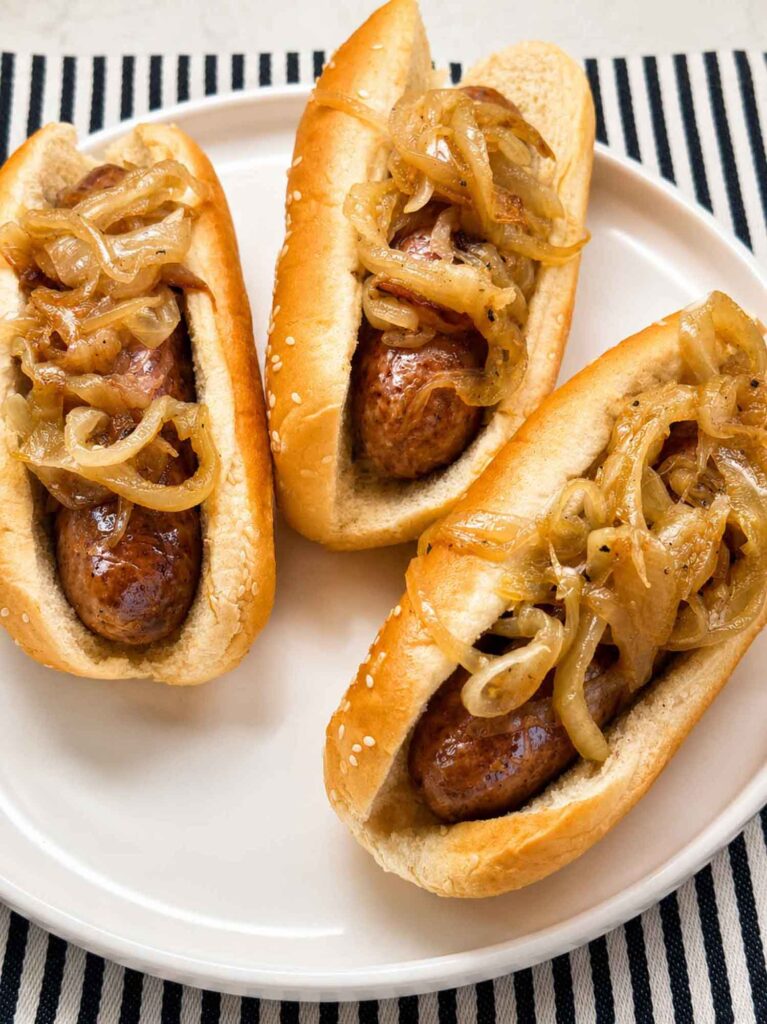
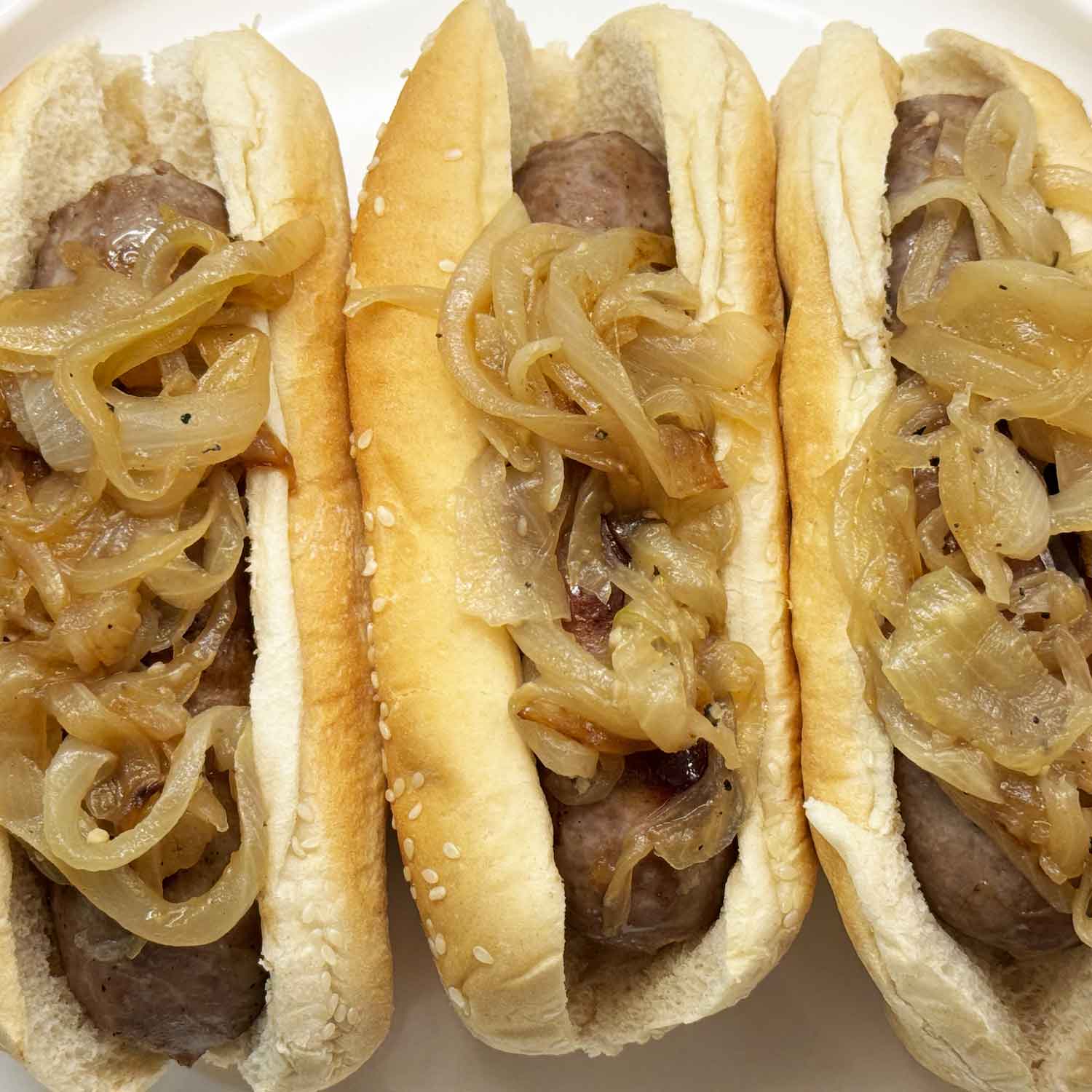
Greg loves to make bratwurst on the grill, but I am a stovetop girl at heart, so the version I make again and again is beer brats simmered in beer with two big sliced onions, a little garlic, and a splash of broth. That lager gives them a rich, malty, cozy flavor that plain water just cannot (and I don’t normally drink beer!). And here is the funny part… the first time I made these, I piled them on buns, but the bread buried the wonderful flavor. So I ate the second one right off the plate with a fork and a heap of those soft beer onions, and WOW. Now we usually skip the bun entirely when we make them this way – they are that good!
Important: don’t poke holes in the casings. I know it is tempting, but every little hole lets the juice run out, and juice is the whole point of a plump, snappy brat.

Want to Save This Recipe?
Enter your email below and we’ll send it straight to your inbox! Plus you’ll get new recipes each week!
What Is Bratwurst, Exactly?
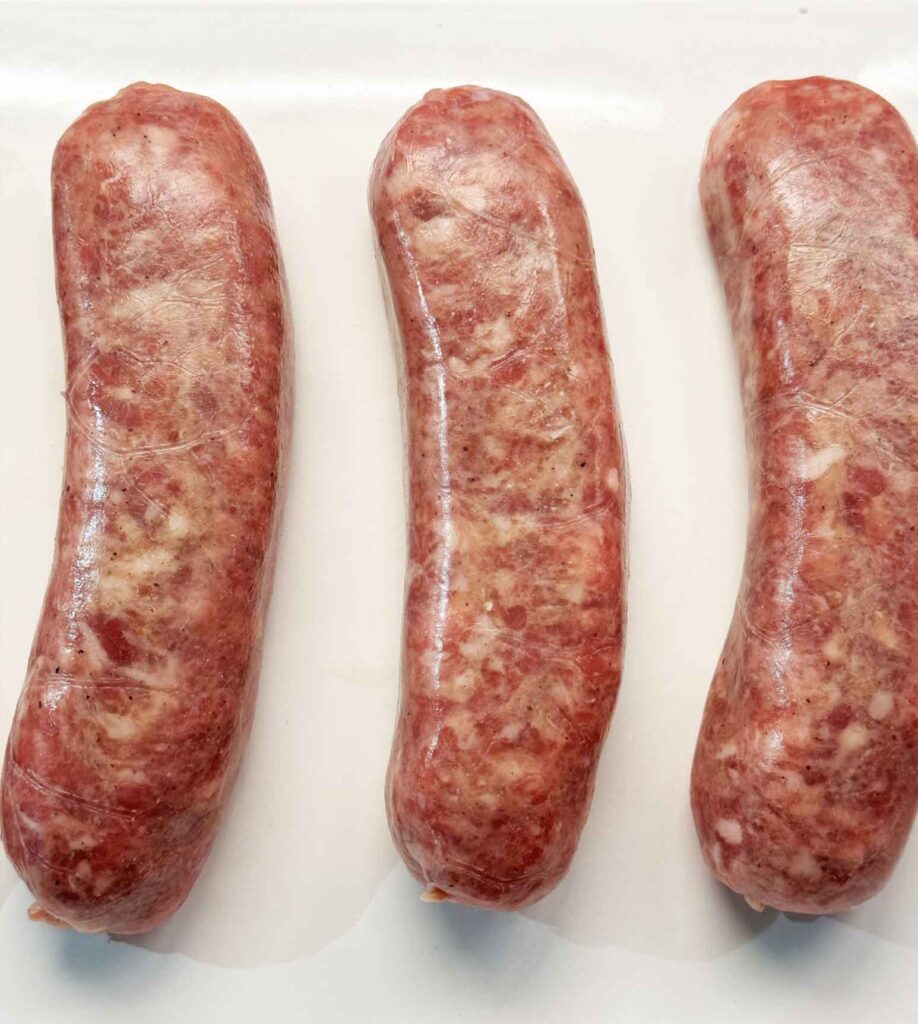
Bratwurst is a fresh German-style sausage, usually pork (sometimes a pork and beef blend), packed into a natural casing. The important part for cooking is this: most brats you buy at the store are raw, not pre-cooked. That means you cannot just warm them through. You need to cook them all the way to 160°F in the center so they are safe and fully done.
Because they are fresh and wrapped in a delicate natural casing, brats like to be treated gently at first. Rush them over high heat and the casing tightens and splits, and all that good juice ends up in the pan instead of in your bratwurst. So we’ll cook them slow to get them done, then turn up the heat at the very end just for color. Two stages, and I promise it is easier than it sounds.
How Is Bratwurst Different from Regular Sausage?
The big difference that matters in the kitchen is whether the sausage is raw or already cooked. A lot of sausages, like smoked sausage or kielbasa, are sold fully cooked, so you are really just heating them up and browning them. Raw bratwurst is a different animal. It needs that gentle cook-through to 160°F first, or you risk a brat that is charred outside and pink inside. Always peek at the package… if it says “fully cooked,” you are reheating, not cooking from raw.
Ingredient Notes for Beer Brats
The recipe itself is short, but a couple of the ingredients are worth a closer look, because they are where most of the flavor comes from.
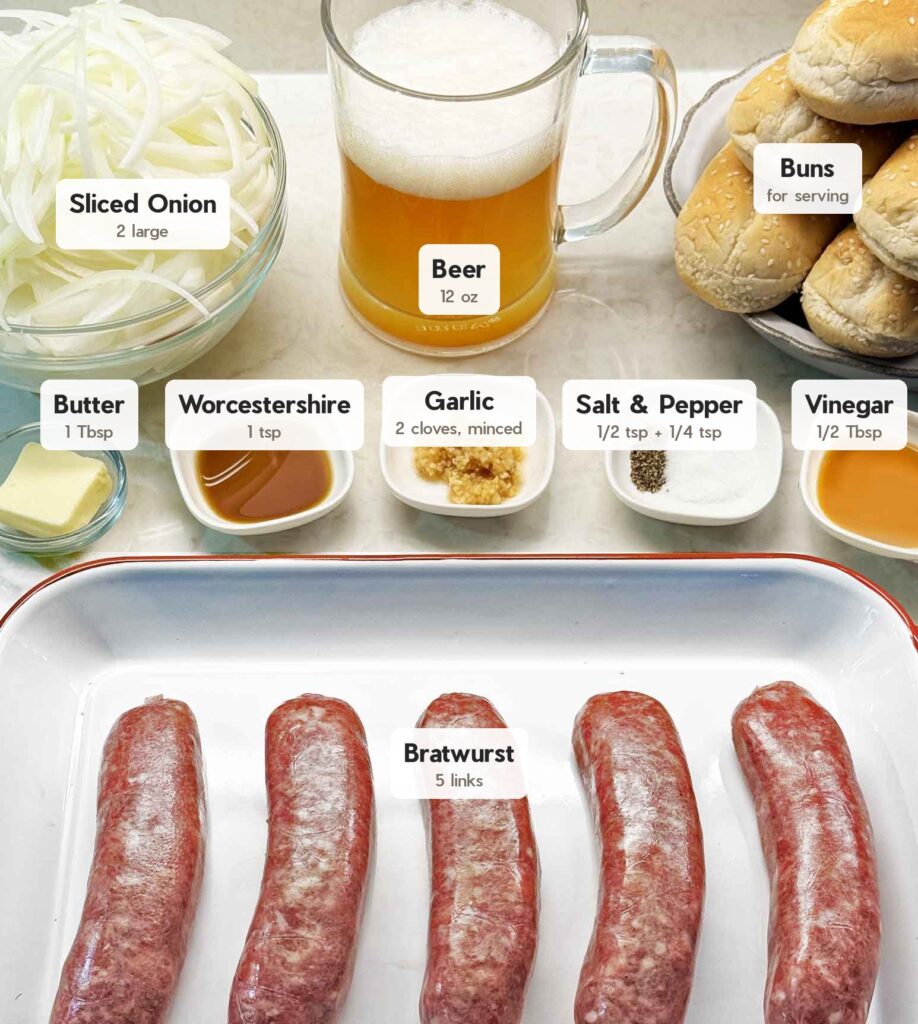
The beer. I use a lager, and my favorite for this is Samuel Adams Winter Ale because it brings a warm, malty note. Any lager or amber will work beautifully, though. You’ll want to steer away from a really hoppy IPA, though, because the bitterness gets stronger as the liquid reduces and it can turn the onions a little harsh. If you would rather skip alcohol entirely, don’t worry, you have good options: chicken broth, vegetable broth, apple cider or apple juice, a non-alcoholic beer, or even plain water all work. When you go without beer, just toss in an extra handful of onion and an extra clove of garlic so the simmer still has plenty of flavor to give.
The onions. Two large sliced yellow onions sounds like a lot for five brats, and that is on purpose. They cook way down, go soft and sweet, and become the topping. Yellow onions are my pick because they get the sweetest, but sweet onions or even white onions are fine if that is what you have on hand.
HOW TO SLICE ONIONS

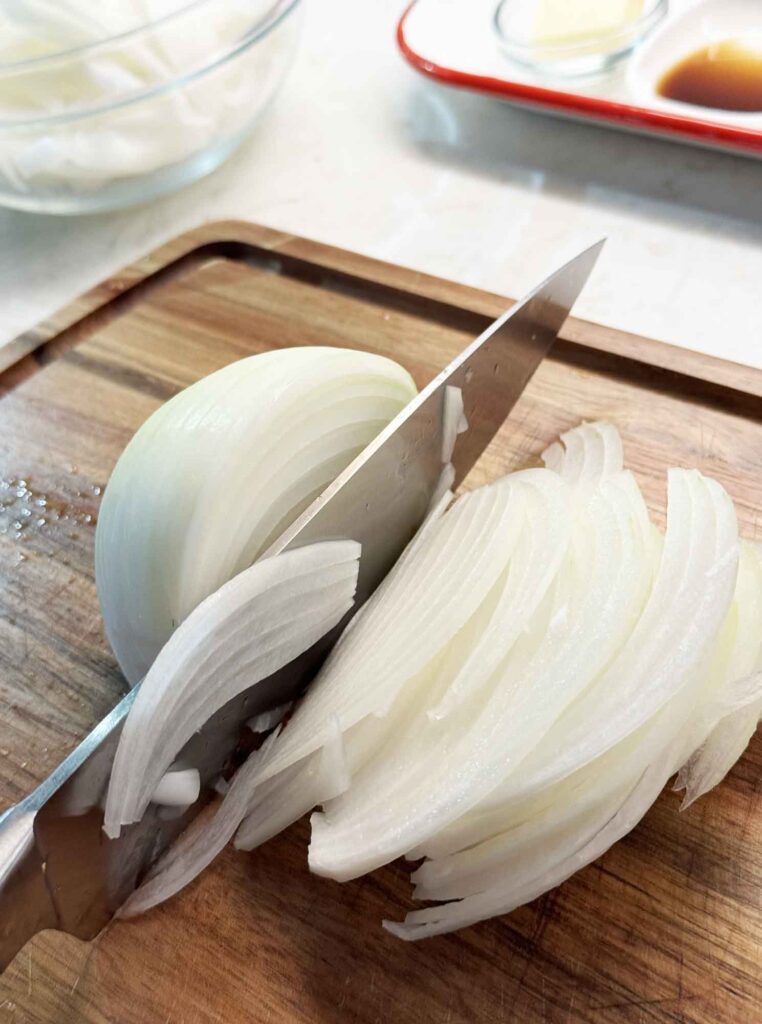
Here’s the easiest way: Cut off the stem but leave the root end mostly intact, then cut the onion in half from root to stem, peel off the paper skin, place each half flat-side down on the cutting board, and slice from root end toward stem end into thin half moons, about 1/8 to 1/4 inch thick. Two large onions will look like a lot at first, but they’ll shrink down quite a bit.
How to Cook Bratwurst (3 Methods)
Here is the heart of it. I’ll walk you through all three methods, starting with my stovetop beer brats, then the oven, then the grill. No matter which one you pick, your target is the same: a gentle cook to 160°F, then a hard brown at the end. Keep an instant-read thermometer nearby and you really cannot go wrong.
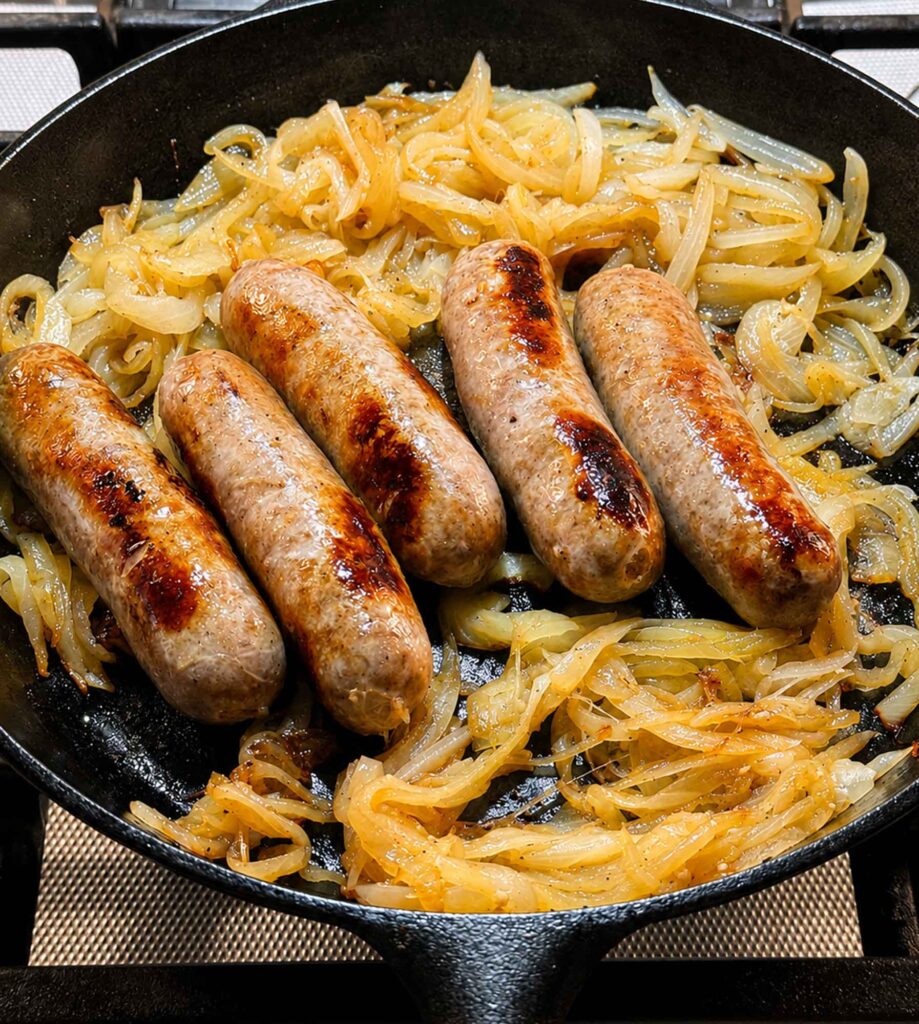
Method 1: Stovetop (Beer and Onion Simmer)
This is the one I make on a chilly night when I want the kitchen to smell amazing. It cooks in one pan, start to finish, in about 35 minutes.
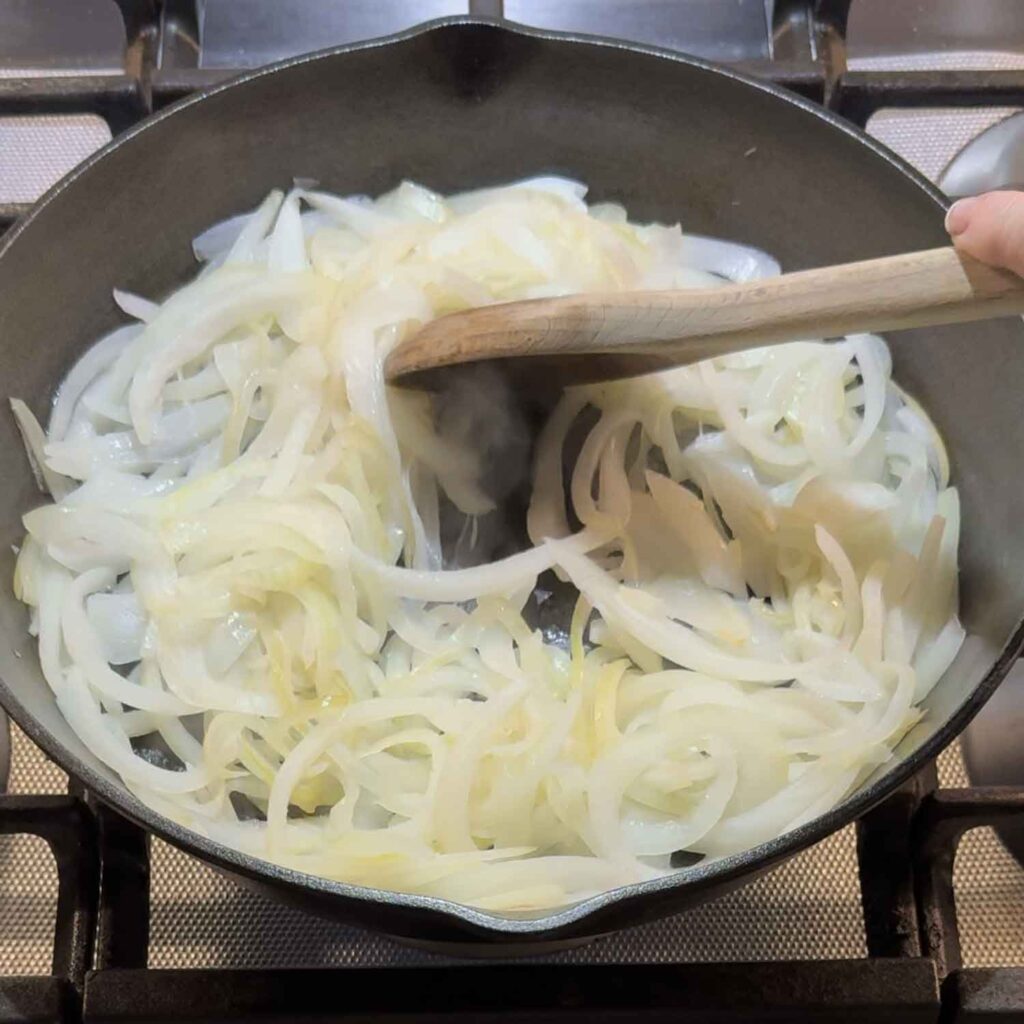
Cook the onions
Melt 1 tablespoon of butter in a large skillet or Dutch oven over medium heat. Add 2 thinly sliced onions and cook for 6 to 8 minutes, stirring now and then, until they soften and turn lightly golden. They don’t need to be fully caramelized here, we’re just giving them a head start.
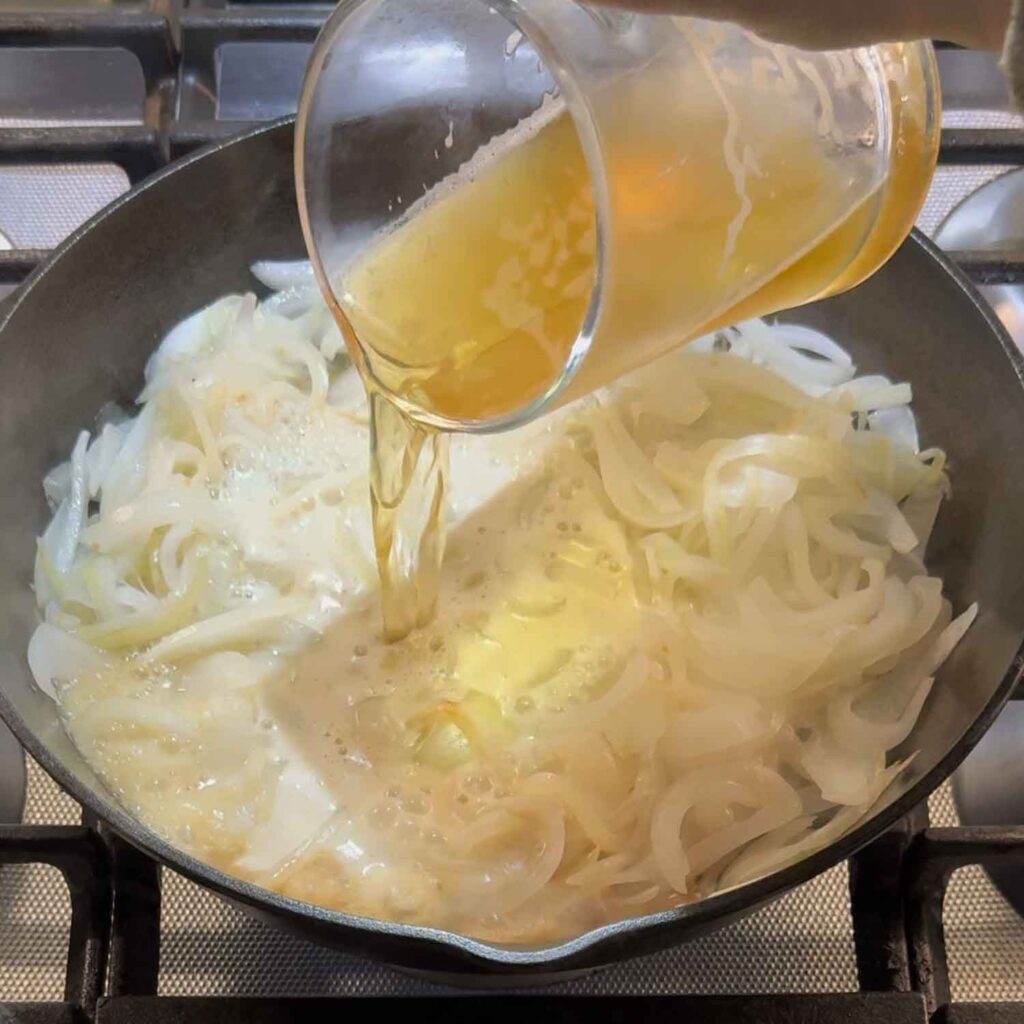
Add the beer and seasonings
Stir in 2 cloves of minced garlic and cook for just 30 seconds, until you can smell it. Be careful not to let the garlic brown, because it turns bitter fast. Pour in the lager (or whatever liquid you’re using), apple cider vinegar, Worcestershire sauce, salt, and pepper. Give it a stir.
Simmer the brats
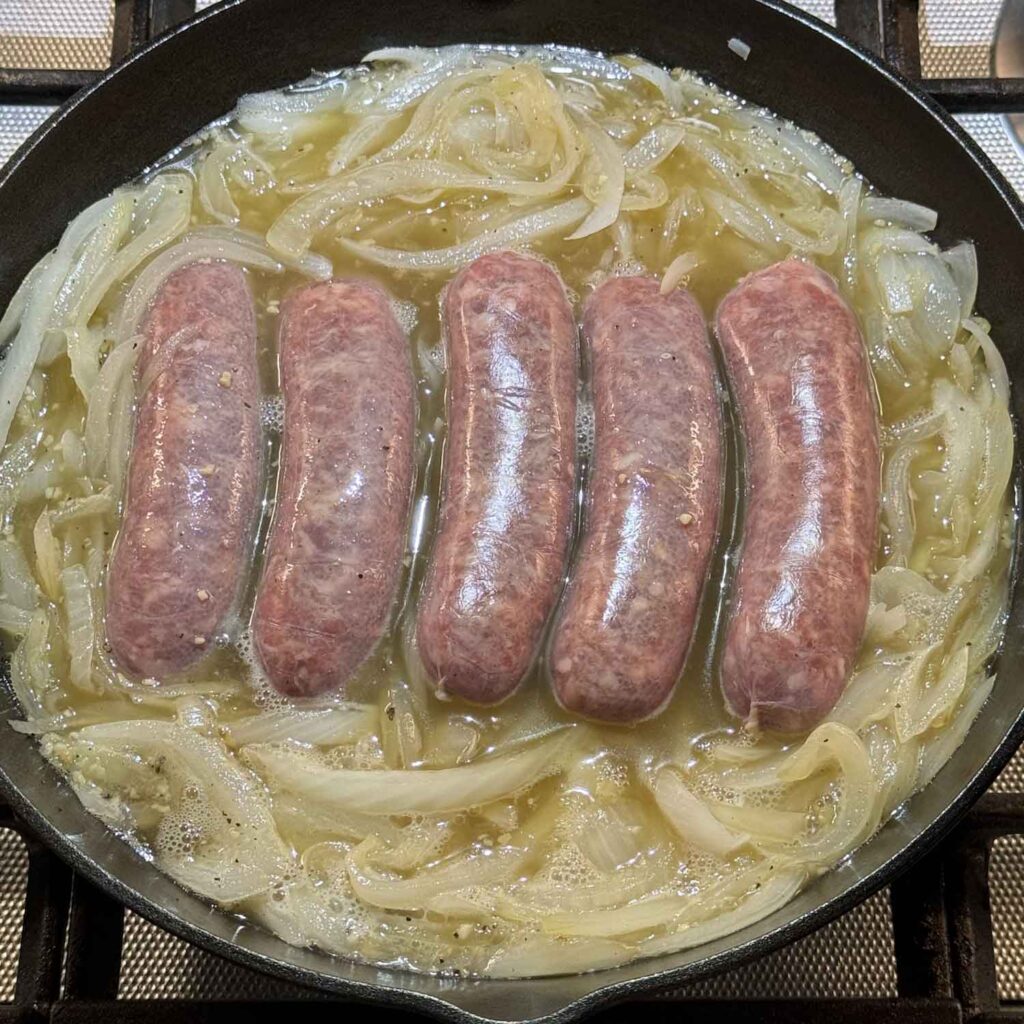
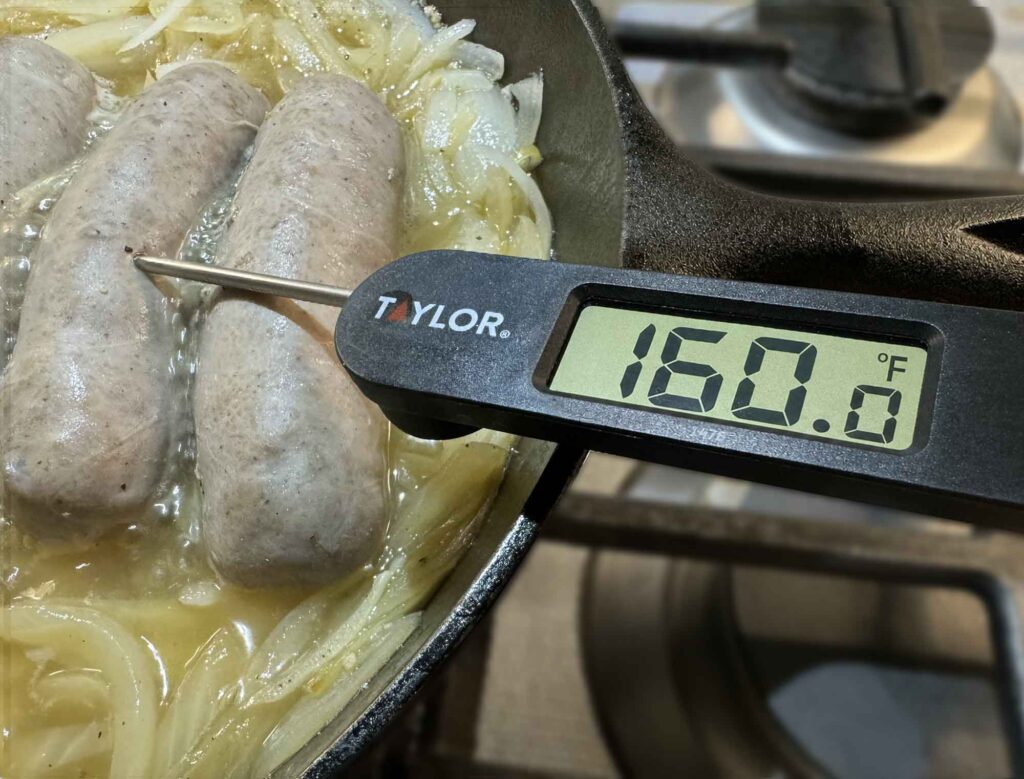
Nestle 5 bratwurst down into the liquid and onions. Bring it up to a gentle simmer, then drop the heat to medium-low, cover the skillet, and cook for 12 to 15 minutes, turning the brats once or twice. You’re looking for tiny bubbles around the edges of the pan, not a rolling boil. Cover keeps things gentle and moist so the brats cook through without the casings splitting. They’re done at 160°F in the center.
Reduce the onions
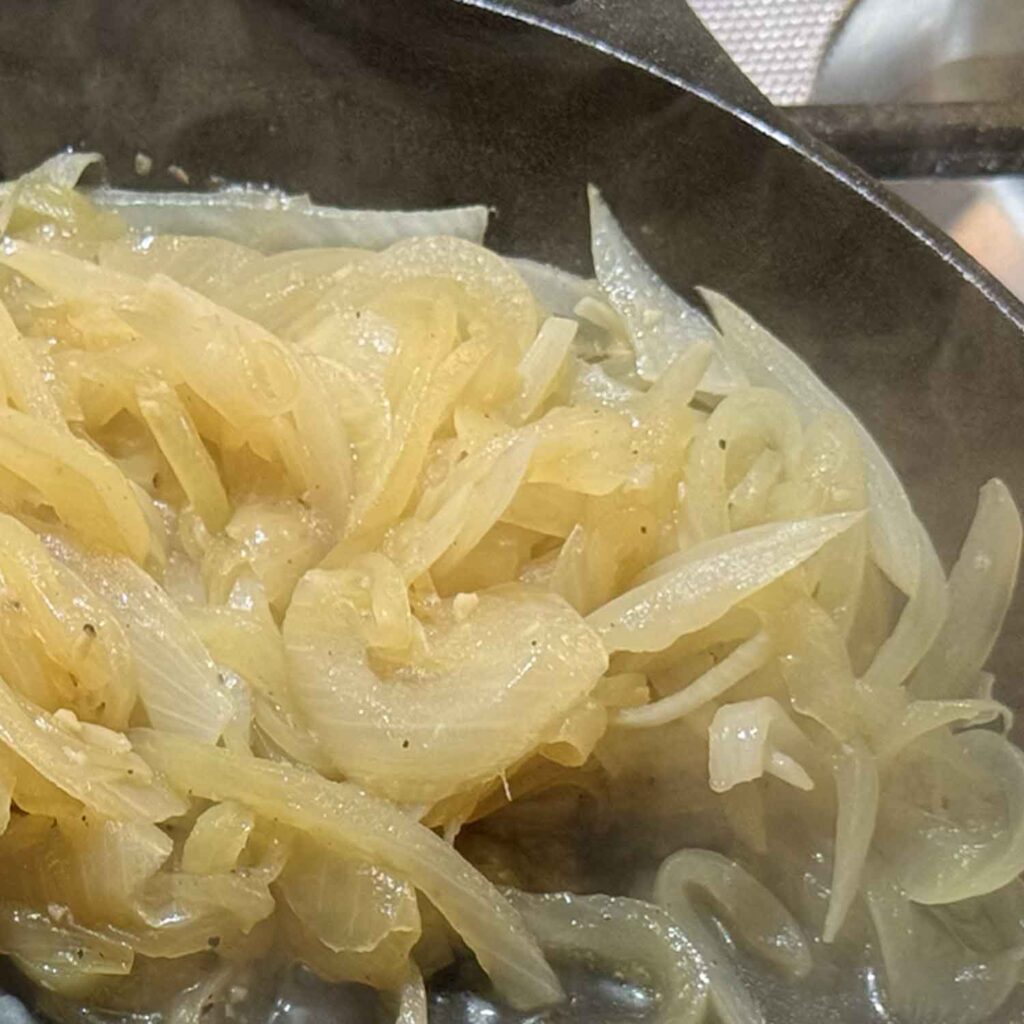
Move the brats to a plate. Uncover the pan, bump the heat to medium, and let the onions simmer 3 to 5 minutes until they’re soft and the liquid looks a little saucy. Be careful not to reduce it too far, or the beer flavor gets too strong and a touch bitter. I learned that one the hard way.
Brown the brats
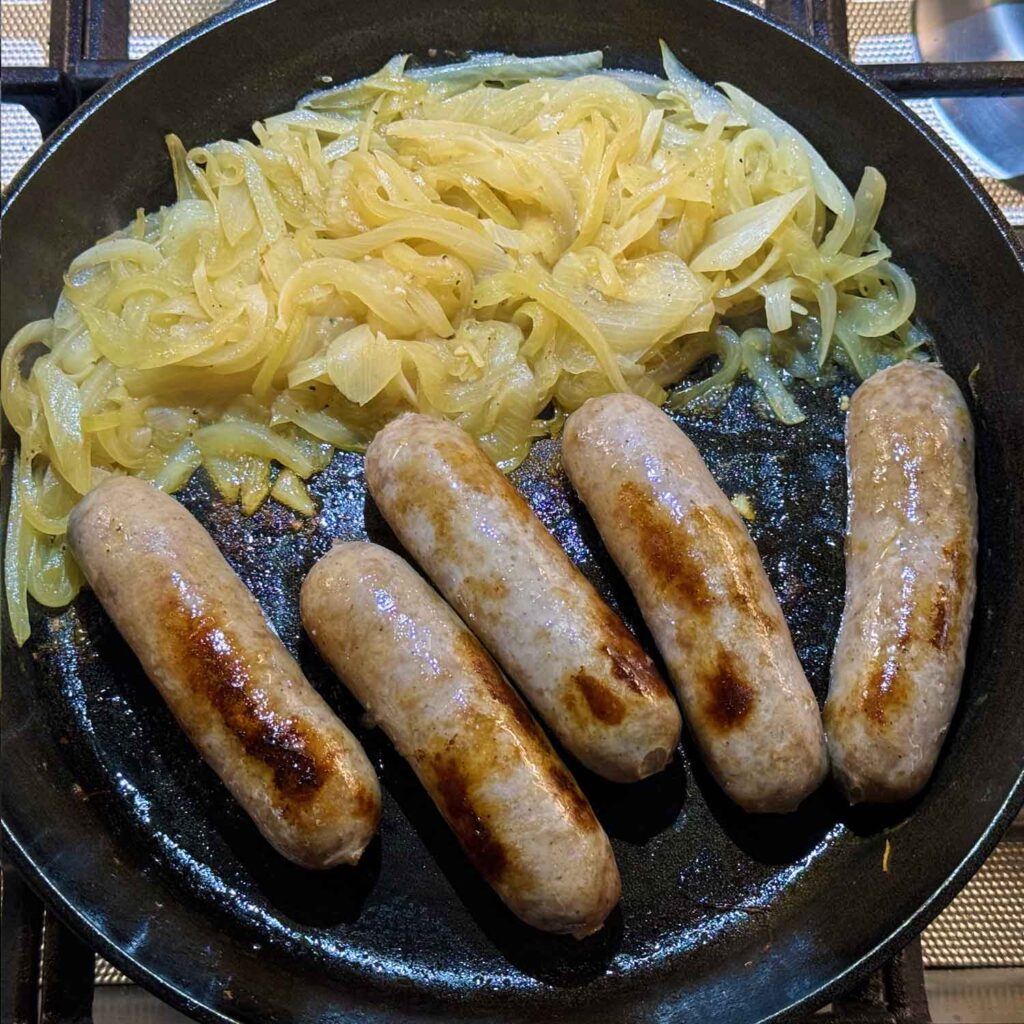
Push the onions to one side, return the brats to the pan, and brown them 2 to 3 minutes per side until they’re deep golden. If your pan is too wet to get good color, no problem, just move the brats to a separate hot skillet with a little oil and sear them there.
Serve
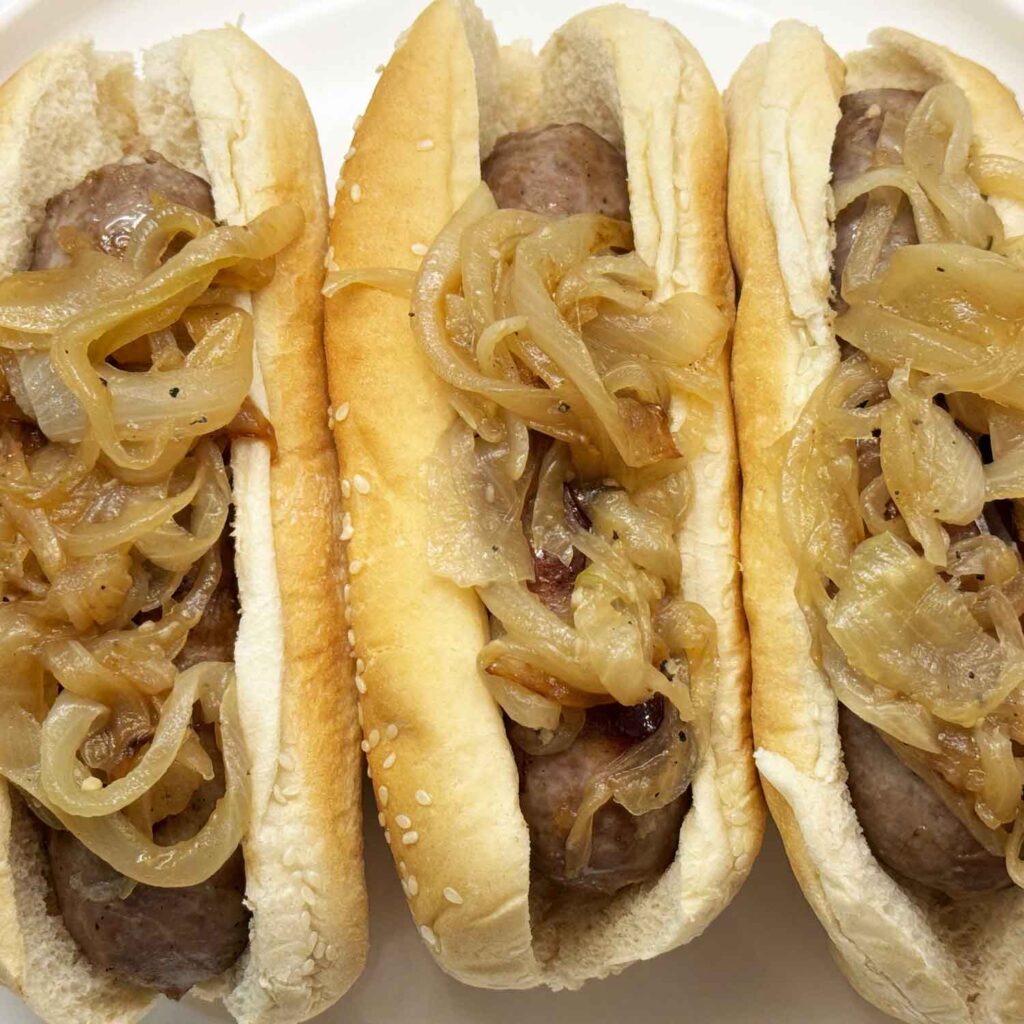
Pile the soft beer onions over the brats and dig in. They are SO GOOD straight off the plate, and you can absolutely tuck them into a bun too.
Method 2: Oven (Bake, Then Broil)
No stovetop space, or feeding a crowd? The oven is hands-off and lets you cook a whole tray of brats at once. Heat your oven to 400°F. Set the brats on an oven-safe skillet or a rimmed 9×13 sheet pan (line it with foil for easy cleanup), add your bratwurst and other ingredients, and bake uncovered for 25-30 minutes, turning them once halfway through, until they hit 160°F in the center.
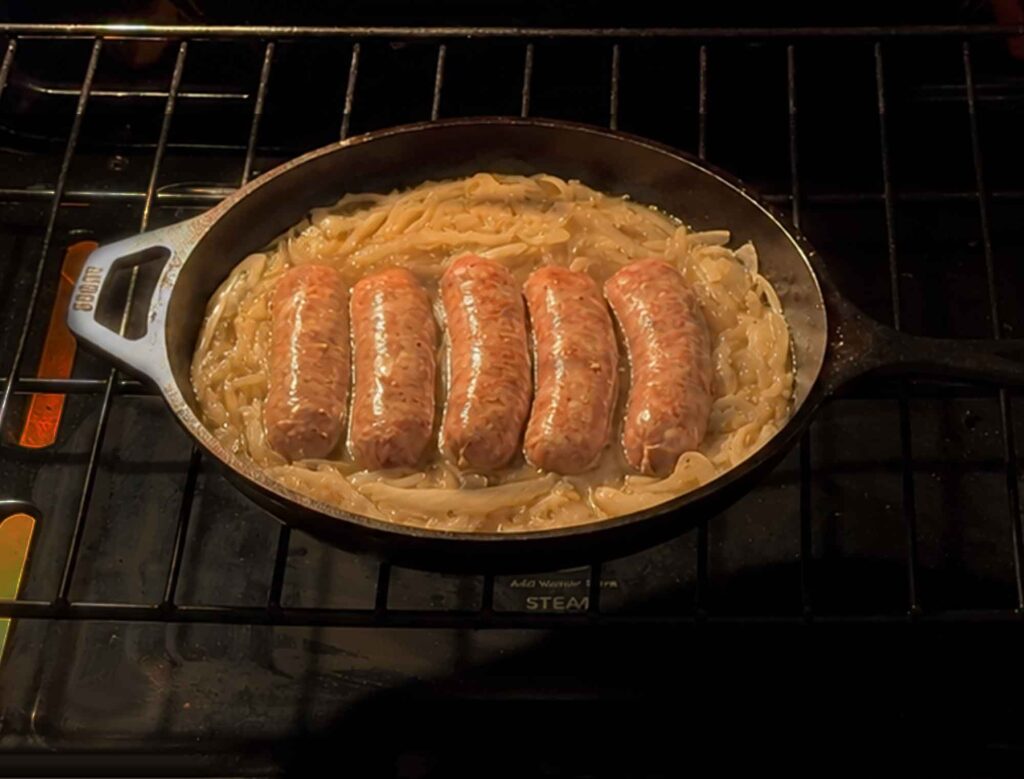
If you want them more browned, remove some of the excess liquid with a ladle or turkey baster, then broil for 2–4 minutes, watching closely. You can also move the brats to a foil-lined baking sheet and broil them there while the onions stay saucy in the baking dish.
Method 3: Grill (Gentle Cook, Then Char)
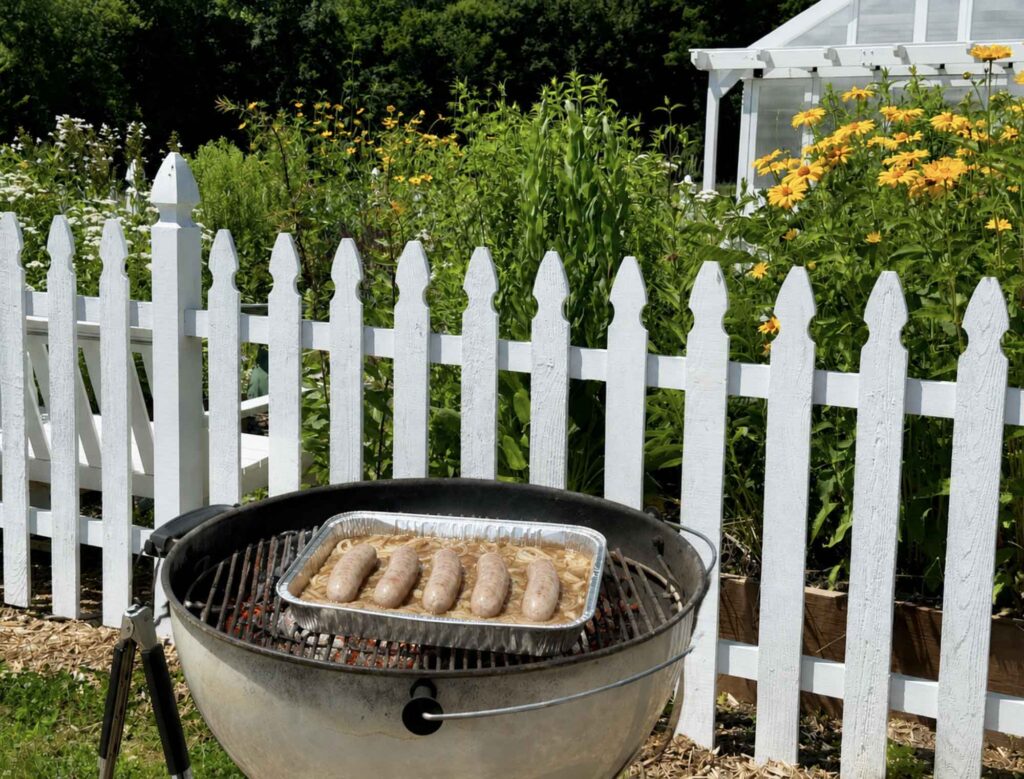
Grilling brats is a summer staple, and the trick that saves people the most heartache is to cook them gently first and char them last, not the other way around. Set up your grill for two zones: one side medium-low, one side medium-high. Start the brats over the cooler side with the lid down and cook 15 to 20 minutes, turning every few minutes, until they reach 160°F. Resist the urge to blast them over high heat right away, because that is exactly how you get a burnt outside and a raw middle and a split casing all at once. Once they’re cooked through, move them over the hot side for a minute or two per side to get that beautiful char.
If you want the beer-and-onion treatment outdoors, simmer the brats in a foil pan of beer and onions right on the grill over indirect heat first, until cooked through, about 15–20 minutes or until 160°F. Transfer the brats to the grill grates. Grill 2–3 minutes per side until browned.
A note for pre-cooked brats: if your package says “fully cooked,” you’re just reheating. Warm them gently by any method and heat to about 140 to 145°F, then brown for color. No need to take those all the way to 160°F.
Tips and Troubleshooting for Perfect Brats
Most brat problems come down to heat and patience. Here is everything I’ve learned, including the mistakes I’ve made so you don’t have to.
- Don’t poke holes in the casings. Those little holes drain out the juice that keeps a brat plump and snappy.
- Keep it at a gentle simmer, never a hard boil. Look for tiny bubbles around the edges. A rolling boil bursts the casings.
- Use a thermometer. Brats are done at 160°F in the thickest part. Guessing is how you end up with a pink center.
- Brown at the very end. Cook through first, then crank the heat for color. This gets you a juicy inside and a crisp, golden snap on the outside.
- Reach for a heavy pan. A cast iron or heavy stainless skillet (with a lid) holds steady heat and browns beautifully. A Dutch oven works great too.
- Let them rest a few minutes. Give cooked brats 3 to 5 minutes off the heat. The temperature climbs a touch and the juices settle back in.
- Don’t walk away during the brown or broil. That last stage moves fast, and it is the easiest place to go from golden to burnt.
The two tools that make this foolproof are a heavy skillet or Dutch oven and an instant-read thermometer. That is really it. Everything else is just paying attention to the bubbles.
How to Serve Bratwurst
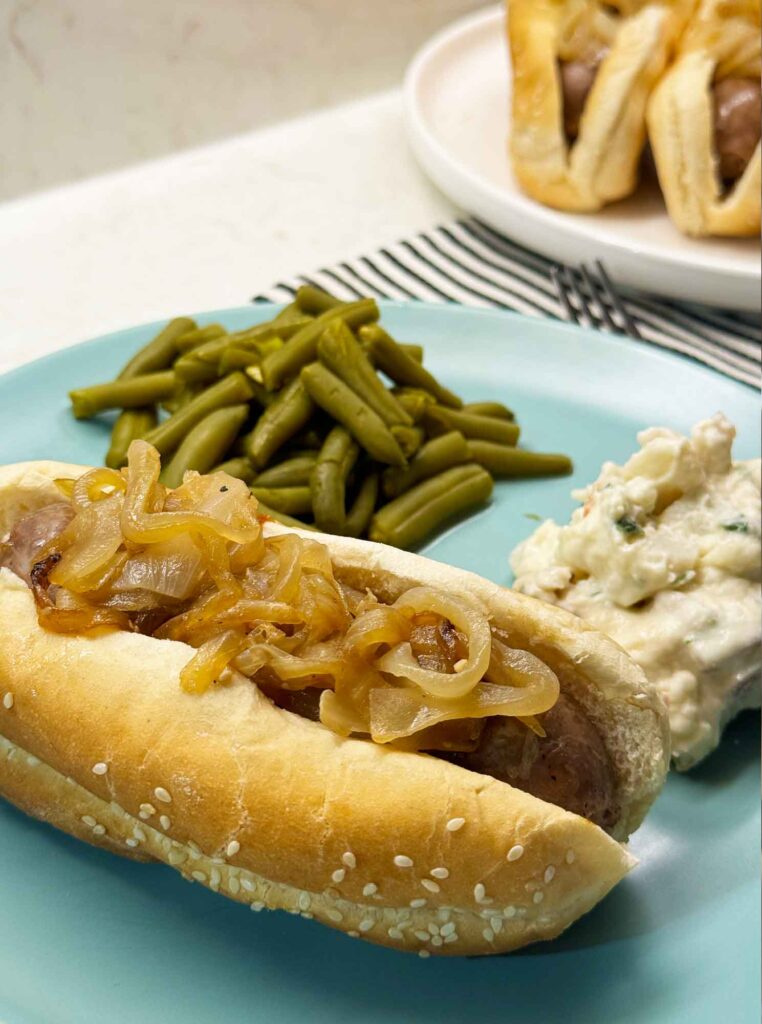
You can eat brats right off the plate with those beer onions (my favorite way, since I learned the buns can hide all that flavor), or tuck them into a toasted bun. For toppings, the classics are hard to beat: spicy or yellow mustard, sauerkraut, beer-braised onions, pickles, or a little relish. If you do go the bun route, a sturdier, denser roll holds up best so it doesn’t go soggy under the toppings.
For sides, brats love anything cozy and a little tangy. A scoop of creamy potato salad, some crunchy homemade coleslaw , or a side of baked beans are the natural pairing, and on a cooler night I’ll set out a pot of brown beans or a bowl of skin-on mashed potatoes right alongside.
Feeding a crowd or running a tailgate? Keep the cooked brats warm by holding them in a covered pan with a splash of beer or broth over low heat, or in a 200°F oven until you’re ready to serve. That keeps them juicy without cooking them past done.
Leftovers, Storage, and Reheating
Cooked brats keep well, which makes them great for planned leftovers. Let them cool, then store them airtight in the fridge for 3 to 4 days. To reheat, go gentle: pop them in a covered skillet with 2 to 3 tablespoons of water or broth over medium-low heat until they’re hot through. That little splash of liquid is the secret, because it keeps them from drying out the way the microwave tends to. You can also freeze cooked brats for 2 to 3 months in an airtight bag.
FOOD SAFETY NOTE

Since brats often come out at parties and cookouts: get leftovers into the fridge within 2 hours, and when you reheat, bring them all the way up to steaming hot (160°F if you want to check). Better safe than sorry, especially with make-ahead and tailgating food.
How to Cook Bratwurst (Beer Brats with Onions Recipe)
Equipment
- Heavy cast-iron skillet, stainless steel skillet, or Dutch oven with a lid for stovetop method
- 9×13 sheet pan or heavy cast-iron skillet for the oven method
- foil pan for the grill method
- instant-read thermometer
Ingredients
- 5 uncooked bratwurst links
- 1 tablespoon butter or oil
- 2 large yellow onions, thinly sliced
- 2 cloves garlic, minced
- 12 ounces lager (I use Samuel Adams Winter Ale) or chicken broth, vegetable broth, apple cider apple juice, a non-alcoholic beer, or even plain water
- 1/2 tablespoon apple cider vinegar
- 1 teaspoon Worcestershire sauce
- 1/2 teaspoon salt, plus more to taste
- 1/4 teaspoon black pepper
Instructions
- Cook the onions. Melt the butter in a large skillet or Dutch oven over medium heat. Add the onions and cook 6 to 8 minutes, stirring occasionally, until softened and lightly golden.
- Add the liquids and seasonings. Stir in the garlic and cook 30 seconds until fragrant. Add the lager (or broth), vinegar, Worcestershire, salt, and pepper. Stir to combine.
- Simmer the brats. Nestle the brats into the liquid. Bring to a gentle simmer, then reduce to medium-low, cover, and cook 12 to 15 minutes, turning once or twice, until they reach 160°F in the center.
- Reduce the onions. Move the brats to a plate. Increase the heat to medium and simmer the onions uncovered 3 to 5 minutes, until soft and saucy. Don’t reduce too far or the beer flavor turns strong.
- Brown the brats. Push the onions aside, return the brats, and brown 2 to 3 minutes per side until golden. If the pan is too wet, either sear them in a separate hot skillet with a little oil or remove some of the liquid from the original pan first.
- Serve. Top the brats with the beer onions and serve as is, or on buns with mustard, sauerkraut, or pickles.
Notes
- Oven: Bake at 400°F for 25 to 30 minutes (turning once) to 160°F, then broil 2 to 3 minutes for color.
- Grill: Cook over medium-low with the lid down 15 to 20 minutes to 160°F, then char over high heat 1 to 2 minutes per side.
- No beer? Swap in chicken or vegetable broth, apple cider, non-alcoholic beer, or water. Add extra onion and garlic for flavor.
- Keep the simmer gentle (tiny bubbles, not a boil) and don’t poke the casings, or you’ll lose the juices.
- Brown at the end for juicy centers and crisp, golden edges.
Nutrition (estimate, per bratwurst with onions): about 320 calories, 26g fat, 8g carbs, 14g protein. Values vary by brand of sausage.
The Best Way to Cook Bratwurst, by Situation
If you cook brats indoors, the stovetop beer-and-onion simmer is my hands-down favorite, and the oven is your friend when you’re making a big batch with no burner to spare. For a summer cookout or tailgate, cook them gently on the cooler side of the grill, then char them over the flames to finish. Whichever way you go, the two rules never change: keep the heat gentle until they’re cooked through, brown them hard at the end, and pull them at 160°F for juicy, snappy brats every time. You’ve got this.
Happy cooking!
Love,
Jennifer
Tried this recipe?
Tap the stars in the recipe card to leave a quick rating. Your rating helps other home cooks know this recipe works in a real kitchen, not just mine.
And as a thank-you for your feedback, you will receive a free printable copy of my Maker Home Companion Cookbook, featuring my most popular recipes, each one formatted on a SINGLE, easy-to-use page, a perfect kitchen companion for easy meal prep. Click here to learn more about this cookbook and how you can get your copy!
Meet Jennifer
Jennifer cooks and experiments in the kitchen at Maker Farm, where she focuses on simple pantry cooking, homemade staples, and practical recipes that make everyday meals easier. Over the years she has tested many ways to make cooking simpler and more dependable, and shares the methods that work best in her own kitchen, occasionally showing them on her Heart to Home at Maker Farm vlog.