

If you’ve ever gone to make pancakes and realized you’re out of pancake mix, you don’t actually need it. It turns out pancake mix is just a handful of basic ingredients you likely already have in your kitchen. I had them all in mine! This version comes together quickly, cooks up light and tender, and works just as well as anything from a box, all without needing a trip to the store.
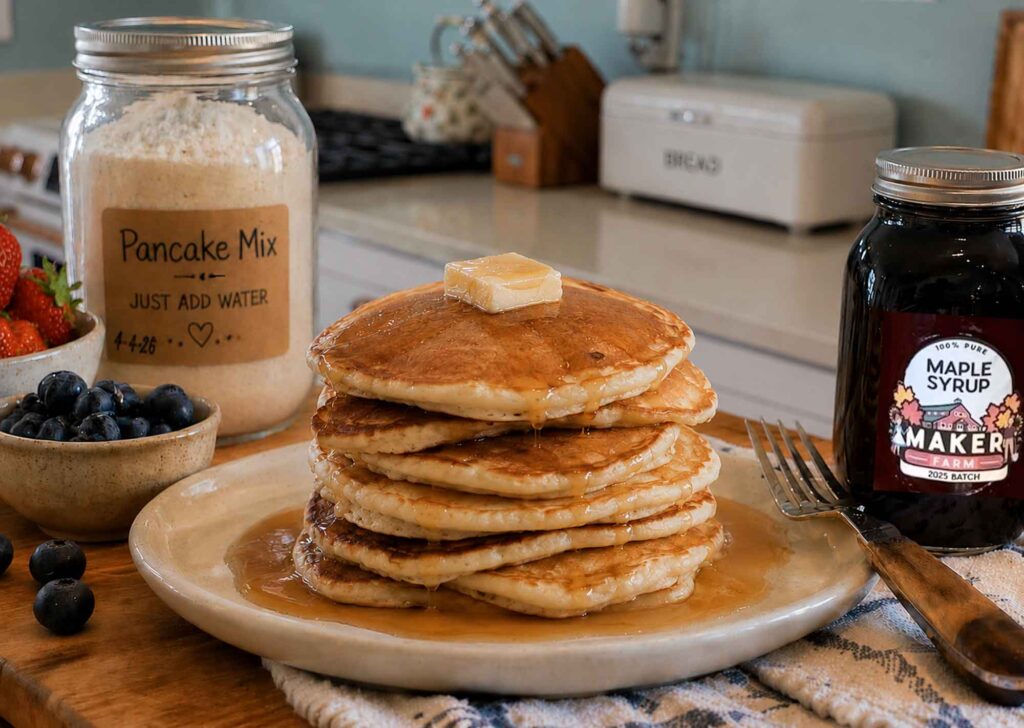
I’ve tested this several times in the Maker Farm kitchen using different variations, including versions with and without eggs, milk, and butter, so I know exactly how it behaves depending on what you have on hand. Don’t worry if you don’t have everything exactly as listed. I tried this with a few variations and it still works.
Quick Substitute for Pancake Mix
Let me show you exactly how to make a simple substitute for pancake mix using what you already have.
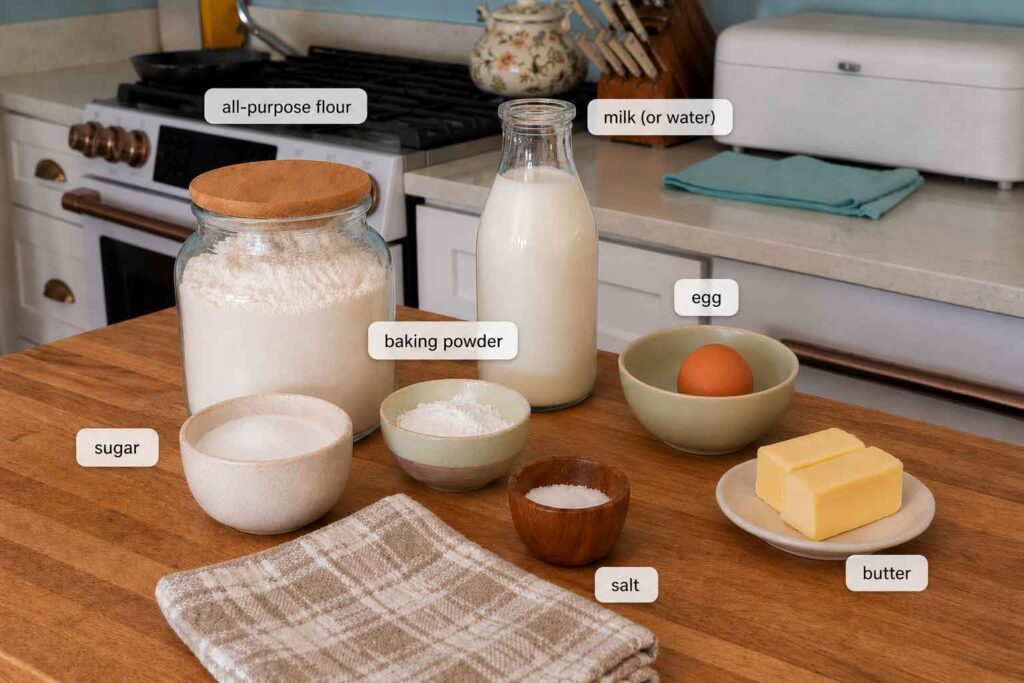
In a bowl, combine:
- 1 cup all-purpose flour
- 1 tablespoon sugar
- 1 teaspoon baking powder
- ¼ teaspoon salt
Then add:
- 1 cup milk (or water if that’s what you have)
- 1 egg (optional, but it helps with structure)
- 1 tablespoon melted butter or oil
Stir everything together just until the dry ingredients are incorporated. Don’t worry if the batter looks a little lumpy … that’s actually what you want. Overmixing is one of the most common mistakes, and it can make your pancakes turn out dense instead of soft.

If you have the time, be sure to let the batter sit for 2–3 minutes before cooking. This helps because the flour has time to absorb the liquid, which improves the texture.
Cook on a lightly greased pan over medium heat, flipping when bubbles form on the surface and the edges begin to set.

Now that you know how to make it, I’ll walk you through what matters most and how to adjust it based on what you have on hand.
How to Adjust This Based on What You Have
The nice thing about pancakes is that they’re very forgiving. If you’re missing something, you can usually still make this work with a small adjustment.
Let me walk you through the most common ones.
If you don’t have milk
You can use water instead. The pancakes will be a little less rich, but they’ll still cook up just fine.
If you have it, you can add a little extra oil or butter to make up for that.
If you don’t have an egg
You can leave it out. Your pancakes may be slightly flatter and a bit more tender, but they’ll still taste good and hold together.
If you want a little more structure, just make sure you don’t make the batter too thin.
If you don’t have butter
Use oil instead. This works almost the same, and you likely won’t notice much difference.
If you don’t have baking powder
This one matters more. But if you don’t have it, you can substitute:
- ¼ teaspoon baking soda
- plus ½ teaspoon vinegar or lemon juice
This helps because baking soda needs an acid to activate, and that gives you the lift you’d normally get from baking powder.
If your batter seems too thick or too thin
- Too thick → add a little more liquid
- Too thin → add a bit more flour
You’re aiming for a pourable batter that spreads a little but doesn’t run all over the pan.
If your pancakes aren’t turning out right
Don’t worry, this is very normal.
- Too dark → lower the heat
- Too pale → raise the heat slightly
- Too dense → you may have overmixed
Once you adjust the heat and mixing, they usually come out just fine.
What to Know about Pancake Mix
Pancake mix is really just:
- flour (structure)
- baking powder (lift)
- a little fat and sugar (flavor and tenderness)
As long as you have those pieces in some form, you can make this work. I’ve made this enough times now, including when I was missing key ingredients, that I know how it behaves and what matters most.
What Actually Matters
- Fresh baking powder (this is what makes them rise)
- Not overmixing (keeps them tender)
- Letting batter sit 2–3 minutes before cooking on a hot griddle
What Doesn’t Matter As Much
- exact sugar amount
- milk vs water (milk is better, but both work)
- butter vs oil
LOOK MA, NO BOX!

I used to think boxed pancake mix was something I had to keep on hand. The first time I made this without actual pancake mix, I expected it to be a compromise and a one-off solution. It wasn’t, and it turned out just as good, maybe even better. I realized I didn’t really need the box at all, and haven’t bought one since.
How to Make Pancakes (Without Pancake Mix)
Let me show you exactly how to do this. It’s simple, and once you’ve done it once, it feels very natural.
- Start with your dry ingredients
In a bowl, whisk together the flour, sugar, baking powder, and salt.
This helps everything distribute evenly so you don’t end up with pockets of baking powder later. - Add your wet ingredients
Pour in the milk (or water), and add the egg if you’re using one, along with your melted butter or oil.
Don’t worry if you’re missing the egg because it still works without it. - Stir just until it comes together
You’ll want to mix until you don’t see dry flour anymore, but it’s completely okay if the batter is a little lumpy. In fact, that’s just what you want. One common mistake is overmixing, which can make your pancakes dense instead of soft. - Let the batter sit for a couple of minutes (optional, but helpful)
Just 2–3 minutes is enough. This gives the flour time to absorb the liquid, which helps the pancakes turn out more tender. - Heat your pan or griddle
Place it over medium heat and lightly grease it. If you’re not sure if your pan or griddle is ready, you can sprinkle a few drops of water on the surface — they should sizzle gently. - Cook the pancakes
Pour about ¼ cup of batter for each pancake.
Let them cook until you see bubbles forming on the surface and the edges start to look set. - Flip and finish cooking
Flip them over and cook for another minute or so, until the second side is golden brown.
Don’t worry if the first one isn’t perfect … that’s very normal while your pan is coming up to temperature. - Serve and enjoy
I like to butter my pancakes and pour real maple syrup on them. Brown sugar is also good instead! Perfect with a cup of coffee and homemade coffee creamer.
How to Tell They’re Ready
You’ll know it’s time to flip when:
- small bubbles form on top
- the edges look slightly dry
- the bottom lifts easily and is golden
Helpful Tip

If your pancakes are browning too quickly, just lower the heat a bit. This gives the inside time to cook through without over-browning the outside.
If you’d rather not measure this every time, you can mix up a jar and keep it on hand in your pantry for quick pancakes. Here’s a recipe for a quart-size jar of homemade pancake mix — just add water!

Want to Save This Recipe?
Enter your email below and we’ll send it straight to your inbox! Plus you’ll get new recipes each week!
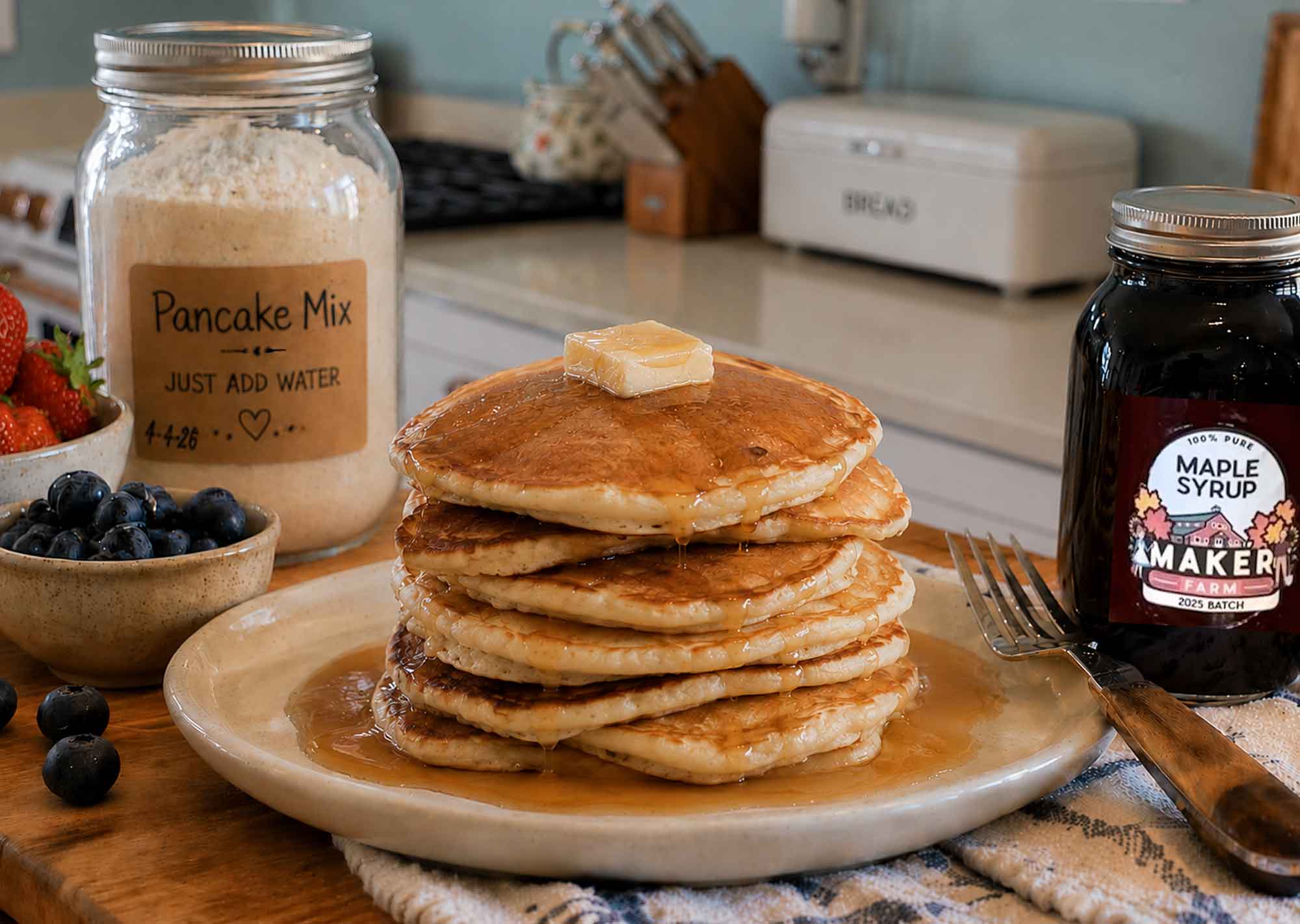
Pancake Mix Recipe (“Just Add Water” Pantry Version)
Equipment
- 1 quart-size mason jar
Ingredients
- 2 cups all-purpose flour
- 3 tablespoons sugar
- 2 tablespoons baking powder
- 1 teaspoon salt
- 2 tablespoons powdered milk optional but recommended
Instructions
- Combine ingredients.Stir everything together well before adding to the jar so it’s evenly mixed.
- Seal jar. Seal the jar. I prefer to use a vacuum sealer to keep moisture out of my dry ingredients.
- Label jar.Label and date the jar, as well as include directions on how to make panckaes with it (add one cup of dry mix to 3/4 cup of water, plus an optional tablespoon of oil for added texture).
- Make pancakes.Add one cup of dry mix to 3/4 cup of water, plus an optional tablespoon of oil for added texture. Stir until just combined — the batter should still look a little lumpy—don’t overmix or the pancakes can turn out dense. Let it sit for 2–3 minutes, because this helps the pancakes turn out a bit softer. Place a skillet or griddle over medium heat and lightly grease it. When a little sprinkle of water dances on the surface of your skillet/griddle, pour about ¼ cup of batter for each pancake. When bubbles form on the surface and the edges look set, flip them. Cook the other side until golden brown, about another minute or so.
Nutrition
Notes
- 1 cup dry mix
- ¾ cup milk
- 1 egg
- 1 tbsp melted butter
Why do you let it sit before cooking?
Letting the batter sit for a couple of minutes helps because the flour has time to absorb the liquid, which gives you a better texture.
Why does overmixing matter?
One common mistake is overmixing the batter. It’s okay if it looks a little lumpy — that actually helps keep the pancakes soft. If you overmix your batter, it develops the gluten, which makes pancakes dense instead of soft. We want light, fluffy pancake pillows, not dense flat pancake plates.
Dairy-Free Pancakes (Using Water)
If you don’t have milk or need a dairy-free option, you can still make pancakes with water. They turn out a little less rich, but they’re still soft, tender, and very usable. Just use my recipe above, but add water instead of milk.
What to Expect
- Slightly less rich than milk-based pancakes
- Still soft and tender
- A little more neutral in flavor
Helpful Tip

Since you’re using water, the oil matters more here, as it adds back some of the richness you’d normally get from milk or butter.
If you want to improve them (still dairy-free)
If you happen to have any of these, you can upgrade them a bit:
- Add a splash of vanilla
- Use lactose-free milk or plant-based milk instead of water
- Add a little extra sugar for flavor
I’ve made these with just water before, and while they’re a little simpler, they still work just fine, especially when you just want pancakes without needing anything extra.
Pancake Recipe for One (No Milk)
If you just want a single serving of pancakes and don’t have milk, you can still make this with a few basic ingredients. This makes a small batch—enough for one person—without needing anything special.
Ingredients
- ½ cup all-purpose flour
- 1 teaspoon sugar
- ½ teaspoon baking powder
- pinch of salt
- ⅓ to ½ cup water
- 1 tablespoon oil
- 1 egg (optional)
Follow the same cooking directions for other pancakes on this page. This single-serve recipe will yield about 2-3 pancakes, depending on size.
Tried this recipe?
Tap the stars in the recipe card to leave a quick rating. Your rating helps other home cooks know this recipe works in a real kitchen, not just mine.
And as a thank-you for your feedback, you will receive a free printable copy of my Maker Home Companion Cookbook, featuring my most popular recipes, each one formatted on a SINGLE, easy-to-use page, a perfect kitchen companion for easy meal prep. Click here to learn more about this cookbook and how you can get your copy!


Meet Jennifer
Jennifer cooks and experiments in the kitchen at Maker Farm, where she focuses on simple pantry cooking, homemade staples, and practical recipes that make everyday meals easier. Over the years she has tested many ways to make cooking simpler and more dependable, and shares the methods that work best in her own kitchen, occasionally showing them on her Heart to Home at Maker Farm vlog.
This is an excellent base recipe! I enjoy the extra tips that your experience adds. I also make sourdough bread and occasionally have extra starter, which I dehydrate for later use or to share. I used your base and added 1/2C dried sourdough starter to the mix. Game changer in regards to flavor. Thank you for sharing with us.
Ooooh, what a great idea! I have some discard from this morning — I stuck it in the refrigerator to make biscuits later today for strawberry shortcake tonight, but I should dry it out just for this! THANK YOU!!
The recipe is ok, but the insights provided after the recipe really helps. I like to experiment and this recipe provides me with knowledge that can be applied elsewhere.
Happy to hear this, Roy! Thank you for letting me know!