
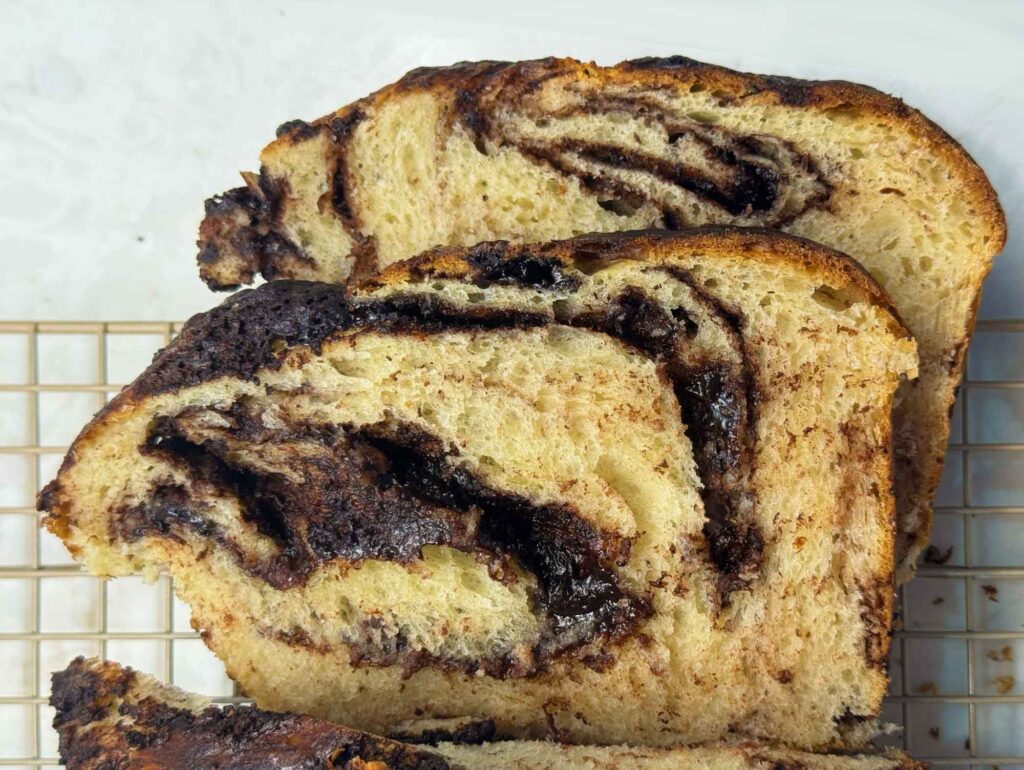
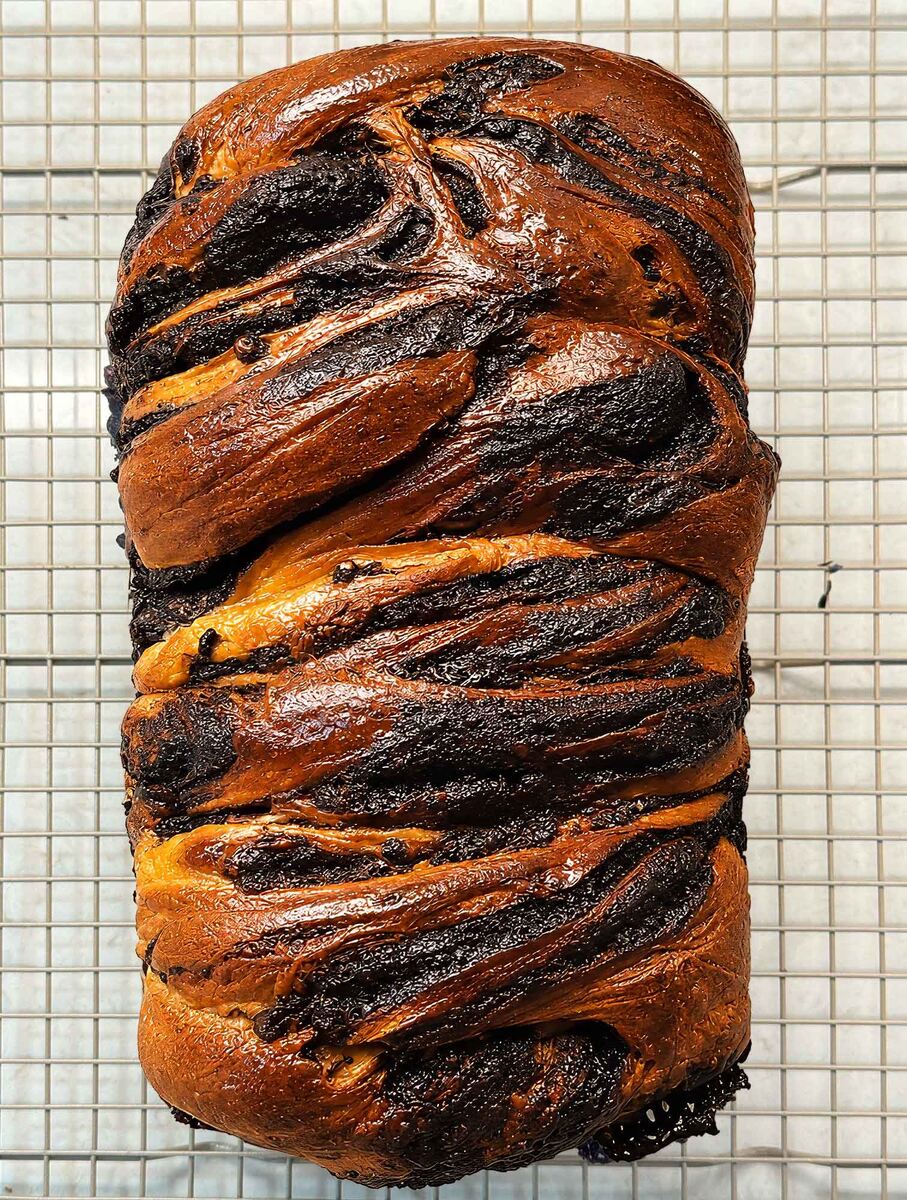
This chocolate sourdough babka is a sweet, buttery enriched dough swirled with a rich cocoa and chocolate filling, braided and baked into a golden loaf. It uses bread flour, milk, eggs, butter, sugar, and an active sourdough starter, with about 30 minutes of hands-on work, a day of slow rises, and 40 to 50 minutes in the oven. It looks fancy enough for a celebration, and tastes decadent.
The Dessert Bread I Didn’t Know I Needed in My Life
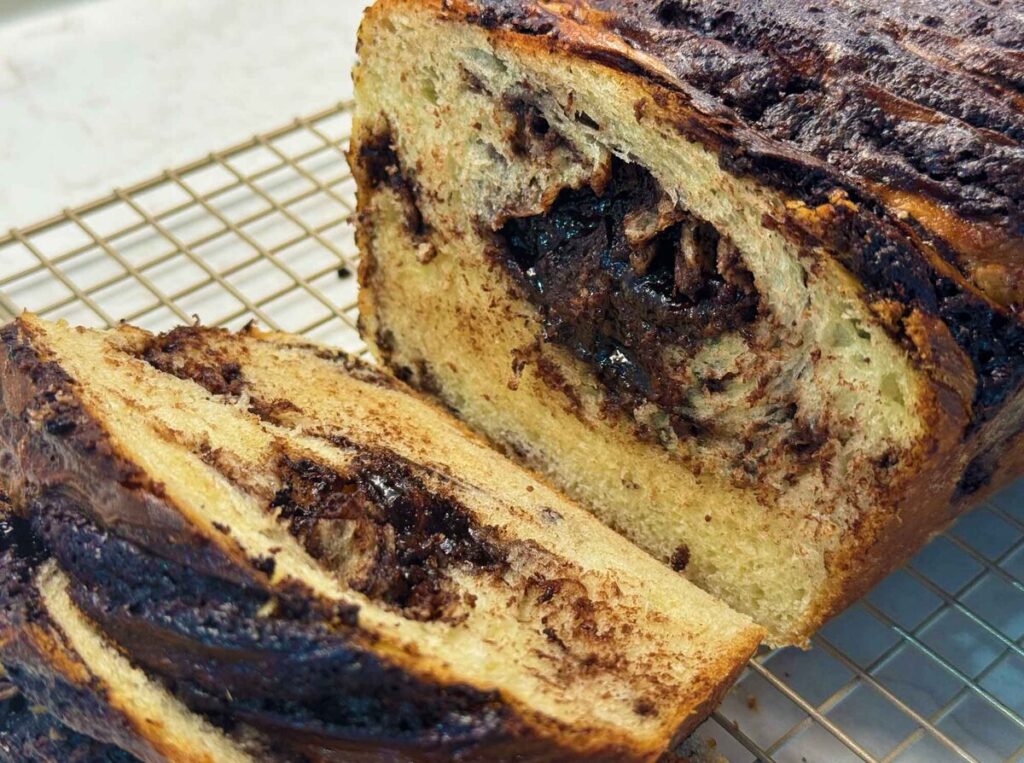
I make sourdough every single week, so my starter is always bubbling away on the counter… but babka was new territory for me until this one. But oh my goodness, is it good!
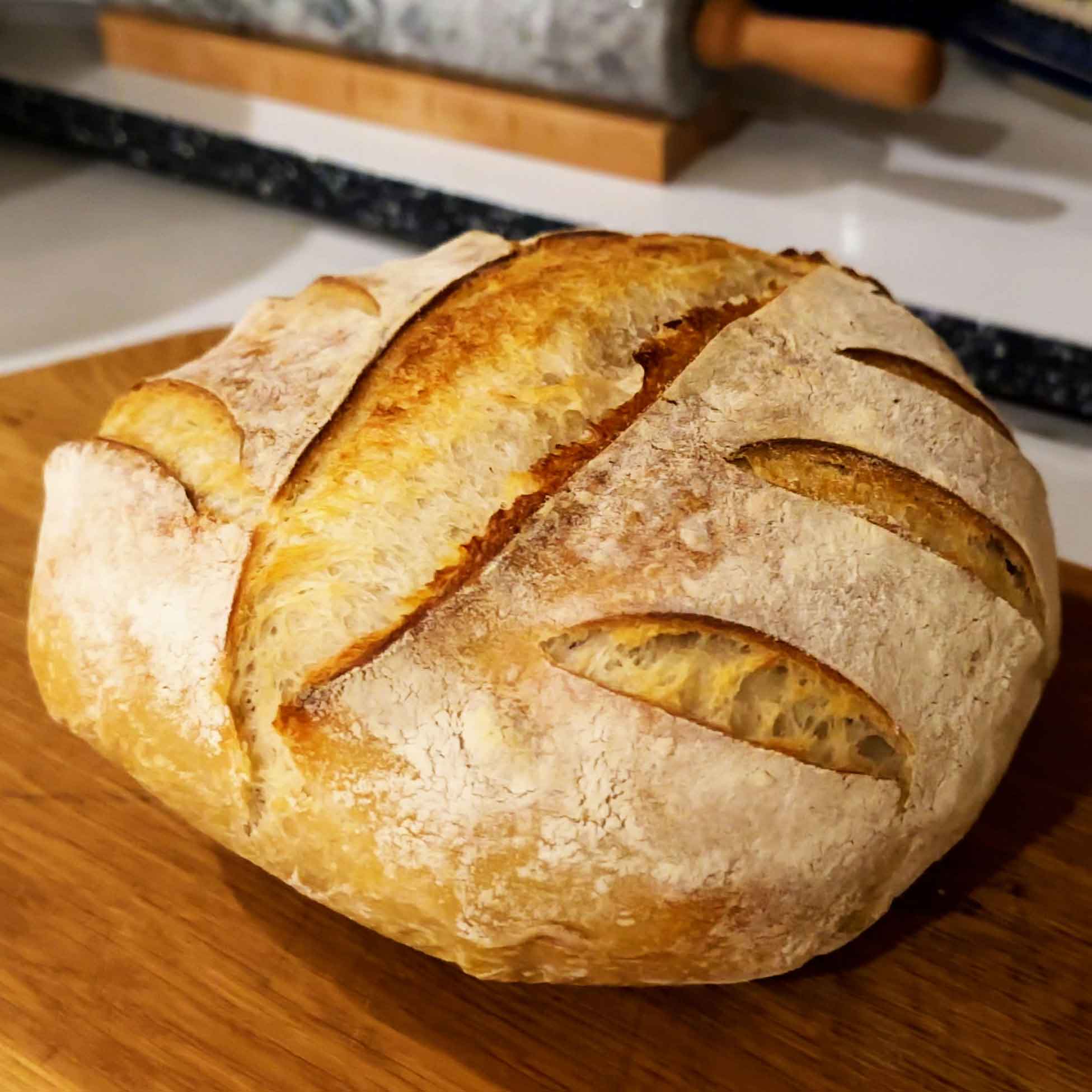
I baked a loaf for my daughter Alexa’s 22nd birthday. She loves to cook, and a chocolate babka felt like the right way to fuss over her a little. I started from a recipe I already trust for the dough, and shaped it the classic way: rolled, filled, and braided into a loaf so all those chocolate layers show when you slice it. The flavor was SO good, rich and chocolatey with just enough sourdough tang, and Alexa was thrilled.
I learned a couple of things my first time through, and loved it so much I made it again just to have … no celebration needed. Everything is baked into the recipe below so yours comes out beautifully, too.
Let’s dig in!

Tips for the Best Chocolate Sourdough Babka
- Feed your sourdough starter the night before. A peak, bubbly starter is the difference between a good rise and a long, worried afternoon.
- Warm room, faster rise. Enriched dough loves warmth. A cool kitchen just means a longer wait, not a failed loaf.
- Do not over-ferment the bulk rise. Pull the dough once it has truly doubled, no further. Pushed too long, it turns slack and sticky, hard to braid, and can bake up gummy. This was my own first-time slip that made it harder to work with.
- Chill it well. A cold, firm dough rolls and braids far more easily than a warm one. Overnight is ideal.
- Resist the flour. The dough is meant to be wet. Adding flour to tame the stickiness is what makes babka dense, so lean on the chill instead. A bench scraper and lightly floured hands help with this, too.
- Use parchment as a sling. After you braid it, lift it on a strip of parchment. It makes moving the soft dough into the pan so much easier and saves the swirl. (Another lesson learned!)
- Bake to temperature, not just the clock. This wet dough can look done on top while the center is still gooey. Pull it at 190 to 195°F, and cool it completely before slicing. Yes, completely!

Want to Save This Recipe?
Enter your email below and we’ll send it straight to your inbox! Plus you’ll get new recipes each week!
Just What IS Sourdough Babka?
Babka is a sweet, cake-like bread made from an enriched dough, soft and rich with butter and eggs, like brioche or challah. You roll the dough out, spread it with a filling (chocolate here, though cinnamon is lovely too), roll it back up, then cut and twist it so all those pretty layers show. The sourdough version swaps commercial yeast for your starter, so it rises slowly over several hours and picks up a little tang along the way. That tang is the reason chocolate babka works so well... the sourness keeps all that sweetness from feeling like too much.
What You Need to Make This
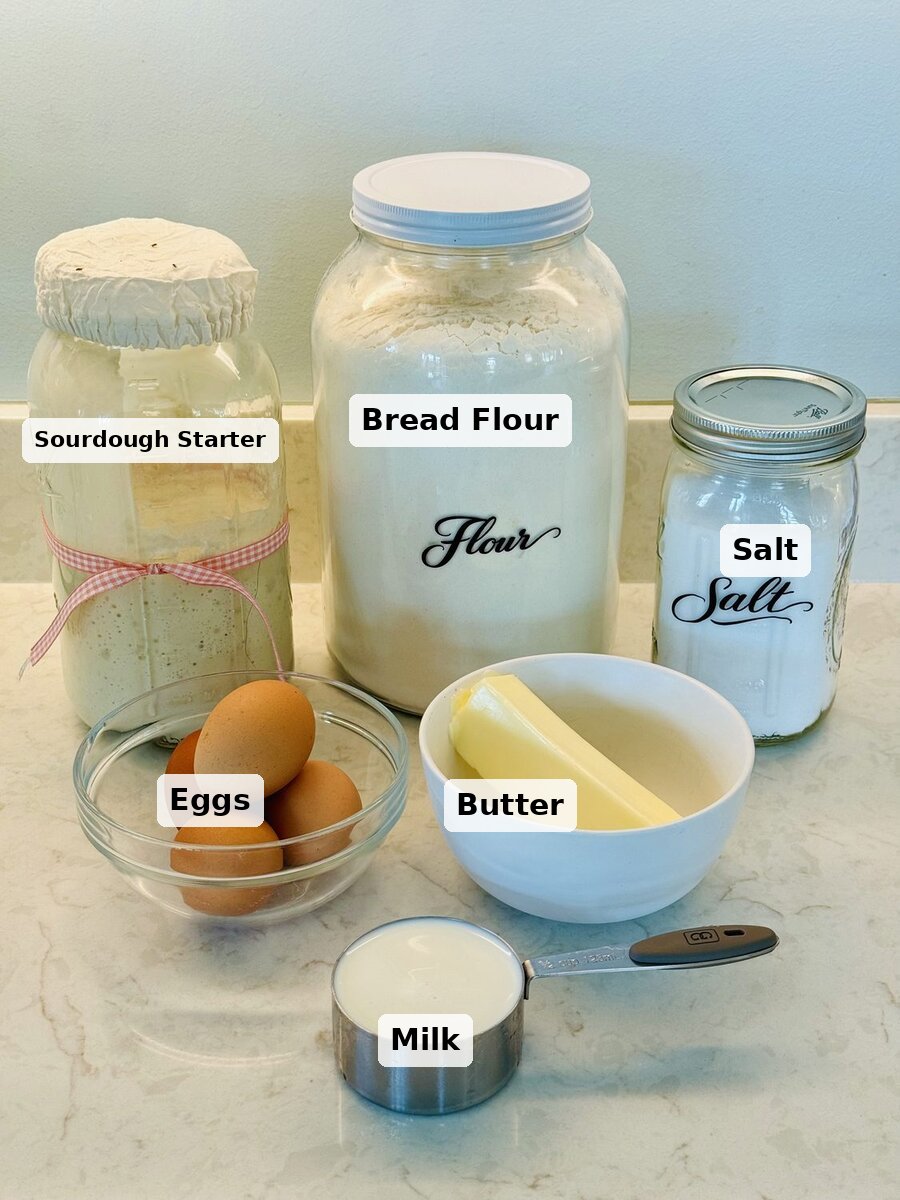
- Active sourdough starter. You want it bubbly and lively. Feed it the night before so it is at its peak in the morning. A weak starter is the number one reason enriched dough rises slowly, so give it a good feeding. See my Sourdough Starter Guide for help making a starter.
- Bread flour. The extra protein gives you that light, stretchy, pull-apart crumb. All-purpose works in a pinch, it just will not be quite as fluffy.
- Whole milk. The fat makes the dough tender. 2% is fine if that is what you have.
- Eggs and butter. These are what make it an enriched dough. Room temperature for both, please, so they blend in smoothly instead of seizing up the cold dough.
- Cocoa powder and semi-sweet chocolate. The cocoa makes the filling deep and fudgy, and the chopped chocolate gives you little melty pockets. Use dark chocolate if you like it less sweet.
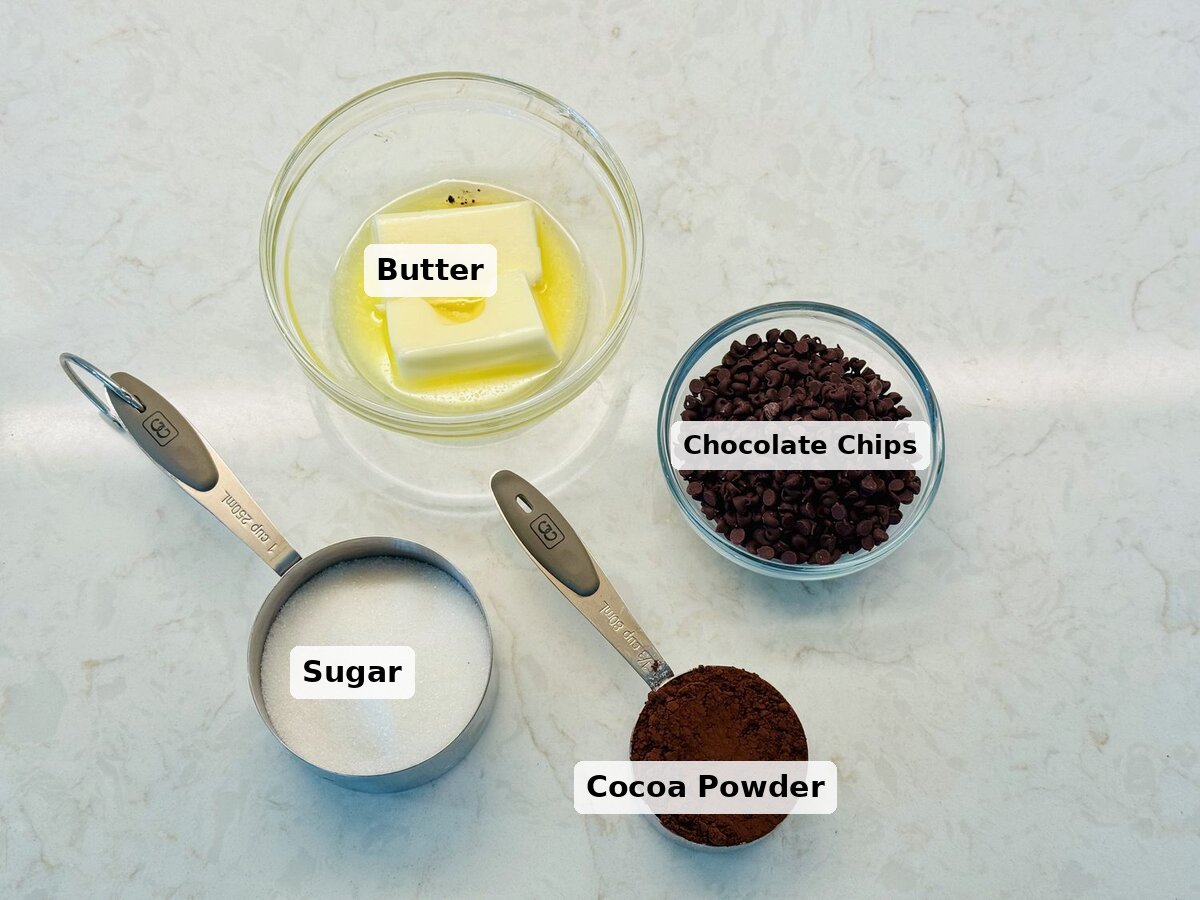
One small note, since I know some of you find bakery desserts too sweet (me too, sometimes): you can drop the filling sugar down to 1/2 cup and it will still taste plenty like a birthday treat. I would not go lower than that, or the filling gets a little bitter from the cocoa.
How to Make Chocolate Sourdough Babka
Mix and Knead the Dough
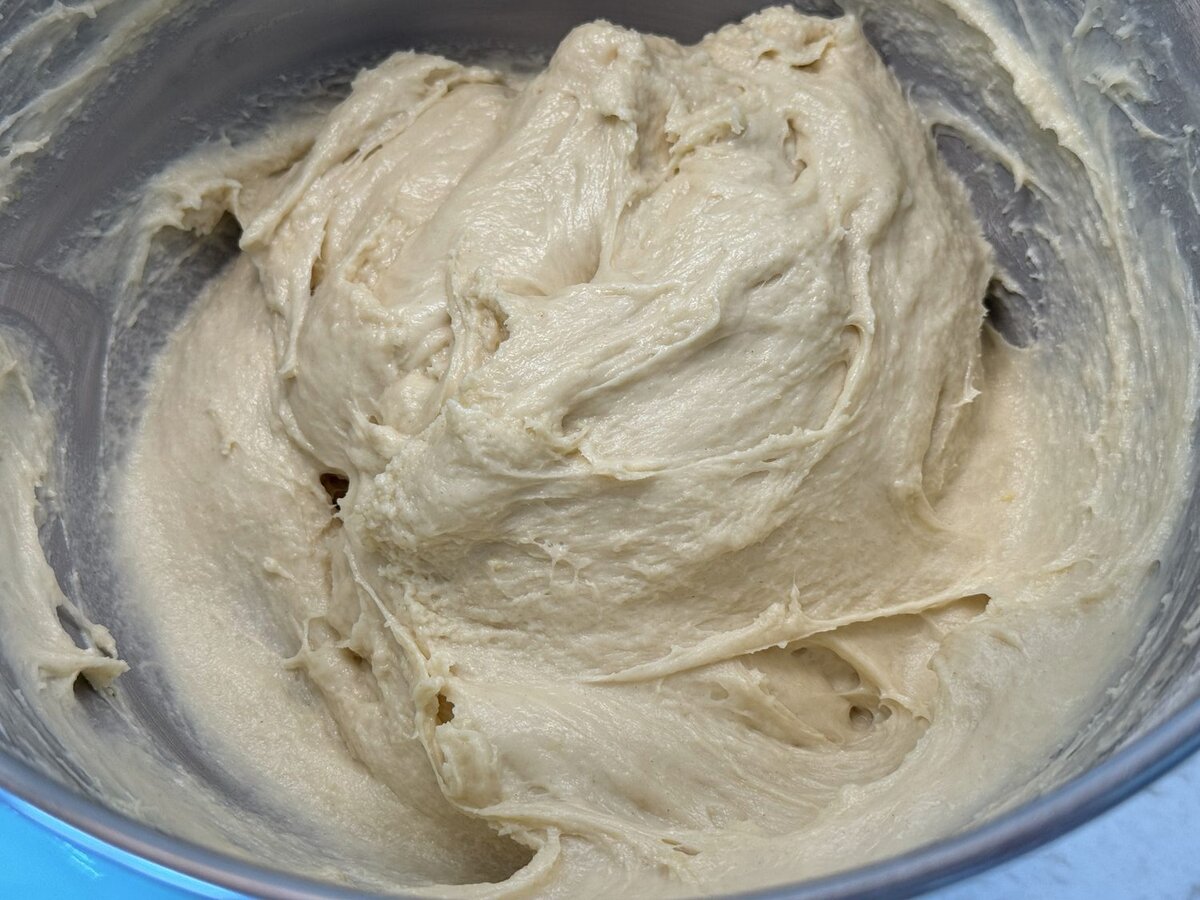
Combine all the dough ingredients in a stand mixer fitted with the dough hook and knead until the dough is smooth and glossy, about 10 to 15 minutes. It will look alarmingly wet and sticky at first, and that is totally normal. Be careful not to add extra flour to fix the stickiness… that is the most common babka mistake, and it gives you a dense, tough bread instead of a pillowy one. Just give the mixer time and it will pull together.
Bulk Ferment Until Doubled
Cover the bowl and set it somewhere warm for 6 to 8 hours, until the dough has doubled. Enriched dough is slow, all that butter and egg weighs it down, so if it takes the full 8 hours, don’t worry. A warm spot (like an oven with just the light on) speeds things along. The reason we wait for a true double is that this is where the flavor and the rise both come from. Watch the dough, not the clock, though: in a warm kitchen it can double well before 8 hours, and letting it run long, into the 9 or 10 hour range, pushes it into over-fermentation. Over-proofed dough goes slack and sticky to shape, and it can bake up gummy in the center no matter how long it stays in the oven. So once it has truly doubled, move it on to the chill, even if that comes earlier than you expected (ask me how I know).
Chill the Dough
Once it has doubled, pop the bowl in the fridge, ideally overnight, or for at least 3 to 4 hours if you are short on time. This helps because cold dough is firm dough, and firm dough is SO much easier to roll and braid without turning into a sticky mess. This is a wet, buttery dough, and a good long chill makes it much easier to handle. Do not skimp here. That said, even a well-chilled dough will stay slack and sticky if it over-fermented during the bulk rise, so the two really go hand in hand.
Make the Chocolate Filling
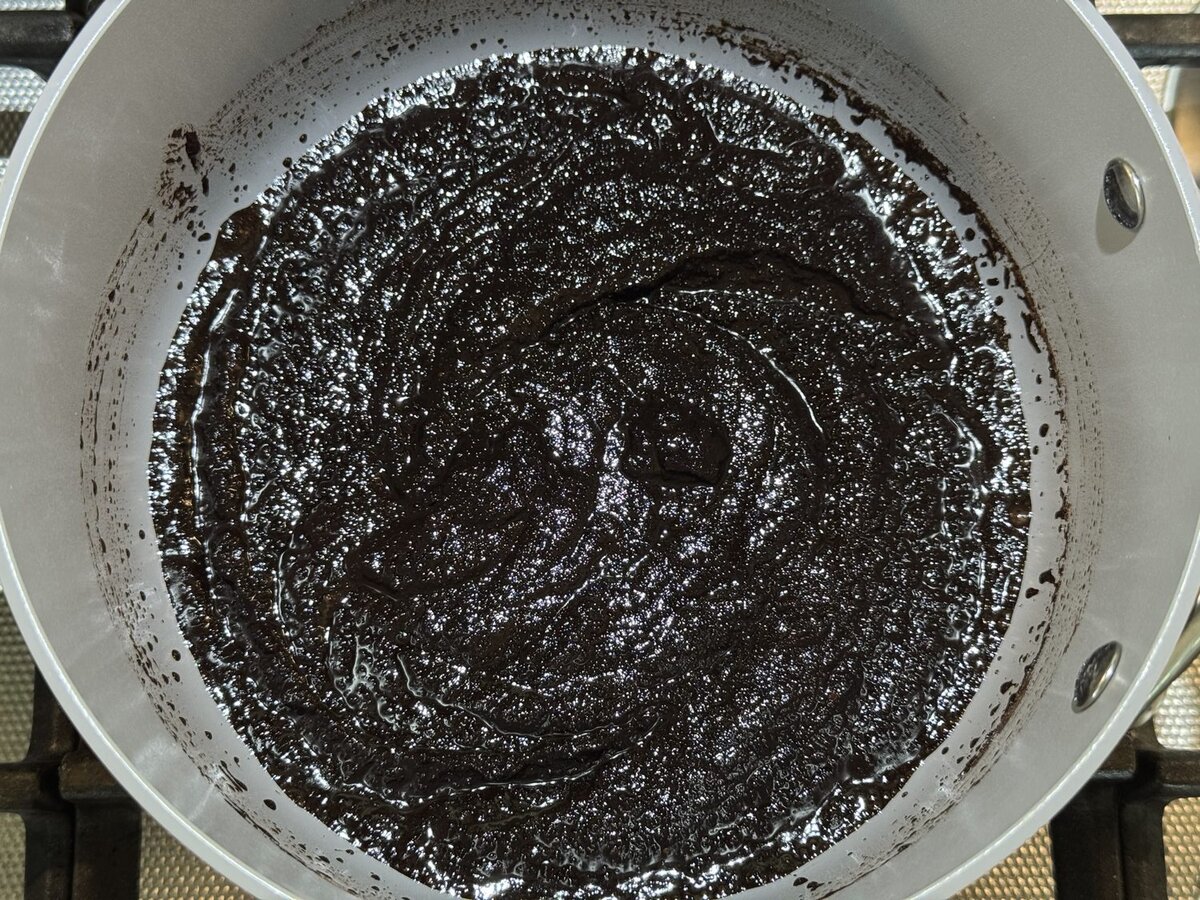
Add the cocoa powder, sugar, chopped semi-sweet chocolate, and softened butter to a small pot and warm it over low heat, stirring, until it is melted and smooth. Let it cool just slightly so it is spreadable but not runny. Warm filling soaks in nicely; hot filling will tear your chilled dough.
Roll, Fill, and Braid
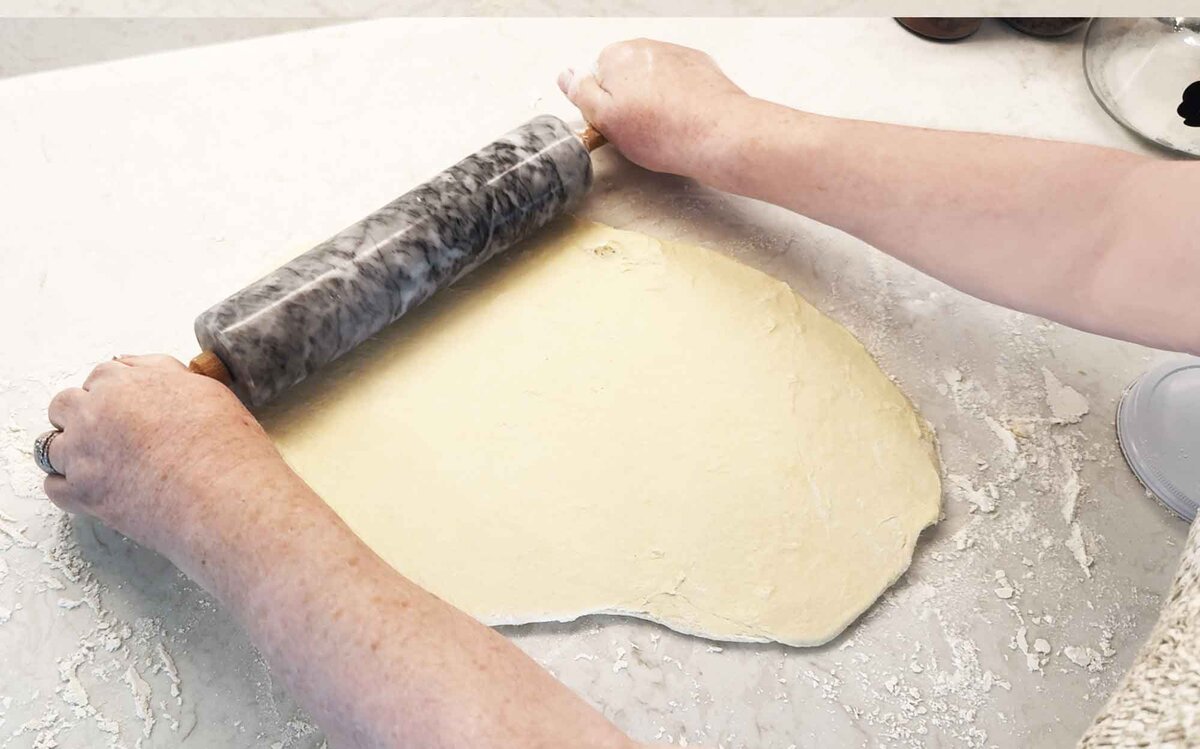
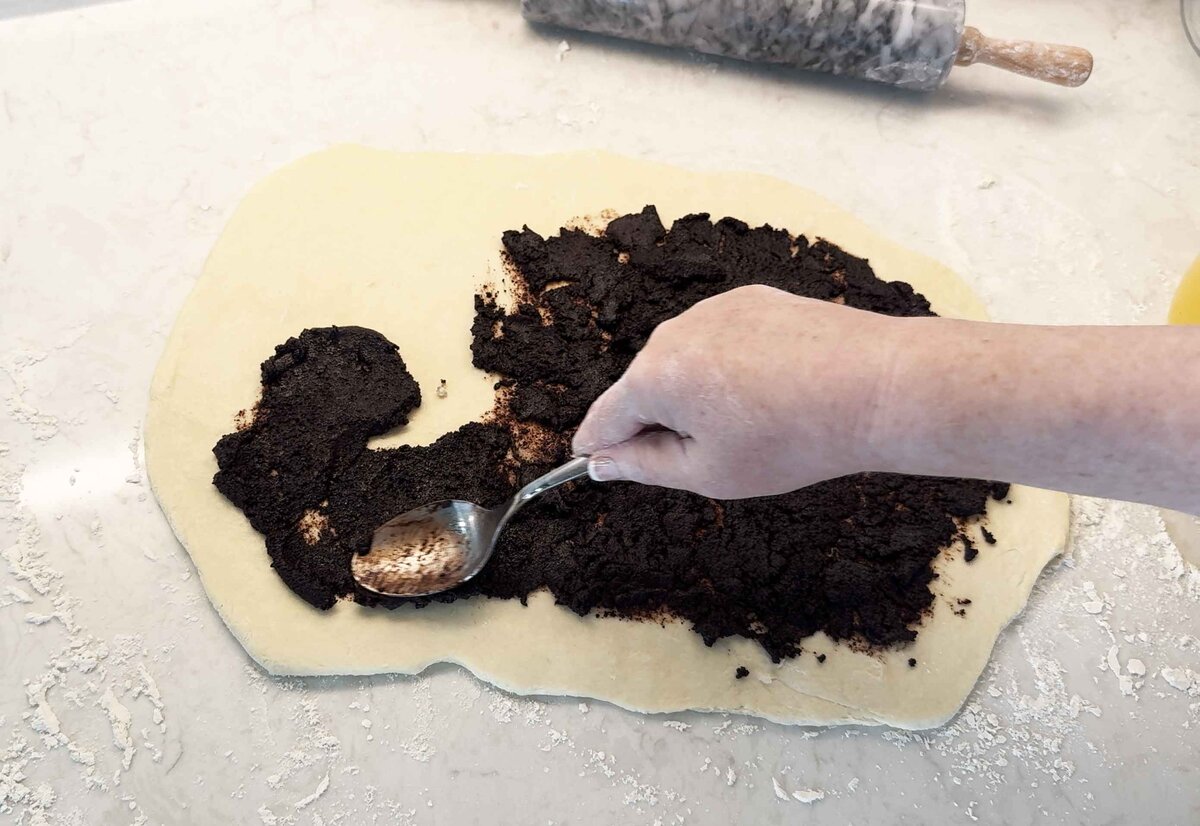
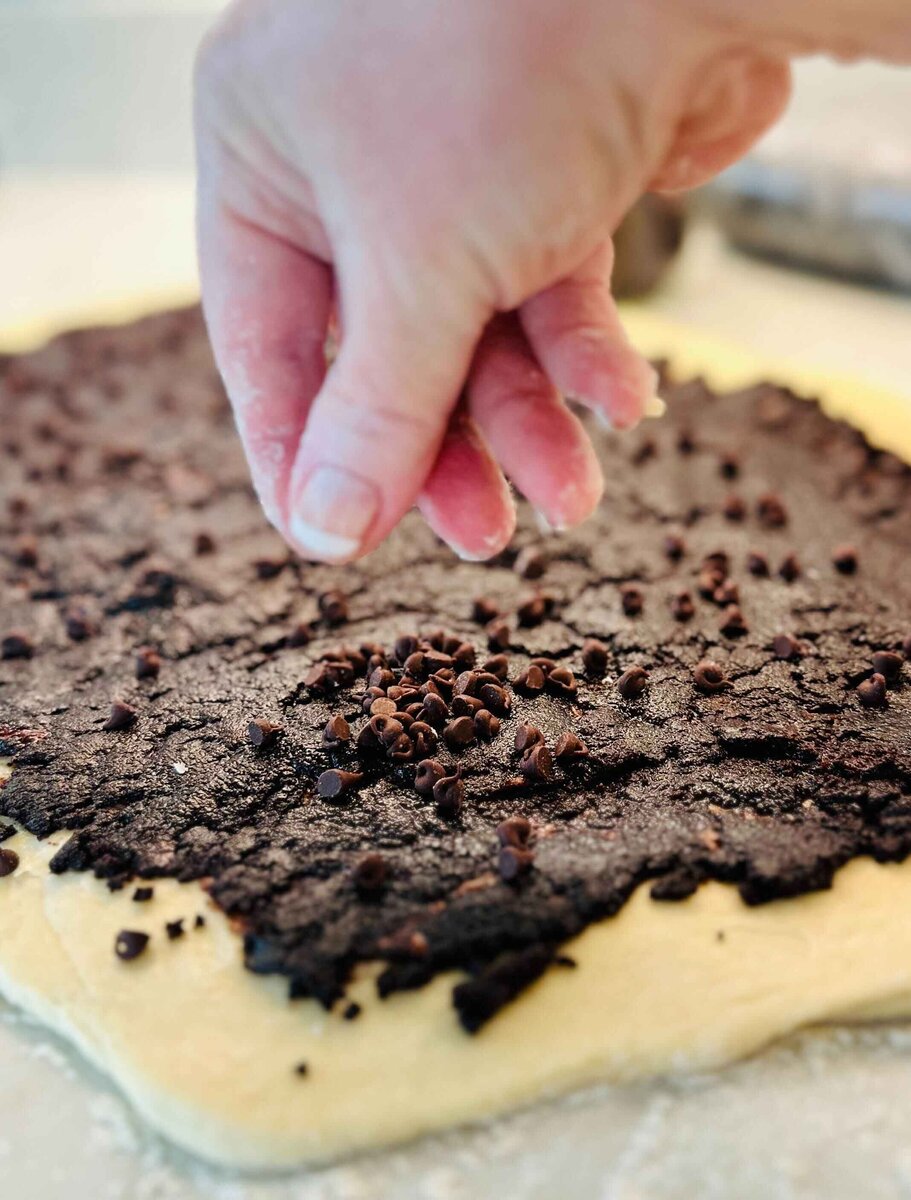
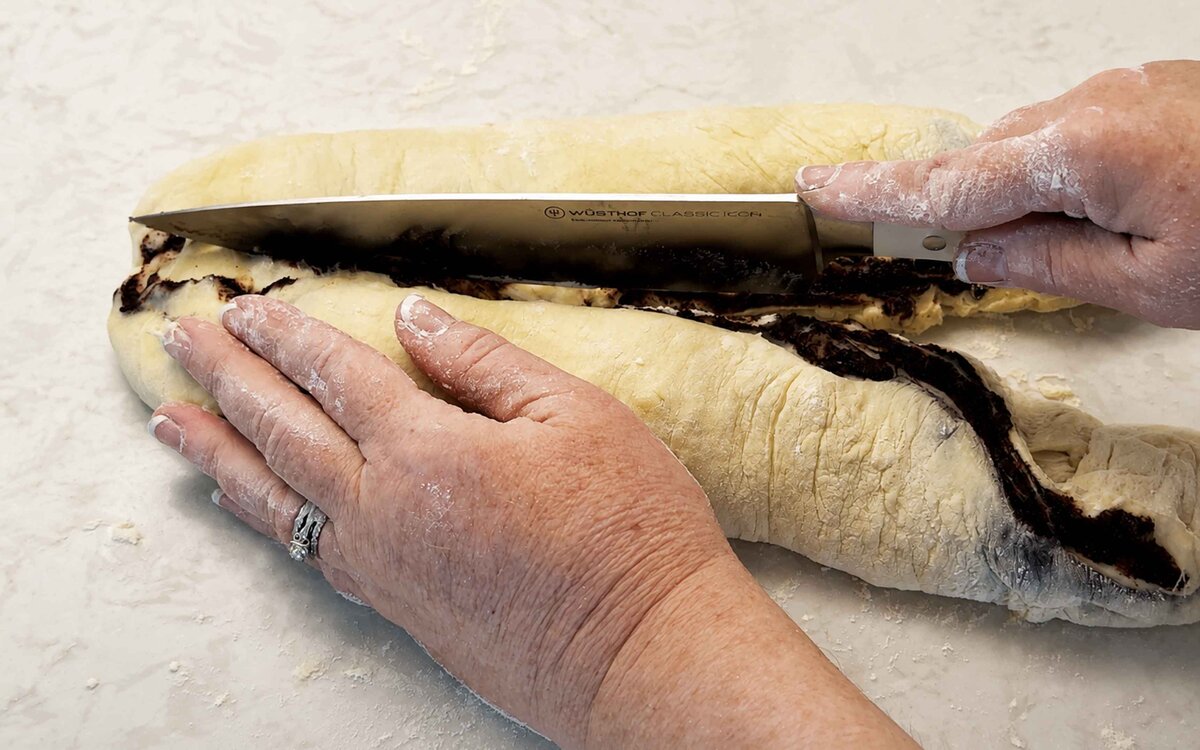
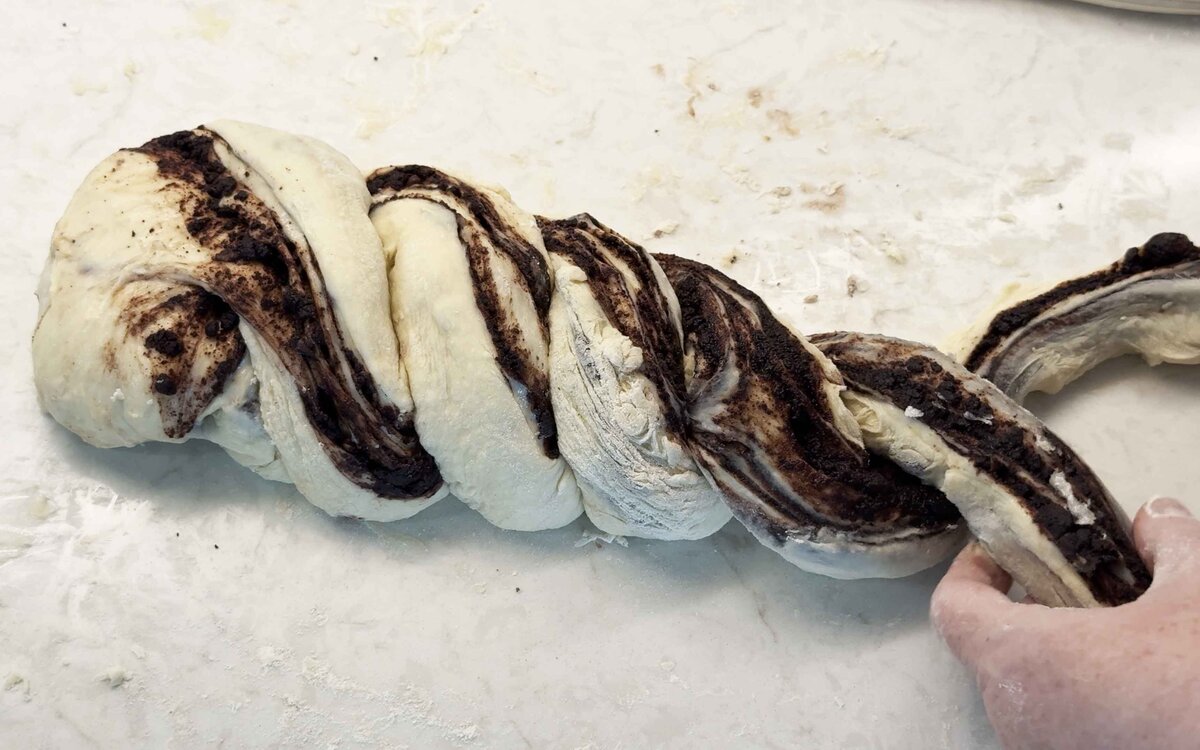
On a lightly floured surface, roll the chilled dough into a rectangle about 10 by 14 inches. Spread the filling in a thin, even layer all the way to the edges, leaving a bare inch along one short side so you have something to seal with, and sprinkle the chopped chocolate over the top. A thin, even layer is worth the care here, because thick patches melt into big molten pockets that make the center look gooey once you slice. Starting from the opposite short side, roll it up into a tight log and pinch the seam to seal. Now here is the babka magic: with a sharp knife, cut the log in half lengthwise so the layers are exposed, then twist the two halves over each other, cut sides up, into a braid.
Settle It in the Loaf Pan
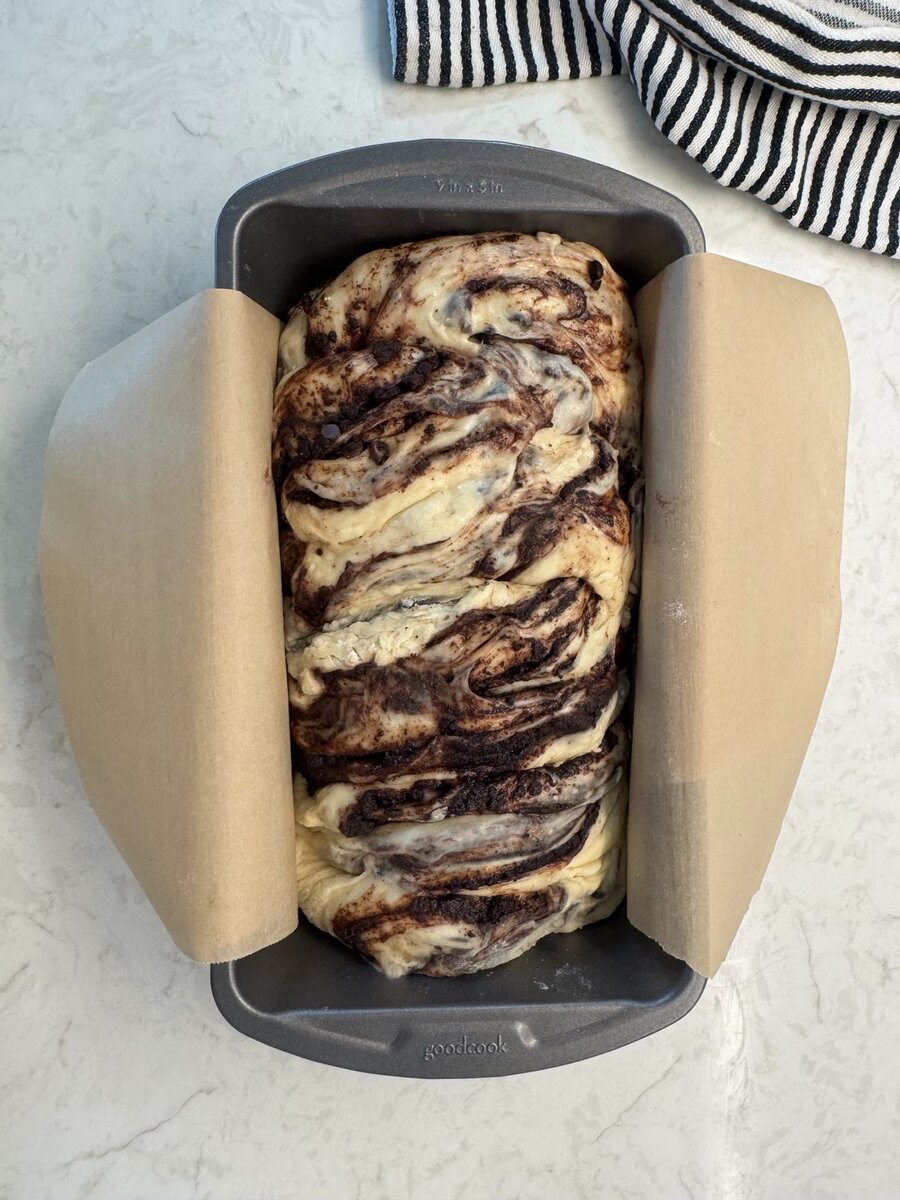
Tuck the braid into a parchment-lined 9 by 5 inch loaf pan, curling or folding the ends under if it runs a little long. Do not worry if it is not perfectly even… mine never is, and once it rises and bakes, nobody can tell. A trick I love: do your cutting and braiding right on a sheet of parchment, then use that parchment as a sling to lower the whole thing into the pan without wrecking the swirl.
Second Rise, Then Bake
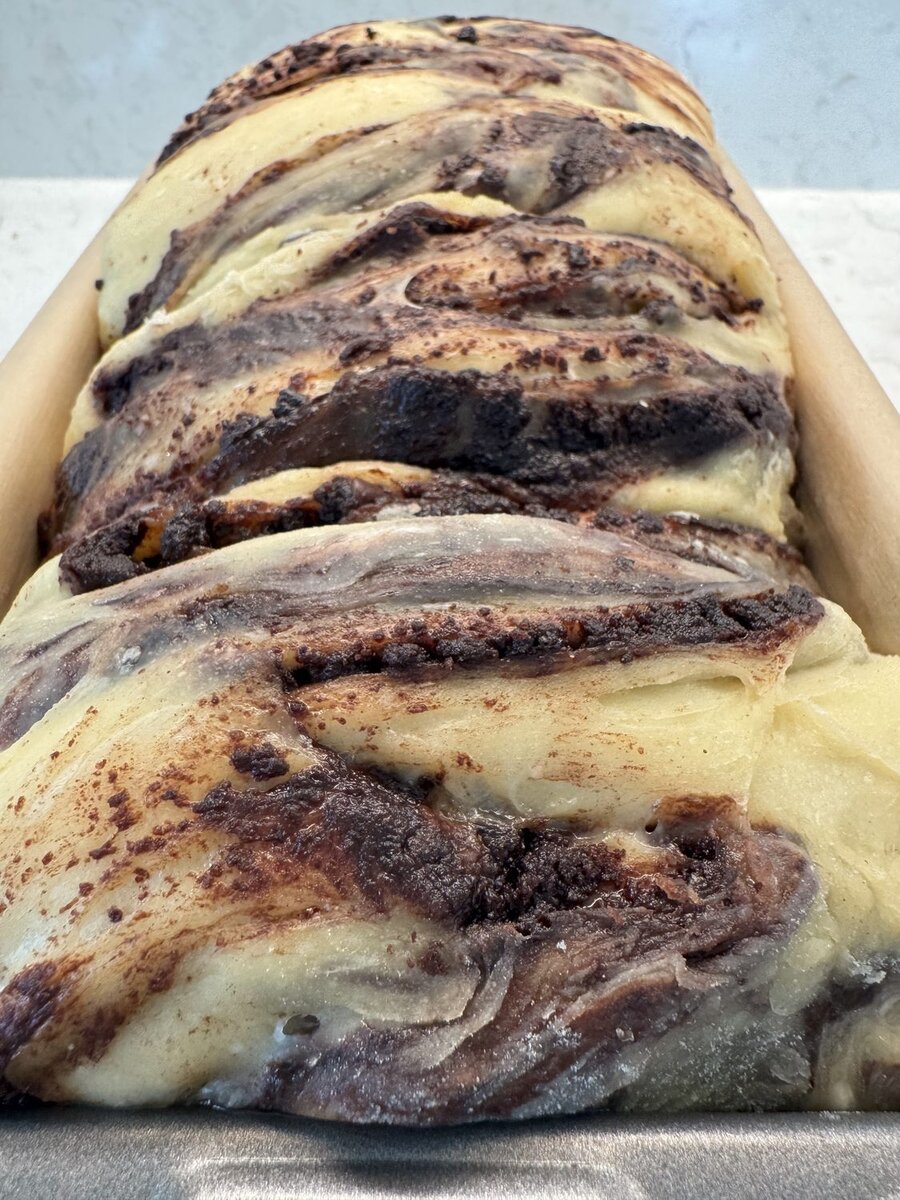
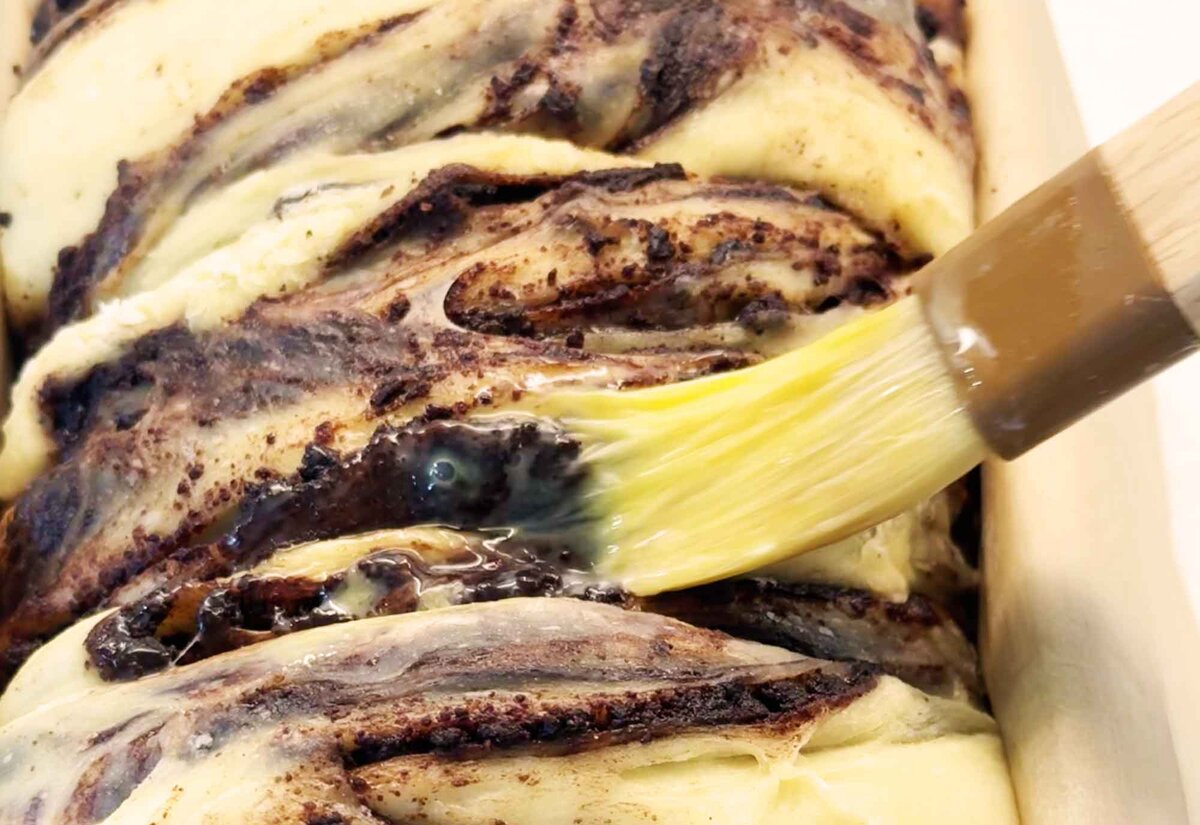
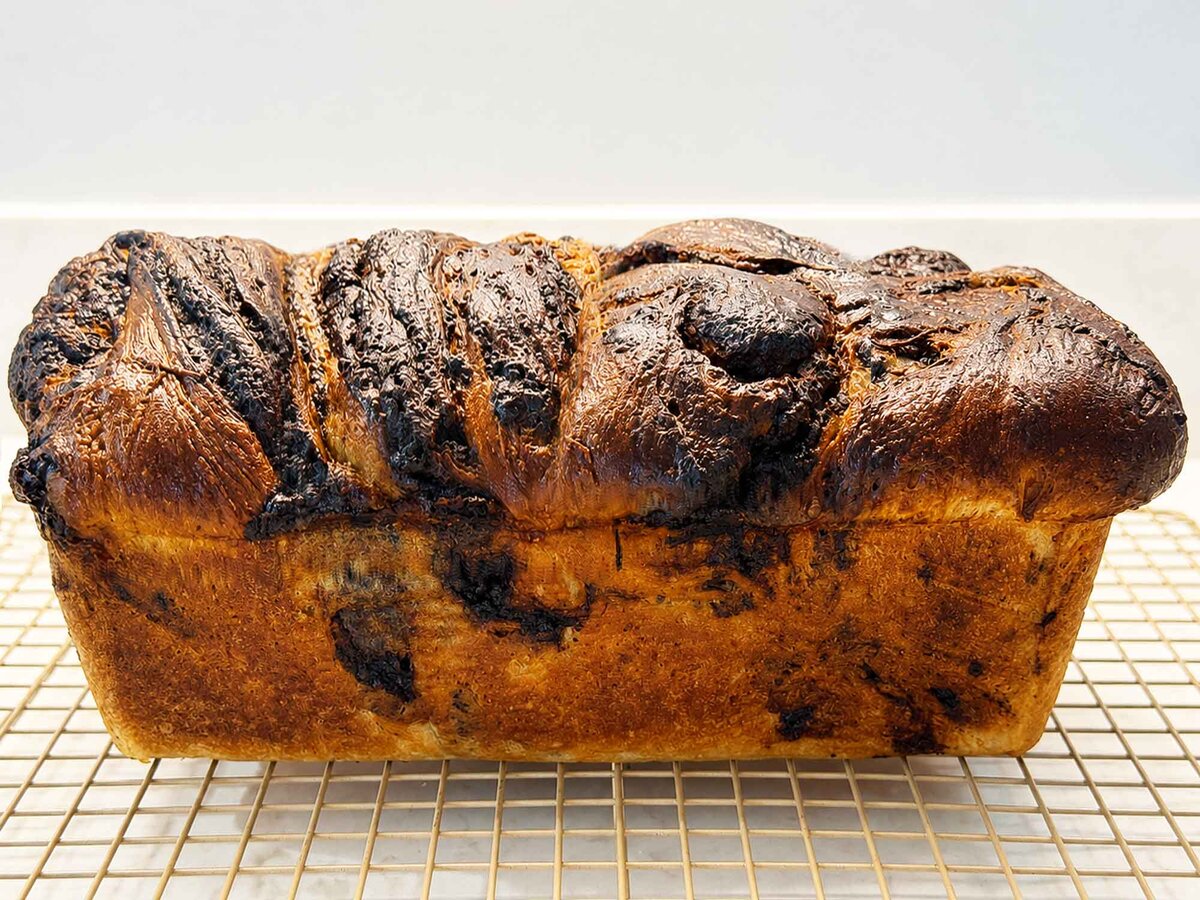
Loosely cover the pan and let it rise again in a warm spot for about 4 hours, until puffy and risen to the top of the pan. When it is nearly there, preheat the oven to 350°F and whisk one egg with a splash of water for an egg wash. Brush it gently over the top so the babka bakes up shiny and golden. Bake on a lower-middle rack, which keeps the top farther from the heat. That sugary, egg-washed top browns well before the inside is done, so plan to tent it: lay a sheet of foil loosely over the top as soon as it is nicely golden, usually around 20 to 25 minutes in, and keep baking. If it is still darkening too fast even under the foil, drop the oven to 325°F and give it the time it needs. Total baking runs about 40 to 50 minutes depending on your oven. Check the temperature in the thickest part of the middle, since the center finishes last: it is done when that spot reads 190 to 195°F, so go by temperature rather than the clock or the color of the top. If the ends seem set but the center is still soft, give it another 5 minutes under the foil. Then let it cool completely, at least a couple of hours, before slicing. The center firms up a lot as it rests, and a warm middle slice can seem mushy even when it is baked, so the wait really does matter here.
How Do You Keep Babka From Sticking?
The easiest insurance is parchment paper. Line your loaf pan with a strip long enough to hang over the two long sides, and butter the pan first so the paper stays put. After baking, those overhangs become handles, and you can lift the whole babka straight out. Let it cool in the pan for about 15 minutes first so it firms up… warm babka is delicate, and moving it too soon is the quickest way to lose that pretty swirl.
A Sample Babka Timeline
Sourdough babka is a two-day project, but most of that time is hands-off. If you want it ready to slice by dinner, here is roughly how the day lays out:
- The night before, around 8pm: Feed your sourdough starter so it is bubbly by morning.
- Morning, around 7am: Mix and knead the dough. Cover and let it bulk ferment.
- Early afternoon, around 1 to 3pm: Once doubled, chill the dough for at least 2 hours.
- Mid to late afternoon: Make the filling, then roll, fill, braid, and settle it into the lined loaf pan. Let it rise about 4 hours.
- Evening: Egg wash, bake, cool, and slice. Warm babka with a cold glass of milk is hard to beat.
If your day starts later, just shift everything down. The dough is forgiving, and a longer chill in the fridge only helps.
How to Store Sourdough Babka
Once it is completely cool, wrap it well or tuck it in an airtight container and keep it at room temperature for 3 to 5 days. It also freezes beautifully for about a month, so if you are baking ahead of the party, that is a fine plan. And if there are leftovers (a big if), day-old babka makes truly AH-mazing French toast.
Recipe FAQs
My dough is too sticky to work with. What did I do wrong?
Probably nothing, this dough is meant to be wet. Two things tame it: a good, long chill before rolling, ideally overnight, and not over-fermenting the bulk rise. Even a well-chilled dough stays slack and sticky if it proofed too long, so pull it at a true double next time rather than letting it go further. A bench scraper and lightly floured hands help a lot, too.
Why is the inside of my babka gooey?
Often it is not the dough at all, it is the chocolate filling, which stays soft and fudgy and pools into those pretty dark veins. That is normal, and it firms up as the loaf cools, so always let it cool completely before slicing. To be sure the dough itself is baked, check that the center reads 190 to 195°F, tenting the top with foil so it can get there without over-browning. If the filling pooled into big wet pockets, spread it thinner and more evenly next time and let it cool to spreadable before it goes on.
Why are only the center slices gooey?
Two things usually team up here. The middle of the loaf is the last part to finish baking, so temp the thickest center spot and give it a few more minutes under foil if it is still soft. And an over-fermented dough, from a bulk rise that ran too long, can leave a gummy center even when the ends are perfect. Pull the bulk at a true double next time, and let the baked loaf cool completely before slicing… warm center slices always seem mushier than they really are.
The top is browning too fast. What should I do?
Enriched, egg-washed dough browns quickly, so this is common. Bake on a lower-middle rack, and tent the top loosely with foil as soon as it is golden rather than waiting for it to darken. If it is still going too fast, lower the oven to 325°F and bake a little longer. Try not to pull it early to save the top, or the center will be underbaked… let the thermometer, at 190 to 195°F, tell you when it is truly done.
Can I use all-purpose flour instead of bread flour?
You can. It will still be delicious, just a little less tall and fluffy. Bread flour gives you that signature soft, stretchy crumb.
Do I need a stand mixer?
It makes life much easier, since this dough needs a good 10 to 15 minutes of kneading and it is quite wet for hand kneading. If you are mixing by hand, expect a sticky arm workout and a slightly longer knead.
Can I make it cinnamon instead of chocolate?
Absolutely. Swap the chocolate filling for 10 tablespoons softened butter mixed with 3/4 cup brown sugar and 2 tablespoons cinnamon. Everything else stays the same.
What do you serve babka with?
It is wonderful all on its own. We love a slice with a cold glass of milk, or a hot cup of coffee. For a birthday, a few fresh berries alongside make it feel a little extra special.
Chocolate Sourdough Babka
Equipment
- stand mixer with dough hook
- 9 by 5 inch loaf pan
- parchment paper
- instant-read thermometer
Ingredients
For the dough
- 1 cup active, bubbly sourdough starter 200g
- 3 1/2 cups bread flour 490g
- 1/4 cup sugar 48g
- 1/2 cup whole milk 122g
- 1 1/2 teaspoons salt 7.5g
- 4 large eggs room temperature
- 8 tablespoons butter 113g, unsalted and softened
For the chocolate filling
- 1/3 cup cocoa powder
- 2/3 cup sugar (or 1/2 cup for a less sweet filling)
- 8 tablespoons butter , softened
- 4 ounces semi-sweet chocolate chips (plus a small handful chopped for sprinkling)
For finishing
- 1 egg (plus a splash of water for the egg wash)
- simple syrup: 1/3 cup sugar + 1/3 cup water optional
Instructions
- Feed your sourdough starter the evening before so it is very bubbly and active by morning.
- Combine all the dough ingredients in the bowl of a stand mixer fitted with a dough hook. Knead until smooth and glossy, 10 to 15 minutes. The dough will be very wet; do not add more flour.
- Cover the bowl and let the dough bulk ferment in a warm spot until doubled, usually 6 to 8 hours. Watch the dough and pull it at a true double rather than by the clock, since a long over-ferment can leave the center gummy.
- Place the dough in the refrigerator, ideally overnight or for at least 3 to 4 hours, so it firms up well for shaping. A thorough chill makes this wet dough much easier to roll and braid.
- Make the filling: warm the cocoa powder, sugar, chocolate chips, and softened butter in a small pot over low heat, stirring, until melted and smooth. Let cool slightly.
- Line a 9 by 5 inch loaf pan with parchment, leaving an overhang on the long sides. Butter the pan first so the parchment stays put.
- On a lightly floured surface, roll the chilled dough into a rectangle about 10 by 14 inches. Spread the filling to the edges, leaving 1 inch bare along one short side. Sprinkle with the chopped chocolate.
- Roll the dough up into a tight log from the short side and pinch the seam to seal. Cut the log in half lengthwise to expose the layers, then twist the halves together, cut sides up, into a braid.
- Settle the braid into the prepared loaf pan, tucking the ends under if needed. Loosely cover and let rise in a warm spot for about 4 hours, until puffy and risen to the top of the pan.
- Preheat the oven to 350°F. Whisk 1 egg with a splash of water and brush over the top. Bake on a lower-middle rack for about 40 to 50 minutes. Tent loosely with foil as soon as the top is golden (around 20 minutes) so it does not over-darken, and drop the oven to 325°F if it is still browning too fast. Go by temperature: the center is done at 190 to 195°F in the thickest part, which finishes last, so give it another 5 minutes under the foil if the middle is still soft. Cool completely, at least a couple of hours, before slicing.
- Cool in the pan for about 15 minutes, then lift out by the parchment onto a rack. If using, simmer the simple syrup until dissolved and brush it over the warm babka. Cool completely before slicing, or the center may seem gooey.
Notes
I hope this babka makes your day a little sweeter. If you make it, come back and let me know how the twist came out and whether you went chocolate or tried a different filling… I love hearing what you all do with it.
Happy baking!
Love,
Jennifer
Related Recipes
Tried this recipe?
Tap the stars in the recipe card to leave a quick rating. Your rating helps other home cooks know this recipe works in a real kitchen, not just mine.
And as a thank-you for your feedback, you will receive a free printable copy of my Maker Home Companion Cookbook, featuring my most popular recipes, each one formatted on a SINGLE, easy-to-use page, a perfect kitchen companion for easy meal prep. Click here to learn more about this cookbook and how you can get your copy!

Meet Jennifer
Jennifer cooks and experiments in the kitchen at Maker Farm, where she focuses on simple pantry cooking, homemade staples, and practical recipes that make everyday meals easier. Over the years she has tested many ways to make cooking simpler and more dependable, and shares the methods that work best in her own kitchen, occasionally showing them on her Heart to Home at Maker Farm vlog.