

Make this easy turkey meatball recipe for tender, juicy baked meatballs with a “secret” ingredient that keeps them moist without falling apart. Healthy and fast enough for weeknights, and perfect with gravy, marinara, pasta, or subs.
TURKEY MEATBALLS At A Glance
Prep
10 min
COOK/Bake
18-20 min
Total
30 min
Serves
4
Pan
Large oven-safe skillet or baking sheet
Main ingredients: ground turkey, sandwich bread, milk, egg, seasonings
Tastes like: Savory, mild, and warmly spiced with old fashioned seasonings, more like a Swedish-style meatball than an Italian meatball – mmm mmm good!
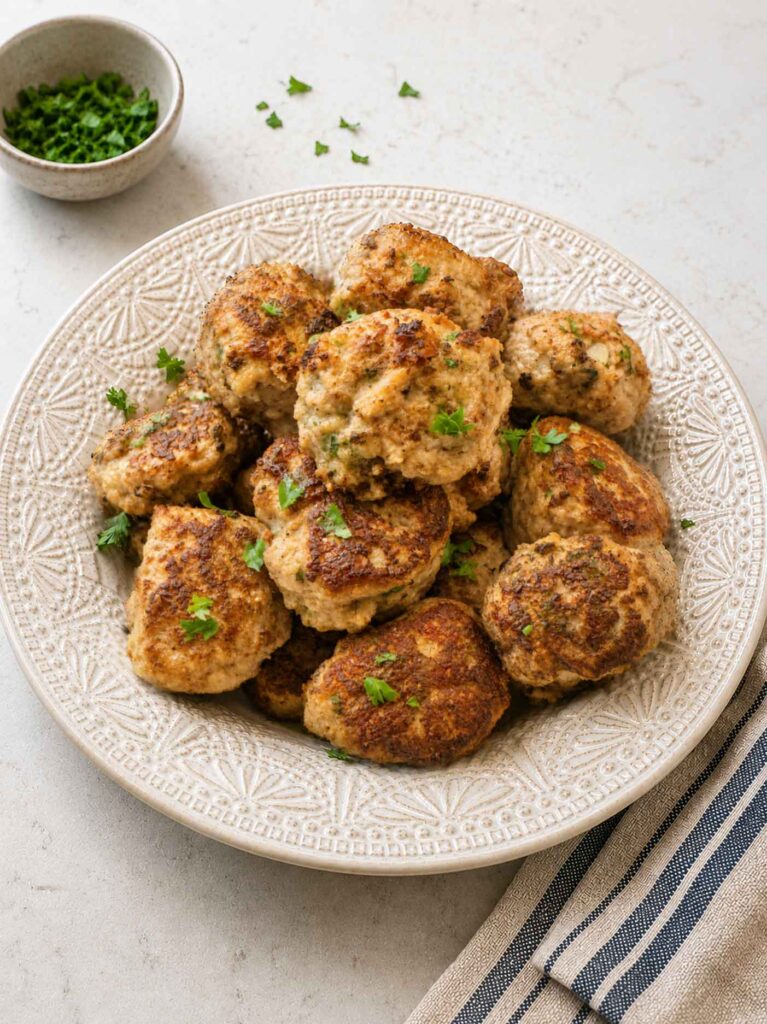
I love meatballs because they are quick and easy to make, and so flexible! We like to eat them as is (they make great savory protein snacks), or smother them in gravy, or toss them into spaghetti sauce for dinner. I prefer the taste of ground turkey as it feels “cleaner” to me than ground beef, likely due to the lower fat content. But this is not a dry, bland meatball! I keep it moist with milk-soaked bread (the “secret ingredient”) and super flavorful with seasonings, including the old-fashioned flavors of allspice, nutmeg, and cardamom (yes, really!).
Why This Turkey Meatball Recipe Works So Well
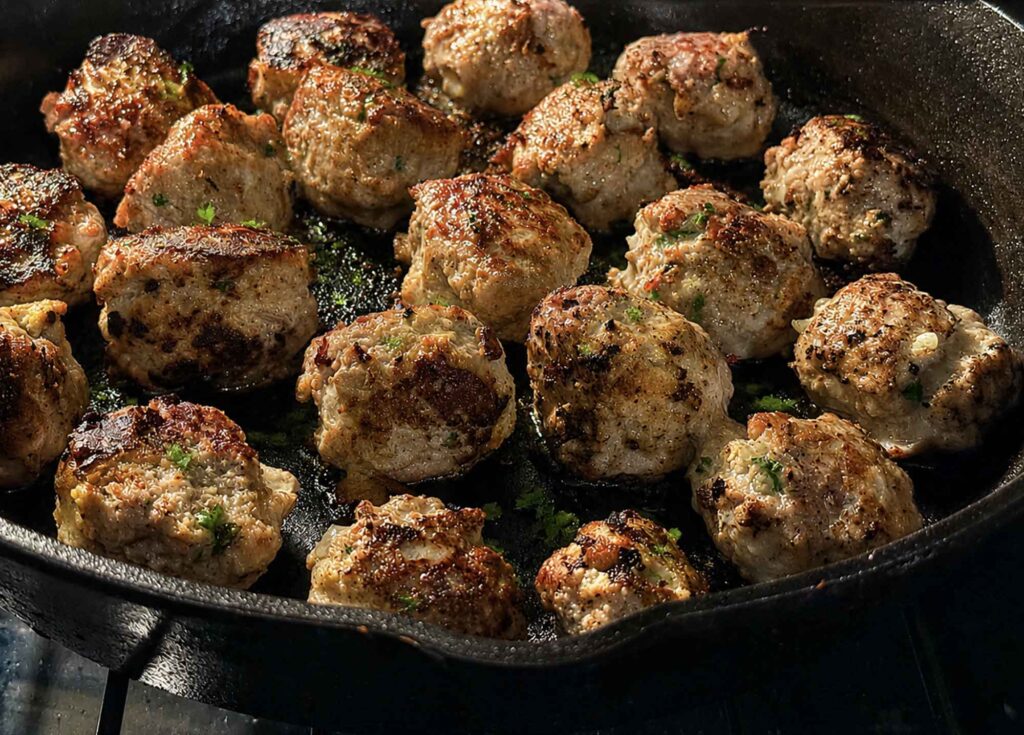
These are not your typical Italian-style meatballs, as I think the mild flavor of the turkey needs a little something else. My turkey meatballs are more like old-fashioned comfort food with a soft, tender texture from milk-soaked stale bread and a cozy flavor from nutmeg, allspice, and a tiny pinch of cardamom. I brown them first in cast iron for added flavor, then finish them in the oven so they cook through without drying out. Juicy juicy!
Ingredients
Here’s what you’ll need to make these old-fashioned turkey meatballs, plus a few easy substitutions.
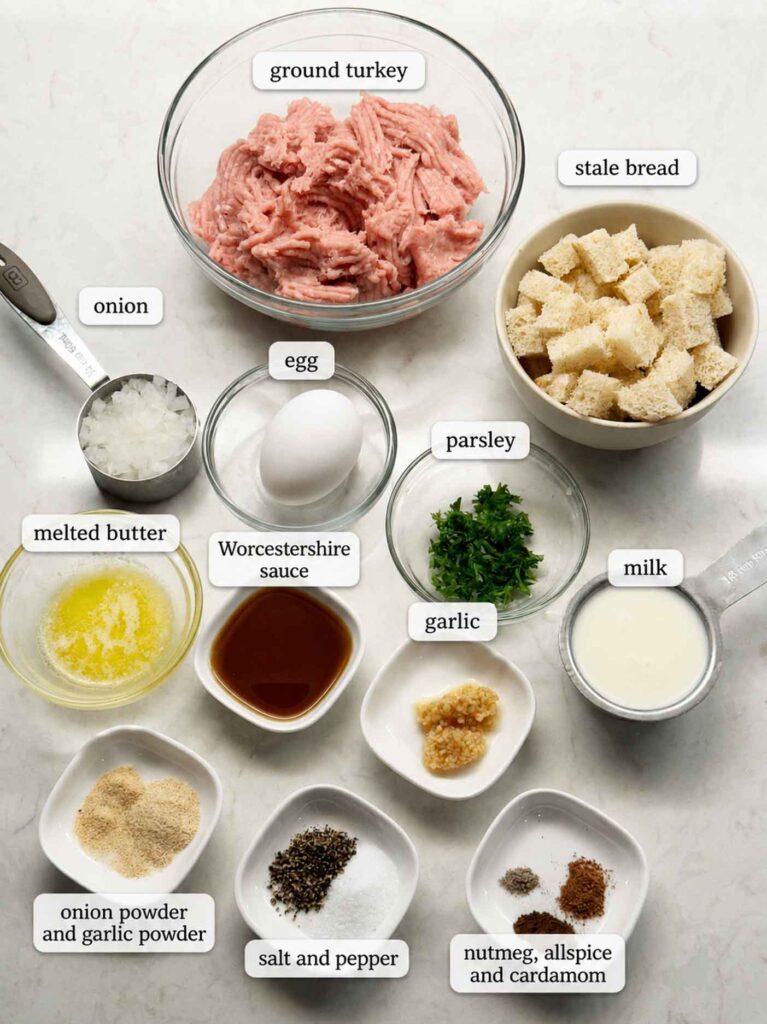
Ground Turkey: Use 93% lean ground turkey for the best texture and flavor. Very lean turkey, such as 99% lean, can make the meatballs dry unless you add extra moisture.
Stale Bread: Cubed stale sandwich bread is the trick to the soft, old-fashioned texture of these meatballs. The bread soaks up the milk and helps bind the meatballs together while keeping them tender. White bread, sourdough bread, wheat bread, or even a soft dinner roll will work.
GLUTEN-FREE OPTION

To make gluten-free turkey meatballs, use your favorite gluten-free bread or gluten-free breadcrumbs in place of the stale bread. Also make sure your Worcestershire sauce is gluten-free, as not all are.
Milk: Milk softens the stale bread and creates a moist bread mixture that helps prevent dry turkey meatballs. Whole milk gives the richest flavor, but 2% milk works well, too.
Egg: The egg helps hold the meatballs together so they keep their shape while browning and baking.
Onion: Finely grated onion adds flavor and moisture. Grating (or finely dicing) the onion is especially helpful because the onion juices mix right into the meatball mixture, which keeps the turkey from tasting dry or bland.
Worcestershire Sauce: This adds rich, savory depth and helps give mild ground turkey a more old-fashioned comfort food flavor.
Nutmeg, Allspice, and Cardamom: These warm spices give the meatballs a subtle old-fashioned flavor and keep your meatballs from being bland. Use a light hand so the spices stay cozy and savory, not sweet.
FRESH HERBS

I love to add fresh parsley because it brings color and a little brightness to my meatballs. You could also add a small amount of dill if you want a more Swedish-style flavor.
How to Make Turkey Meatballs
These turkey meatballs are browned in a cast-iron skillet, then finished in the oven so they get good flavor on the outside while staying tender inside.
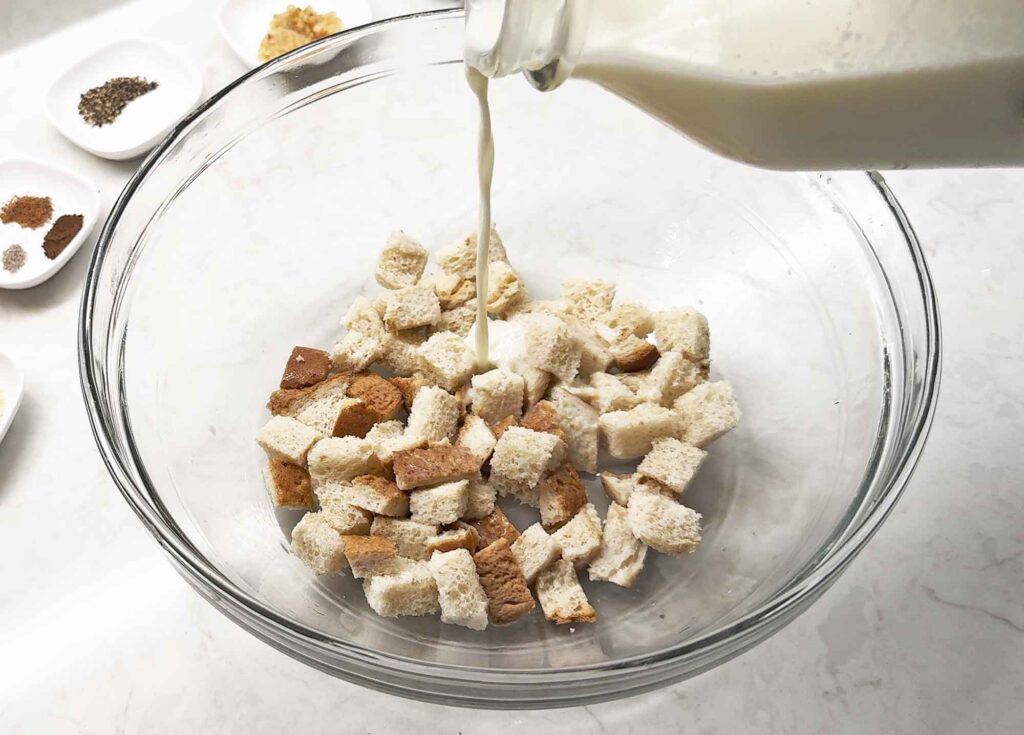
Step 1: Soak the bread
Start by soaking the cubed stale bread in milk until it softens. This helps keep the turkey meatballs moist and tender instead of dry.
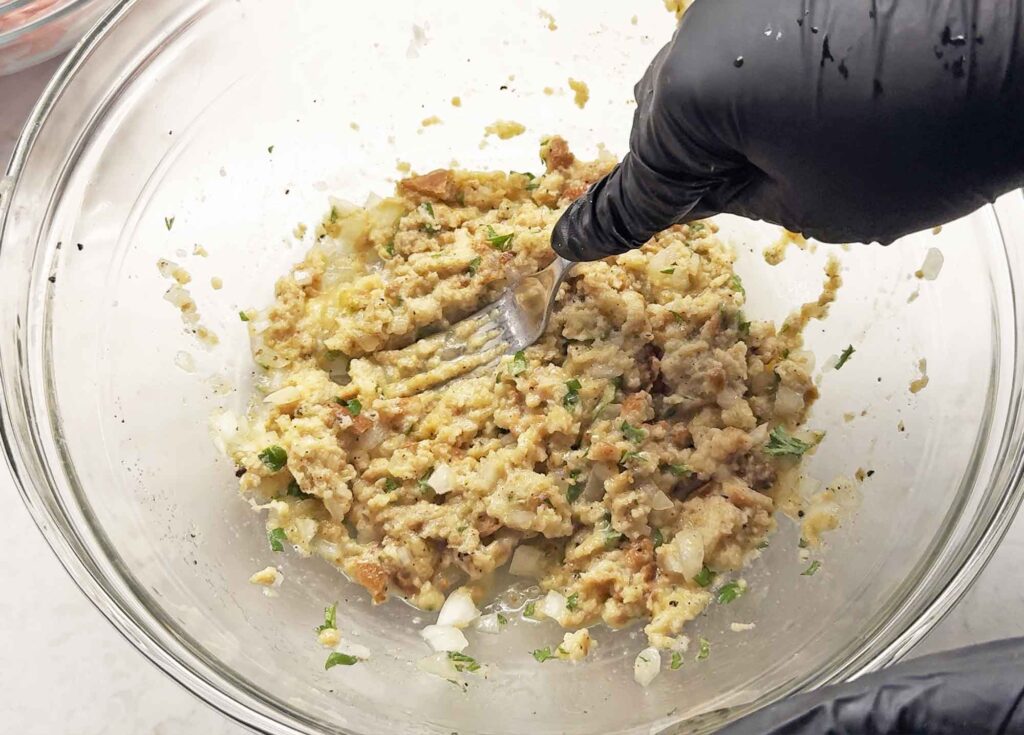
Step 2: Mix up the ingredients
Stir in the egg, grated onion, garlic, Worcestershire sauce, melted butter, parsley, salt, pepper, and warm spices before adding the turkey. Mix and mash it all into a wet, paste-like mixture.
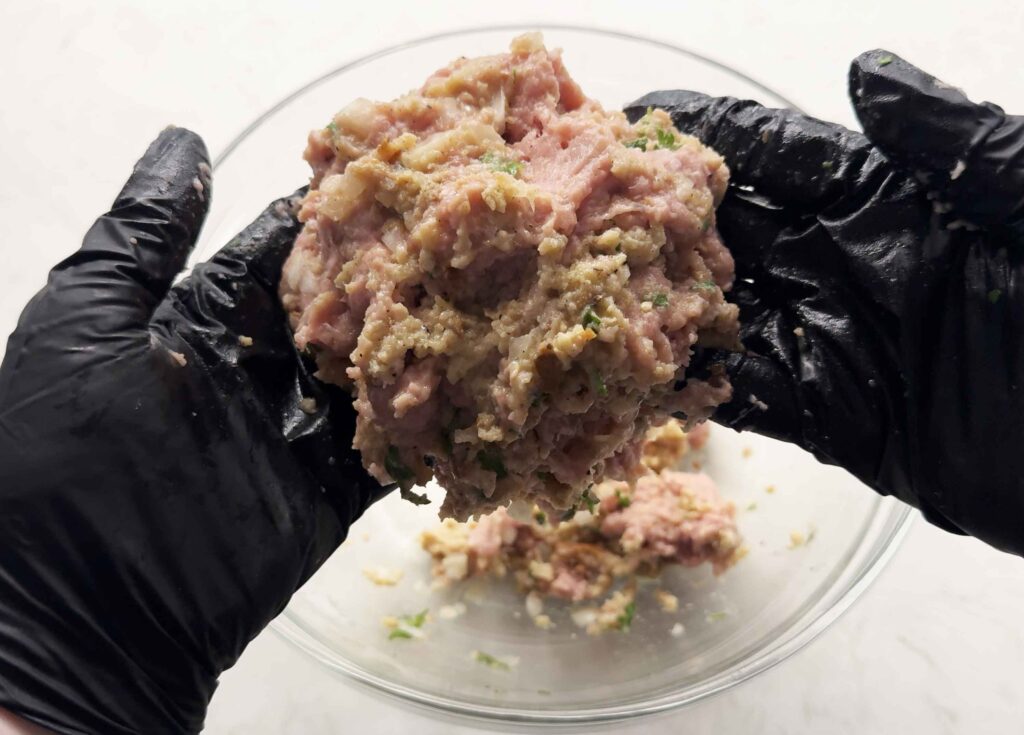
Step 3: Add the ground turkey
Mix in the ground turkey gently just until everything is combined. Overmixing can make meatballs dense. I find it easiest to use my hands to mix – if you find the texture feels weird, wear gloves.
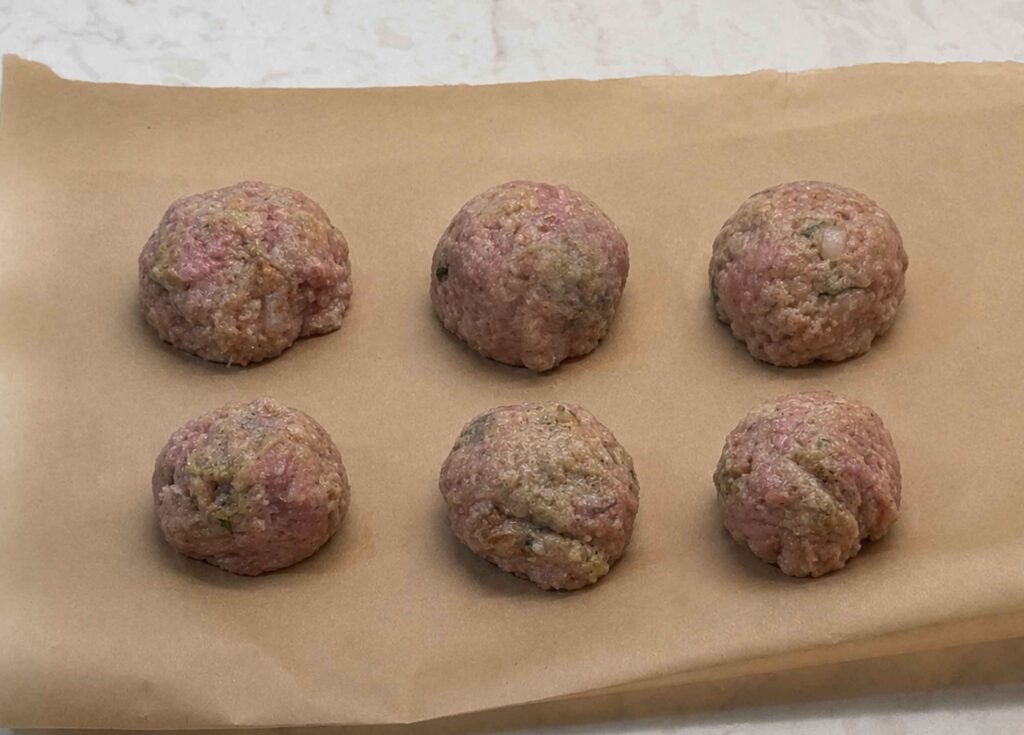
Step 4: Portion the meatballs
For evenly sized meatballs, use a small cookie scoop, ice cream scoop, or tablespoon measure. This helps the meatballs cook at the same rate, so you do not end up with some overcooked and others underdone. For this recipe, aim for about 16–20 meatballs from 1 pound of ground turkey.
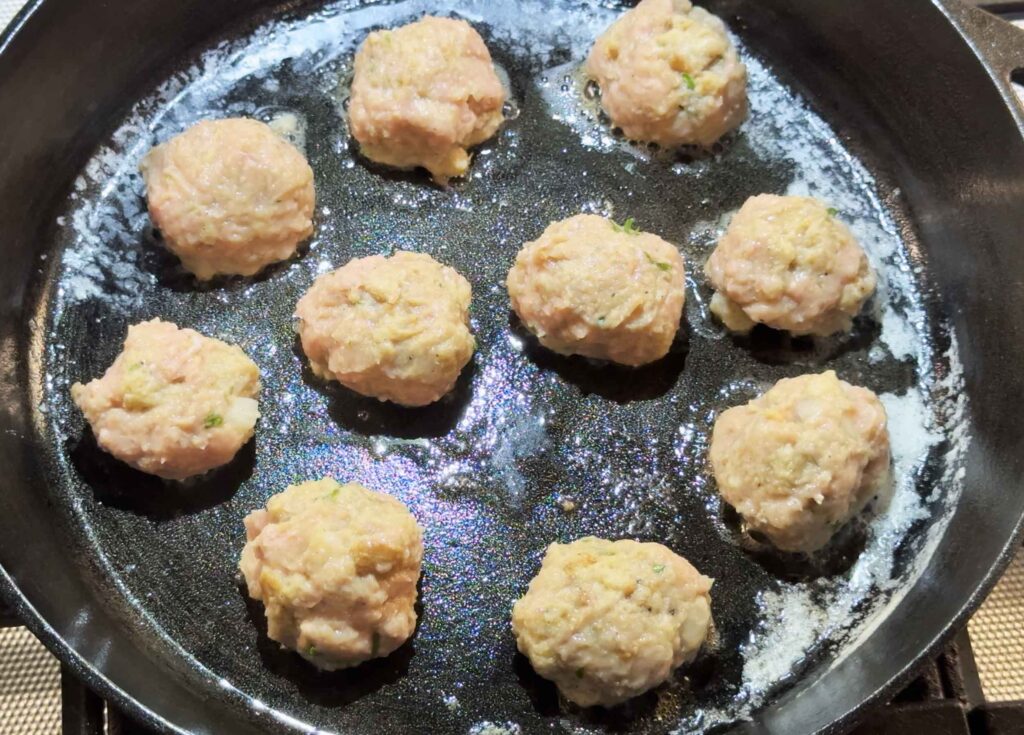
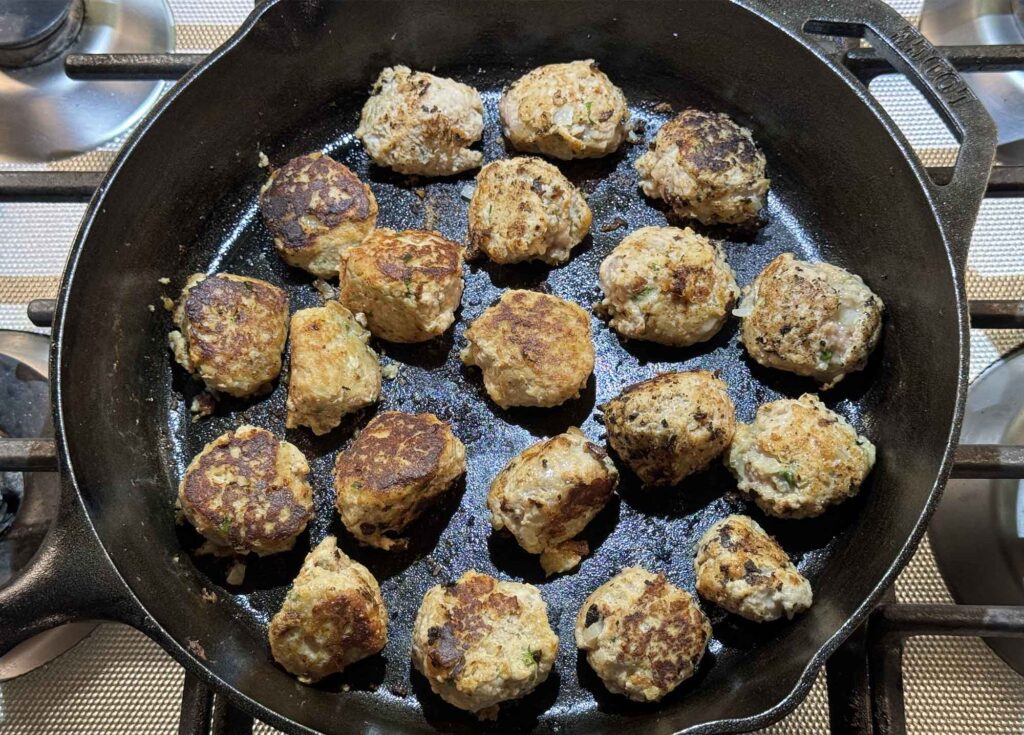
Step 5. Brown
Heat a little butter or oil in a skillet over medium heat. Add the meatballs in a single layer without crowding them and brown them lightly on the outside, turning gently so they do not tear.
Step 6: Bake
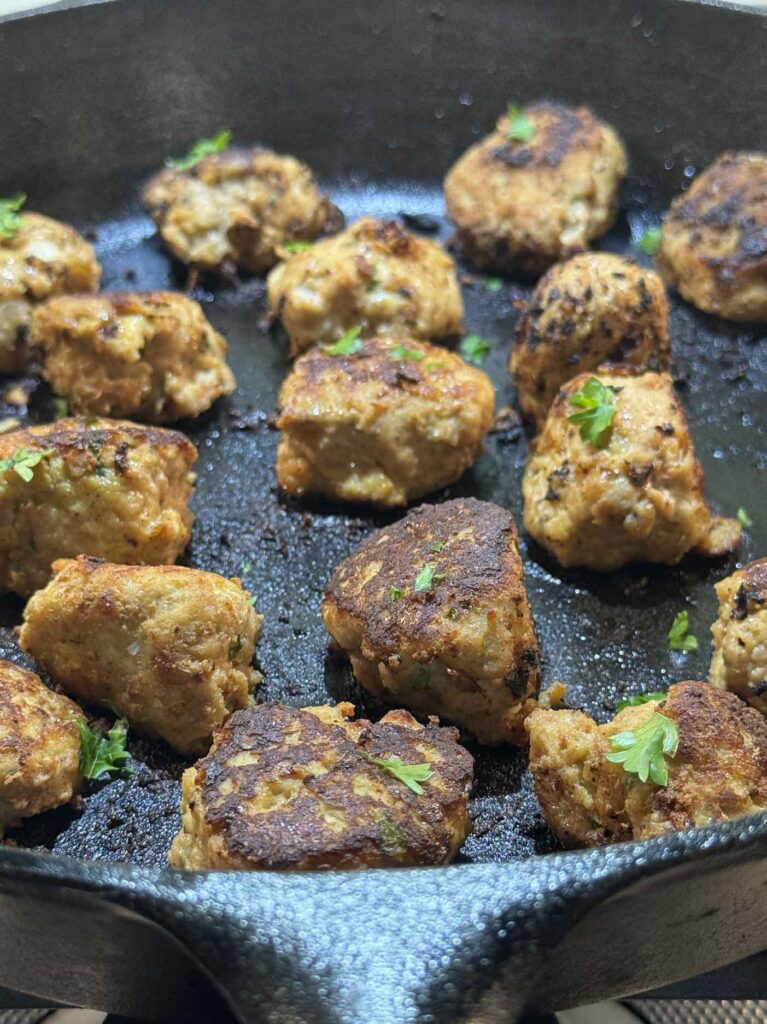
Once browned, transfer your oven-safe skillet (or baking sheet) to a 400°F oven and bake meatballs until they are cooked through.
Kitchen Tip

I cook meatballs in two batches so there is enough room to move. I like to keep them moving around the pan frequently so they keep their ball shape better.
Step 7: Rest before serving
Let the meatballs rest for about 5 minutes before serving. This gives the juices a chance to settle and makes the meatballs easier to move without breaking.
Cook Time + Doneness
Turkey meatballs are done when they reach an internal temperature of 165°F. The USDA lists 165°F as the safe minimum internal temperature for ground poultry.
For this recipe, after browning, the meatballs usually need about 8–12 minutes in a 400°F oven, but the exact time depends on the size of your meatballs and how long they browned on the stovetop.
The most reliable way to check is with an instant-read thermometer inserted into the center of the largest meatball. Color is not the best guide with ground turkey, because it can look done before it is fully cooked or stay slightly pink even when safe.
How to Keep Turkey Meatballs from Falling Apart
Turkey meatballs are softer than beef meatballs, so the right binders and handling make a big difference. If your meatballs are falling apart, it usually means the mixture needs more binding, less handling, or a little time to firm up.
Use the right amount of egg
A good rule is 1 large egg per 1 pound of ground turkey. The egg helps bind the meat, bread, and seasonings together so the meatballs hold their shape while cooking.
Don’t skip the bread and milk
The milk-soaked bread does two jobs: it helps bind the meatballs and keeps them tender. Make sure the bread is fully softened before adding the turkey so it mixes evenly into the meat.
Mix gently
Once the ground turkey goes into the bowl, mix only until everything is combined. Overmixing can make the meatballs dense, but undermixing can leave uneven pockets of bread, onion, or egg that make them harder to shape.
Chill the mixture if it feels too soft
If the meatball mixture feels sticky or loose, cover the bowl and chill it for 10–15 minutes before rolling. This gives the bread time to absorb moisture and helps the mixture firm up.
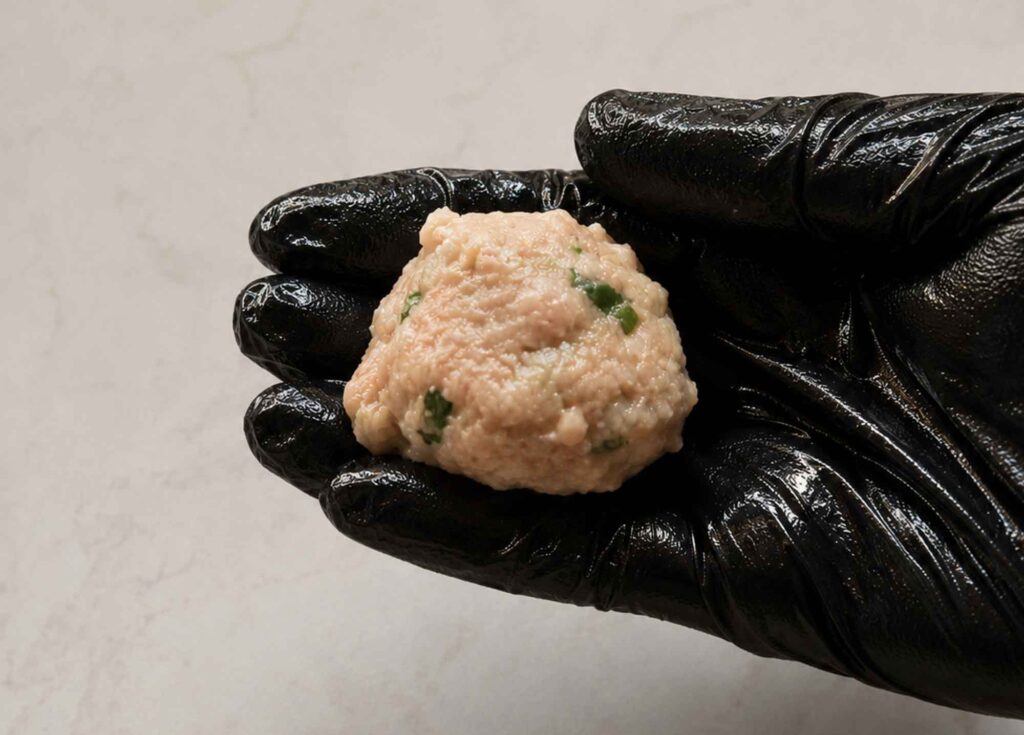
Wet your hands when rolling
Lightly dampen hands or wear food-safe gloves to make the turkey mixture easier to handle and help prevent sticking. Roll the meatballs gently instead of packing them tightly.
Handle them gently while browning
If you are browning the meatballs before baking, let them cook long enough on the first side to form a light crust before turning.
Avoid using tongs to turn the meatballs
Turkey meatballs are tender, and tongs can squeeze them too firmly, causing them to crack or split apart in the pan. (I learned this the hard way years ago.) Use a spoon, small spatula, or offset spatula to gently roll and lift them instead.
Storing, Freezing & Reheating Turkey Meatballs
These turkey meatballs store and freeze well, so they’re a good make-ahead option for easy dinners or meal prep.
Storing
Let the cooked meatballs cool, then transfer them to an airtight container. Store in the refrigerator for 3–4 days. For the best texture, store the meatballs separately from gravy or sauce when possible so they do not get too soft. USDA guidance says cooked leftovers can be kept in the refrigerator for 3–4 days.
Freezing
To keep the meatballs from clumping together, freeze them on a tray first.
- Let the cooked meatballs cool completely.
- Place them in a single layer on a parchment-lined baking sheet.
- Freeze for about 1 hour, or until firm.
- Transfer the frozen meatballs to a freezer bag or freezer-safe container.
- Label and freeze for up to 3 months for the best flavor and texture.
You can freeze them plain, or freeze them with gravy or sauce if you plan to reheat them together later. Plain meatballs are the most flexible, though.
Reheating
Reheat refrigerated or frozen meatballs gently so they stay tender.
In sauce or gravy: Add the meatballs to warm sauce or gravy, cover, and heat over low to medium-low heat until hot all the way through.
In the oven: Place meatballs in a covered baking dish and reheat at 300°F until warmed through. Add a splash of broth or water if needed to keep them moist.
In the microwave: Place a few meatballs in a microwave-safe dish, cover loosely, and heat in short intervals until hot.
For food safety, leftovers should be reheated to 165°F. The USDA lists 165°F as the safe reheating temperature for leftovers.
How to Serve Turkey Meatballs
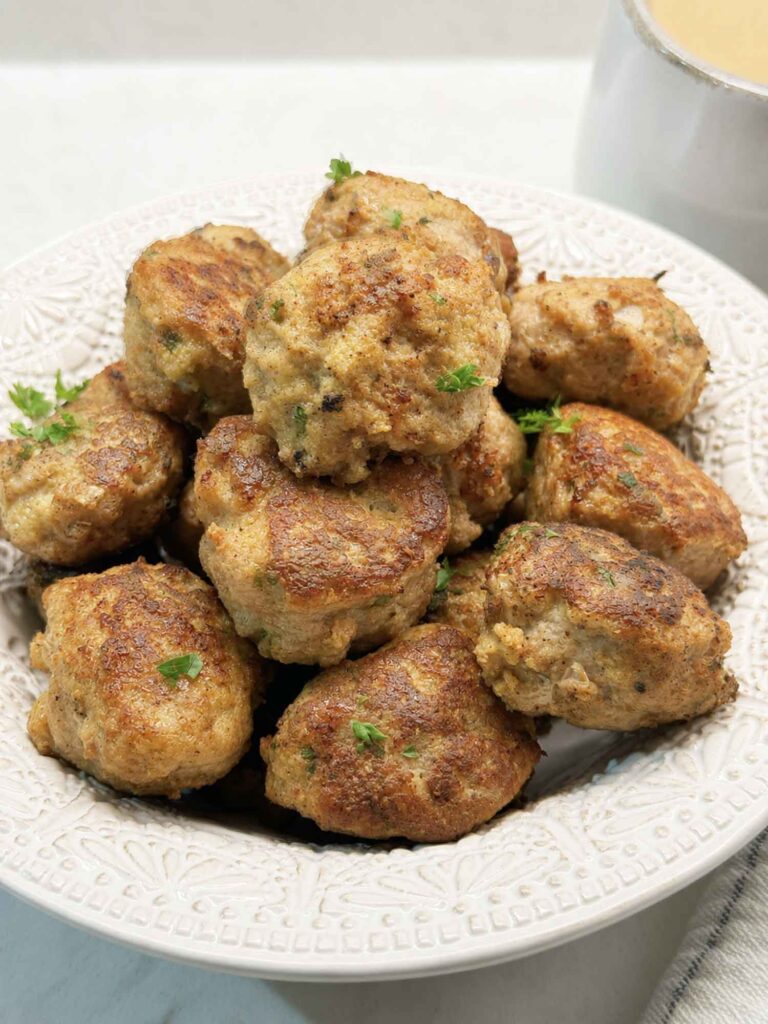
These old-fashioned turkey meatballs are mild, savory, and cozy, so they work with all kinds of meals. Serve them plain, with gravy, or use them anywhere you would normally use beef meatballs.
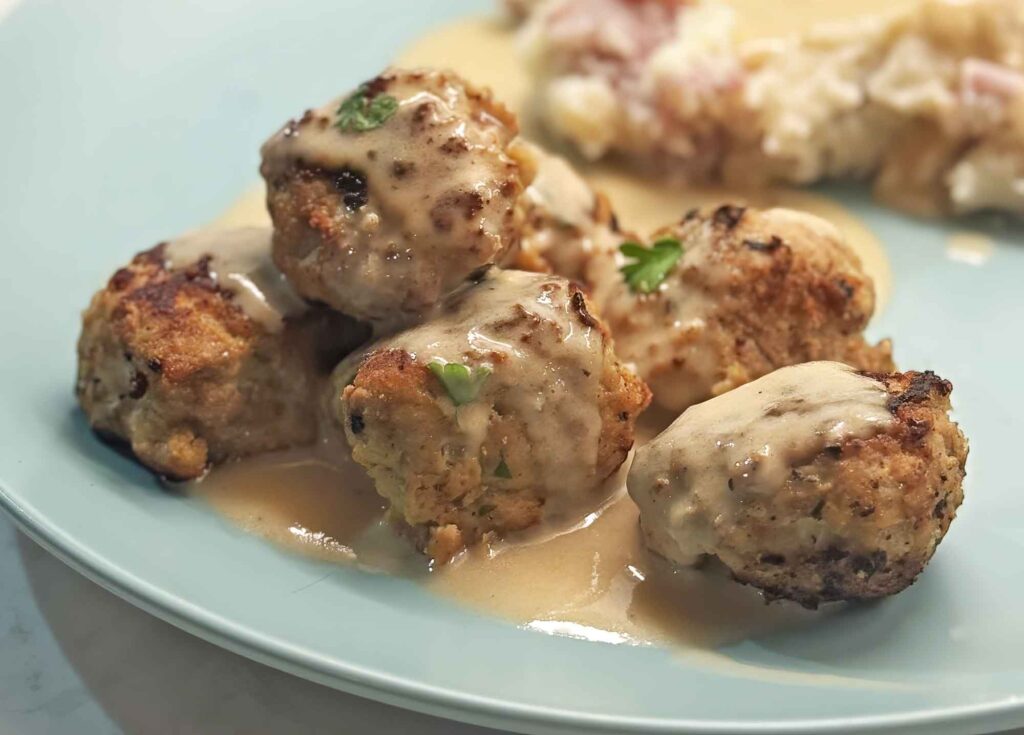
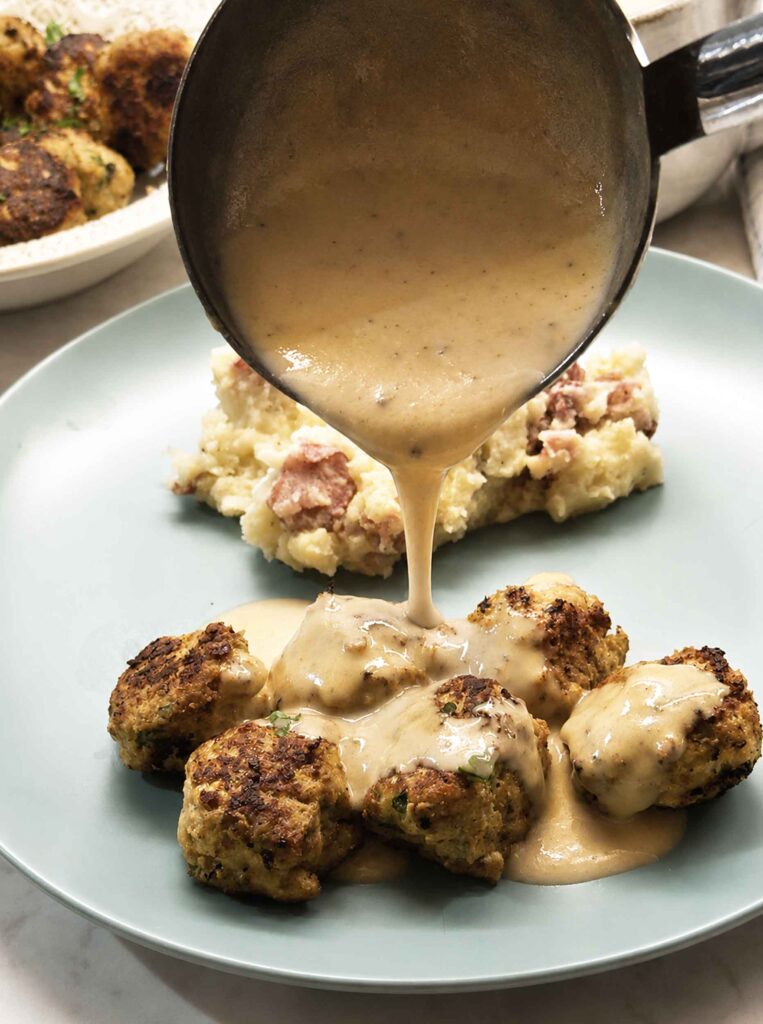
With Brown Cream Gravy
Serve the turkey meatballs with warm brown cream gravy and mashed potatoes for a classic comfort food dinner. Buttered egg noodles or rice are also good choices.
With Marinara and Spaghetti
For an easy pasta dinner, warm the meatballs in marinara sauce and serve over spaghetti. While the meatballs do not have Italian seasoning, they still work really well with tomato sauce.
In Meatball Subs
Use these turkey meatballs in a hot meatball sub with marinara sauce and melted cheese. They are a great lighter substitute for regular beef meatballs.

As an Appetizer
Serve the meatballs with toothpicks and a small bowl of sauce on the side. They would be good with brown gravy, cranberry sauce, barbecue sauce, or a creamy mustard-style sauce.
With Mashed Potatoes
This is one of the best old-fashioned ways to serve them. Spoon the meatballs over mashed potatoes with gravy for a simple, filling dinner.
With Buttered Noodles
Egg noodles, butter, parsley, and turkey meatballs make a quick comfort food meal. Add gravy or a splash of broth if you want it saucier.
In Meal Prep Bowls
Add the meatballs to meal prep bowls with rice, roasted vegetables, mashed potatoes, or steamed green beans. Store the sauce separately when possible so the meatballs keep their texture.
In Soup
Drop cooked turkey meatballs into broth-based soups, creamy soups, or vegetable soup near the end of cooking. Since they are already cooked, they only need to be warmed through.
With Cranberry Sauce
For a cozy turkey-dinner flavor, serve these meatballs with cranberry sauce and mashed potatoes. The warm nutmeg, allspice, and cardamom in the meatballs pair especially well with cranberry.
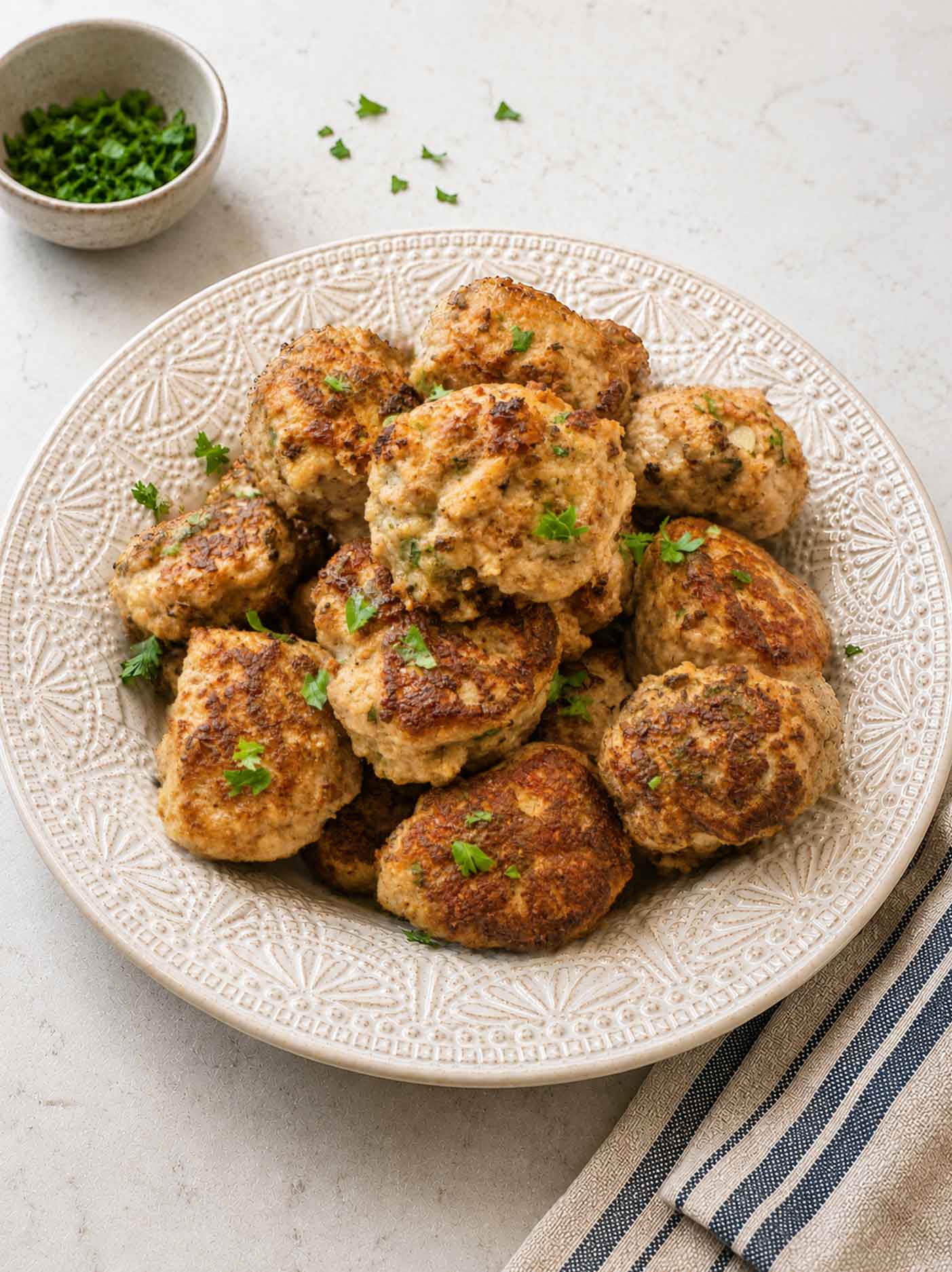
Turkey Meatballs Recipe
Equipment
- 1 large oven-safe skillet (or a skillet + baking sheet)
Ingredients
- 1 pound ground turkey preferably 93% lean
- 2 slices stale sandwich bread cut into small cubes
- 1/3 cup milk
- 1 large egg
- 1/4 cup finely grated or very finely minced onion
- 2 cloves garlic minced
- 1 tablespoon Worcestershire sauce
- 1 tablespoon melted butter
- 1 tablespoon chopped fresh parsley or 1 teaspoon dried parsley
- 3/4 teaspoon salt
- 1/2 teaspoon black pepper
- 1/2 teaspoon onion powder
- 1/4 teaspoon garlic powder
- 1/8 teaspoon ground nutmeg optional
- 1/8 teaspoon ground allspice optional
- 1/16 teaspoon ground cardamom optional
- 1 tablespoon butter or oil for browning
Instructions
- Preheat the oven to 400°F.
- Place the cubed stale bread in a large mixing bowl. Pour the milk over the bread and let it sit for 5–10 minutes, until softened.
- Add the egg, grated onion, garlic, Worcestershire sauce, melted butter, parsley, salt, pepper, onion powder, garlic powder, and optional nutmeg, allspice, and cardamom. Stir and mash with a fork until well combined and it is soft, wet bready mixture..
- Add the ground turkey and gently mix just until everything is incorporated. Do not overmix, or the meatballs may become dense.
- Shape the mixture into about 16–20 meatballs. The mixture will be soft, so use gentle hands or a small scoop.
- Heat a large skillet (preferably one that is oven safe) over medium heat. Add 1 tablespoon butter or oil.
- Add the meatballs in a single layer, leaving a little space between them. Brown for about 2–3 minutes per side, turning gently with a spatula (not tongs). They do not need to be cooked through yet.
- Once the meatballs are lightly browned, transfer the meatballs to the preheated oven. If you're using an oven-safe skillet, it can go right in the oven — otherwise, transfer the meatballs to a baking sheet lined with parchment paper first.
- Bake for 8–12 minutes, or until the meatballs reach 165°F in the center.
- Let the meatballs rest for 5 minutes before serving.
Nutrition
Notes

Meet Jennifer
Jennifer cooks and experiments in the kitchen at Maker Farm, where she focuses on simple pantry cooking, homemade staples, and practical recipes that make everyday meals easier. Over the years she has tested many ways to make cooking simpler and more dependable, and shares the methods that work best in her own kitchen, occasionally showing them on her Heart to Home at Maker Farm vlog.