

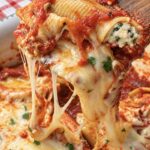
Million dollar spaghetti is a delicious baked spaghetti casserole layered like lasagna but way easier to make: buttery noodles, a creamy cottage cheese filling through the middle, a rich ground beef sauce, and melty mozzarella over the top. It cuts into squares, which makes it a whole lot simpler to eat than a plate of spaghetti. Perfect for family gatherings and potlucks!
MILLION DOLLAR SPAGHETTI At A Glance
Prep
25 min
Bake
50 min
REST
15 min
Serves
12
Pan
Deep 9×13 Pan
Assemble up to 24 hours ahead; freezes 3 months
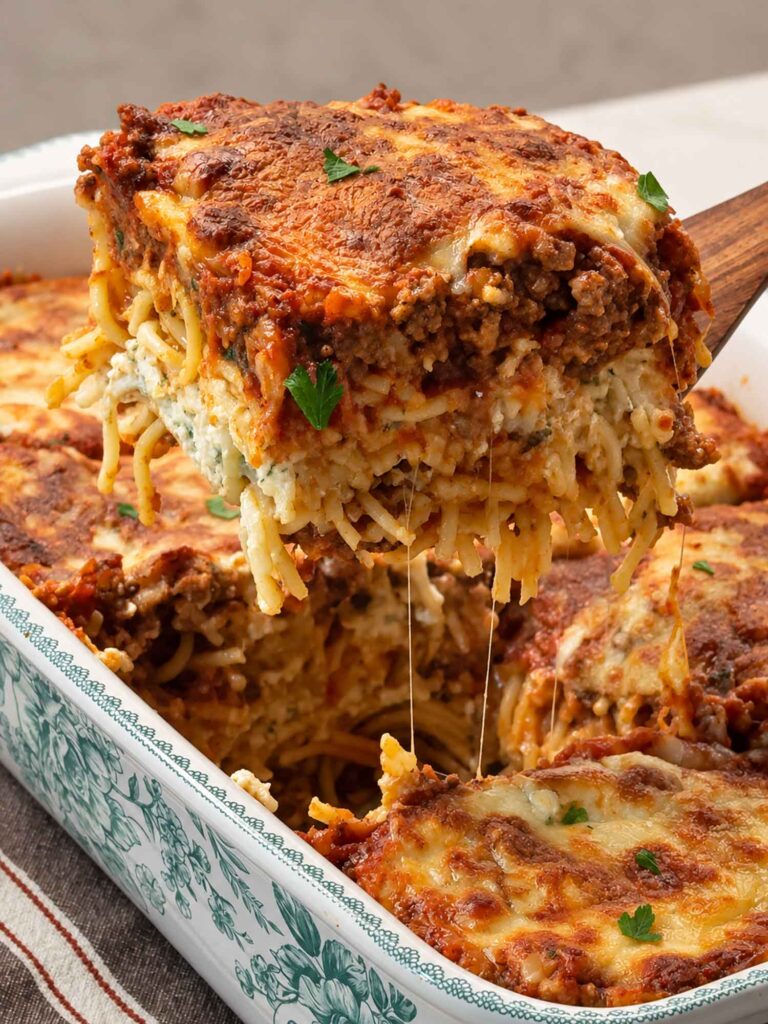
Why My Million Dollar Spaghetti Is Better with Cottage Cheese

Most million dollar spaghetti recipes build that famous middle layer out of cream cheese and sour cream, with cottage cheese as an afterthought if it shows up at all. Mine goes the other way around. Two cups of cottage cheese carry the layer and a full block of cream cheese makes it silky, the same balance I use in my easy lasagna. Here in the Midwest, cottage cheese in a pasta bake is not a substitute … it is just how a lot of us grew up. It bakes into a creamy layer with a little tang that keeps the whole pan from tasting flat, and it holds its shape in a hot oven instead of going grainy.
What I skip in my recipe is the sour cream that nearly every other version piles on top of all that. I think adding sour cream tips the casserole from rich into too heavy. And using cottage cheese instead of ricotta keeps it on the right side of that line. But if you want to use these, I’ve got notes below on how to add them back in.
My favorite thing is how much easier this is to eat than regular spaghetti. No twirling, no chasing noodles around the plate, no splatter. You just cut a square and lift it out. Greg took one bite and said, “this is a winner,” which is high praise from a guy who always gives me a shrug when I mention spaghetti for dinner. And it made a TON of leftovers, which really makes me just as happy… some went in the refrigerator for lunches and the rest went straight into the freezer.
Let’s dig in!

Tips and Notes Before You Start
- Jarred sauce makes this easy. Two 24-ounce jars of a brand you already like is exactly right, and that is what I used. If you would rather make your own, my homestyle spaghetti sauce works beautifully in this, and so does a jar of home-canned spaghetti sauce with meat if you have some on the shelf.
- Boil the spaghetti 2 minutes shy of al dente. It keeps cooking in the oven, and this is the one step that separates a good pan from a mushy one.
- Set the cream cheese out early and beat it smooth with the egg before the cottage cheese goes in. A cold block dropped straight into cold cottage cheese breaks into white pebbles that will not smooth out. No mixer needed, a fork does it, as long as the block is soft.
- You need a deep 9×13 baking pan. Mine came right up to the rim and did not spill, but a shallow dish would have gone over. Set it on a sheet pan the first time if yours runs shallow.
- Rest it 15 minutes before you cut, or it slides apart.
Why Is It Called Million Dollar Spaghetti?
The name has been around since 2013, but it’s also a potluck brag about how rich it tastes, the same way we say something tastes like a million bucks. What earns it is the texture: creamy, saucy, and buttery all landing in the same forkful, instead of the single note you get from plain spaghetti with sauce spooned over it.
It solves a real problem, too. Regular spaghetti has to hit the table the minute it is done. This one waits in a warm oven while everyone finds a seat.
What You’ll Need
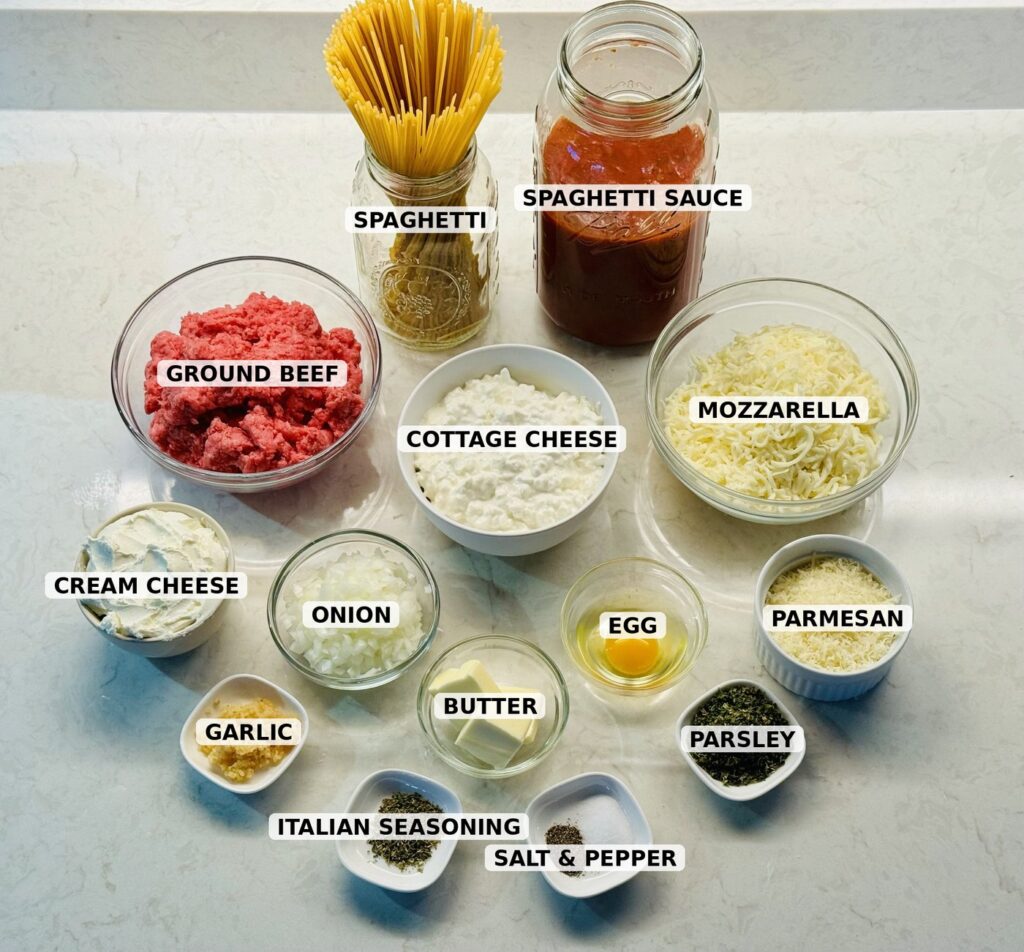
Spaghetti. A full pound fills a 9×13 pan. Regular spaghetti is what I use, but thin spaghetti, angel hair, and linguine all work… just pull thin shapes even earlier, because they go soft fast. Gluten-free spaghetti works too, though it holds less sauce, so plan on a slightly looser pan.
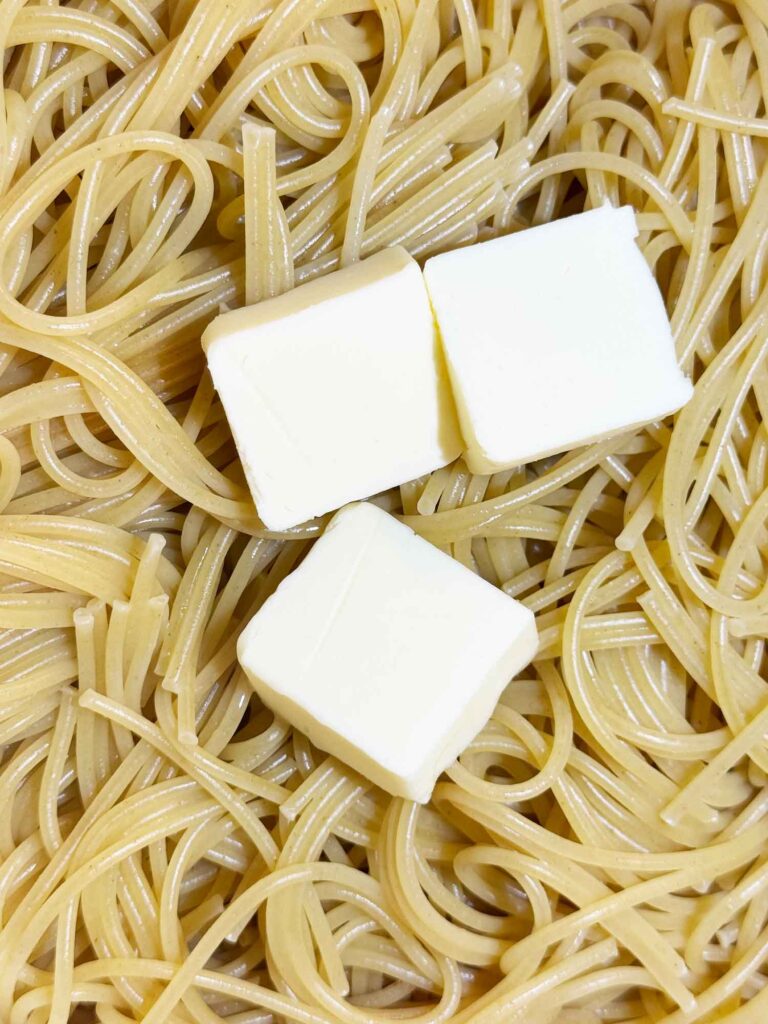
Butter. Tossed through the hot drained noodles. Most versions of this recipe put pats of butter in the bottom of the pan, but I think it’s better to coat every strand rather than leave a buttery puddle at one end. This helps because the coated noodles stay separate as they bake instead of knitting into one solid brick.
Ground beef. A pound and a half of 85/15. You want enough fat that the sauce actually tastes like meat, and 85/15 gives you that without leaving a slick on top. Drain off most of the fat after browning, but you do not need to chase every drop.
Spaghetti sauce. Two 24-ounce jars, and yes, you really do need all of it. Spaghetti drinks sauce as it bakes, so a pan that looks generous going in can come out dry. The only jar that lets you down is a thin, watery, or overly sweet one.
Cottage cheese and cream cheese. Two cups of full-fat cottage cheese and a full 8-ounce block of cream cheese. That is twice as much cottage cheese as cream cheese by weight, which is the whole difference between this and every other version: the cream cheese does the smoothing, the cottage cheese does the tasting. Get the block truly soft before you start, or you will be chasing white lumps around the bowl.
One egg. Small ingredient, big job. The egg sets the cheese layer so the casserole cuts into squares instead of collapsing into a scoop. Leave it out and it still tastes great, it just serves saucier.
Mozzarella and Parmesan. Two cups of shredded mozzarella for the melty top and about three quarters of a cup of grated Parmesan in all, half a cup stirred into the cheese layer and the rest scattered over the top. Shredding your own mozzarella off a block melts creamier than the bagged kind, which is coated to keep it from clumping.
Why Both Cottage Cheese and Cream Cheese?
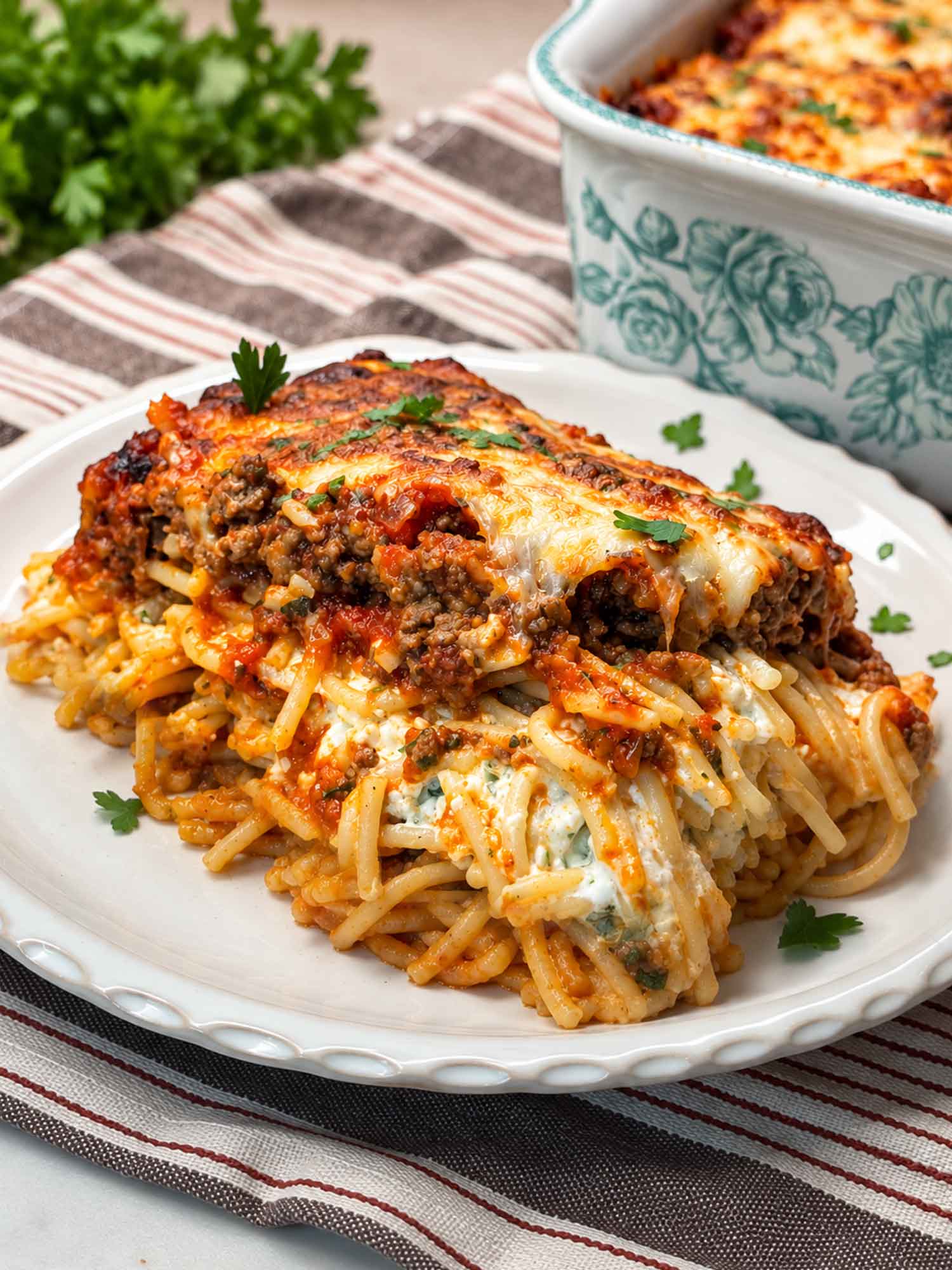
The worry I hear most is that people will taste the curds, and that is a fair thing to wonder about. Here is what actually happens: fifty minutes in a hot oven softens the curds and the cream cheese carries them the rest of the way. You can still see it as a white stripe when you cut a square, and it looks lovely, but what you taste is a mild, slightly tangy cheese filling rather than a spoonful of cottage cheese.
If you would rather go all the way and skip cream cheese entirely, use 3 cups of cottage cheese and keep the egg. If you want it perfectly smooth before it even goes in the pan, give the cottage cheese a few pulses in the blender. And if your tub looks especially wet, let it drain in a strainer for 10 minutes first. Be careful not to swap in nonfat cottage cheese here… it is the one version that can turn watery on you.
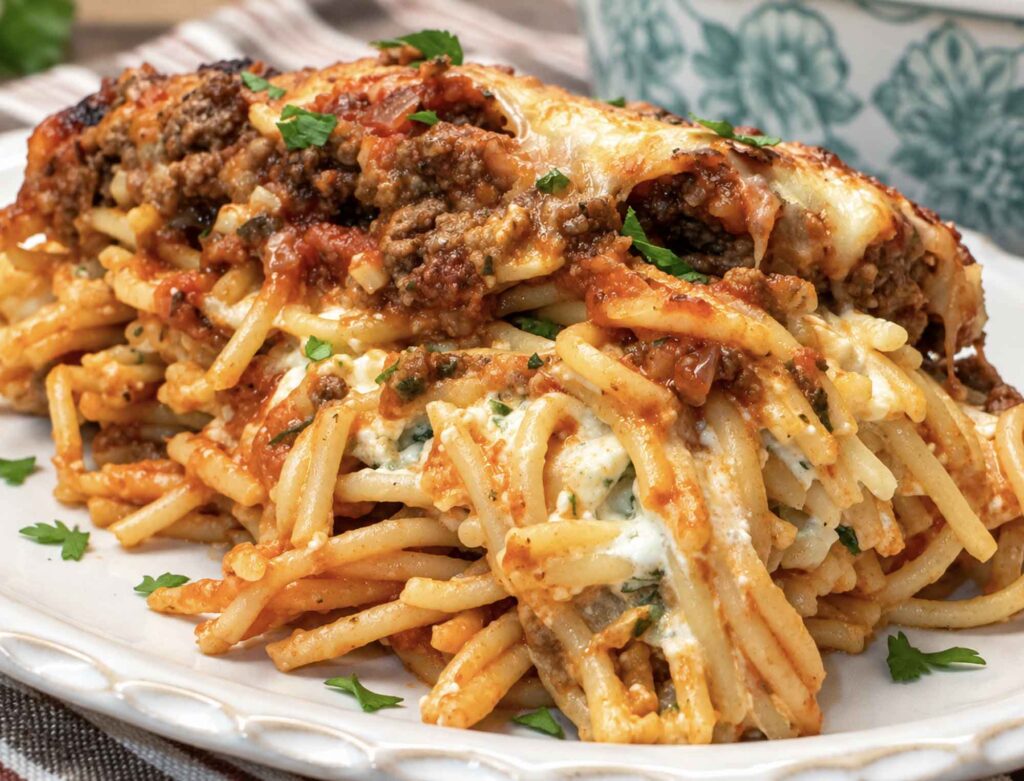
| Instead of | Use | What changes |
|---|---|---|
| Cottage cheese | Whole-milk ricotta, cup for cup | Milder and a little grainier, no tang |
| Ground beef | 1 lb beef plus 1/2 lb Italian sausage | More seasoning built in, a bit richer |
| Ground beef | Ground turkey | Leaner, so add a drizzle of olive oil when browning |
| Spaghetti | Penne, rigatoni, or ziti | Sturdier bite, closer to my baked ziti |
SOUR CREAM?

If you love that tang and want the sour cream after all, here is how I would work it in without ending up with a runny layer. Stir 1/4 cup of full-fat sour cream in at the very end, once the cream cheese and egg are already smooth, and keep the egg no matter what… that is the thing holding the whole layer together. Sour cream is wetter than it looks, so if you want a full half cup, drain the cottage cheese in a strainer for 10 minutes first to make room for it. Be careful not to reach for light sour cream here, because it runs thinner and tastes sharper, and this layer is already about as loose as it wants to be.
How to Make Million Dollar Spaghetti
We make this in three stages: the noodles, the meat sauce, and the cheese layer. Get all three ready before you start filling the pan, and the layering part takes about four minutes. I’ll walk you through it.
Stage One: The Noodles
Boil the spaghetti in well-salted water until it is bendy but still firm in the center, about 2 minutes shy of the package time. Drain it, but do not rinse it, because that starchy coating is what helps the sauce cling. While it is still steaming hot, toss it with the butter until every strand looks glossy. One common mistake is cooking the pasta all the way to al dente because it looks right in the pot. It keeps cooking in the oven for another 50 minutes, and by then it has gone soft.
Stage Two: The Meat Sauce
Brown the beef with the diced onion in a large skillet over medium heat, breaking it up as it goes, until there is no pink left and the onion has softened, about 8 minutes. Add the garlic and Italian seasoning in the last minute so the garlic gets fragrant without scorching. Drain off most of the fat, then stir in both jars of sauce and let it warm through for 5 minutes. Taste it here and add salt if it needs it. This is your last easy chance.
Stage Three: The Cheese Layer
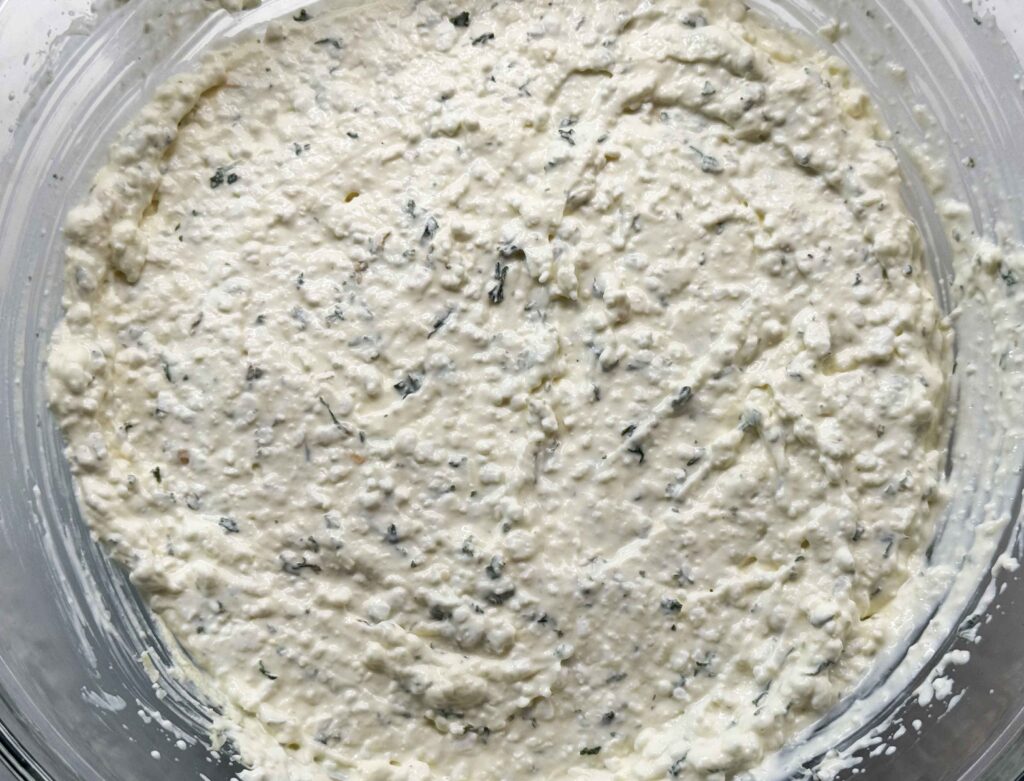
Beat the egg in a medium bowl, then stir in the softened cream cheese first, until it loosens up and takes the egg. Now add the cottage cheese, half a cup of Parmesan, the minced garlic, the parsley, and a pinch of salt and pepper. A fork is all you need here. Stir until it is mostly smooth, folding the cottage cheese in gently so it keeps a little of its texture. A few small curds are completely fine and they melt right out. Don’t worry if it looks thick and spoonable rather than pourable… that is exactly right, and it spreads once it is on the warm noodles.
How to Layer It
Grease a deep 9×13 pan, then build it bottom to top in the five steps below. Hold the mozzarella back for now.
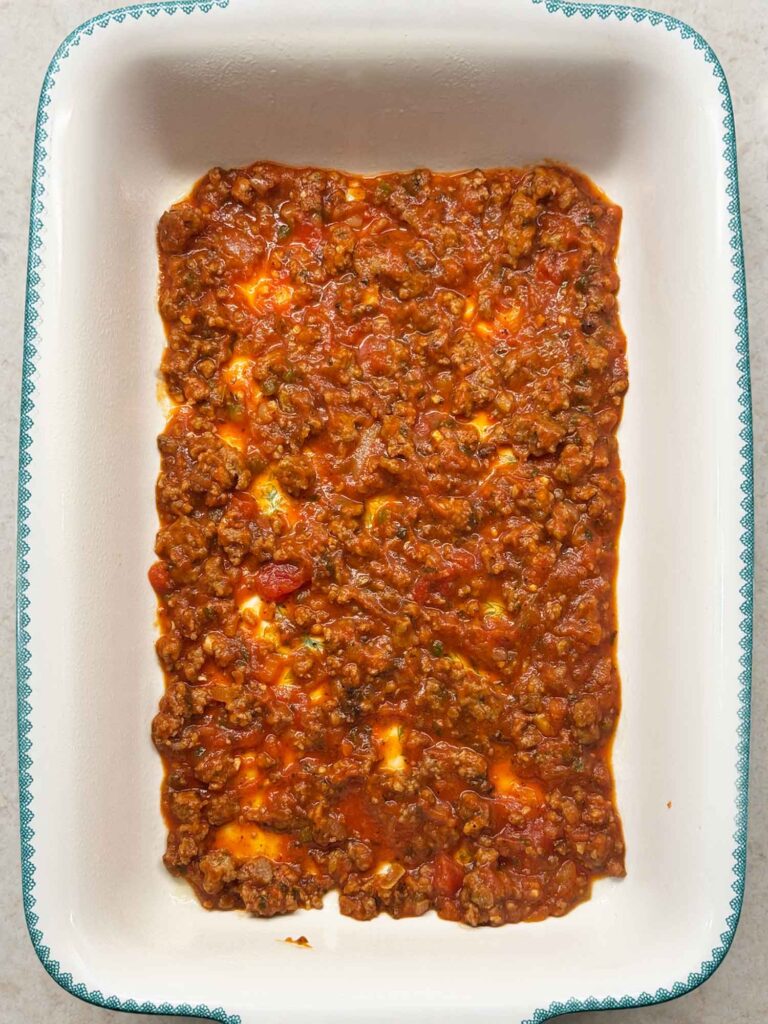
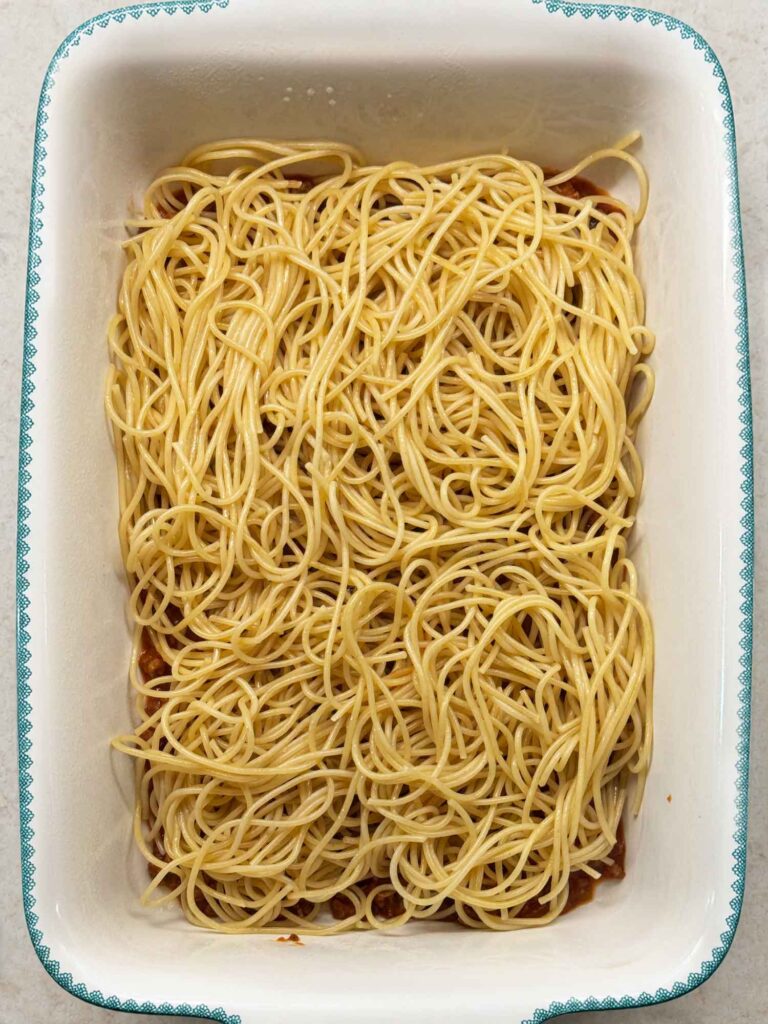
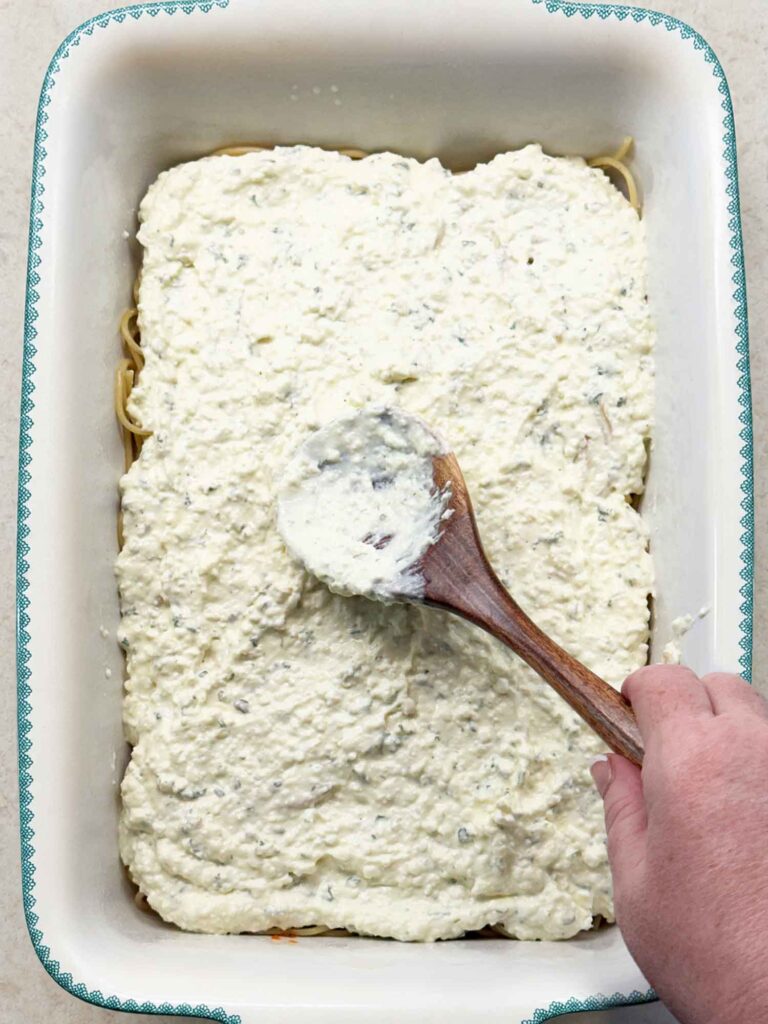
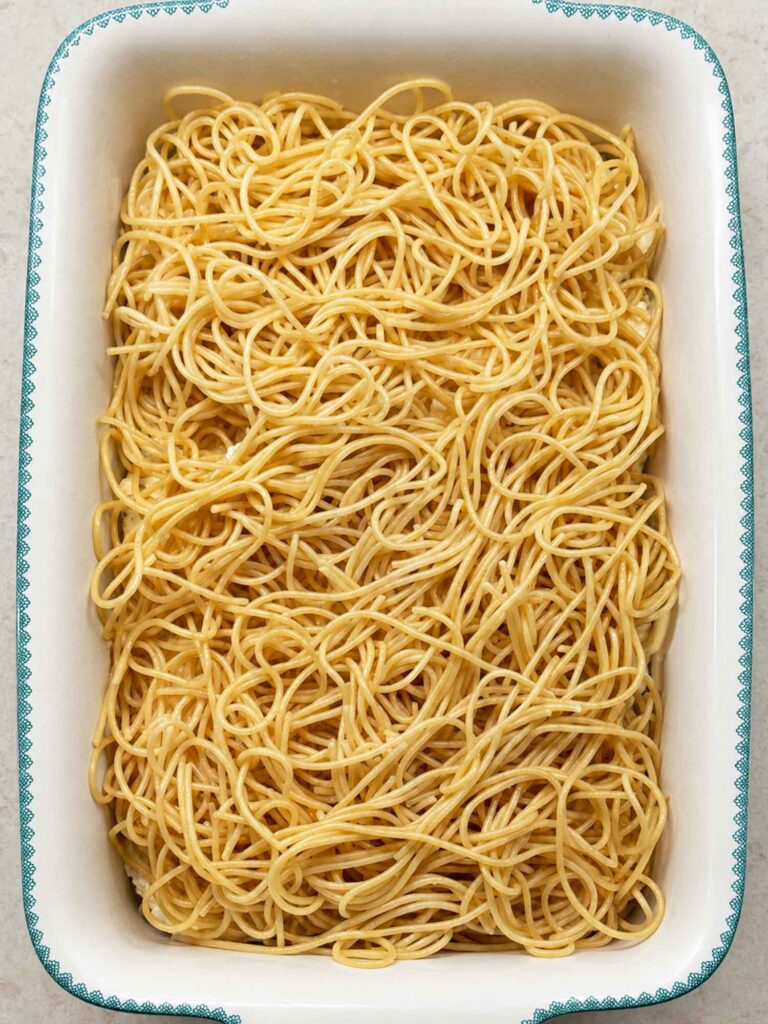
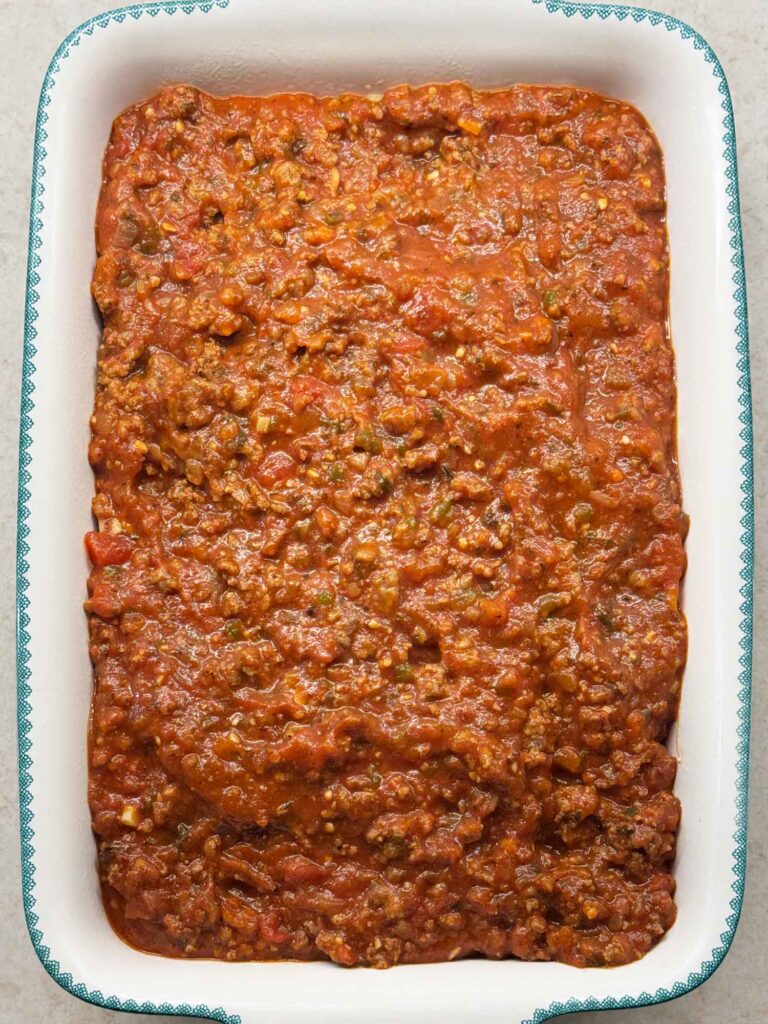
Two things to watch while you are stacking. First, spread the cheese layer gently with the back of a spoon rather than dragging it, because dragging pulls the noodles up through it and you lose that clean middle stripe. Second, make sure no noodles are poking out bare on top. Any noodle that is not tucked under sauce will bake up hard and crispy, so just spoon a little sauce over anything that looks exposed.
The Bake
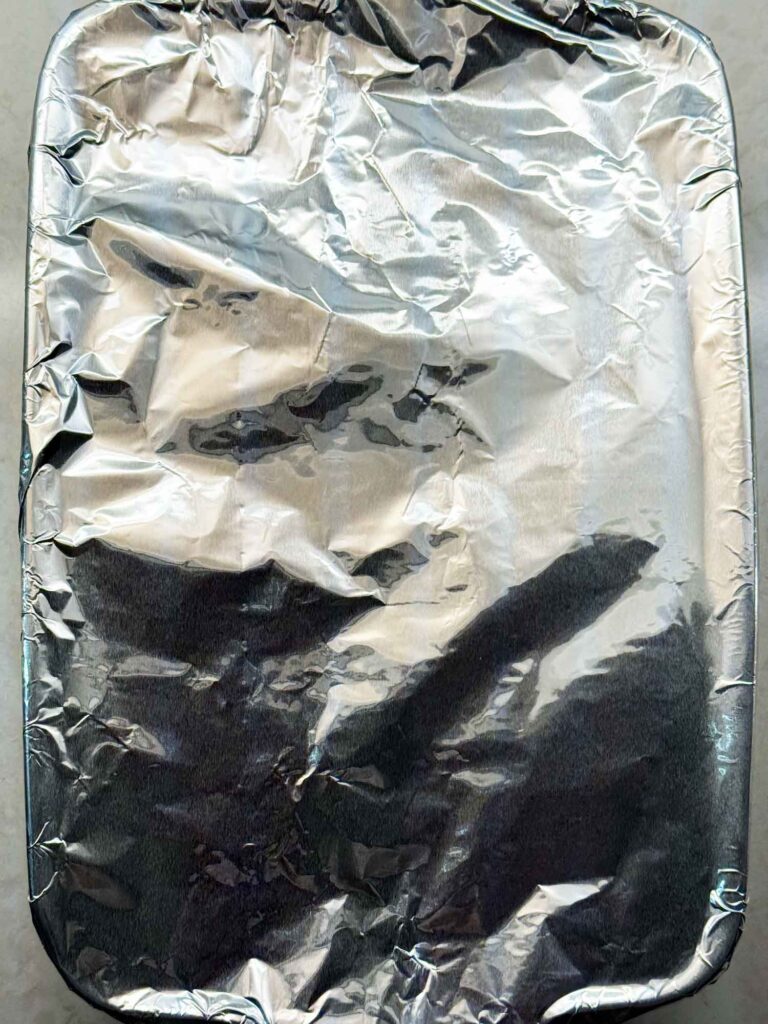
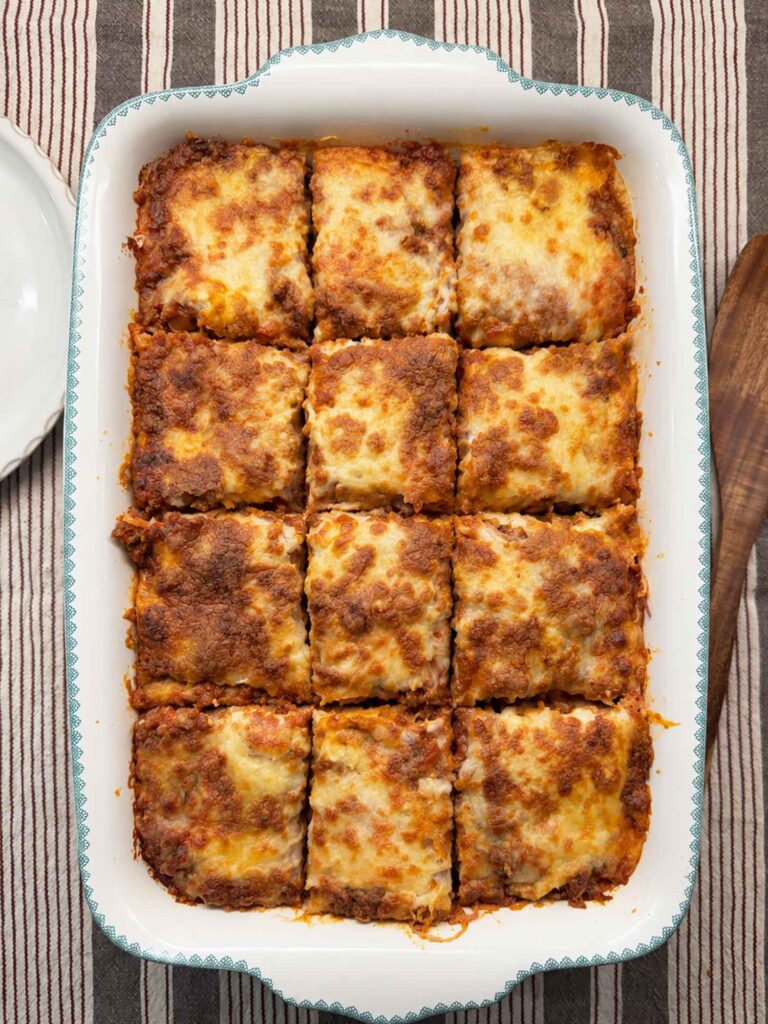
Cover the pan tightly with foil and bake at 350°F for 30 minutes. That trapped steam is what drives the sauce down through the noodles and heats the middle. Then pull the foil off, scatter on the mozzarella and the last of the Parmesan, and bake another 15 to 20 minutes, until the cheese is melted and bubbling at the edges with golden spots on top.
Adding the mozzarella at the halfway point rather than the beginning matters more than it sounds like it should. Cheese that bakes the full 50 minutes goes rubbery and dark before the center is hot. Twenty minutes is just enough to melt it and brown it. If you want it more blistered than that, run it under the broiler for a minute at the end, but stay right there and watch it, because it turns from golden to gone in a hurry.
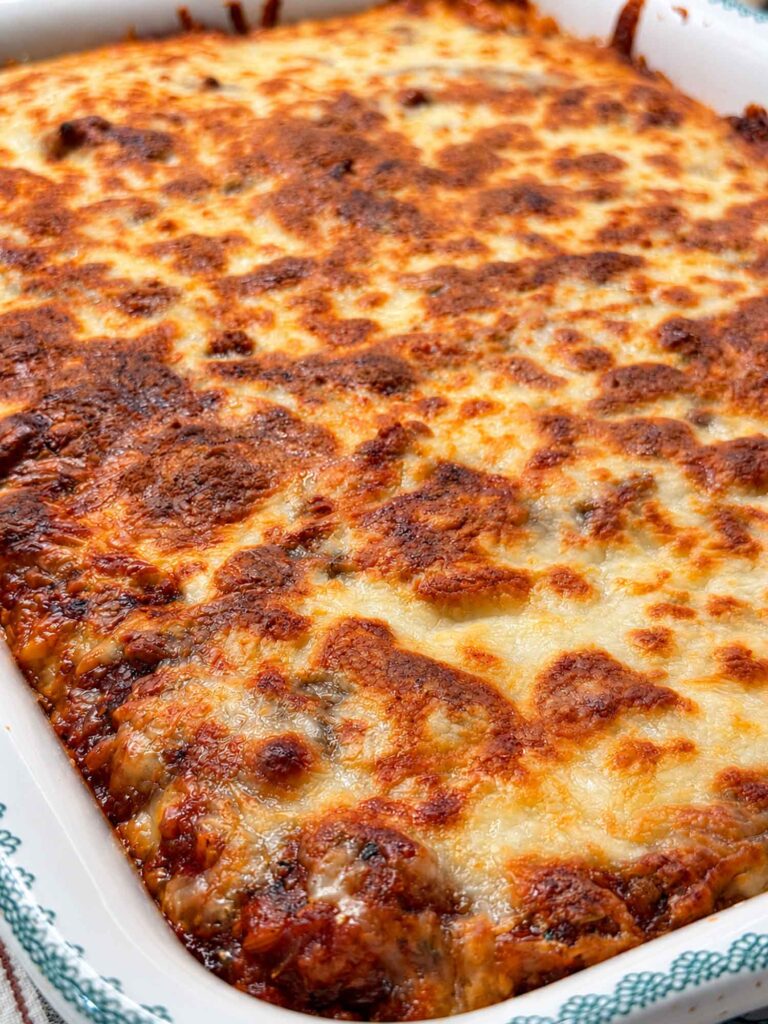
Then let it rest 15 minutes. I know that is the hardest part when the whole kitchen smells like this. Resting helps because the cheese layer and the sauce firm up just enough to hold together, and you get squares instead of a landslide. Let’s dig in!
Make It Ahead, Freeze It, Reheat It
All these times assume a deep 9×13 baking pan.
Assemble Now, Bake Later
Build the whole thing right up to the mozzarella, cover it tightly, and refrigerate up to 24 hours. Bake it straight from the fridge and add about 10 minutes to the covered time, since it is starting cold. This is the version I would take to a potluck.
Freeze It Unbaked
Assemble it in a freezer-safe pan without the mozzarella, wrap it in foil and then a layer of plastic, and freeze up to 3 months. You can bake it straight from frozen: keep it covered at 350°F for 60 to 75 minutes, then uncover, add the cheese, and bake another 20. Don’t worry if the very center takes a little longer… that is totally normal for a frozen pan.
Freeze It Baked
Let it cool completely, then freeze the whole pan or portion it into containers for up to 3 months. Reheat covered at 350°F for 45 to 60 minutes, then uncover for the last 10.
Leftovers
Covered in the fridge, leftovers keep 4 days and honestly taste better on day two. Add a spoonful of sauce or a splash of water before you reheat a portion, because baked pasta always tightens up in the fridge and that little bit of moisture brings the saucy texture right back.
Million Dollar Spaghetti Recipe
Equipment
- 1 9×13 baking pan
Ingredients
Pasta
- 16 oz spaghetti
- 3 tablespoons butter
Meat sauce
- 1 1/2 lb ground beef (85/15)
- 1 small yellow onion , diced (about 1 cup)
- 3 cloves garlic , minced
- 1 teaspoon Italian seasoning
- 1/2 teaspoon salt
- 1/4 teaspoon black pepper
- 2 jars (24 oz each) spaghetti sauce
Cottage cheese layer
- 2 cups (16 oz) cottage cheese , full-fat
- 8 oz cream cheese (full block), softened to room temperature
- 1 large egg
- 1/2 cup Parmesan cheese , grated
- 1 clove garlic , minced
- 2 tablespoons dried parsley (or 1/4 cup chopped fresh)
- 1/4 teaspoon salt
- pinch black pepper
Topping
- 2 cups (8 oz) mozzarella cheese , shredded
- 1/4 cup Parmesan cheese , grated
Instructions
- Preheat the oven to 350°F and grease a deep 9×13 baking dish.
- Bring a large pot of well-salted water to a boil. Cook the spaghetti 2 minutes shy of al dente, so it is bendy but still firm in the center. Drain (do not rinse) and toss the hot noodles with the butter until every strand is coated.
- Meanwhile, brown the ground beef with the diced onion in a large skillet over medium heat, breaking it up as it cooks, about 8 minutes. In the last minute, stir in the minced garlic, Italian seasoning, salt, and pepper. Drain off most of the fat.
- Stir both jars of spaghetti sauce into the meat and warm through for 5 minutes. Taste and adjust the salt.
- In a medium bowl, beat the egg, then stir it into the softened cream cheese until smooth. Add the cottage cheese, 1/2 cup Parmesan, minced garlic, parsley, salt, and pepper and stir until mostly combined. A few small curds are fine. The mixture should be thick and spreadable.
- Spread about 1 cup of the meat sauce thinly across the bottom of the pan. Add half the buttered spaghetti in an even layer.
- Spread all of the cottage cheese mixture gently over the spaghetti with the back of a spoon.
- Add the remaining spaghetti, then spoon the rest of the meat sauce evenly over the top, all the way to the edges so no noodles are left exposed.
- Cover tightly with foil (spritz the underside with cooking spray) and bake 30 minutes.
- Uncover, scatter on the mozzarella and remaining 1/4 cup Parmesan, and bake another 15 to 20 minutes, until melted, bubbly, and golden in spots. For a blistered top, broil 1 to 2 minutes, watching closely.
- Let it rest 15 minutes before cutting, so the layers set and it slices cleanly.
Nutrition
Notes
- Room-temperature cream cheese. Cold cream cheese will not blend into cold cottage cheese. Microwave it 15 to 20 seconds if you forgot to set it out.
- No cream cheese? Use 3 cups cottage cheese total and keep the egg, or swap in 1 cup whole-milk ricotta for the block.
- Watery cottage cheese? Drain it in a strainer for 10 minutes first. Use full-fat (4%), not nonfat.
- Want the sour cream? Stir 1/4 cup of full-fat sour cream into the cheese layer at the end, after the cream cheese and egg are smooth, and keep the egg. Going up to 1/2 cup? Drain the cottage cheese for 10 minutes first so the layer still sets. Skip light sour cream, it runs thin.
- Make ahead or freeze: assemble without the mozzarella and refrigerate up to 24 hours (add 10 minutes to the covered bake from cold), or freeze up to 3 months and bake from frozen, covered, 60 to 75 minutes, then uncover, add the cheese, and bake 20 more.
- Add sausage: swap 1/2 lb of the beef for Italian sausage for a richer, more seasoned sauce.
Million Dollar Spaghetti Questions
Do I need a mixer for the cheese layer?
No, a fork is plenty. If you do reach for one, beat the cream cheese and egg with it, then fold the cottage cheese in by hand… a mixer run through the curds gives you a smooth, ricotta-like layer instead of a textured one.
Small curd or large curd cottage cheese?
Small curd, if the store has both. The smaller curds soften faster and give you a smoother layer. Large curd works fine, it just leaves a little more texture behind, which some people like.
Why is my baked spaghetti watery?
Almost always low-fat cottage cheese, or a thin, watery jarred sauce. Both are fixable before the pan ever goes in the oven.
Why is mine dry instead?
Either it was baked uncovered the whole time or it came up short on sauce. Both jars really do belong in there, and that foil for the first 30 minutes is what keeps the steam in.
Can I use leftover cooked spaghetti?
Yes, and it is a great use for it. Toss the cold noodles with the butter to loosen them first, and expect a slightly softer casserole since those noodles are already fully cooked.
Can I make it in a smaller pan?
Halve everything into an 8×8 and start checking at 25 minutes covered, 12 uncovered.
One More Pan for the Freezer
If you are already washing the pot and the skillet, this is the recipe I would double. One pan for tonight, one wrapped and stacked in the freezer for the week when nobody wants to cook.
Happy cooking!
Love,
Jennifer

Tried this recipe?
Tap the stars in the recipe card to leave a quick rating. Your rating helps other home cooks know this recipe works in a real kitchen, not just mine.
And as a thank-you for your feedback, you will receive a free printable copy of my Maker Home Companion Cookbook, featuring my most popular recipes, each one formatted on a SINGLE, easy-to-use page, a perfect kitchen companion for easy meal prep. Click here to learn more about this cookbook and how you can get your copy!


Meet Jennifer
Jennifer cooks and experiments in the kitchen at Maker Farm, where she focuses on simple pantry cooking, homemade staples, and practical recipes that make everyday meals easier. Over the years she has tested many ways to make cooking simpler and more dependable, and shares the methods that work best in her own kitchen, occasionally showing them on her Heart to Home at Maker Farm vlog.
Made this for supper this evening and I divided it into two pans; one I froze for a future meal and the other was for tonight. Even then, half of what we had tonight will be used for another meal as it is beyond filling! I did make it with the homemade tomato sauce (MakerFarm’s recipe – we did several canning jars of) so that added to the Maker recipe ‘experience’. The only thing I would do next time is I would rinse the spaghetti. I know that is against the recipe, but I believe because we are gluten intolerant, the pasta just doesn’t bode well without rinsing. It can become a giant ‘glob’. I would rinse it with hot water so the butter can be added as indicated and work as intended. Thank you again, Jennifer!
Wonderful! So glad you like it! I agree that a little goes a long way with this dish, which I like, because it gives me lots of leftovers for easy meals. Thank you, Heather!
I was skeptical about the cottage cheese and cream cheese in this recipe. Boy oh boy was I wrong. Every once in a while, I would run into a little piece of cream cheese that was not thoroughly mixed. It was like a little piece of heaven. Not only that I love this recipe, but my husband has already asked for it again.
So happy to hear you enjoyed this, Mary!!
Le bon gout et la preparation pour congeler. Vite fait et bien fait Merci Jennifer
Wonderful! Thank you for the feedback, Ginette!