

Thick, herby, pizza-shop flavor from a can of tomato paste, a can of tomato sauce, and the spices already in your cabinet. No cooking, no blender, and about five minutes of stirring.
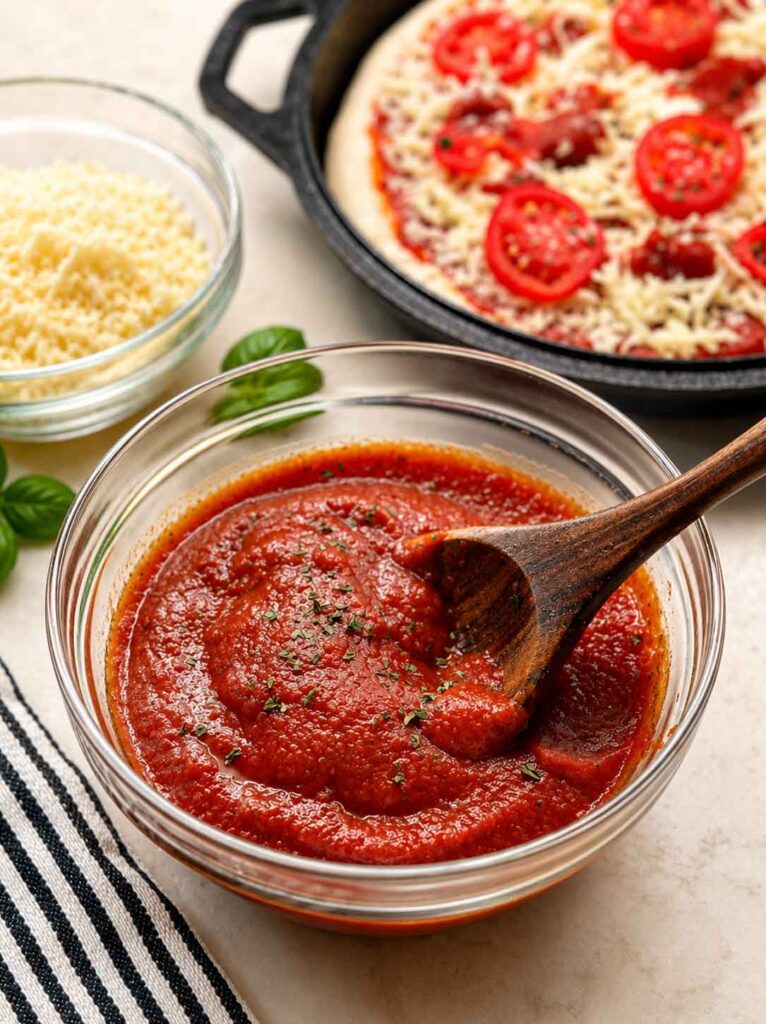
This homemade pizza sauce is a no-cook sauce you stir together from things you probably already have on hand. It takes about five minutes and makes enough for two pizzas. The paste keeps it thick so your crust never goes soggy, the herbs stay bright and fresh-tasting. You just mix, taste, and spread. That’s it.
I started making my own pizza sauce back when I got serious about pizza night here on the farm. I make sourdough pizza dough often now, and it felt silly to fuss over a from-scratch crust and then reach for a jar of sauce that cost more than the whole batch of dough. So I started experimenting with pantry cans until I landed on this one. We love how it tastes!
Why Make Pizza Sauce from Scratch?
Because it’s faster than driving to the store, cheaper than a jar, and you almost certainly have everything already. Two cans and a few spice jars make more sauce than most jars hold, for a fraction of the price. Homemade also means you’re in charge: how garlicky it is, how much salt, whether there’s any heat at all. And since this one never touches the stove, the dried herbs taste fresher and greener than they do in a sauce that’s been simmered down and sealed in a jar for months. It really is just stirring, so there’s almost no reason not to.
What Do You Need to Make Pizza Sauce?
Everything here is a regular grocery store staple, and the full amounts are in the recipe card below. Let’s talk about why each one earns its place.
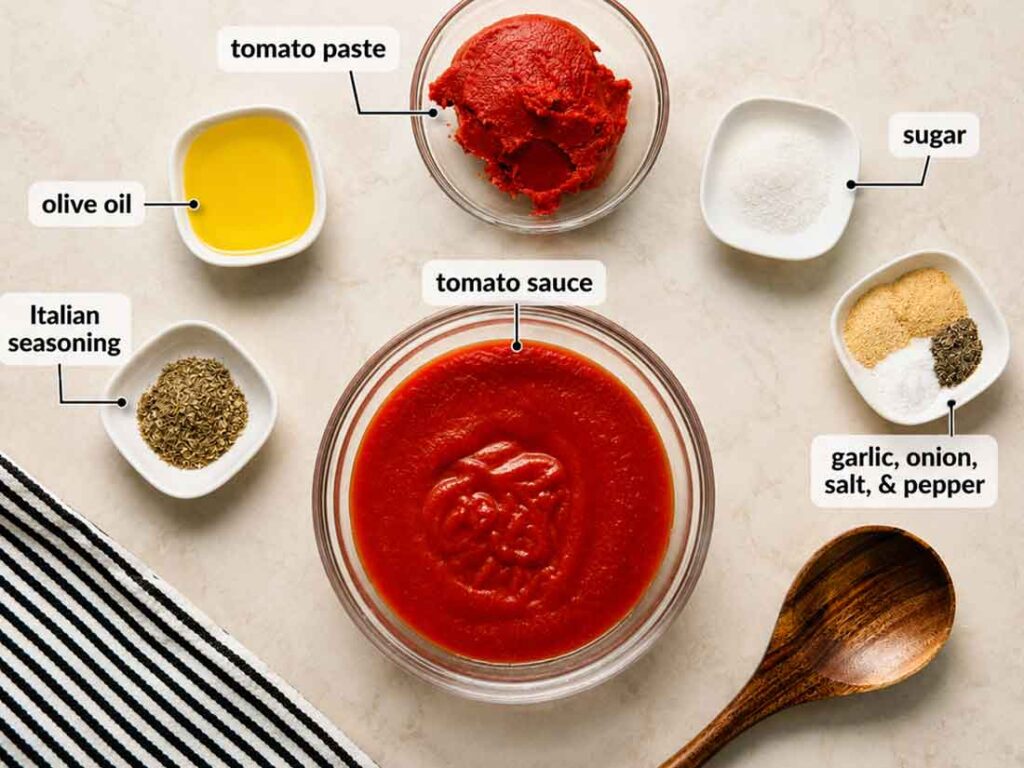
Tomato paste and tomato sauce. These two do the heavy lifting. A 6-ounce can of tomato paste is what makes this sauce thick and deep and rich, and a 15-ounce can of tomato sauce loosens it back into something you can actually spread. Together they give you that dense, clingy pizza-sauce texture instead of the thin, watery pool you get from tomato sauce alone.
Olive oil. Just a tablespoon. It smooths out the sauce and carries the flavor of the herbs, the same way a little fat does in any good sauce. Any everyday olive oil is fine here.
Italian seasoning. This one jar is the backbone of that familiar pizzeria taste, all the oregano, basil, and other dried herbs already blended together, so you’re not measuring out five little spice jars. Store-bought works perfectly here, and if you keep a jar of my homemade Italian seasoning on the shelf, even better. I reach for dried herbs on purpose in a no-cook sauce, because they hold up better than fresh, which can taste grassy when they haven’t been warmed through.
Garlic powder and onion powder. These round out the sauce without you having to chop a thing, and the powders melt right in where fresh garlic and onion would stay sharp in a sauce that never cooks.
Sugar. Optional, and only a teaspoon. Canned tomatoes can taste a little sharp and acidic, and a small pinch of sugar softens that edge. Start with the teaspoon, taste, and add a touch more only if your tomatoes are extra tangy.
Red pepper flakes. Also optional, and just a pinch if you want a gentle warmth. I usually leave them out since I’m not a spicy-food person, but a little goes a long way if your family likes some kick.
How Do You Make Pizza Sauce?
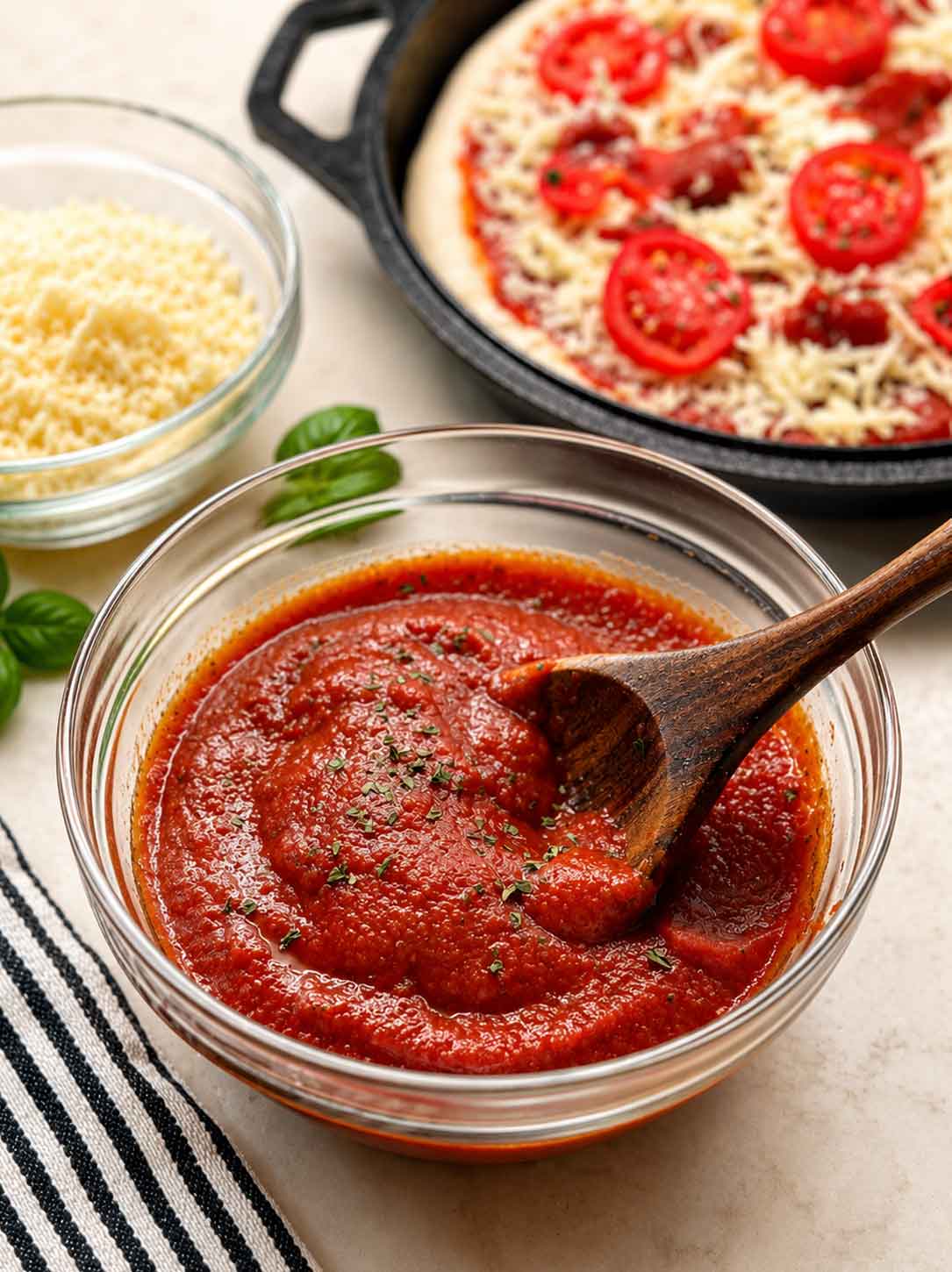
This is about as easy as a recipe gets, so don’t overthink it. Add the tomato paste and tomato sauce to a medium bowl, then stir in the olive oil, sugar, Italian seasoning, garlic powder, onion powder, salt, black pepper, and the red pepper flakes if you’re using them. Mix until it’s smooth and everything is well combined. The paste is stiff straight out of the can, so it takes a few good stirs to loosen up into the tomato sauce. Keep going and it comes together into a thick, even sauce.
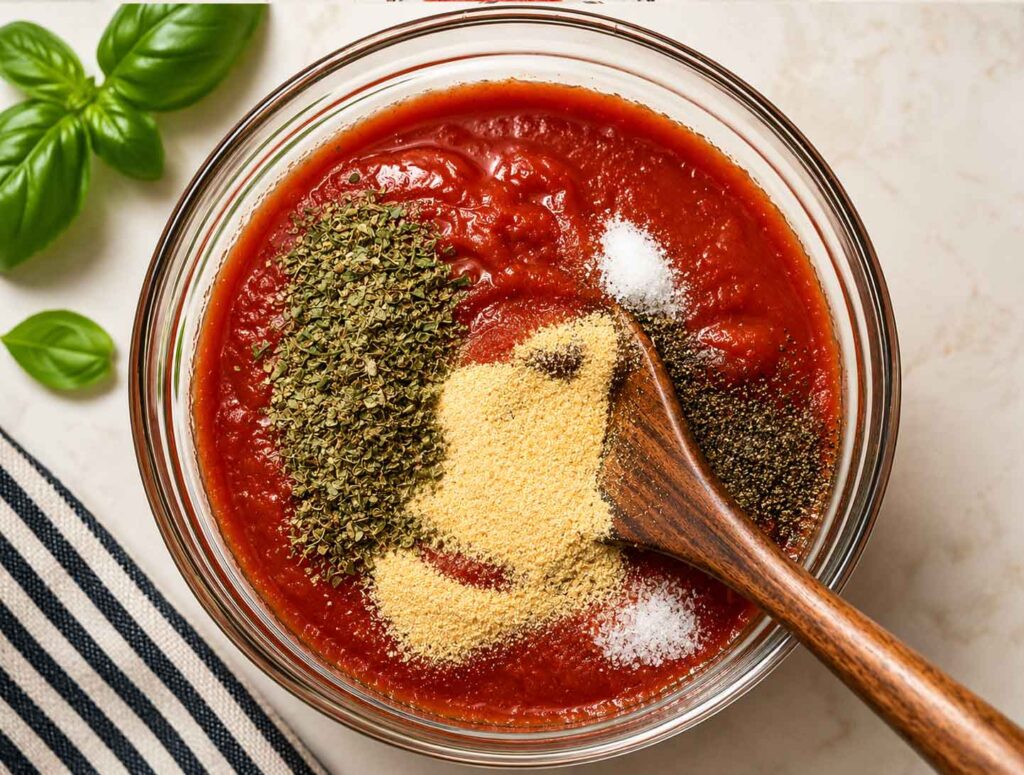
Now taste it, because this is where you make it yours. If it tastes too sharp, add a little more sugar. If it tastes flat, a small pinch more salt usually wakes it right up. And if you want a stronger pizza-shop flavor, add a bit more Italian seasoning. Don’t worry about nailing it on the first taste… adjusting at the end is exactly how this sauce is meant to work.
Why let the sauce rest before using it?
If you have the time, let the finished sauce sit for 15 to 30 minutes before you spread it. This helps because the dried herbs soften in the tomato and their flavor blooms out into the whole sauce, so it tastes more melded and less like separate spices. It’s a small step and completely worth it, but if you’re hungry and pizza is waiting, the sauce is still good to go right away.
How Much Sauce Do You Need per Pizza?
Use about 1/3 to 1/2 cup of sauce for a 12-inch pizza, depending on how saucy you like it. Spread a thin, even layer over your shaped dough, leaving a little bare rim around the edge for the crust, then add your cheese and toppings. One common mistake is piling on too much sauce in the center, which can leave the middle of the crust gummy instead of baked through. Go a little lighter in the very center and you’ll get a crust that cooks all the way. This sauce is thick on purpose, so a thin layer is all you need, and it won’t run or soak in.
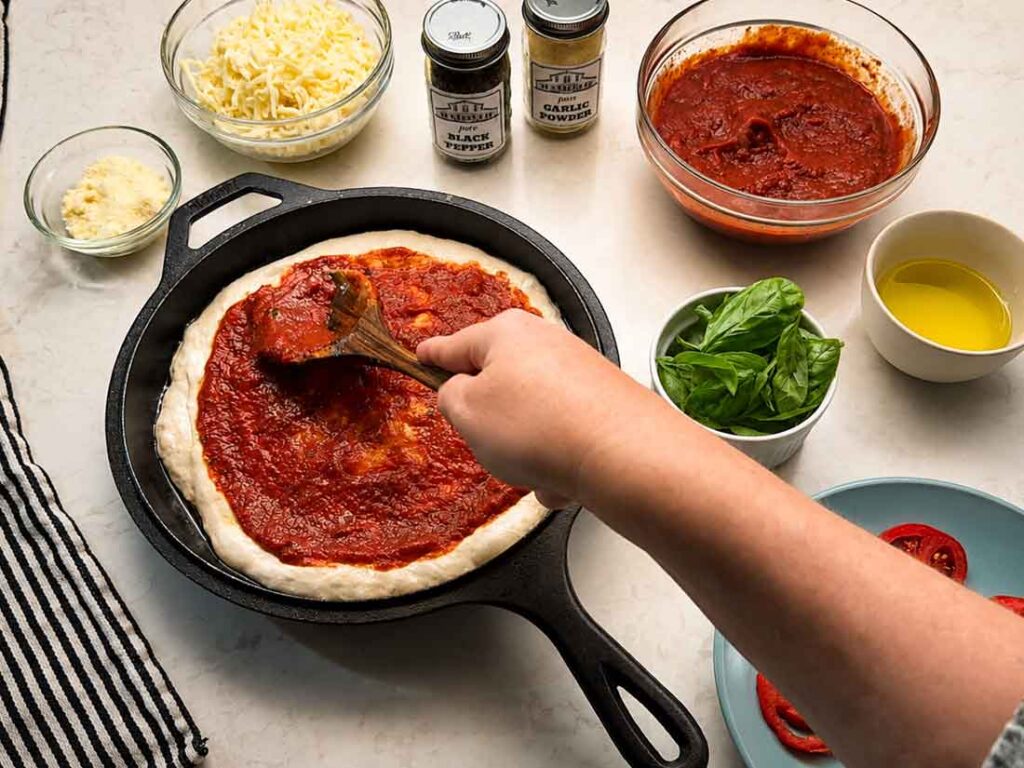
If you really really like sauce (like I do), you can add extra dollops of sauce to your pizza after all of your toppings are in place and it won’t create a soggy mess.
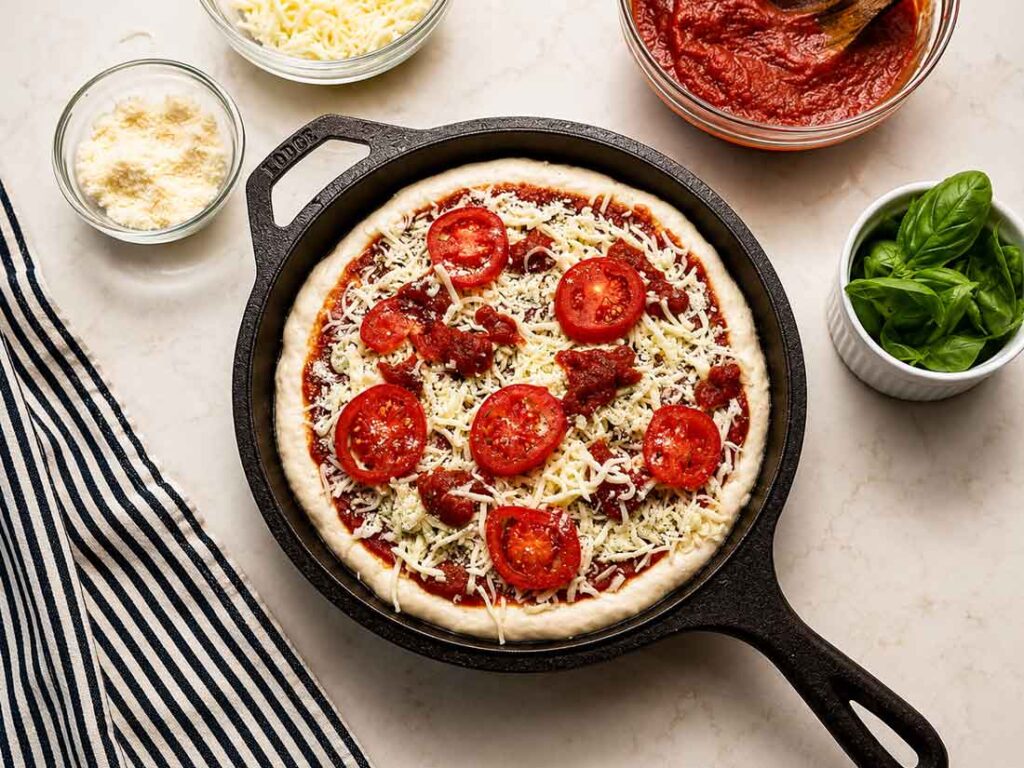
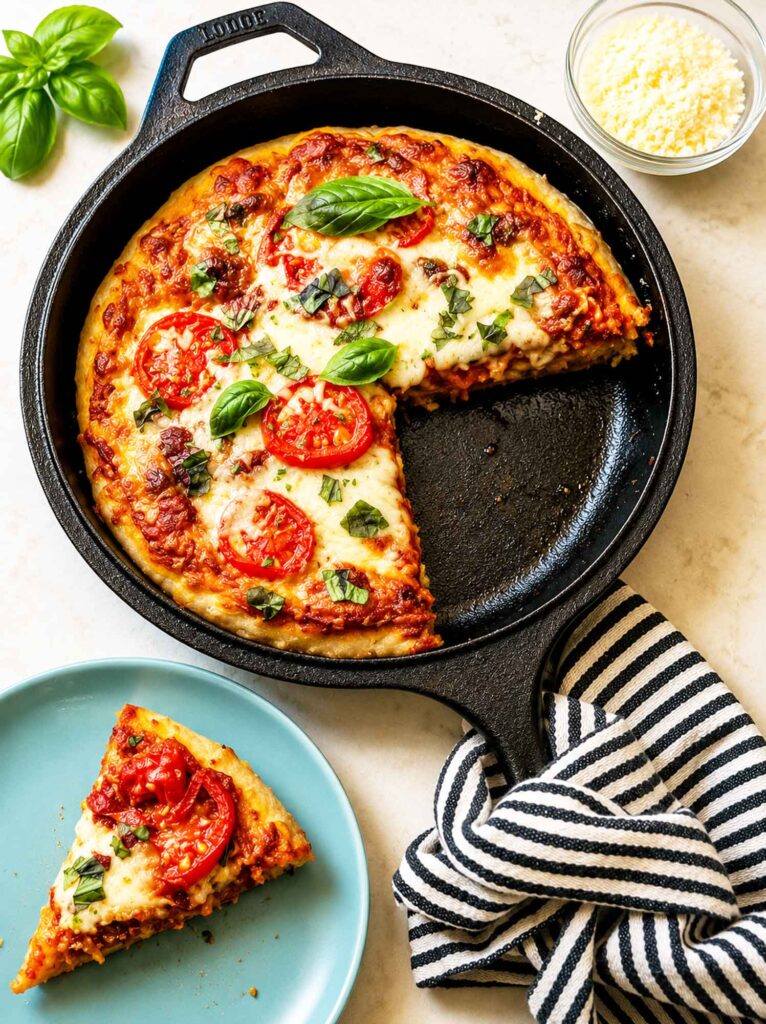
From here, it’s just sauce, cheese, toppings, and a hot oven. If you want the crust I build these on, my sourdough pizza dough recipe walks you through the whole thing, including my favorite deep-dish version pressed into a cast iron skillet.
How Do You Store Homemade Pizza Sauce?
Store any leftover sauce in an airtight container in the refrigerator for up to 5 days, or freeze it for up to 3 months. I like to freeze it in small portions, about enough for one pizza each, so I can pull out just what I need on a busy night. Thaw it in the fridge, give it a quick stir, and it’s ready to spread. The flavor is actually a little better on day two, once the herbs have had more time to settle in.
Pizza Sauce FAQs
Can I use fresh garlic and onion instead of powder?
You can, but I’d keep them light in a no-cook sauce. Raw fresh garlic and onion taste much sharper than the powders, and since nothing cooks to mellow them, they can take over. If you want to use fresh, grate in just half a clove of garlic and a little finely grated onion, then taste before you add more.
Can I use fresh herbs?
Dried is what I reach for here, because dried Italian seasoning gives you that classic pizzeria flavor and holds up well without cooking. If you’d like to add fresh basil, tear a few leaves over the pizza after it comes out of the oven rather than stirring them into the raw sauce, where they can taste grassy.
Do I need to cook this pizza sauce?
Nope, and that’s the whole point. The sauce finishes cooking right on top of the pizza in the hot oven, so there’s no need to simmer it first. Just stir, spread, and bake.
Can I make this sauce ahead of time?
Yes, and it’s even better for it. Stir it together up to 5 days ahead and keep it in the fridge, or freeze it for up to 3 months. Making it ahead actually gives the herbs time to bloom, so the flavor is a little deeper by the time you use it.
How much pizza does this cover?
You’ll get enough for about two 12-inch pizzas, using 1/3 to 1/2 cup per pie. If you like a lighter hand with the sauce, you may stretch it to three. I use it on two 10-inch pizzas and add extra dollops. Any extra keeps beautifully in the fridge or freezer, so I’d rather have a little too much than run short mid-pizza.
Easy Homemade Pizza Sauce Recipe
Ingredients
Ingredients
- 1 can (6 ounces) tomato paste
- 1 can (15 ounces) tomato sauce
- 1 tablespoon olive oil
- 1 teaspoon sugar optional, to soften the acidity
- 2 teaspoons Italian seasoning
- 1/2 teaspoon garlic powder
- 1/2 teaspoon onion powder
- 1/2 teaspoon salt
- 1/4 teaspoon black pepper
- pinch crushed red pepper flakes optional
Instructions
- Add the tomato paste and tomato sauce to a medium bowl.
- Stir in the olive oil, sugar, Italian seasoning, garlic powder, onion powder, salt, black pepper, and red pepper flakes, if using.
- Mix until smooth and well combined.
- Taste and adjust the seasoning as needed. Add a little more sugar if the sauce tastes too sharp, more salt if it tastes flat, or more Italian seasoning if you want a stronger pizza-shop flavor.
- Spread a thin layer over pizza dough before adding cheese and toppings.
Notes
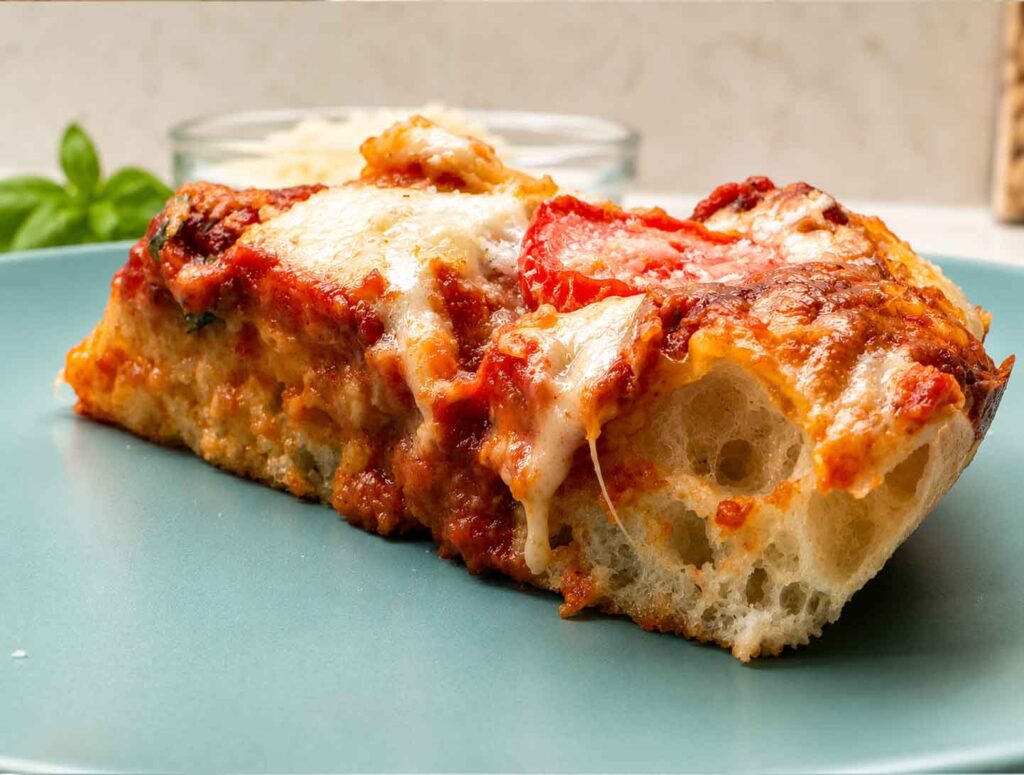
Once you’ve made your own pizza sauce a time or two, you’ll never wonder what to do with a lone can of tomato paste again. Keep a batch in the freezer and pizza night practically makes itself. If you try it, come back and let me know how it turned out, and whether you added any heat!
Happy cooking!
Love,
Jennifer

Tried this recipe?
Tap the stars in the recipe card to leave a quick rating. Your rating helps other home cooks know this recipe works in a real kitchen, not just mine.
And as a thank-you for your feedback, you will receive a free printable copy of my Maker Home Companion Cookbook, featuring my most popular recipes, each one formatted on a SINGLE, easy-to-use page, a perfect kitchen companion for easy meal prep. Click here to learn more about this cookbook and how you can get your copy!


Meet Jennifer
Jennifer cooks and experiments in the kitchen at Maker Farm, where she focuses on simple pantry cooking, homemade staples, and practical recipes that make everyday meals easier. Over the years she has tested many ways to make cooking simpler and more dependable, and shares the methods that work best in her own kitchen, occasionally showing them on her Heart to Home at Maker Farm vlog.
Love this pizza sauce! It is crucial to wait the 15 minutes that Jennifer recommends. The flavors all come together and I needed to add extra sugar (acidic tomato paste and sauce) and extra Italian seasoning after the first 15 minute wait time. I had enough sauce to put together a freezer kit with sauce and cooked meat to have handy for the next pizza night .
I made this up then froze them in a small container along with the pizza dough in a larger container. My husband thought it was sweet so I am glad there were directions for that as well.
I loved how thick this pizza sauce is so it didn’t run off the crust. I did add a little more Italian seasoning to it when I made it today. I froze the remainder for future meals when I’m in a hurry and want pizza.
Thank you so much for letting me know, Jo Ann!
Fan of all your recipes!
love this recipe, so much better than store bought and its easy and quick to make. I have this saved to use everytime I need pizza sauce. YUM
I loved making the Homemade Pizza Sauce! I used the exact ingredients, except we added an extra tiny pinch of salt. I have a hard time trying to figure out how to make my own pizza sauce. I have a food allergy to peppers, so when I saw this recipe I just had to make it. It was delicious and my family loves it as well! Thank you!
So glad this worked out for you, Amy! Thank you. 🙂