

This homemade Italian seasoning is a simple blend of five dried herbs, basil, oregano, thyme, rosemary, and parsley, stirred together and kept in a jar so it is ready whenever a recipe calls for it. It takes about five minutes to mix, uses pantry herbs you probably already have, and makes roughly 6 tablespoons, enough to season sauces, meats, dressings, and garlic bread for weeks. No special equipment, no salt or fillers, just the herbs and the right ratios.
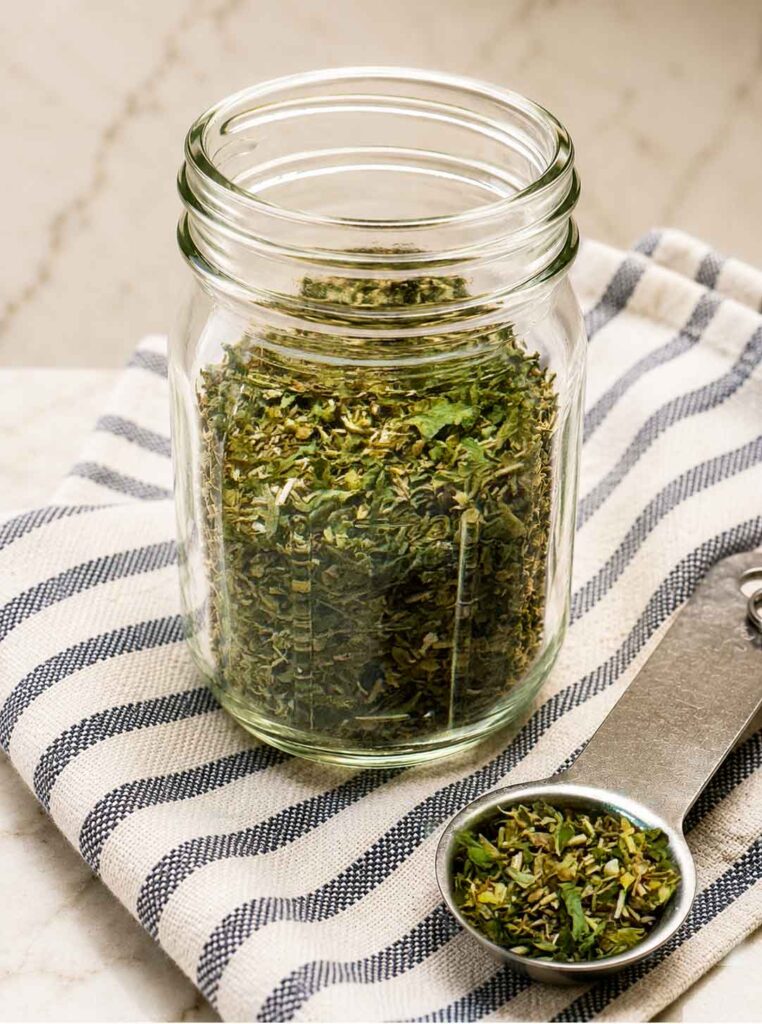
Here is what finally pushed me to make my own… so many recipes call for “Italian seasoning” (like my version of Million Dollar Spaghetti) and it is really just a mix of dried herbs. For the longest time I would either measure them out one by one every single time, or I would shrug and toss in plain oregano and call it close enough. Ha, I’m like the queen of shortcuts.
But now all of these herbs grow in my garden here on Maker Farm, and I’ve been picking and drying them at their peak so they taste bright and green, and just loving them. So one afternoon I decided to just mix up a batch and keep it in a jar to save myself the fuss. You do not need a garden to do this, I promise. You just need the ratios, and then you can stir together your own jar from store-bought dried herbs, or mix a small spoonful fresh whenever a recipe needs it.

Want to Save This Recipe?
Enter your email below and we’ll send it straight to your inbox! Plus you’ll get new recipes each week!
Why Make Your Own Italian Seasoning?
The biggest reason is freshness and control. When you mix it yourself, you know exactly what is in it, five herbs and nothing else, no anti-caking fillers and no hidden salt. That means you get to salt your food separately, to your own taste, instead of letting a spice jar decide for you. This helps because a blend without salt is a lot more flexible… you can use a heavy hand for flavor without making anything too salty.
It is also frugal. A little jar of name-brand Italian seasoning is not expensive, but if you already keep basil, oregano, thyme, rosemary, and parsley in the cupboard, you can mix the same thing for pennies and use up what you have. And you can make it yours, a little heavier on the oregano, a pinch of red pepper if your family likes heat, however works for you.
But the biggest reason is this: when you run out, you don’t have to buy it at a store. You can just make it yourself.
What herbs are in Italian seasoning?
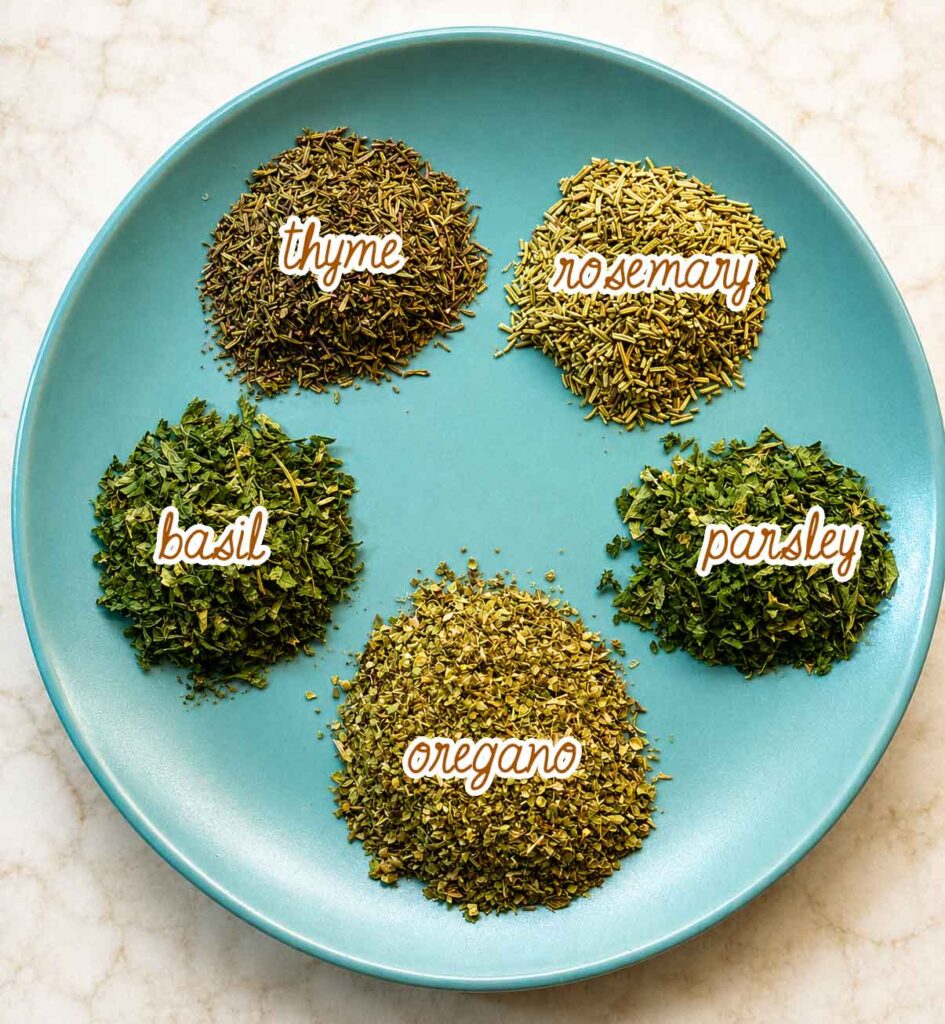
Italian seasoning is a blend of dried Mediterranean herbs, and this version keeps it to five for simplicity. Here is what each one brings, and the full amounts are in the recipe card below.
- Oregano (2 tablespoons). This is the backbone, so it gets a double share. Oregano is that warm, savory, slightly peppery flavor you think of as “Italian,” and it carries the whole blend.
- Basil (1 tablespoon). Sweet and a little peppery, basil rounds out the oregano and keeps the mix from tasting sharp.
- Thyme (1 tablespoon). Earthy and gently minty, thyme adds depth underneath the brighter herbs.
- Rosemary (1 tablespoon). Piney and aromatic. A little goes a long way, and you will want to crumble it so you do not get a woody needle in one bite.
- Parsley (1 tablespoon). Mild and grassy, parsley adds a fresh green note and a pretty flecked color.
Want to change it up? A teaspoon of dried marjoram or a little dried sage are both right at home here. If your family likes a bit of heat, add a pinch of red pepper flakes. I would leave the garlic powder out of the jar itself, though, and just add it when you cook, because it tends to clump and can pull moisture into the blend.
KEEPING IT SIMPLE

If you research what’s in Italian seasoning, you may learn that the five typical herbs are actually basil, oregano, rosemary, thyme, and marjoram. But I substituted parsley for marjoram. Why? Two reasons: First, I grow parsley in my garden, not marjoram. So it’s what I have and love to use. Second, many commercial brands (like McCormick) use parsley instead of marjoram in their Italian seasoning blends, so this tastes familiar.
How to Make Italian Seasoning
This could not be simpler, but I will walk you through it so it comes out even and stores well. We are really just doing two things… crumbling the rosemary, then mixing everything together.
Crush the rosemary. If your dried rosemary is in long, whole needles, rub it between your fingers or give it a quick pulse to break it down a little. The reason is that whole rosemary stays piney and woody, and crumbling it helps it blend in evenly instead of turning up as a sharp bite later (ask me how I know).
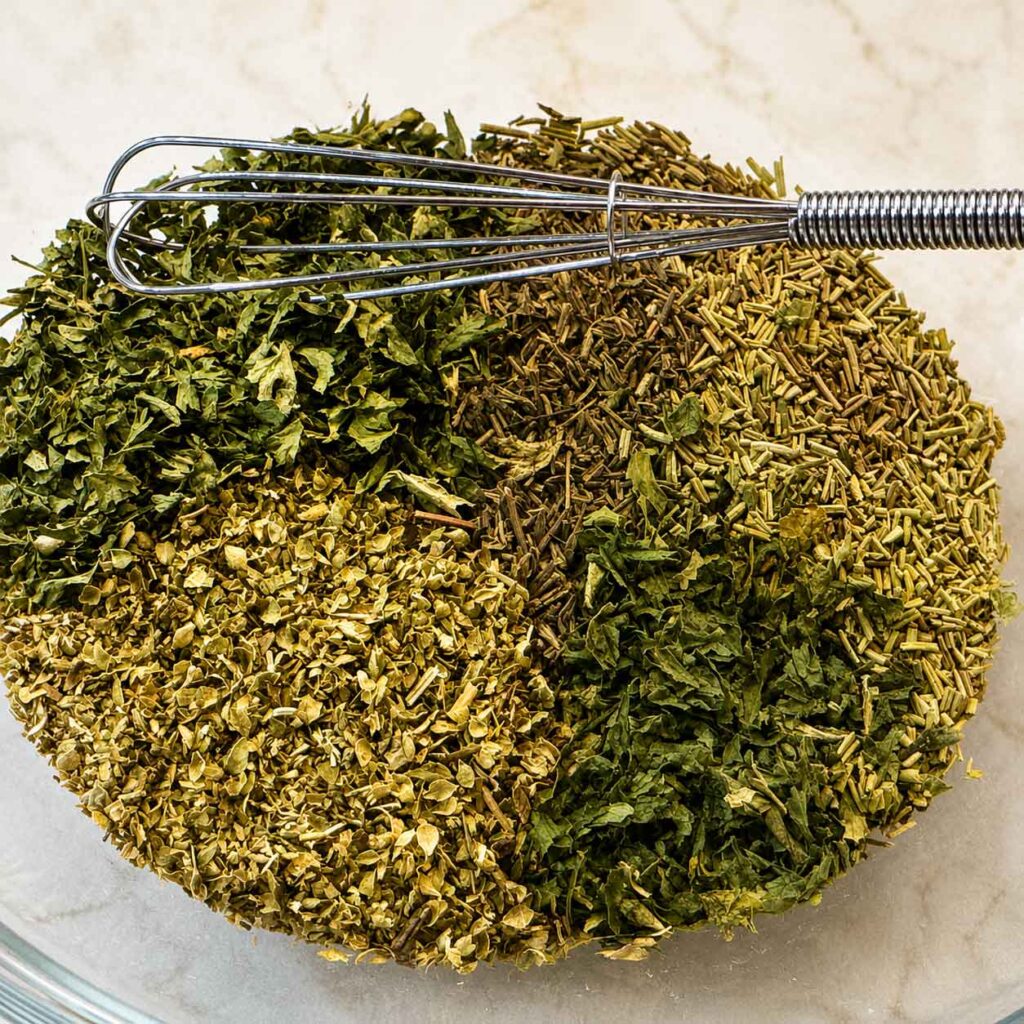
Stir it all together. Add the oregano, basil, thyme, rosemary, and parsley to a small bowl and whisk or stir until the herbs look evenly mixed with no clumps of any one color. Don’t worry if it looks a little uneven at first… just keep stirring and it comes together in under a minute.
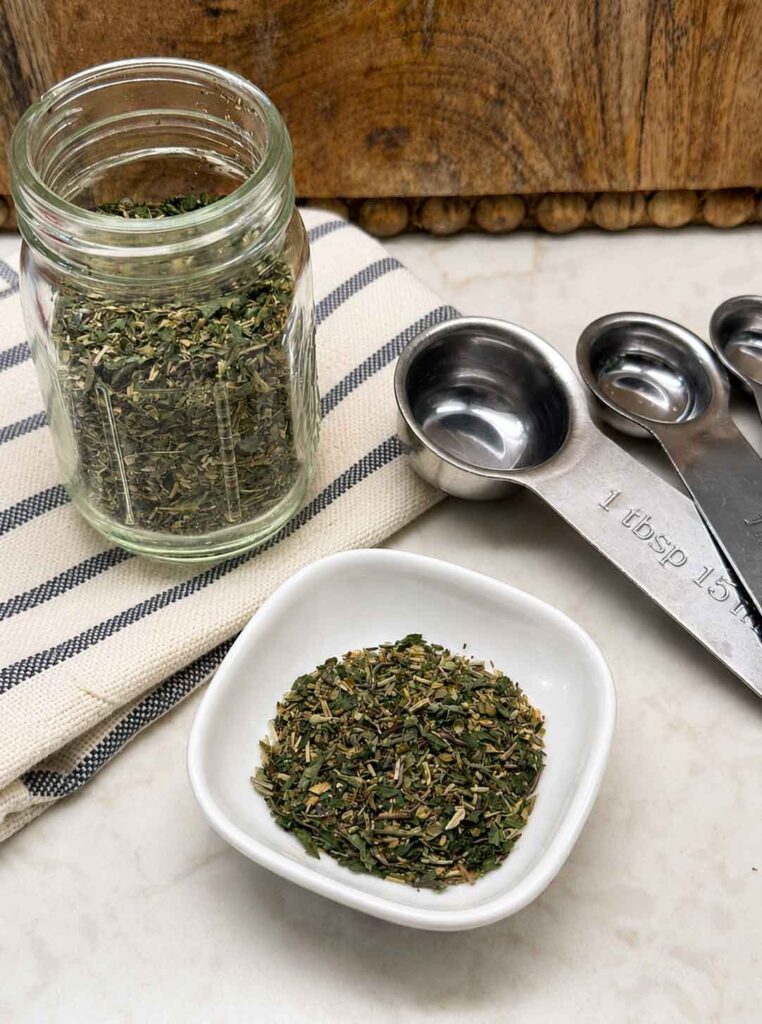
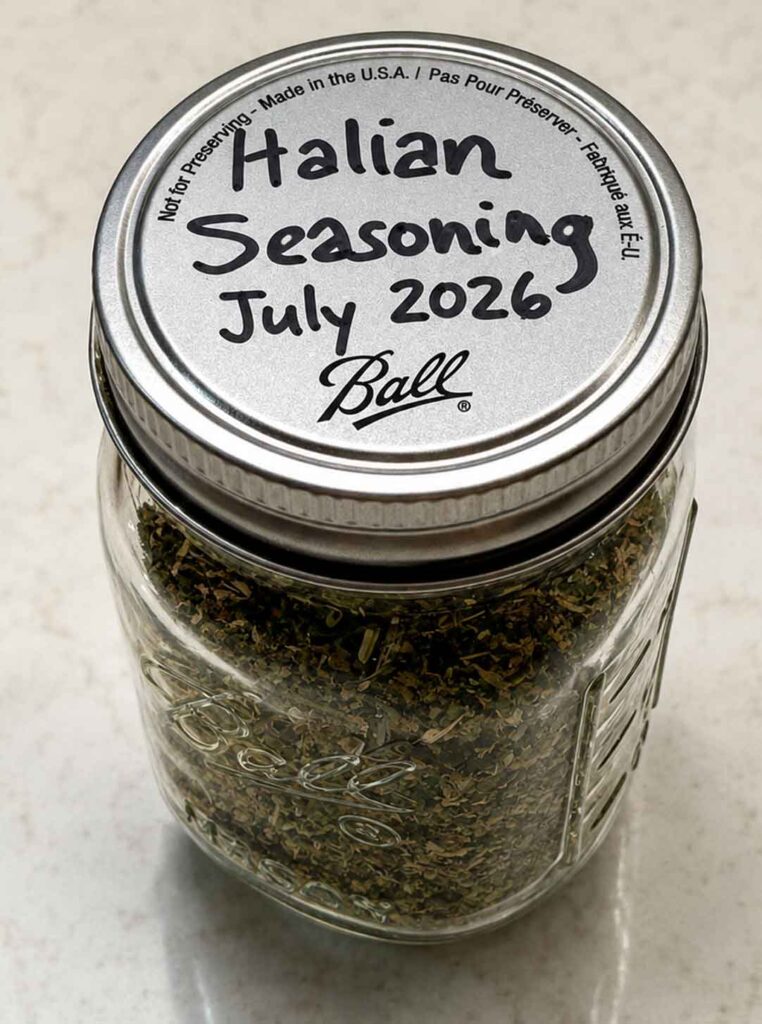
Jar it and label it. Spoon the blend into a clean, completely dry jar (I use Ball 4oz mini Mason jars for my seasonings), then seal it and give it a shake. Be careful that your jar and spoon are dry, because any moisture can make dried herbs clump or spoil early. I like to write the name and date right on the lid so I know what it is and how fresh it is.
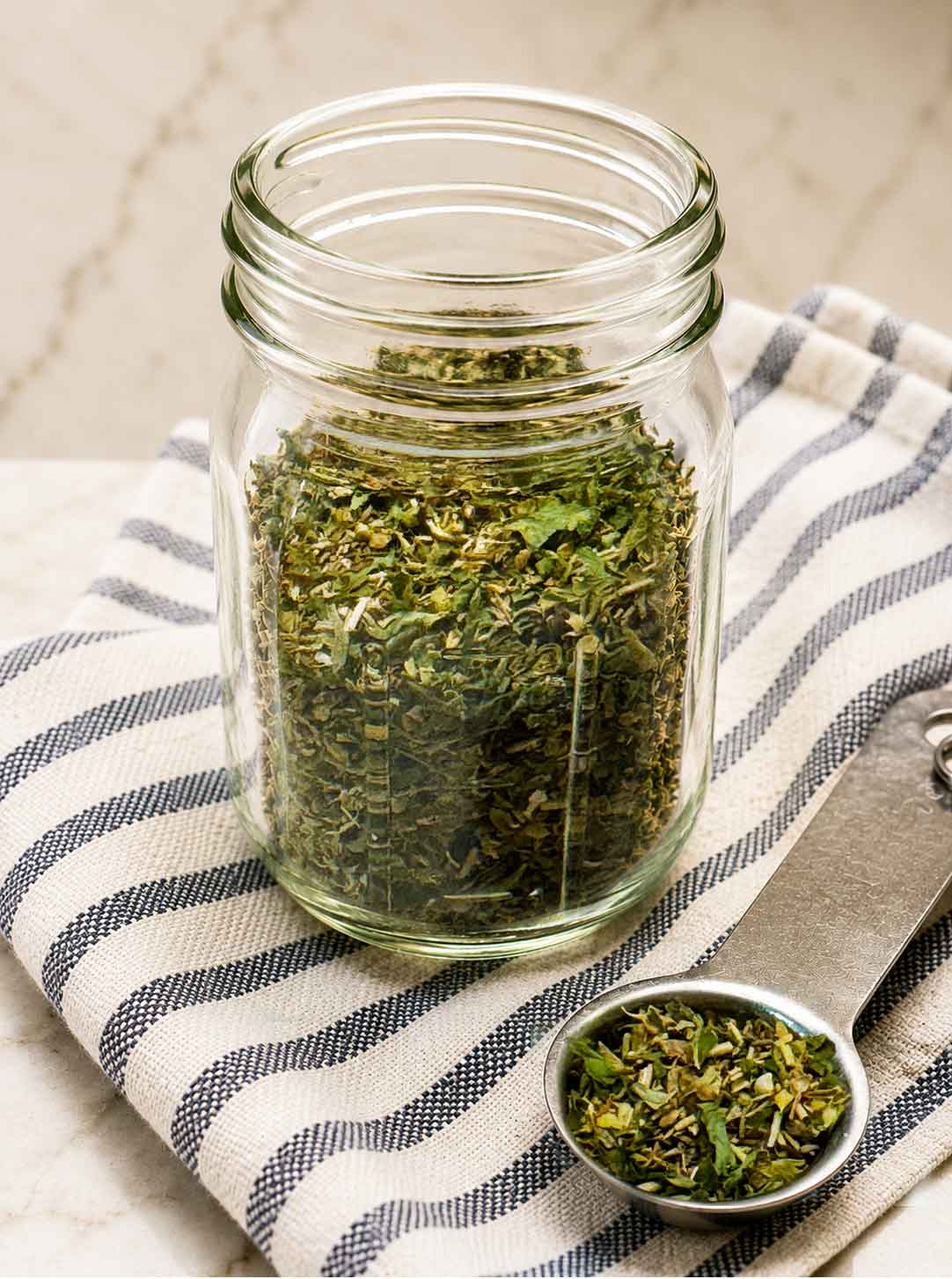
Homemade Italian Seasoning
Ingredients
- 2 tablespoons dried oregano
- 1 tablespoon dried basil
- 1 tablespoon dried thyme
- 1 tablespoon dried rosemary
- 1 tablespoon dried parsley
Instructions
- If your rosemary is in long whole needles, crumble it between your fingers or pulse it briefly so it blends in evenly.
- Add all of the herbs to a small bowl and whisk or stir until evenly combined.
- Spoon into a clean, dry jar, seal, and shake to mix. Label with the name and date.
- Store in a cool, dark cupboard and use within about a year for the best flavor.
Notes
How to Use Italian Seasoning
This is one of those blends that ends up in almost everything. I use about 1 to 2 teaspoons per pound of meat, and a spoonful can go into spaghetti sauce, meatballs, chicken Alfredo, focaccia, soups, and marinades. It is lovely stirred into softened butter or olive oil for garlic bread, sprinkled over chicken or roasted vegetables before they go in the oven, or shaken into a quick salad dressing. If you have a minute, warm the herbs in a little oil before adding your other ingredients, because that gentle heat wakes up their flavor and makes the whole dish taste richer.
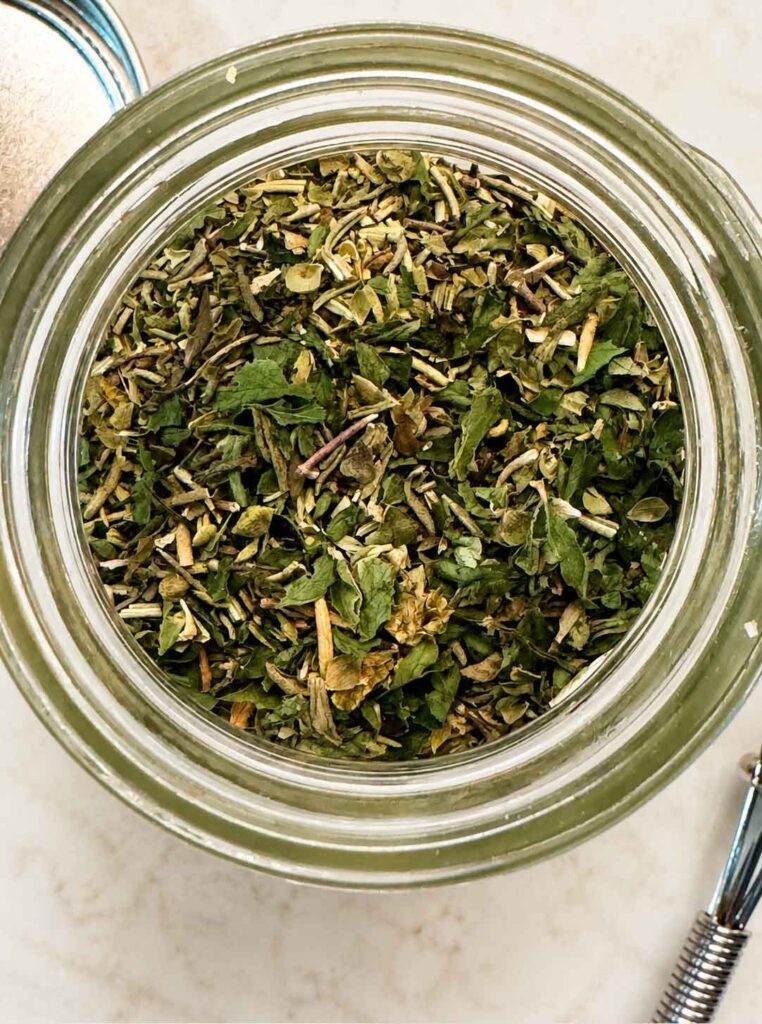
How to Store Homemade Italian Seasoning
Keep your seasoning in an airtight jar in a cool, dark cupboard, away from the heat of the stove and out of direct light. Stored that way, dried herbs do not really spoil, but they do slowly lose their punch, so I like to use mine up within six months to a year. If it ever smells dusty instead of green and aromatic, it is just tired and ready to be refreshed with a new batch. Writing the date on the lid makes that easy to keep track of.
Italian Seasoning FAQs
Can I use fresh herbs instead of dried?
For the jarred blend, stick with dried, since fresh herbs hold moisture and will not store. If you want to cook with fresh, use about 1 tablespoon fresh for every 1 teaspoon dried and add it to your dish right away rather than saving it.
Is there salt in this seasoning?
No, this blend is completely salt-free on purpose. That way you can season your food with salt separately and never end up with something too salty.
How long does homemade Italian seasoning last?
In a sealed jar kept cool and dark, it stays flavorful for about a year. It will not go bad after that, it just fades, so give it a sniff and refresh it when it stops smelling bright.
What is the difference between Italian seasoning and oregano?
Oregano is a single herb, while Italian seasoning is a rounded blend built on oregano with basil, thyme, rosemary, and parsley added. In a pinch you can use plain oregano, which is exactly what I used to do, but the blend tastes fuller.
Can I leave out one of the herbs?
Totally! Oregano and basil are the heart of the blend, so keep those, and adjust the rest to what you have on hand. The ratio is forgiving, so a little more or less of any one herb still tastes great. You can experiment come up with your seasoning blend of herbs, too!
Once you have a jar of this on the shelf, I think you will reach for it constantly, and you will never stand there measuring out each individual herb mid-recipe again. If you mix up a batch, I would love to hear how you like to use it.
Happy cooking!
Love,
Jennifer
Tried this recipe?
Tap the stars in the recipe card to leave a quick rating. Your rating helps other home cooks know this recipe works in a real kitchen, not just mine.
And as a thank-you for your feedback, you will receive a free printable copy of my Maker Home Companion Cookbook, featuring my most popular recipes, each one formatted on a SINGLE, easy-to-use page, a perfect kitchen companion for easy meal prep. Click here to learn more about this cookbook and how you can get your copy!


Meet Jennifer
Jennifer cooks and experiments in the kitchen at Maker Farm, where she focuses on simple pantry cooking, homemade staples, and practical recipes that make everyday meals easier. Over the years she has tested many ways to make cooking simpler and more dependable, and shares the methods that work best in her own kitchen, occasionally showing them on her Heart to Home at Maker Farm vlog.
Were the instructions easy to follow? Yes.
Did the timing feel accurate? Yes.
Did the recipe look and taste the way you expected? Yes.
Did you make any substitutions? No.
Would you make it again? Yes.
Is there anything you wish I had explained more clearly? No.
The smell alone is so overwhelming with flavor!
I love the easy homemade Italian seasoning recipe. I have all the herbs in my garden too so this was super easy. I also love the tip of how to store it and dating it. Thank you for great cooking ideas.
Great Timing! It was time for me to purchase Italian Seasoning – so I tried your recipe. It was EASY & TASTY! Used in meatloaf – YUM !!
I’m just beginning to experiment with dehydrator & having FUN learning how to dry different foods. Hoping you’ll crete/share more dried food recipes.
Oh, good! Thank you, Susan!
love it, easy and ready when you need it. used herbs from my garden. i hang my herbs to dry.
I like to zip this kind of recipe in an electric coffee grinder to sprinkle on salads, pizza, sandwiches, or add some flavor to burgers and pasta sauce. Same great flavor, just getting more uses out of it with a smaller grind on it.
how do you dry the fresh herbs?
I use a dehyrdator. Sometimes you can use an oven, too, but only if your oven goes low enough (ideally 100-150°F)