
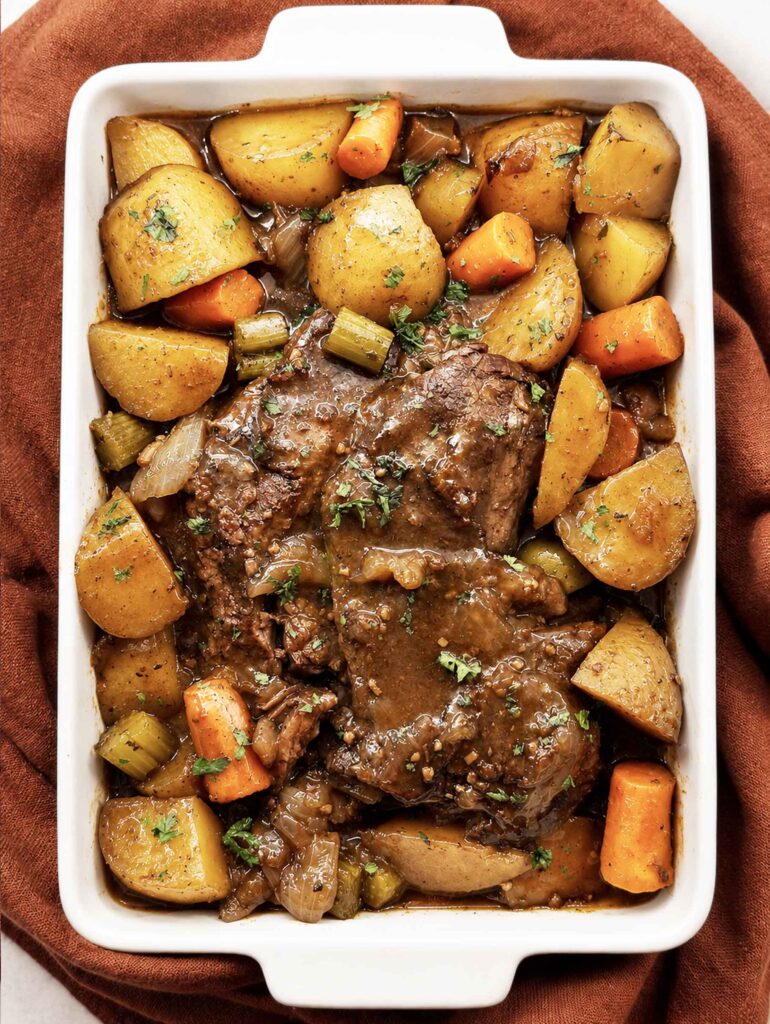
This perfect slow cooker pot roast recipe is just the best comfort food! It’s a classic, home-cooked meal made with a roast seared until it has a real brown crust, then cooked low and slow with potatoes, carrots, and celery in a wine gravy. The secret ingredient is one teaspoon of unsweetened cocoa powder, giving you a deeper, rounder, beefier gravy. The best part? The slow cooker does the hard work while you go do something else!
POT ROAST At A Glance
Prep
30 min
COOK
8 hours
Total
8.5 hours
Serves
6
Pan
Slow cooker, skillet, sauce pan
Why I Put Cocoa Powder In My Pot Roast

I have been putting unsweetened cocoa powder in my chili for years. Not enough to taste like chocolate, just a spoonful. The cocoa does something to the dish that I can’t get any other way. It rounds everything off. It makes the whole pot taste like it has been going longer than it has. I do the same thing my taco soup.
So it was only a matter of time before I started wondering what the cocoa would do in a pot roast… especially a pot roast with red wine in it, because dry red wine in a meat gravy is one of my favorite things ever. Cocoa, tomato paste, seared beef, and Cabernet are all roasted, slightly bitter, slightly sweet flavors. They belong together, and I had a feeling they would stack.
And they totally do! I could not pick the cocoa out of the finished gravy at all, and I am a supertaster, so I’m good at identifying flavors. What I got instead was a gravy with more depth to it than my usual. The house smelled incredible all day as it cooked.
I already have an old fashioned beef stew that I make in the Dutch oven when I need dinner in a few hours. This is the other half of that. This is the one for the day you are leaving the house at eight in the morning and you want the whole place to smell like Sunday when you walk back in.
Let’s dig in!

Tips and Notes Before You Start
- Your beef cut matters. If you’re standing in the store trying to figure out what you need, get a chuck roast. Can’t find it? I’ve got more alternatives below.
- Start the clock backward. On LOW this needs a real eight hours, so it goes into the crockpot by 9 in the morning for a 6 o’clock dinner, plus about ten minutes at the end for the gravy.
- Do not skip the sear. It is the difference between a gravy that tastes like beef and a gravy that tastes like broth. If you are truly short on time, sear just the two flat sides and call it good.
- You will not taste the cocoa. One teaspoon, unsweetened, added with the tomato paste. It is there for depth, not for a flavor you can name.
- It will look too dry, but it isn’t. The liquid will not cover the roast or the vegetables when you put the lid on. Resist adding more, because everything in there releases moisture as it cooks.
- Save some salt for the end. I needed a fair amount in the finished gravy, more than I expected. Eight hours dulls seasoning and the broth is low-sodium, so plan on tasting and adjusting at the very end.
What Cut of Beef Makes the Best Pot Roast?
Chuck. If you take one thing away from this whole post, let it be that one.
Pot roast is not really a recipe so much as a technique for turning a cheap, hardworking piece of beef into something tender, and it only works on cuts that have the right stuff in them to begin with. Chuck comes from the shoulder, a muscle the animal leaned on all day long, so it is threaded with collagen and marbled with fat. Over eight low, slow hours that collagen melts into gelatin, and gelatin is what makes pot roast silky instead of stringy. A lean cut simply has nothing in it to melt. That is why an expensive roast will come out worse here than a cheap one.
What is it called at the meat counter?
This is the part that trips people up, because chuck gets labeled about six different ways depending on the store and the butcher. Mine was sold as a boneless chuck blade roast. You may also see chuck roast, chuck shoulder roast, blade pot roast, seven-bone roast, or beef chuck under blade. Do not worry about picking between them. If the word “chuck” appears anywhere on that label, you are in the right neighborhood, and any of them will work in this recipe.
Here is roughly how the common options behave, in case chuck is not available or you already have something else in the freezer.
| Cut | How it does in a slow cooker |
|---|---|
| Chuck roast (and all its other names) | The best choice, and what I use. It forgives you if the timing runs long, which no lean cut will. |
| Brisket, flat cut | A good second. Plenty of collagen, but it slices rather than shreds, so expect neat slabs instead of pull-apart pieces. |
| Bottom round or rump roast | It will cook and it will taste fine, though it is leaner, so slice it against the grain rather than hoping it pulls apart. Watch it a little more closely near the end. |
| Boneless short ribs | Very rich and very forgiving, and lovely if you find them on sale. You will want to skim more fat off the liquid before making the gravy. |
| Eye of round, sirloin tip, tenderloin, anything labeled “lean” | These are the ones to leave on the shelf. There is no collagen to melt, so more time only makes them drier and tighter, never tender. |
How to Pick a Good Roast While You Are Standing There
Look for white fat threading through the meat, not just a cap around the outside. Those little marbled seams are the whole reason this works. A roast that is a uniform deep red with no white running through it is a lean roast wearing a chuck label, and it will disappoint you eight hours from now.
One common mistake, and it is such an easy one to make, is reaching for the tidiest looking roast in the case. We are trained to think lean equals good, so the marbled one looks like the lesser cut… it is not. In pot roast the fatty, marbled, slightly ugly roast is the one you want, and it will cost you less.
Aim for a piece around 2 inches thick, since a thin, wide roast dries at the edges before the middle gives up. Boneless is easier to deal with at the end, though a bone-in roast adds a little body to the gravy if you do not mind working around it. And do not trim the fat cap off before cooking. You can skim the fat from the liquid later, once it has done its job.
What Else You Need to Make This
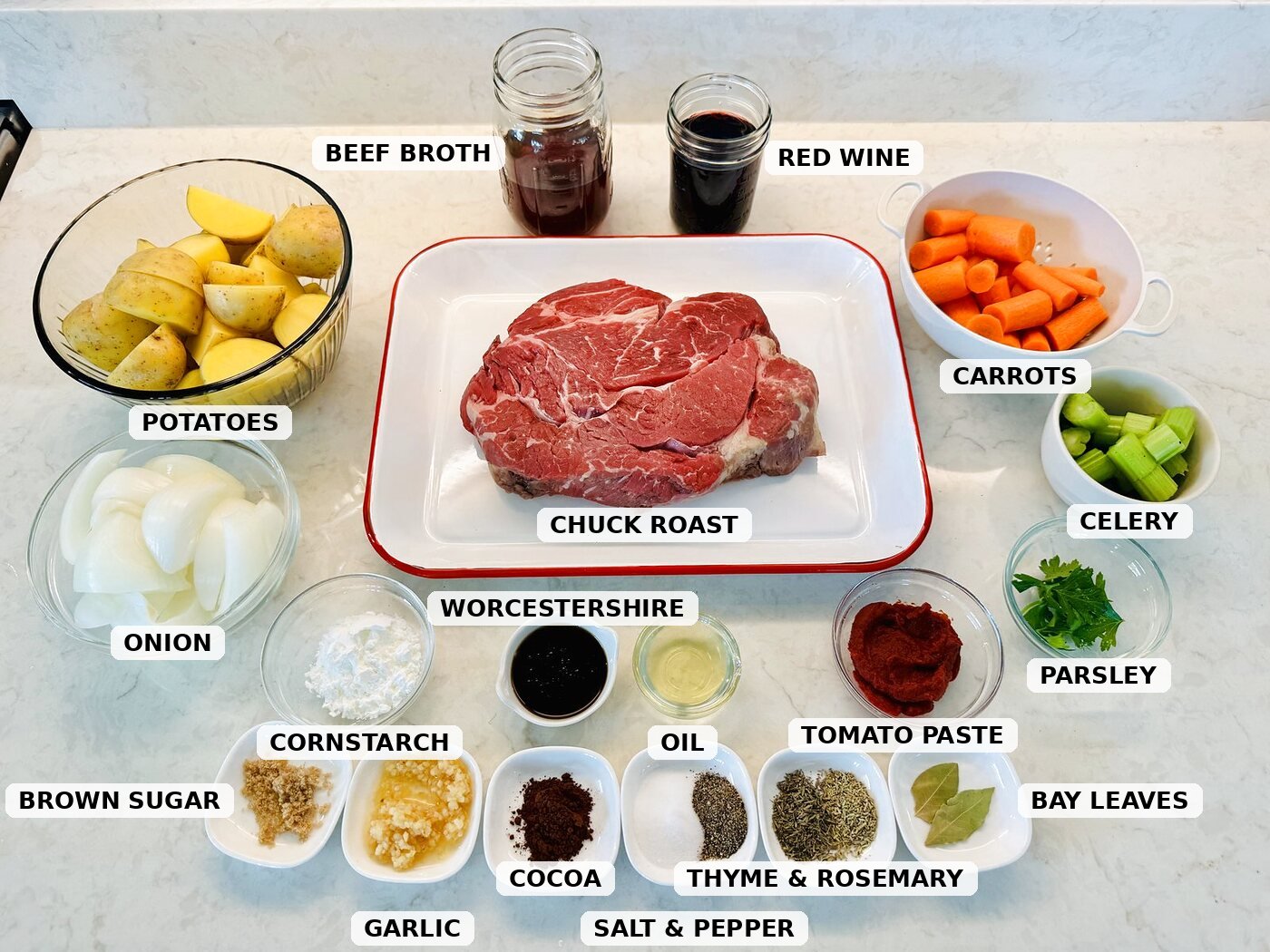
Nothing here is unusual except the cocoa, and I’m betting you already have that. Here is what each thing is doing in this meal:
| Ingredient | What it does, and what you can swap |
|---|---|
| Unsweetened cocoa powder | This gives your gravy depth and complexity. Be sure to use regular unsweetened baking cocoa, not hot cocoa mix. And don’t add more thinking it will help, because past a teaspoon or so it starts to read as bitter. |
| Tomato paste | This gives you a savory umami flavor, as well as adds a little thickness and balances acidity. When you combine beef and tomato paste, you trigger a chemical synergy that multiplies the umami flavor many times over. |
| Red wine | Wine deglazes the pan and gives the gravy its backbone. Any dry red works: Merlot, Zinfandel, a Chianti. To skip the wine, use an extra ¾ cup of beef broth plus a teaspoon of balsamic vinegar, and know the gravy will be simpler. |
| Beef broth (low- sodium) | Low-sodium matters here, because the liquid concentrates over eight hours. |
| Worcestershire sauce | This adds salt and tang. I like to think of this has another “secret” ingredient, and I use it in many meat dishes. |
| Yukon Gold potatoes | Yukons hold their shape over a long cook and go creamy inside instead of chalky. Baby potatoes or peeled russets work too, though russets soften faster. |
| Veggies (carrots, celery, onion) | Cut the carrots into good chunky 2-inch pieces and the celery into 1-inch. Small pieces disappear over a long cook. |
| Thyme, Rosemary, and Bay Leaves | Dried is right here, because fresh herbs get tired over eight hours. If you want fresh, stir a little chopped thyme into the finished gravy instead. |
| Cornstarch | This creates a slurry that turns the cooking liquid into gravy. |
| Brown sugar | Insurance. I did not end up needing it, but I liked having it there to fine-tune the taste if the wine had finished sharp. |
How to Make Slow Cooker Pot Roast
We’re going to first build flavor, then let it slow cook, and make the gravy at the end. Only the first and last ones need you.
Stage One: Build the flavor
Pat the roast dry with paper towel. This part feels fussy and it is not optional, because a wet surface steams instead of browns. Season it all over with a teaspoon of the salt and all of the pepper.
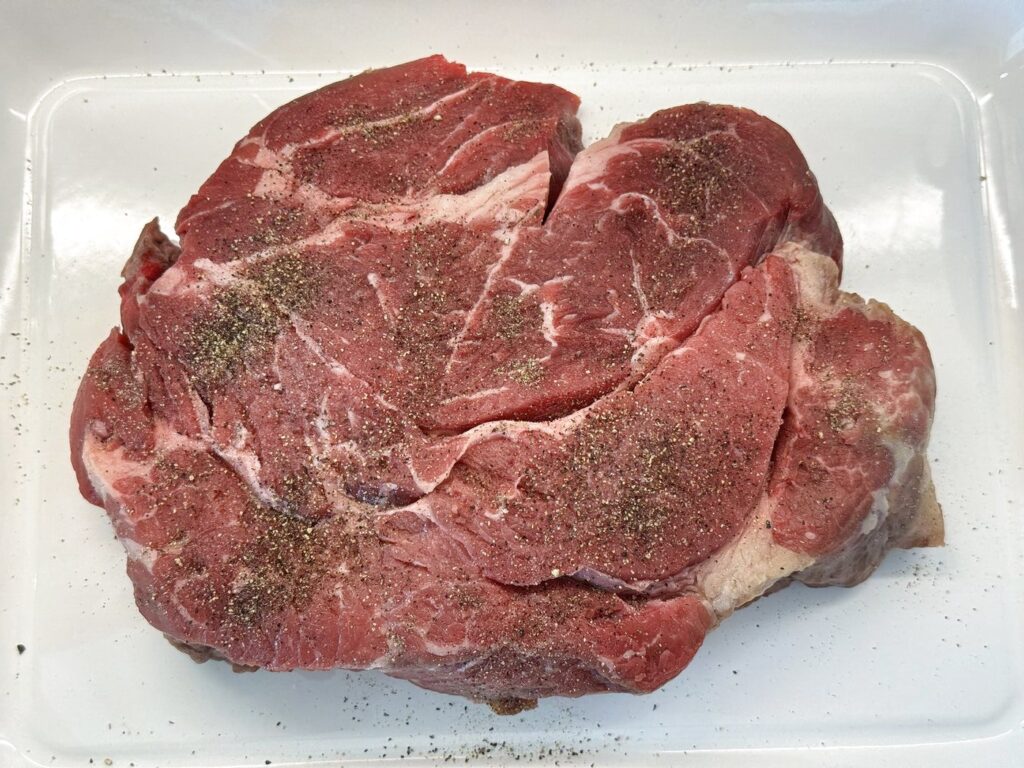
Heat the oil in a large skillet over medium-high until it shimmers, then lay the roast in and leave it alone for 3 to 4 minutes a side. Leaving it alone is the hard part. Every instinct says to poke it and move it around, but the crust needs uninterrupted contact with the pan to form.
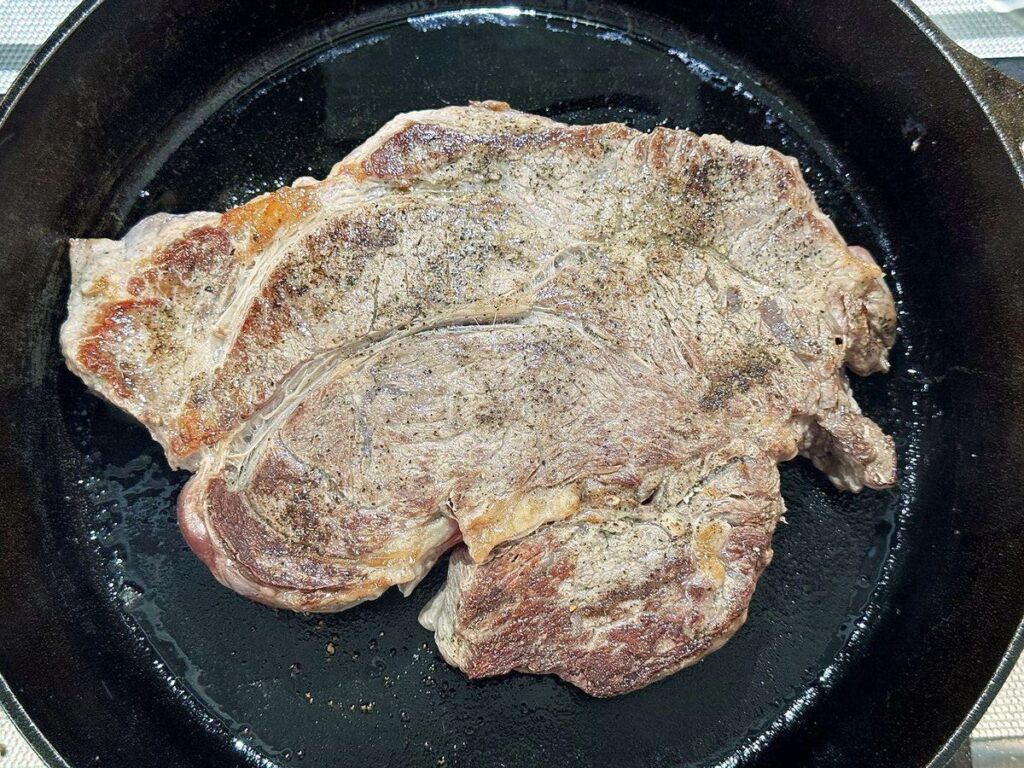
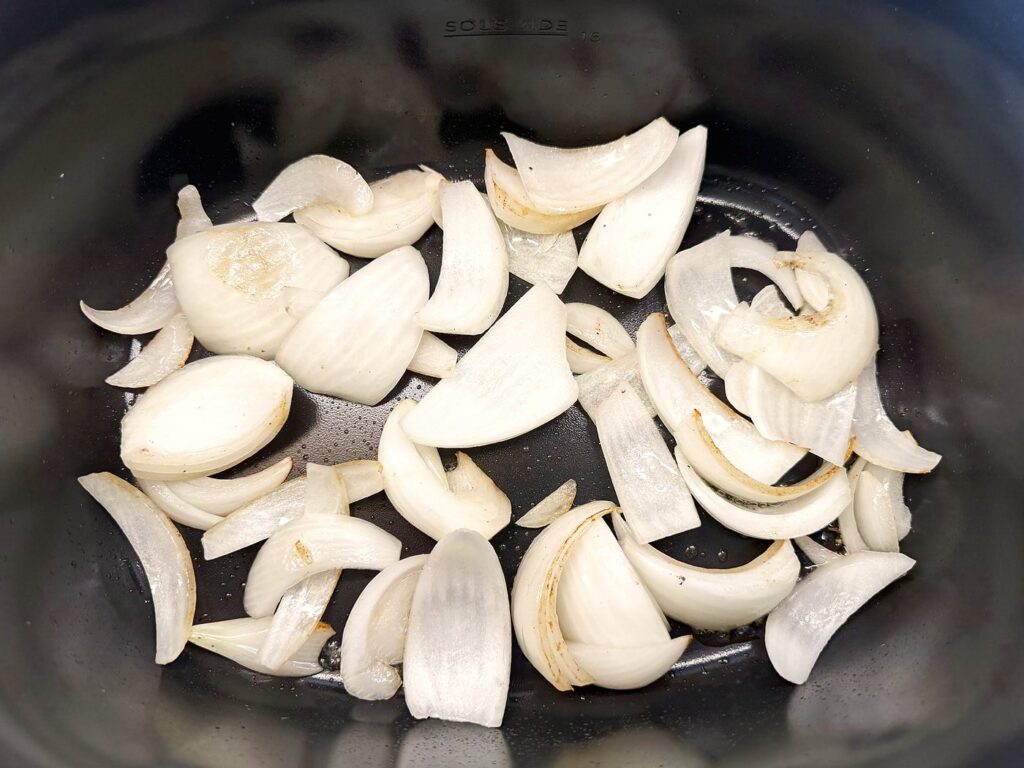
When all sides are deeply browned, move the roast to the slow cooker. Turn the heat down to medium and add the onion wedges to all that beef fat. Three minutes or so, stirring now and then, until they soften and pick up some color.
Then add the garlic, tomato paste, and cocoa powder and cook for exactly one minute, stirring constantly.
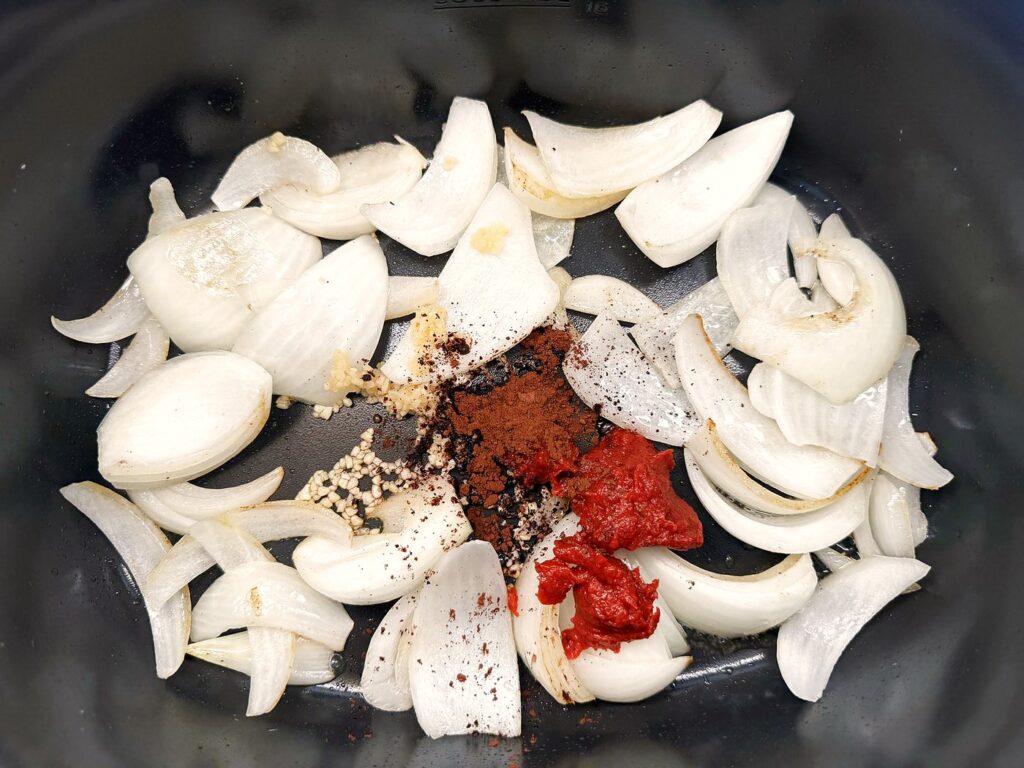
The mixture will get very thick and a little alarming, almost like a paste. That is totally normal. Just keep it moving and keep an eye on it, because with that much sugar in the tomato paste it can go from toasted to scorched quickly. If your pan runs hot, pull it off the burner for a few seconds rather than fighting it.
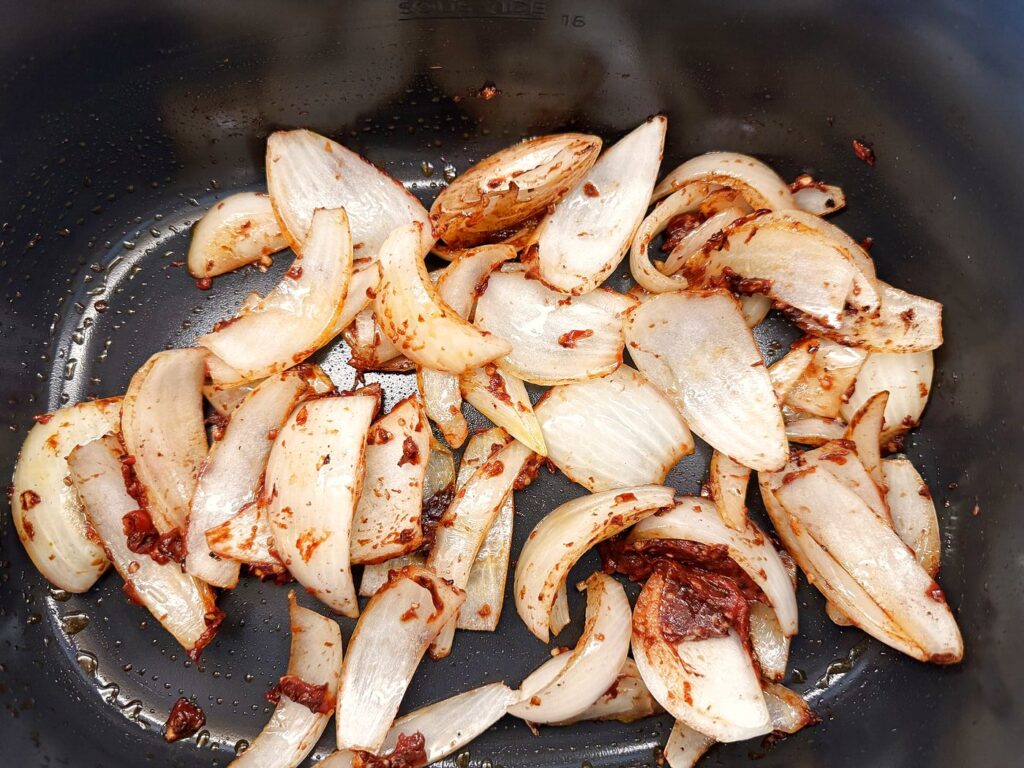
Now pour in the Cabernet and scrape the bottom of the pan hard with a wooden spoon. All those stuck brown bits are the flavor you just spent ten minutes making, and the wine’s whole job is to lift them. Let it simmer 3 to 4 minutes to reduce slightly, then stir in the beef broth, Worcestershire, thyme, rosemary, and the remaining ½ teaspoon of salt.
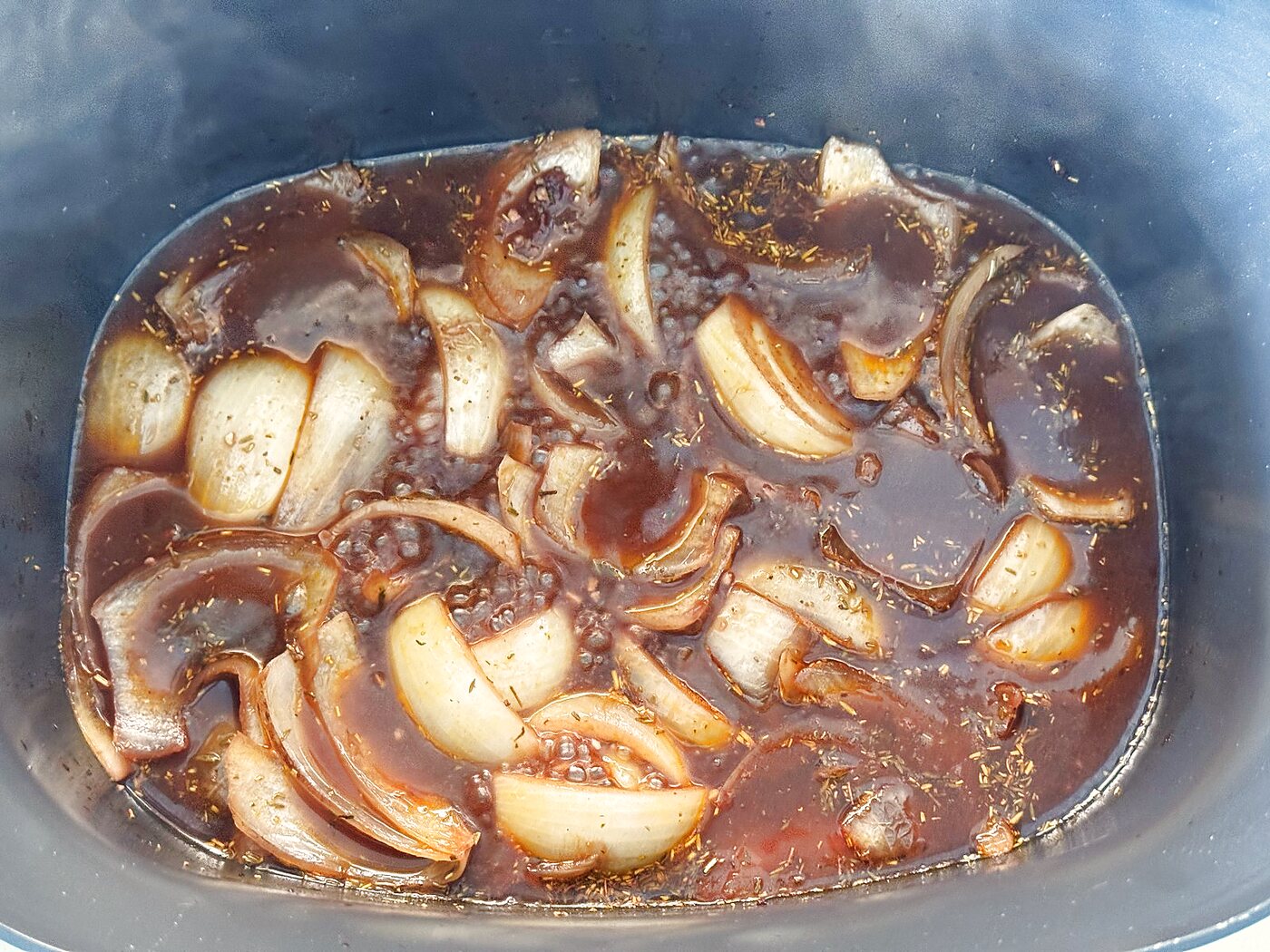
Bring it to a gentle simmer and pour the whole thing over the roast.
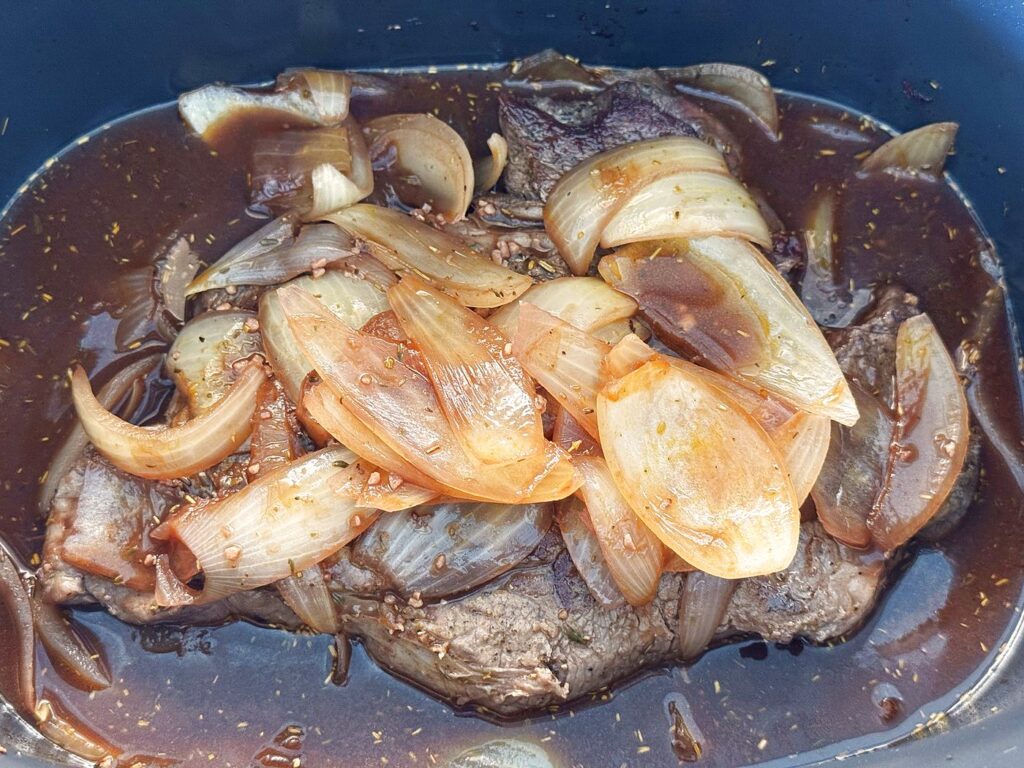
Stage two: leave it alone
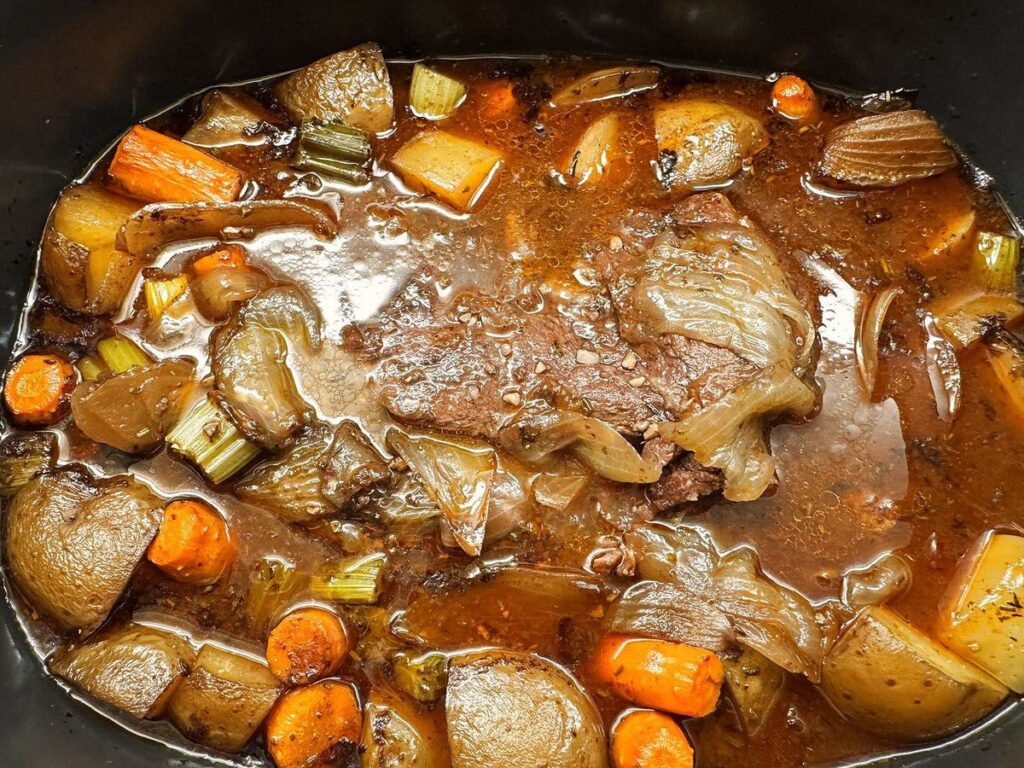
Arrange the potatoes and carrots around the roast, tucking as many as you can down into the cooking liquid. Add the celery and the bay leaves, then set any vegetables that did not fit right on top of the roast. They do not need to be submerged, so do not fuss with trying to make them fit.
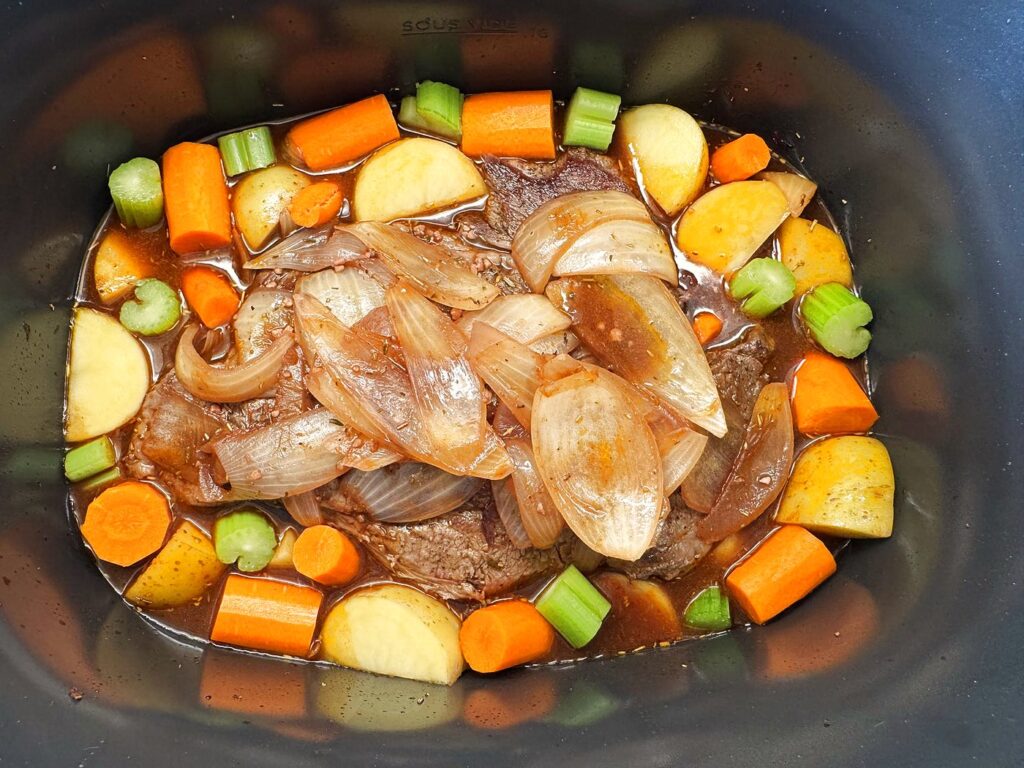
THE LIQUID DOES NOT NEED TO COVER EVERYTHING

This is the moment you might panic. You look into the crock, the liquid comes maybe a third of the way up, half the potatoes are sitting high and dry, and every instinct says to pour in more broth. Don’t. The roast and the vegetables release a surprising amount of moisture as they cook, and by the end there is more liquid in there than you started with. Add extra now and you end up with a thin, washed-out gravy that no amount of cornstarch will fix.
Mine came out perfectly with a single cup of broth, and the potatoes and carrots that rode above the liquid line the whole time were every bit as tender as the ones underneath.
If you know going in that you want even more gravy, that is a different decision and you make it up front: use 1½ cups of broth instead of 1, and plan on an extra teaspoon or two of cornstarch.
Cover and cook on LOW for 8 hours.
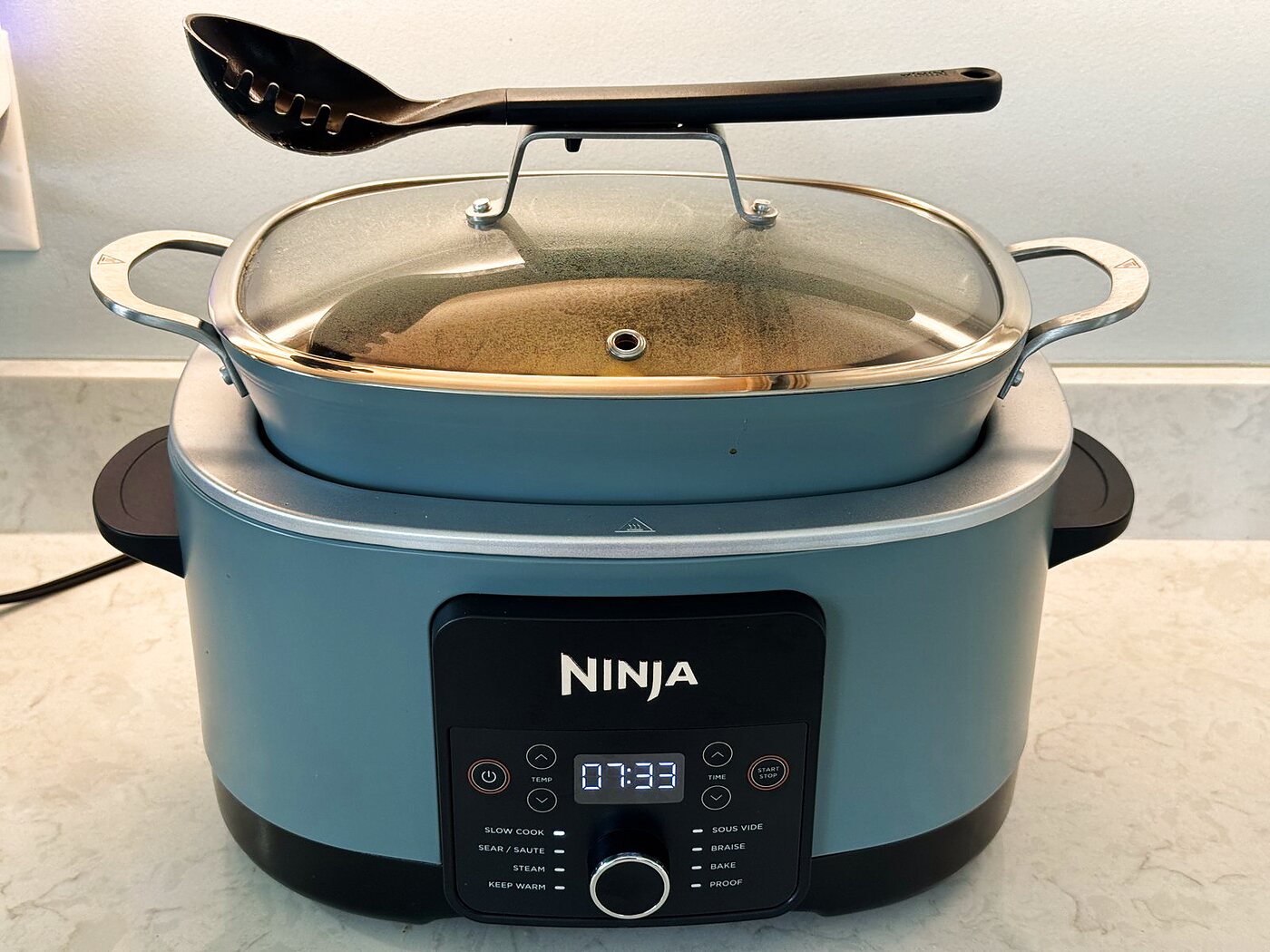
Try not to lift the lid while it cooks. Every time you do, you let out the steam that is doing the cooking. I checked mine at 7 hours and it was not there yet, still a little firm when I pushed a fork in. It needed the full 8. So if yours feels tight early, do not panic and do not turn it up… it just is not finished. The roast is done when a fork slides in and twists with no resistance, and the meat pulls into big shreds instead of holding together in slices.
Stage three: the gravy
Lift the roast and vegetables onto a platter and tent them loosely with foil. Fish out the bay leaves. Pour the cooking liquid into a saucepan and skim the fat off the top, because chuck gives up a lot of it and a greasy gravy is a sad end to eight hours of work. A spoon works, a fat separator works better, and letting it sit for a few minutes so the fat rises makes either one easier.
Bring the liquid to a gentle simmer. Whisk the cornstarch into the cold water until there are no lumps at all, then drizzle the slurry into the simmering liquid while whisking.
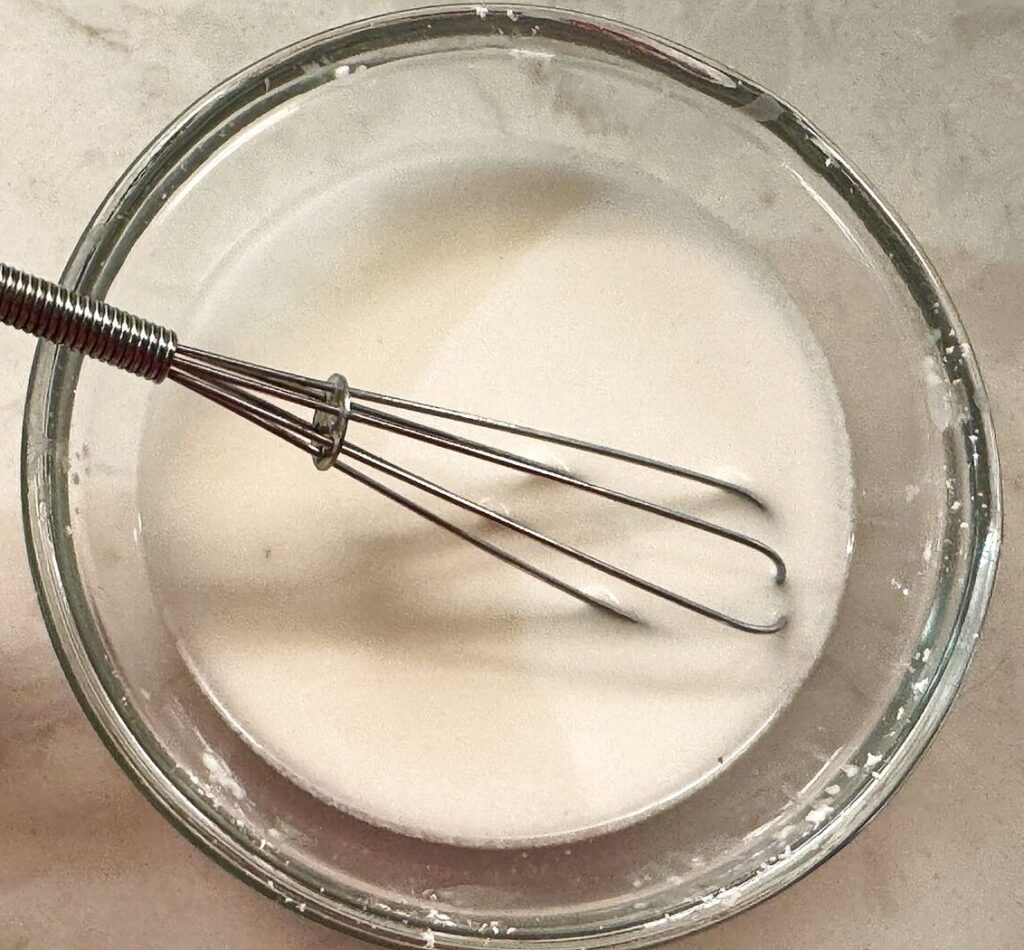
Cook 2 to 3 minutes, stirring, until it thickens. One common mistake is dumping the slurry in all at once, which gives you a gravy with lumps you cannot whisk out. Go slowly, and remember cornstarch needs to actually reach a simmer to thicken, so do not panic in the first thirty seconds when nothing is happening.
Then taste it, and be ready to salt it more than feels reasonable. This was the one thing that genuinely surprised me. Eight hours of low, slow cooking flattens seasoning, and between that and the low-sodium broth my gravy needed a fair amount of salt at the end to come alive. Add it a pinch at a time and keep tasting. If the wine left a sharp edge you do not love, a teaspoon of brown sugar softens the acidity without making it sweet, though I did not end up needing it.
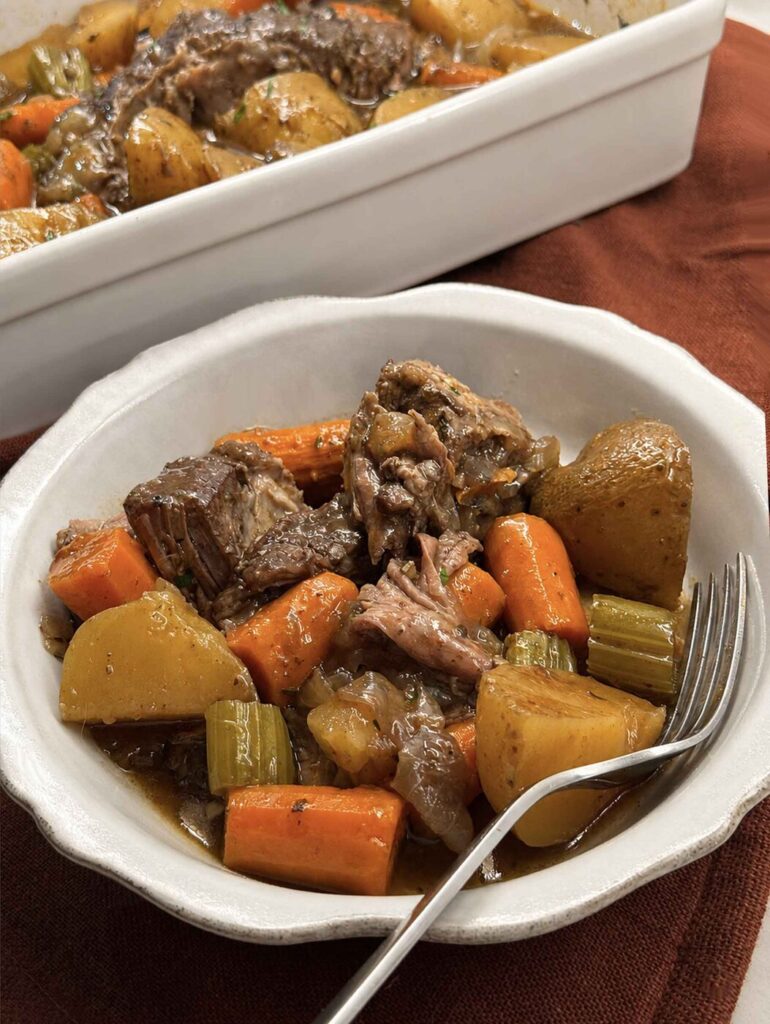
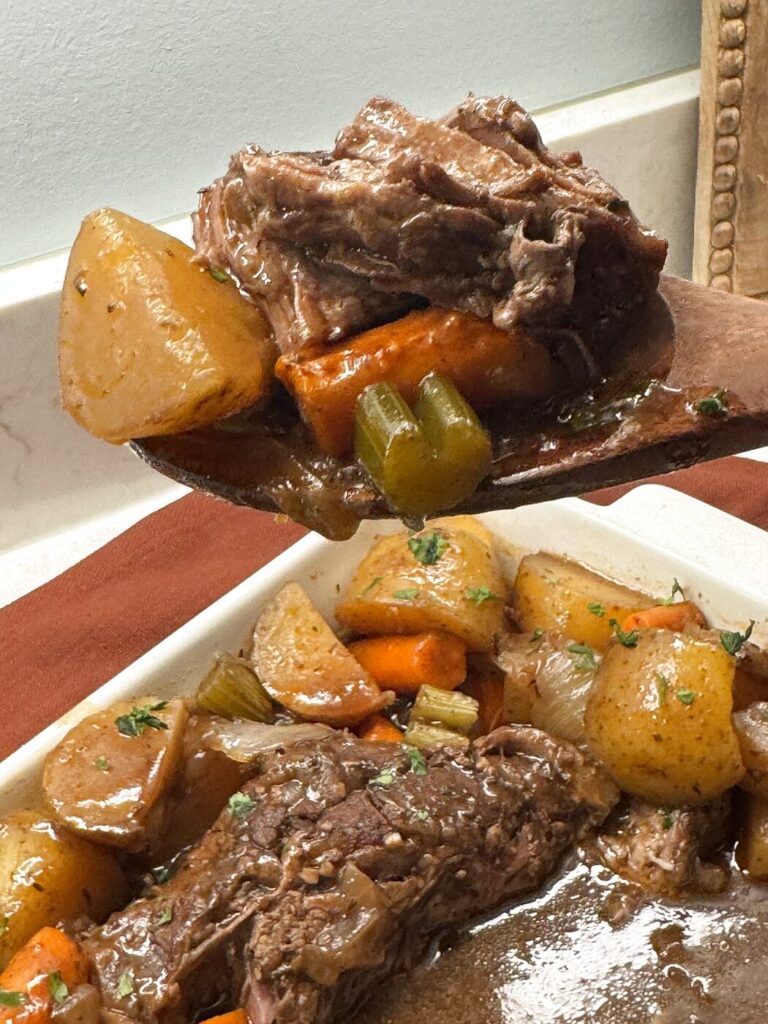
Pull the roast into large pieces, spoon the gravy over everything, and scatter parsley on top if you have it.
A Bonus I Did Not Plan On: Doing the Whole Thing in One Pot
I bought a Ninja PossibleCooker Pro because I needed a bigger slow cooker, and it was 8.5 quarts. I honestly was not shopping for anything clever. Then I was standing there getting ready to start this roast and noticed the panel had settings for Sear/Sauté and Braise right next to Slow Cook. So I tried it.
I seared the roast in it, softened the onions and toasted the tomato paste and cocoa in it, deglazed with the wine in it, slow cooked all day in it, and then made the gravy in it at the end. One pot. No skillet and no saucepan to wash, which at the end of a long cook is a genuinely nice thing.
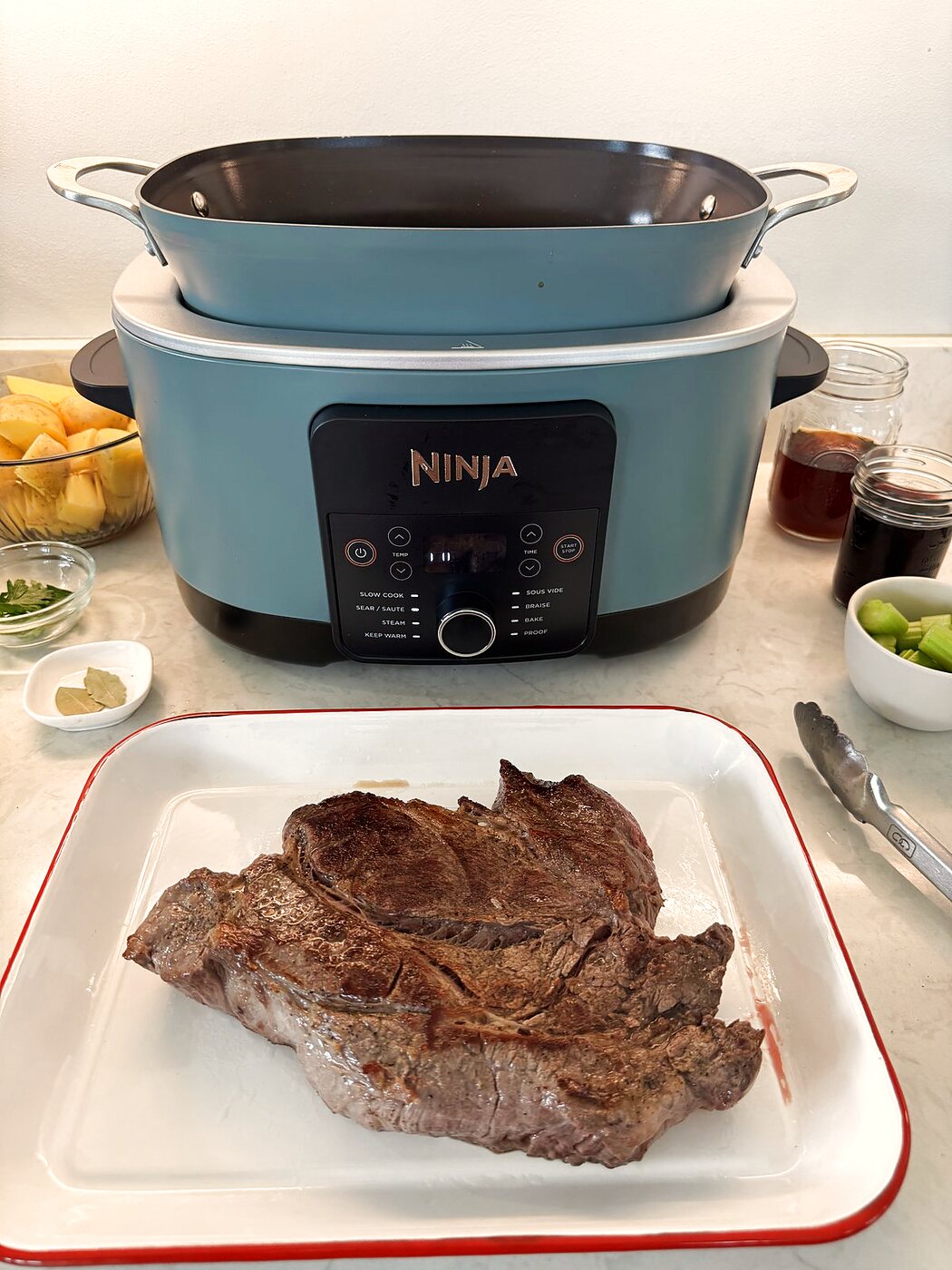
This is not going to replace the way I normally cook, and you absolutely do not need one to make this recipe. The skillet and saucepan version above is the recipe, and it is what most of us have. But if you happen to own a multi cooker with a sear function, it is worth checking whether yours can do the same thing… I was surprised how much I liked not dirtying two extra pans. When I am slow cooking, I think I will be reaching for it more often.
Common Questions About Slow Cooker Pot Roast
Can I cook it on HIGH instead?
You can, and it will still be good, but LOW gives you better meat. Collagen needs time as much as heat, and rushing chuck tends to leave it tender in some spots and tight in others. I have not timed a HIGH batch of this one myself, so treat any HIGH timing as a starting point and go by feel: it is done when the fork twists with no resistance, not when the clock says so.
Does the liquid need to cover the roast?
No. The cooking liquid should come partway up the roast, not over it, and the vegetables can sit well above the line or even on top. A slow cooker traps steam, so the food cooks in that steam as much as in the liquid, and everything in the crock gives off moisture as it goes. Braising is not boiling. If you top it up to cover, you are diluting your gravy before you have made it.
Why are my vegetables mushy?
Eight hours is a long time for a carrot, though mine came out tender and still holding their shape, so it is very doable. Cut the potatoes into 1½-inch pieces and the carrots into a good chunky 2 inches, and use Yukon Golds rather than russets. If yours still fall apart, hold the potatoes and carrots back and add them for the last 3 to 4 hours instead. The pieces riding on top of the roast tend to hold up best, so that is where to put them if you like your vegetables firmer.
Why is my pot roast tough?
If you followed the timing and it is still tight, the usual culprit is the cut. A lean roast like eye of round or a trimmed sirloin tip has no collagen to melt, so no amount of time will make it fall apart. The other one is heat: chuck cooked fast on HIGH can seize up and go stringy even while it technically reaches temperature.
Why does my gravy taste flat?
It probably just needs salt. This caught me out, and it is the single most useful thing I learned making this. A long slow cook mutes seasoning, and if you used low-sodium broth like I did, the finished gravy will taste thin and a little dull until you salt it properly at the end. Add it gradually and keep tasting. It wakes up quickly.
Can I make it without wine?
Yes, using the broth and balsamic swap in the ingredient notes above. You will get a rounder, quieter gravy, and the cocoa still does its job.
What size slow cooker do I need?
A 5 to 6-quart is the classic choice for a 2½ pound roast, and that is what most recipes assume. I made this in a larger 8.5-quart and it worked without any change to the timing, which is worth knowing if all you have is a big one. Whatever size you use, be careful not to fill it past about two thirds, because a crowded crock cooks unevenly.
Storing and Reheating Pot Roast
Keep the meat and vegetables in the gravy in an airtight container in the refrigerator for up to 4 days. Storing them together matters, because the gravy keeps the meat from drying out and the meat keeps soaking up flavor overnight.
Reheat gently in a covered saucepan over low heat, or in a covered dish at 325°F for about 20 minutes. Add a splash of broth if the gravy has set up thick, which it will. High heat and the microwave both tend to make reheated pot roast tough, so slow and covered is the way.
It freezes well for up to 3 months, though the potatoes come back a little grainy, so if you know you are freezing it you might leave them out and make fresh ones. Leftover pot roast and gravy also make an excellent filling for a beef pot pie, which is where a lot of ours ends up.
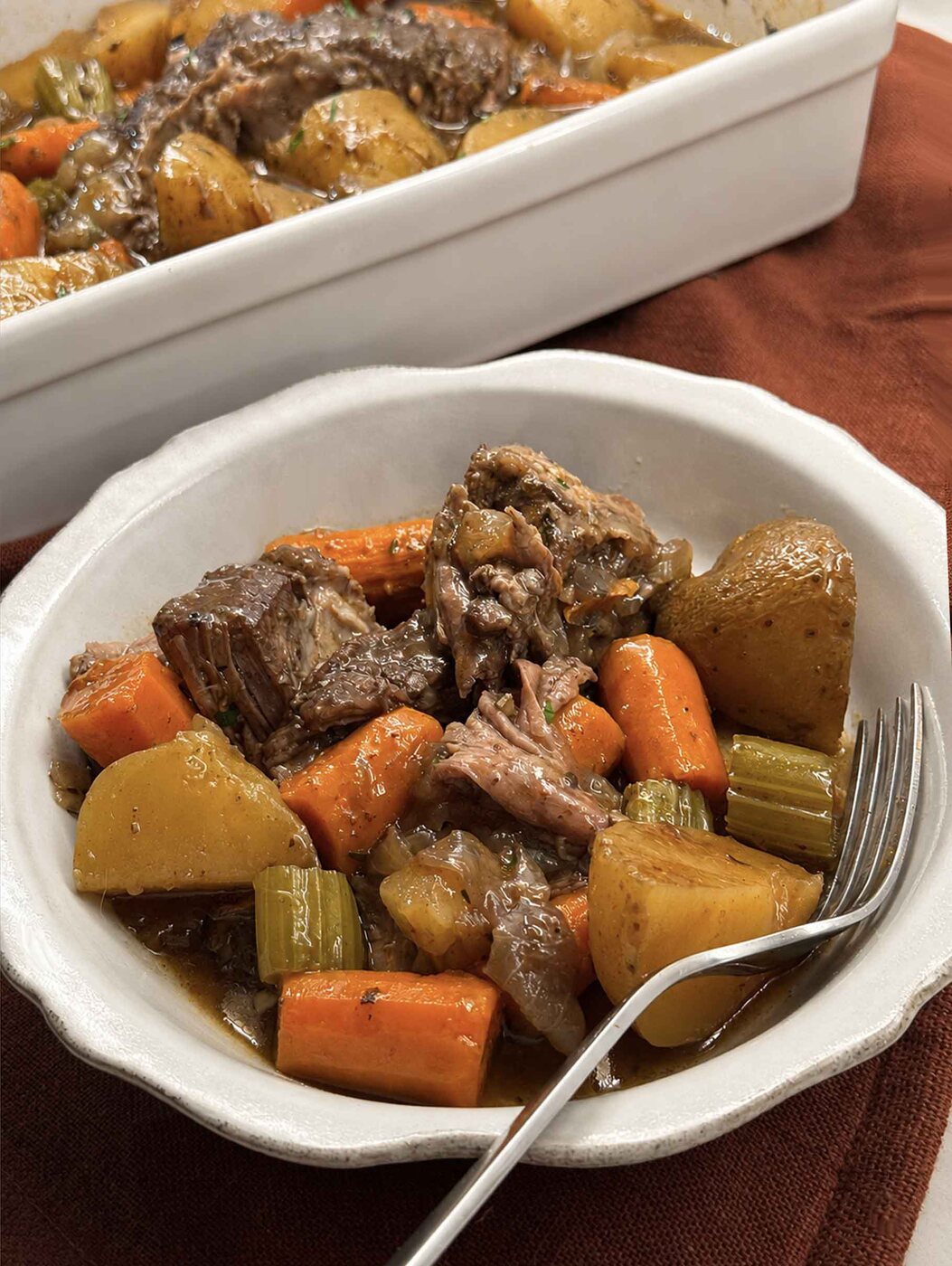
Slow Cooker Pot Roast with a Secret Ingredient
Equipment
- slow cooker (5-quart or larger)
- small saucepan
Ingredients
Ingredients
- 2.5 pounds boneless chuck blade roast
- 1 1/2 teaspoons salt, divided, plus more to finish
- 3/4 teaspoon ground black pepper
- 1 tablespoon avocado oil or canola oil
- 1 yellow onion, cut into thick wedges
- 4 cloves garlic, minced
- 2 tablespoons tomato paste
- 1 teaspoon unsweetened cocoa powder
- 3/4 cup red wine such as Cabernet Sauvignon
- 1 cup low-sodium beef broth
- 1 1/2 tablespoons Worcestershire sauce
- 1 teaspoon dried thyme
- 1/2 teaspoon dried rosemary
- 2 bay leaves
- 1.5 pounds Yukon Gold potatoes, cut into 1½-inch pieces
- 4 large carrots, peeled and cut into 2-inch pieces
- 2 stalks celery stalks, cut into 1-inch pieces
- 2 tablespoons cornstarch
- 2 tablespoons cold water
- 1 teaspoon brown sugar optional
- fresh parsley optional
Instructions
- Pat the chuck roast dry with paper towel. Season it on all sides with 1 teaspoon of the salt and all of the black pepper.
- Heat the oil in a large skillet over medium-high heat. Add the roast and sear for 3 to 4 minutes on each side, until deeply browned. Transfer the roast to the slow cooker.
- Reduce the heat to medium. Add the onion to the skillet and cook about 3 minutes, stirring occasionally, until it begins to soften and brown.
- Add the garlic, tomato paste, and cocoa powder. Cook for 1 minute, stirring constantly. The mixture will be quite thick.
- Pour the Cabernet into the skillet. Scrape the bottom of the pan to loosen all the browned bits. Simmer 3 to 4 minutes, until the wine has reduced slightly.
- Stir in the beef broth, Worcestershire sauce, thyme, rosemary, and remaining ½ teaspoon salt. Bring to a gentle simmer, then pour over the roast in the slow cooker.
- Arrange the potatoes and carrots around the roast, tucking as many as possible into the cooking liquid. Add the celery and bay leaves, then place any remaining vegetables on top of the roast. The vegetables do not need to be submerged, and the liquid will not cover them. Do not add extra liquid.
- Cover and cook on LOW for 8 hours, until the roast is fork-tender and pulls apart easily. Try not to lift the lid during cooking.
- Transfer the roast and vegetables to a serving platter. Cover loosely with foil. Discard the bay leaves.
- Pour the cooking liquid into a saucepan and skim off excess fat. Bring to a gentle simmer over medium heat.
- Whisk the cornstarch and cold water together in a small bowl. Slowly whisk the slurry into the simmering liquid. Cook 2 to 3 minutes, stirring frequently, until the gravy thickens.
- Taste the gravy and season generously with additional salt and pepper. It will need more salt than you expect. If the wine gives it a sharper finish than you prefer, stir in 1 teaspoon brown sugar.
- Slice or pull the roast into large pieces. Serve with the vegetables and spoon the gravy generously over everything. Garnish with parsley if desired.
Notes
- You will not taste the cocoa. One teaspoon adds complexity and reinforces the roasted flavors of the beef, tomato paste, and Cabernet.
- Salt the gravy at the end. A long slow cook mutes seasoning, so the finished gravy needs a fair amount of additional salt to taste right.
- Do not add extra liquid. The cooking liquid will not cover the roast or vegetables at the start. This is normal. Both release plenty of moisture as they cook.
- Choose a wine you enjoy drinking. It does not need to be expensive, but avoid anything labeled “cooking wine.”
- The roast is ready when it pulls apart easily. If it still feels firm at 7 hours, it needs more time, not less.
- Yukon Gold potatoes hold their shape while going creamy inside. Baby potatoes or peeled russets also work.
- For more gravy, decide before you start and use 1½ cups of beef broth instead of 1, plus an extra teaspoon or two of cornstarch.
- One-pot option. If you have a multi cooker with a sear or sauté function, you can brown the roast, build the base, slow cook, and thicken the gravy all in the same pot.
There is always more gravy than there is roast, which is a good problem. A loaf of sourdough bread is what we make to catch the rest of it.
If you try this, come back and tell me whether you could taste the cocoa. I am betting you cannot, and I would love to be right. Haha.
Happy cooking!
Love,
Jennifer

Tried this recipe?
Tap the stars in the recipe card to leave a quick rating. Your rating helps other home cooks know this recipe works in a real kitchen, not just mine.
And as a thank-you for your feedback, you will receive a free printable copy of my Maker Home Companion Cookbook, featuring my most popular recipes, each one formatted on a SINGLE, easy-to-use page, a perfect kitchen companion for easy meal prep. Click here to learn more about this cookbook and how you can get your copy!

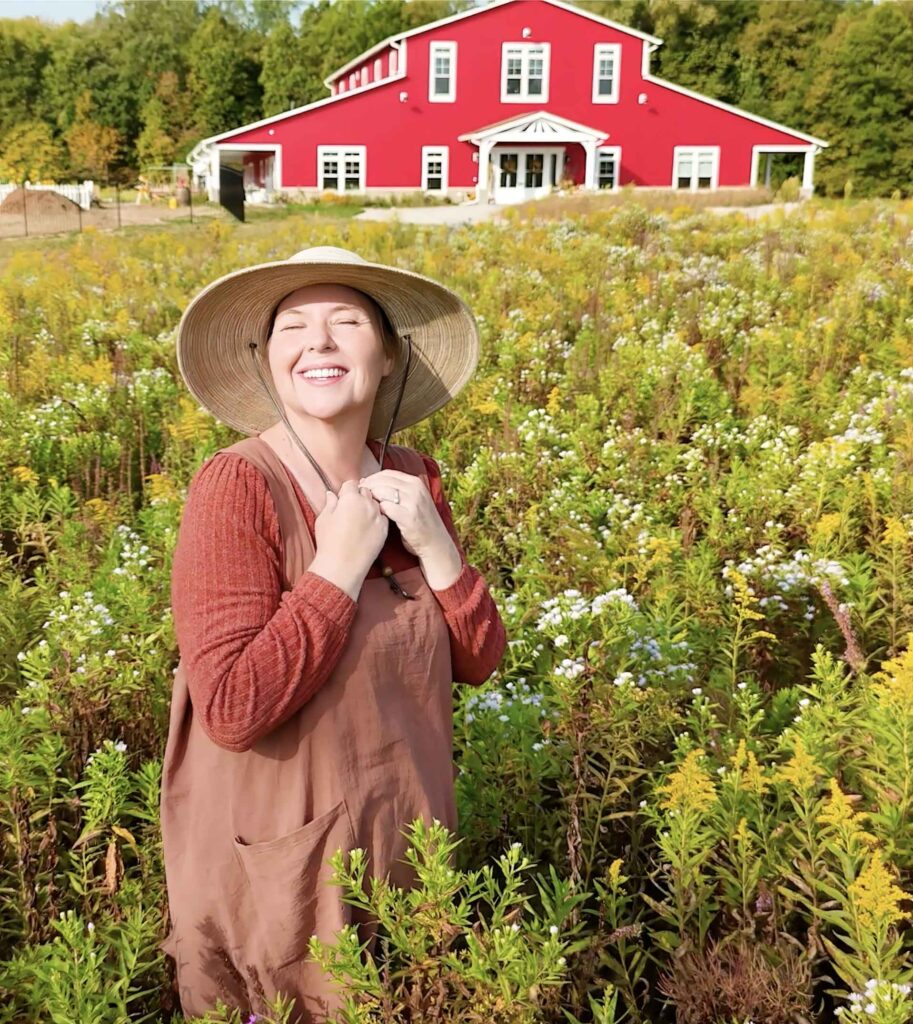
Meet Jennifer
Jennifer cooks and experiments in the kitchen at Maker Farm, where she focuses on simple pantry cooking, homemade staples, and practical recipes that make everyday meals easier. Over the years she has tested many ways to make cooking simpler and more dependable, and shares the methods that work best in her own kitchen, occasionally showing them on her Heart to Home at Maker Farm vlog.