

This amazing Chicken Scarpariello recipe gives you tender, golden chicken thighs smothered in a silky lemon and white wine sauce with garlic and a little rosemary. This is the classic New York Italian restaurant version, the one without sausage or peppers. This is my favorite way to enjoy chicken thighs!
Chicken Scarpariello At A Glance
Prep
10 min
COOK
25 min
Total
35 min
Serves
4
Pan
12-inch skillet
Main ingredients: Boneless skinless chicken thighs, white wine, lemon, garlic, butter, rosemary
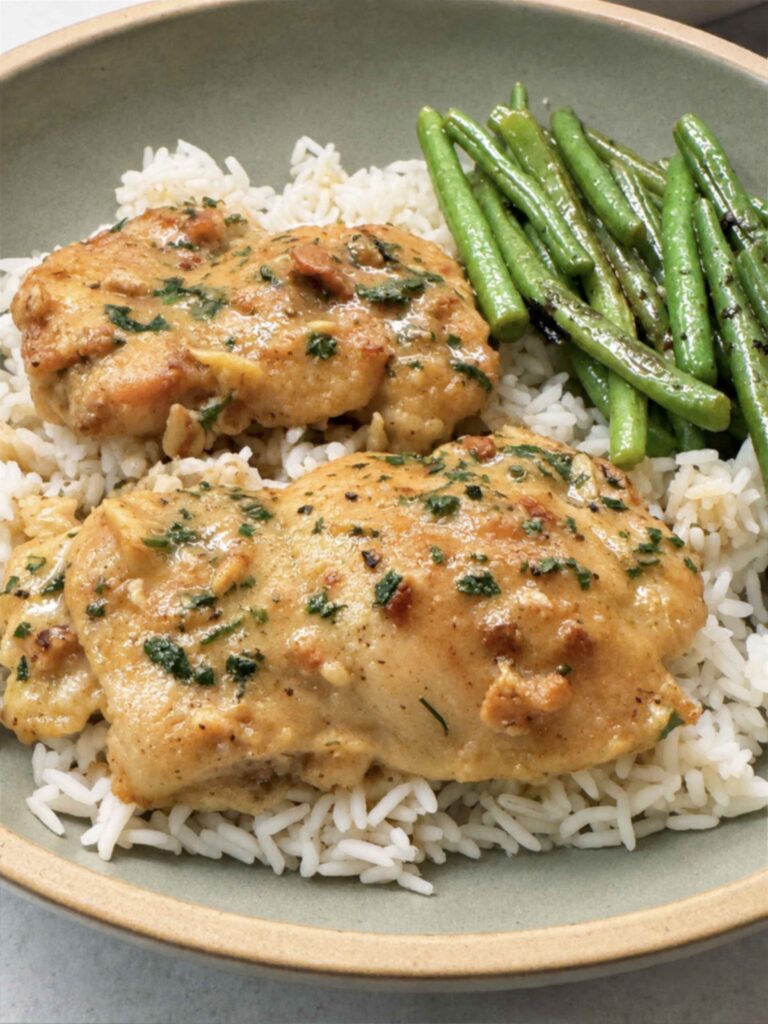
My All-Time Favorite Way to Cook Chicken Thighs

Dredging the chicken thighs in flour before they hit the pan is the little step that elevates this from a simple weeknight dinner to something that tastes like it came from an Italian restaurant. The flour turns into a thin, golden coating, and it helps the thighs brown evenly, even with all their lumps and bumps. Boneless, skinless thighs are already really forgiving, so they stay nice and juicy.
And my favorite part… none of that flour goes to waste. The browned bits it leaves in the skillet start thickening the wine and stock right away, so your sauce is already halfway there before the butter goes in. One pan, and it does double duty!
I’ve been enjoying chicken thighs made this way for a couple of decades now, but I didn’t come up with it. I first had it when it was made by my daughter’s father (Dave Marx) who is an exceptional cook and taught me a lot about cooking and appreciating good food when we were married long ago.
Let’s dig in!

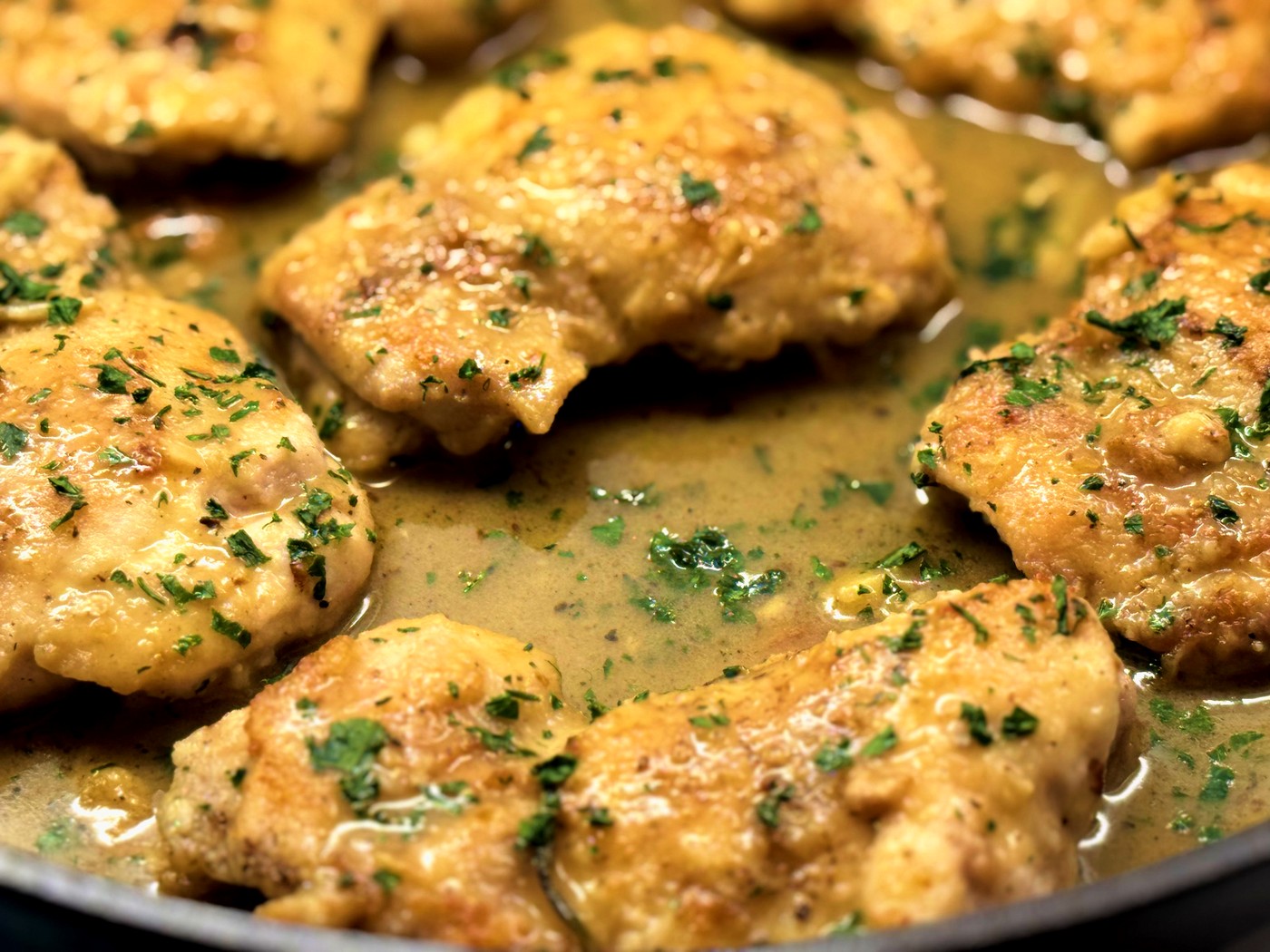
Tips and Notes Before You Start
- Boneless, skinless thighs keep this on the stovetop the whole time. No oven needed.
- The flour does double duty. It browns the chicken and starts thickening the sauce, and a teaspoon mashed into the butter at the end finishes it. No cornstarch or roux.
- Lemon goes in at the very end, with the butter. That keeps it bright and fresh-tasting.
- Smash the garlic cloves instead of mincing them. Jarred minced garlic works too; it just goes in later so it doesn’t scorch.
- No wine? Use extra chicken stock plus a teaspoon of white wine vinegar.
- Dairy-free: swap the butter for a dairy-free butter or an extra tablespoon of good olive oil. The sauce will be a little less glossy.

Want to Save This Recipe?
Enter your email below and we’ll send it straight to your inbox! Plus you’ll get new recipes each week!
What Is Chicken Scarpariello?
Scarpariello means “shoemaker’s style,” and it’s an Italian-American dish from New York. Nobody agrees on exactly why it got the name. One popular story is that it’s made from simple, cheap ingredients a shoemaker could cobble together.
As I recall from what was told to me, this lemon and garlic version is how most Italian restaurants in the New York City area made it decades ago. While modern-day Chicken Scarpariello adds sausage, potatoes, mushrooms, and hot cherry peppers, this lemon, garlic, and wine version is the “old” way. So if you’ve been served this with a lemony sauce and no sausage in sight, you’re not misremembering… that’s the original restaurant style, and it’s the one we’re making here.
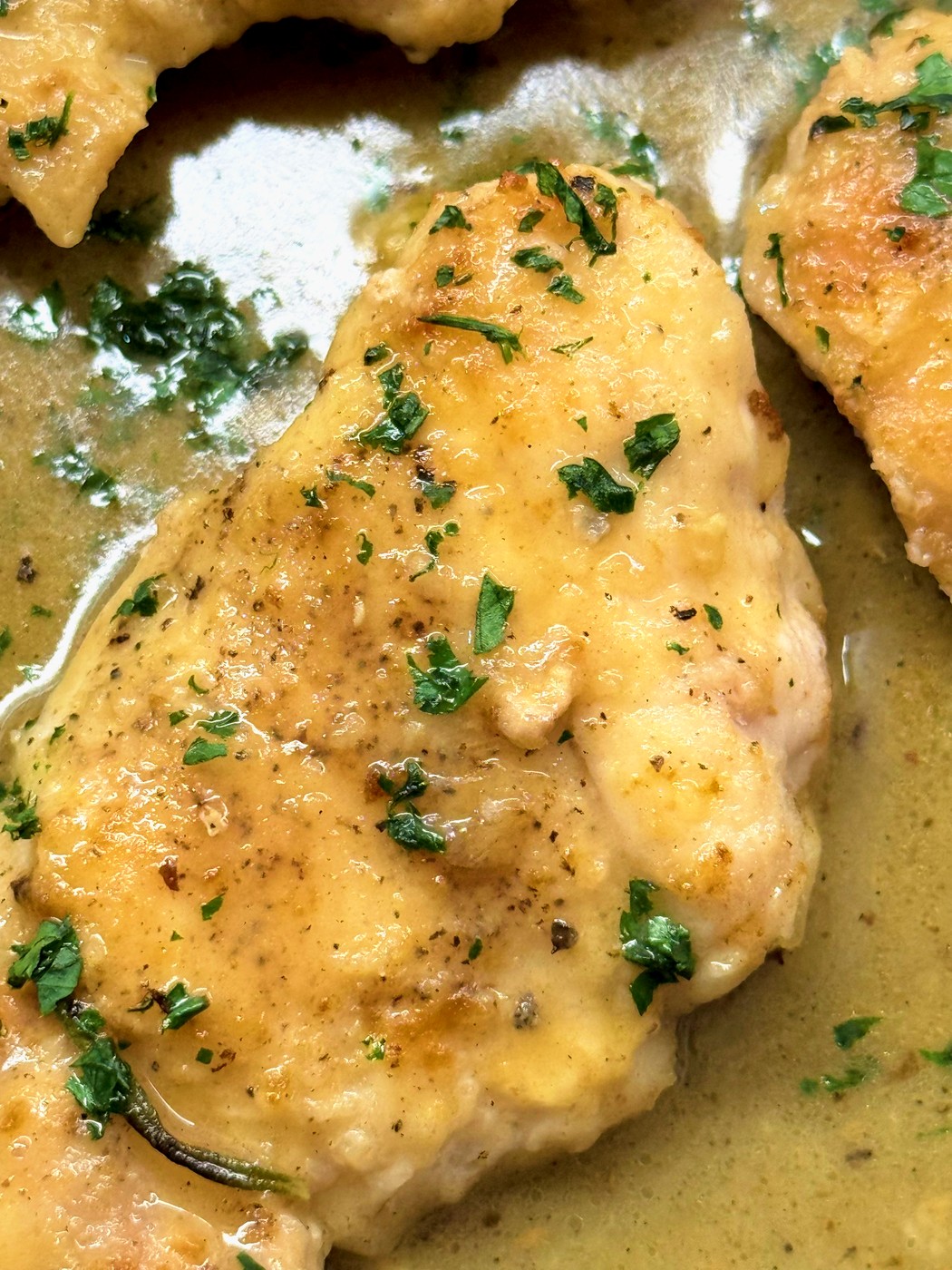
It belongs with the other Italian-American restaurant favorites I’ve shared here, like Chicken Alfredo with homemade sauce and my Chicken Gnocchi Soup.
Ingredients for Chicken Scarpariello
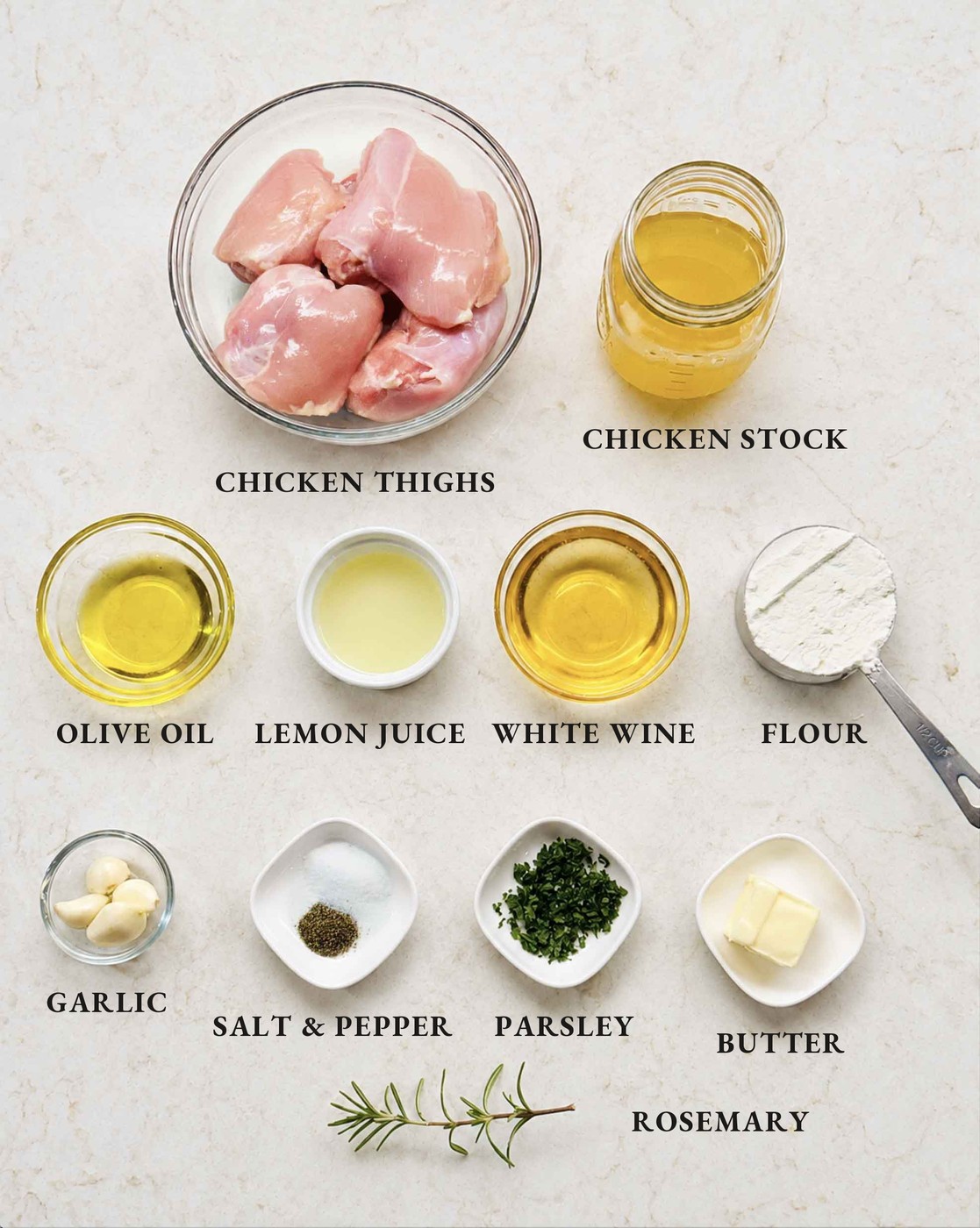
You only need a handful of ingredients, so a couple of them are worth a note.
Chicken thighs. I use boneless, skinless thighs. They stay juicy in the sauce and they’re really hard to overcook, which is why I like them in saucy skillet dinners like my Honey Garlic Chicken, too. Trim off any big pieces of fat before you dredge them.
Dry white wine. Pick one you’d happily drink, like Chardonnay, Pinot Grigio, or Sauvignon Blanc. Be careful not to use a sweet wine (like Moscato or a sweet Riesling) because the sauce reduces, and so does the sweetness… it gets concentrated fast.
Fresh lemon. Bottled lemon juice tastes flat next to fresh here, and the lemon is the star of the sauce. So go for fresh if you can manage it, but the bottled stuff will do in a pinch.
Chicken stock. Homemade or store-bought both work. If you use store-bought, low-sodium gives you more control, because the sauce reduces and the salt concentrates with it.
Rosemary and parsley. Just one sprig of rosemary. It’s strong, and a sprig is easy to fish out at the end. Dried works if that’s what you have. Parsley goes on at the end for freshness and color.
Garlic. You want to smash the cloves, rather than chop or mince them because it will give you a softer, sweeter garlic flavor that doesn’t overpower the lemon and wine.
SmashING the garlic

The traditional way of smashing garlic is to press it flat under the side of a knife so it cracks open but stays mostly in one flattened piece. But I worry about cutting myself, so I press each clove with the bottom of a sturdy glass bowl instead of a knife blade, so there’s no chance of cutting myself. It’s fine if the cloves break into pieces; they melt right into the sauce.
How to Make Chicken Scarpariello
First we brown the chicken, then we build the pan sauce right on top of all those browned bits. I’ll walk you through it step by step, as always.
Season and dredge the chicken
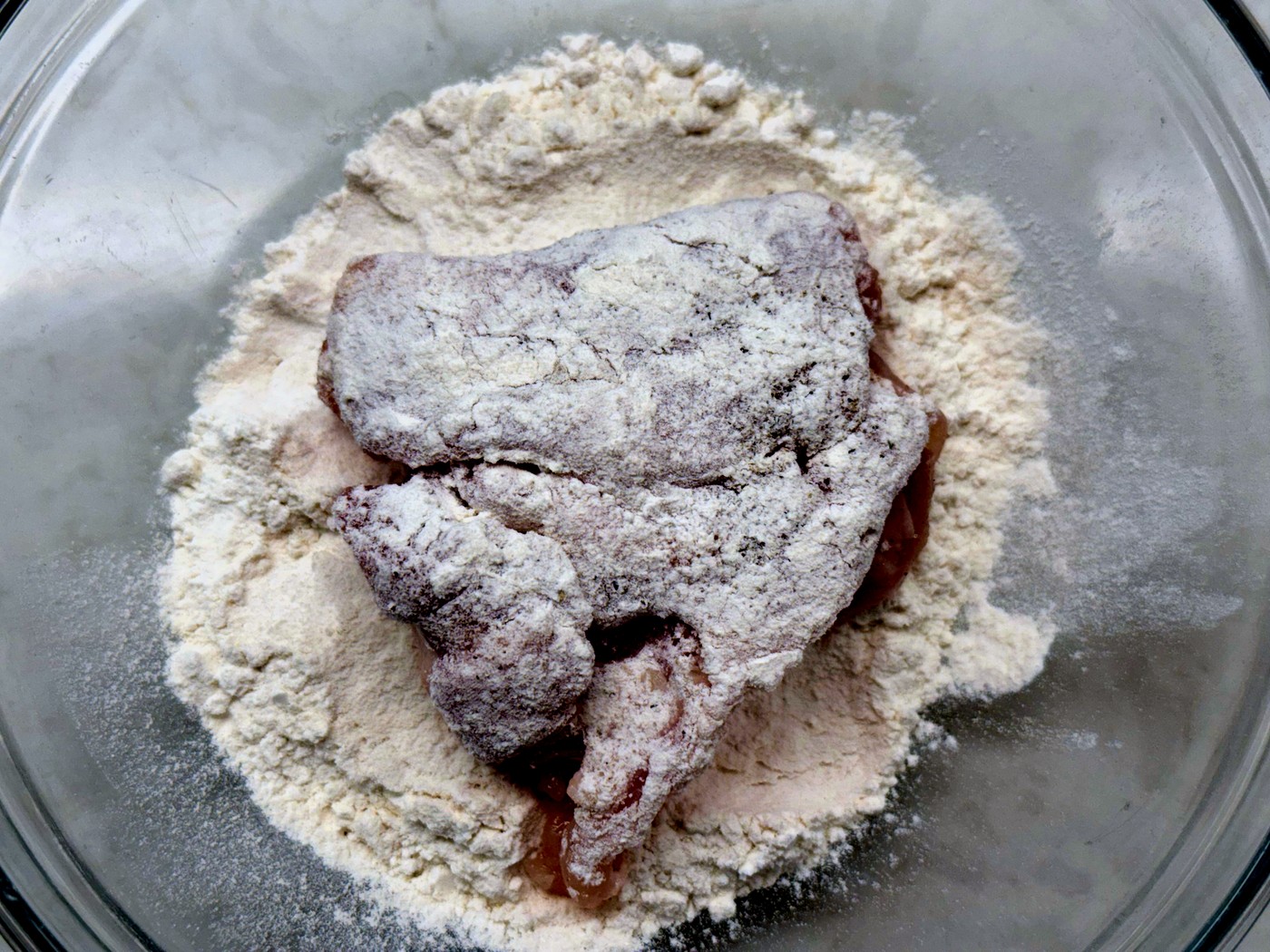
Pat the thighs dry with paper towels, then season both sides with salt and pepper and press them into the flour. Shake off the extra. This helps because dry chicken browns, and wet chicken steams. One common mistake is dredging too early. If the floured chicken sits for a long time it turns gummy, so dredge right before it goes into the pan.
Brown the thighs
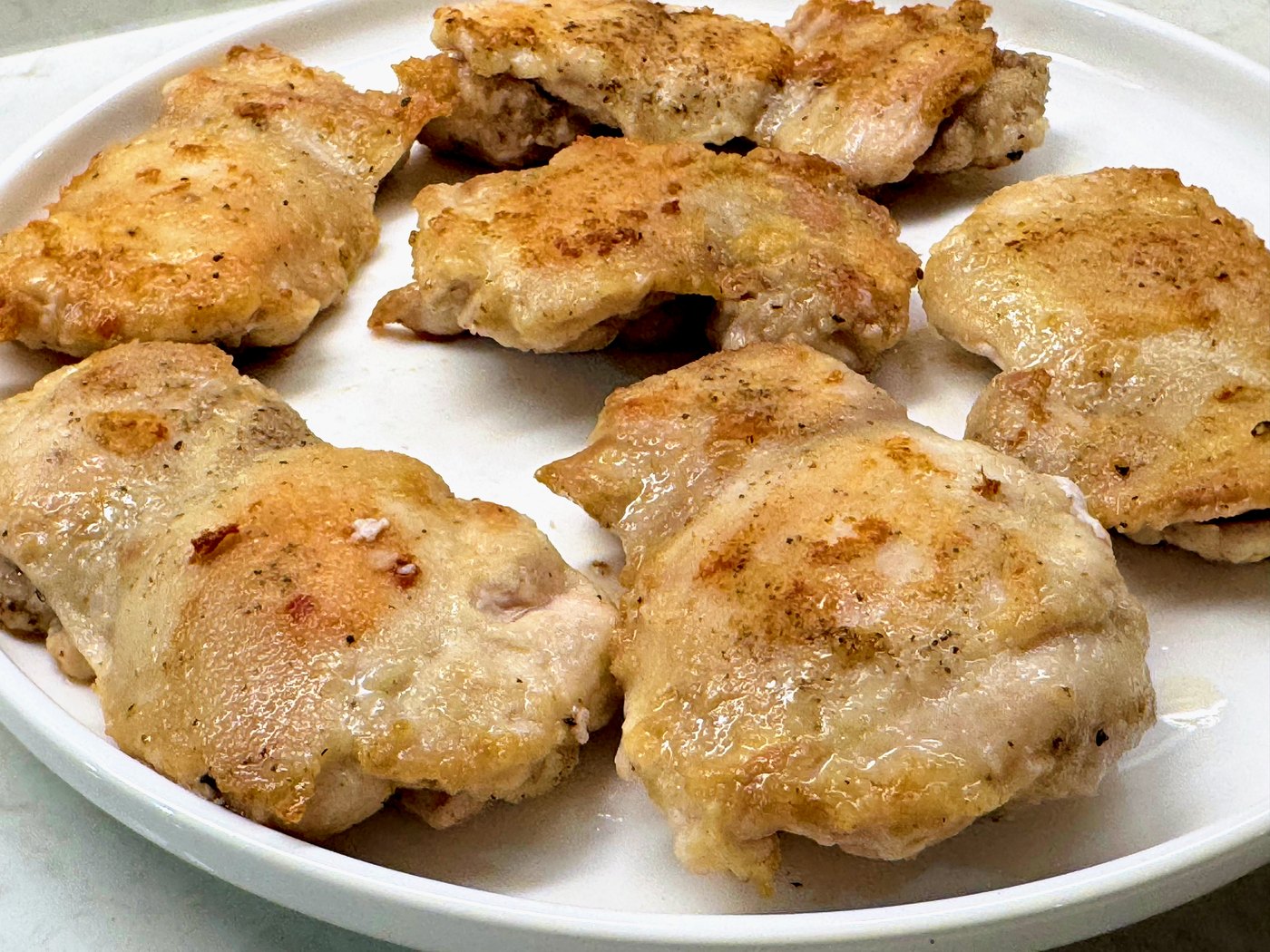
Heat the olive oil over medium-high until it shimmers, then lay the thighs in, smooth side down. Leave them alone for about 3 to 4 minutes. They’ll stick at first… don’t worry, this is totally normal. Once they’re golden underneath they let go of the pan on their own. Flip and cook the other side for another 3 to 4 minutes, then move them to a plate. You’re going for golden here, not a hard, dark crust, because the coating softens in the sauce and becomes part of it. They don’t need to be cooked through yet; they’ll finish in the sauce.
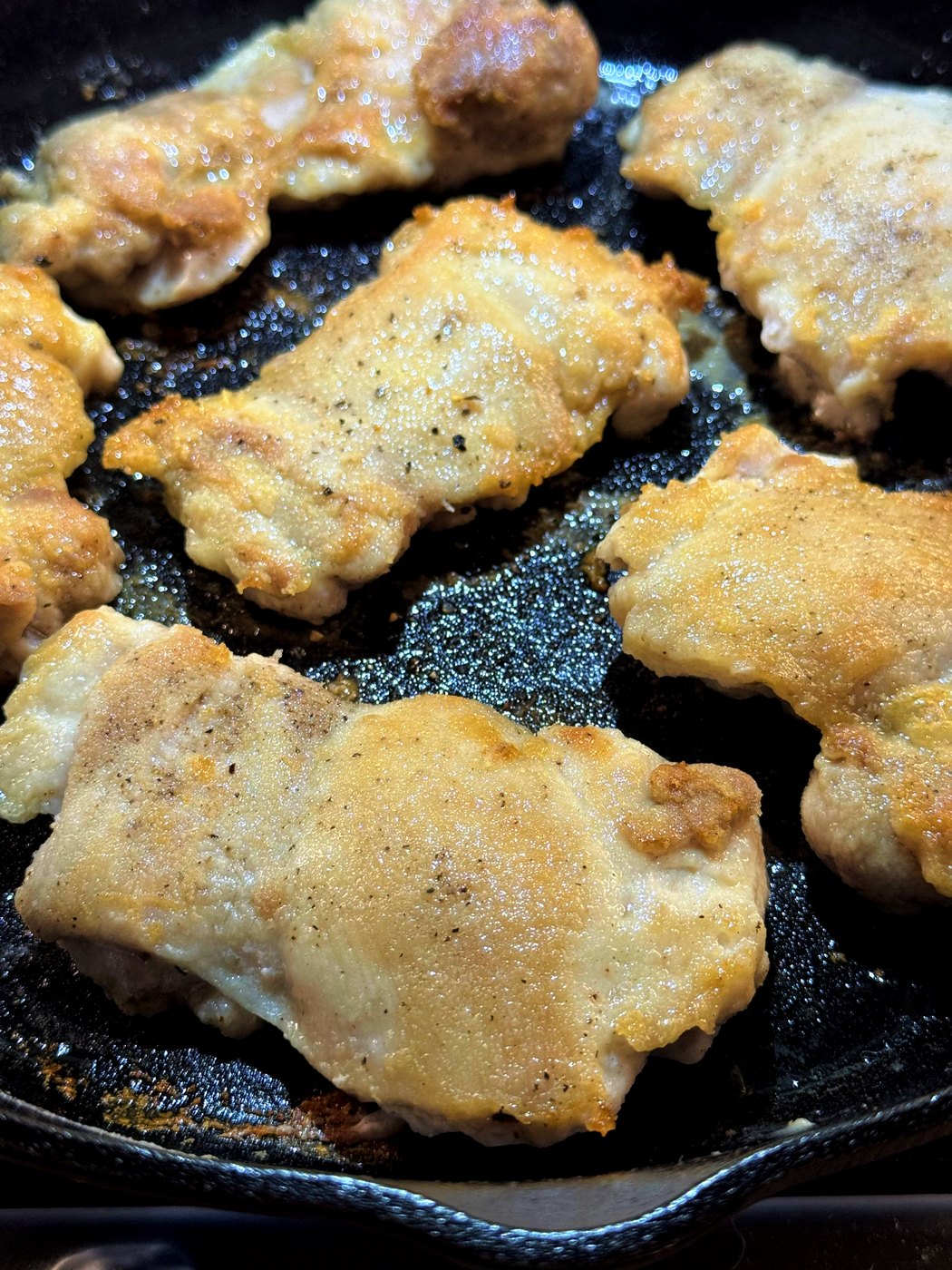
Make sure you don’t crowd the pan. If the thighs are touching, they steam instead of browning, so do two batches if they don’t all fit with a little space between them.
Build the white wine sauce
Turn the heat down to medium. If there’s a lot of oil left, pour off all but about a tablespoon. Add the smashed garlic and the rosemary sprig and stir for about a minute, just until the garlic smells good and starts to turn golden. (If you’re using jarred garlic, give it 30 seconds at most. It burns fast.)
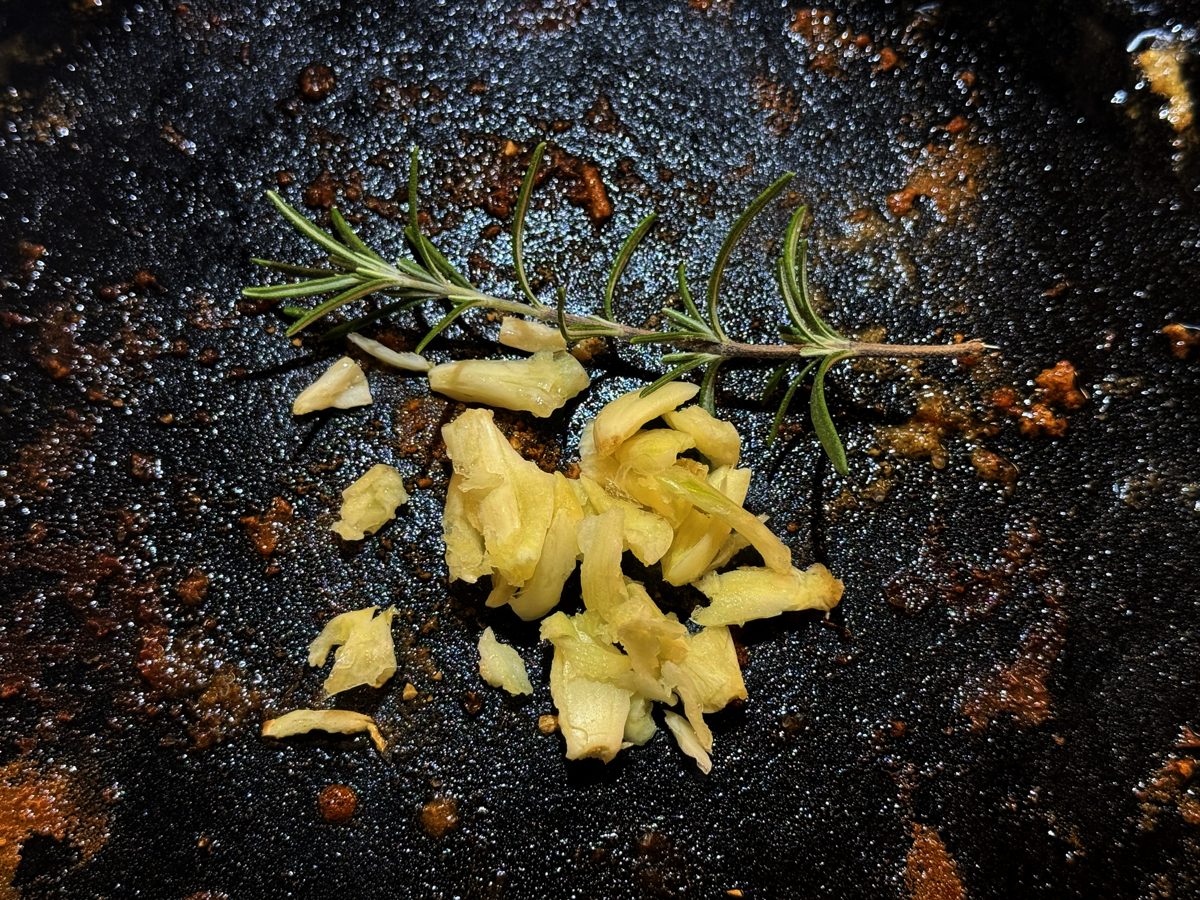
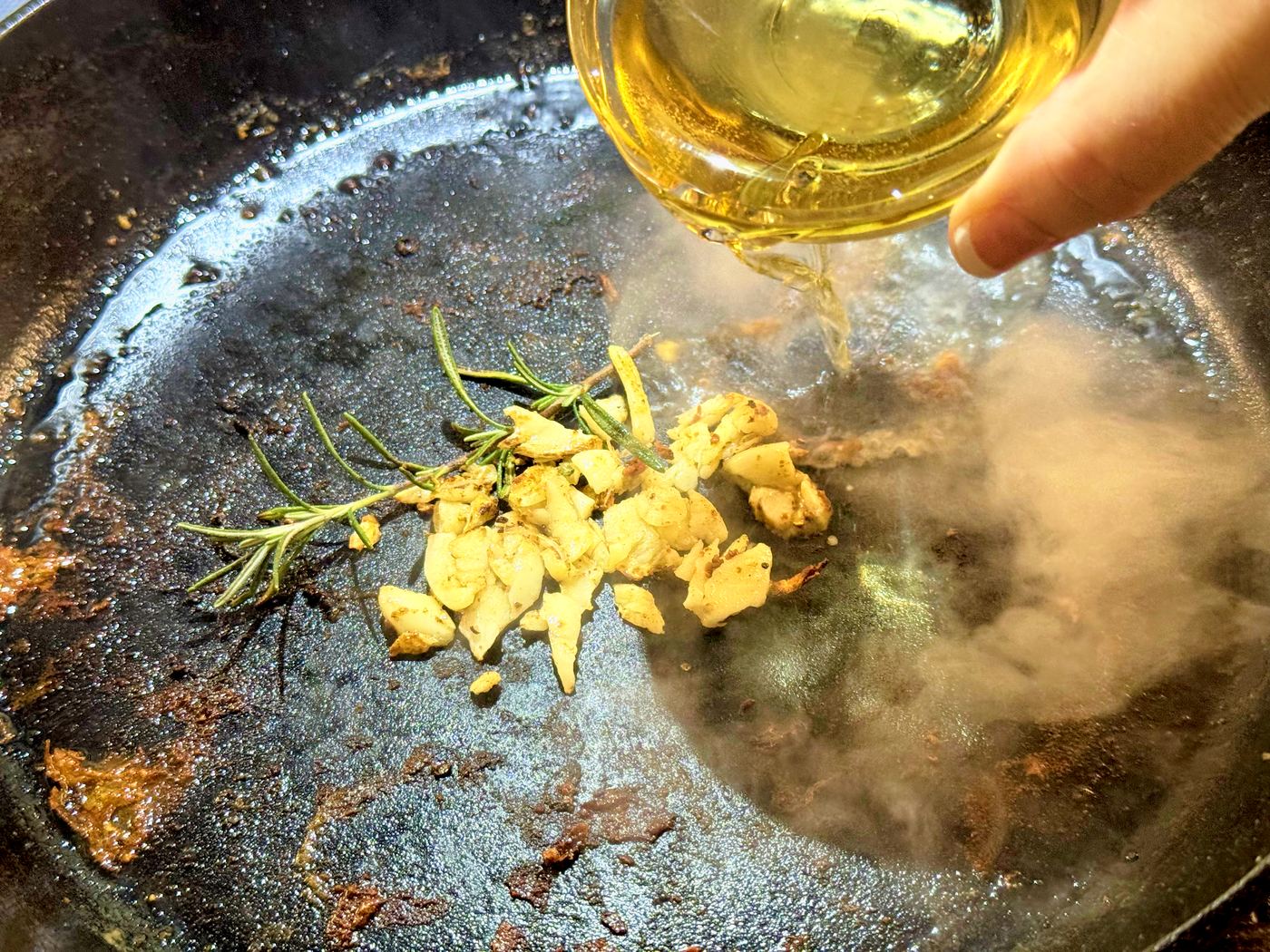
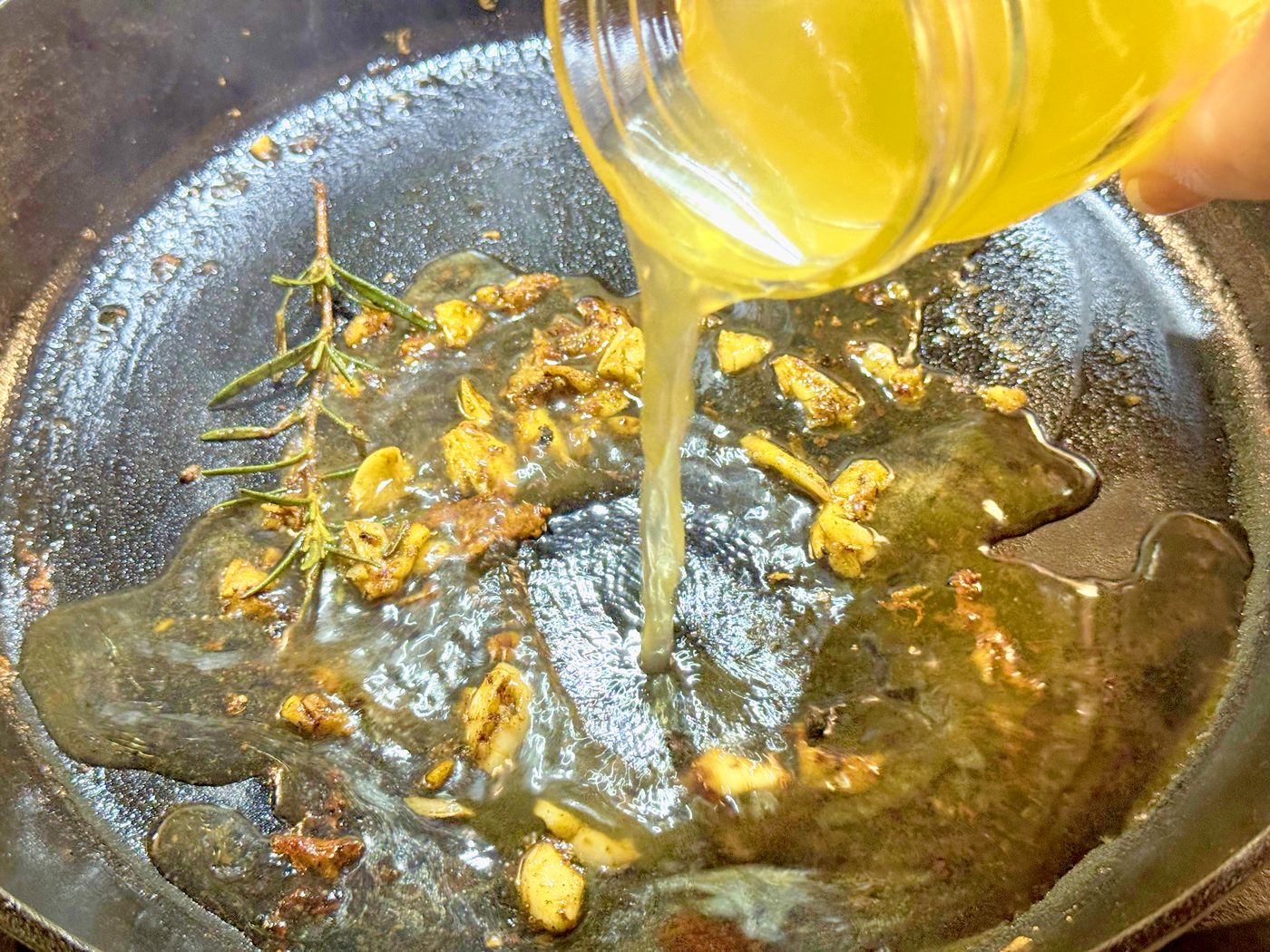
Pour in the wine and scrape up every browned bit stuck to the bottom of the pan. That’s where the flavor lives. Let it bubble until it’s reduced by about half, then add the chicken stock.
Simmer the chicken in the sauce
Nestle the chicken back into the pan along with any juices on the plate and spoon the sauce over the top.
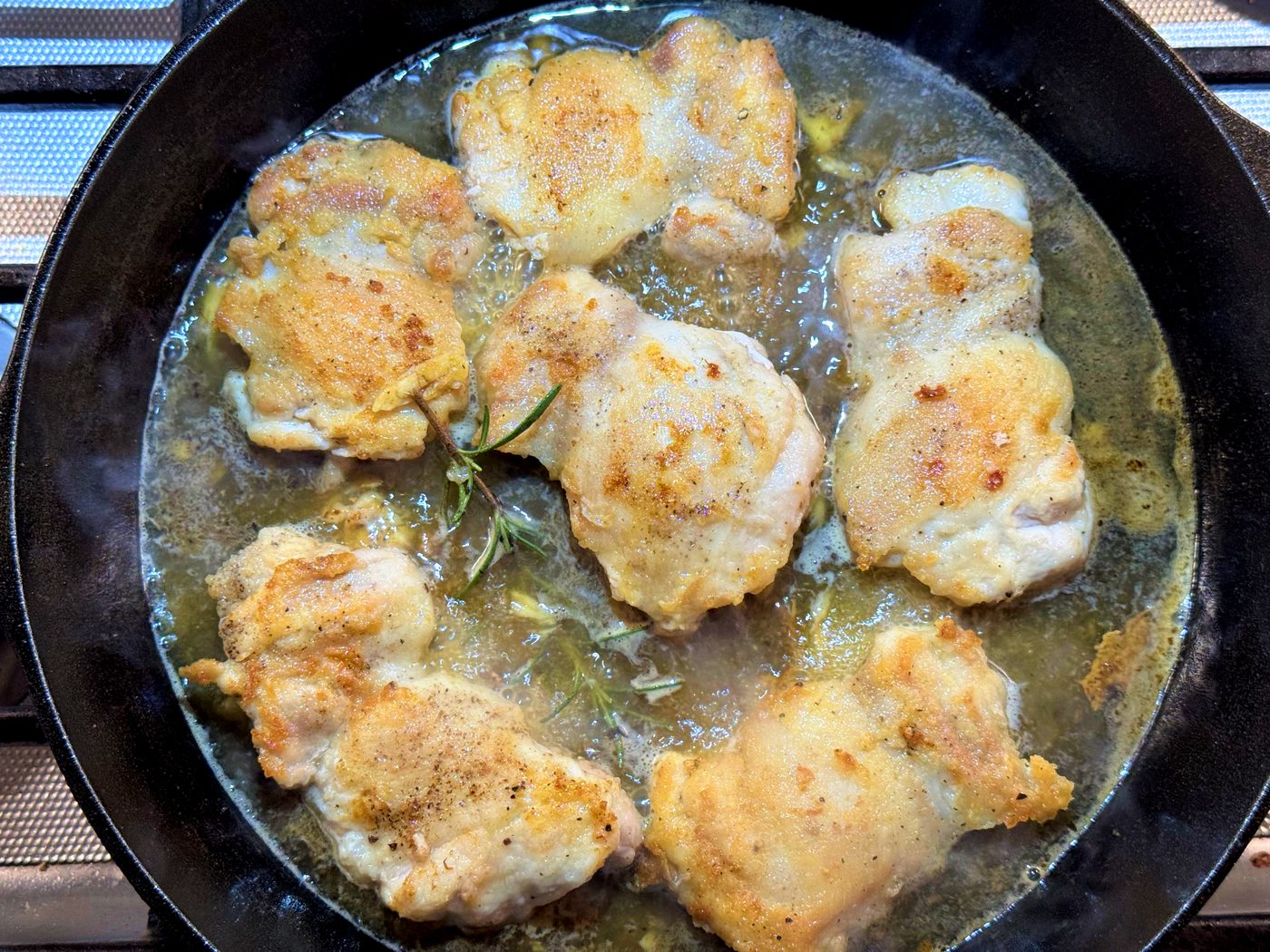
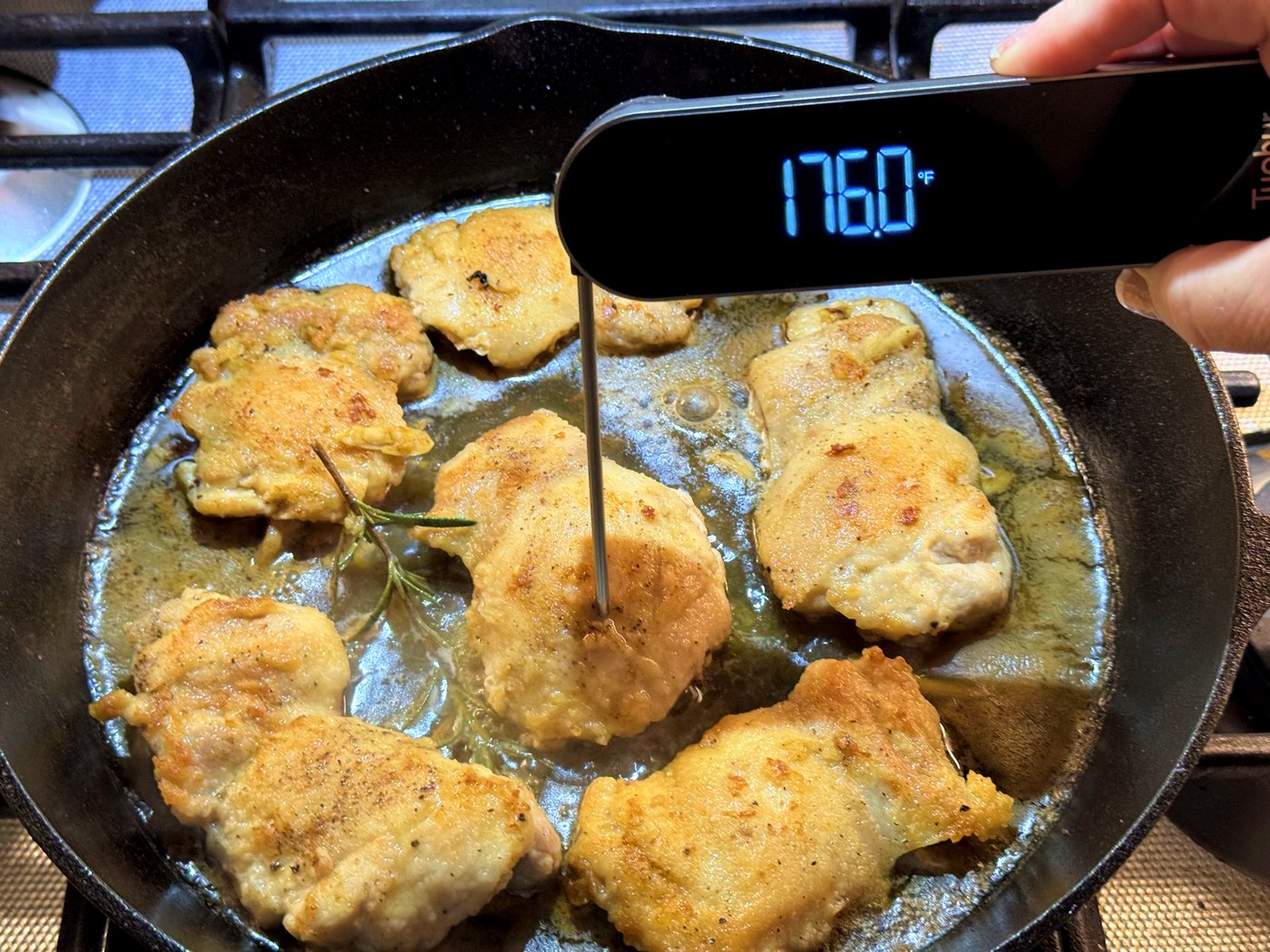
Let it simmer gently, uncovered, for about 6 to 10 minutes, spooning sauce over the chicken every few minutes, until they reach at least 165°F on an instant-read thermometer. Thighs are actually more tender closer to 175°F, so there’s no rush. The flour from the chicken thickens the sauce as it simmers.
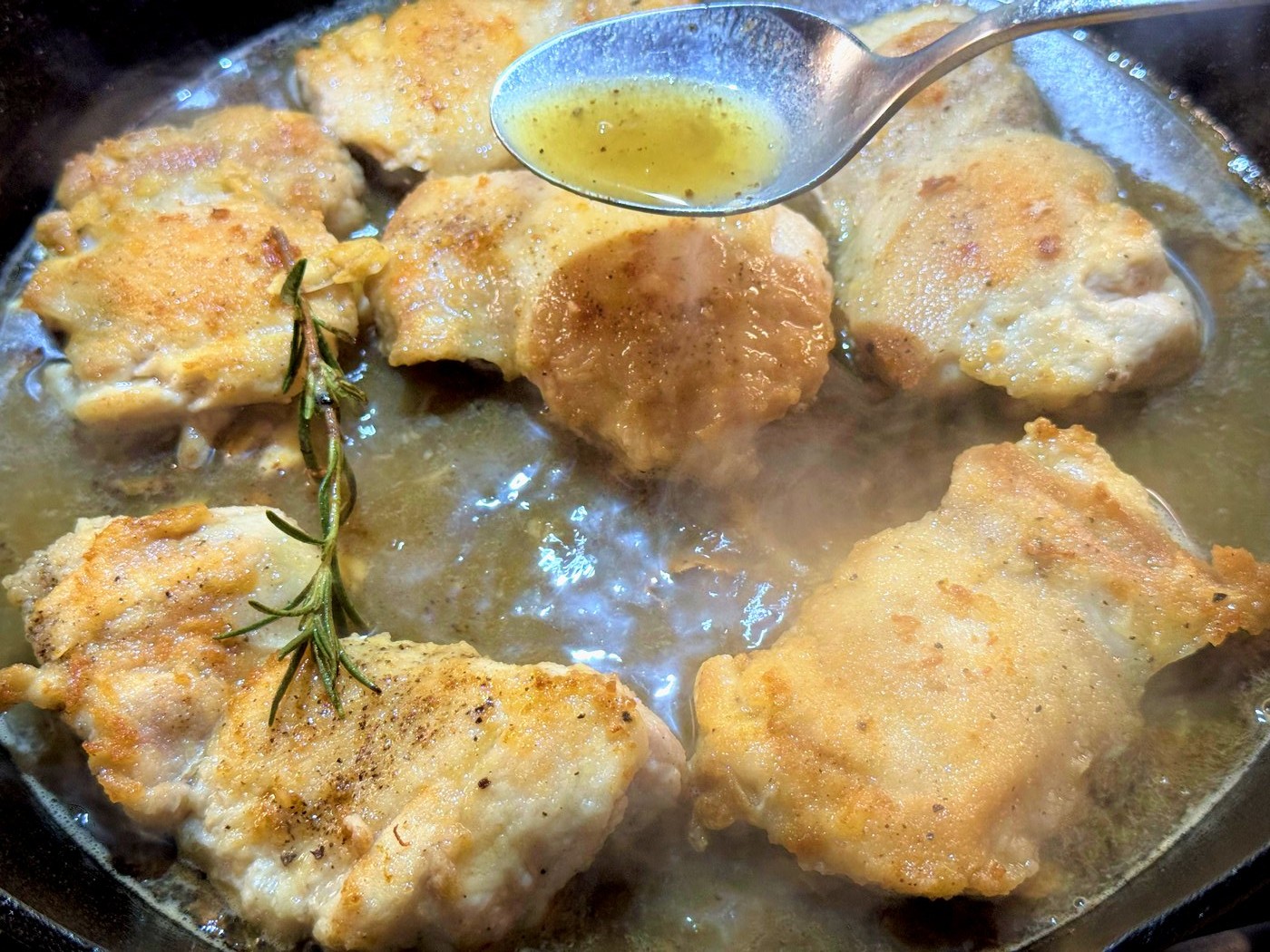
Finish with lemon and butter
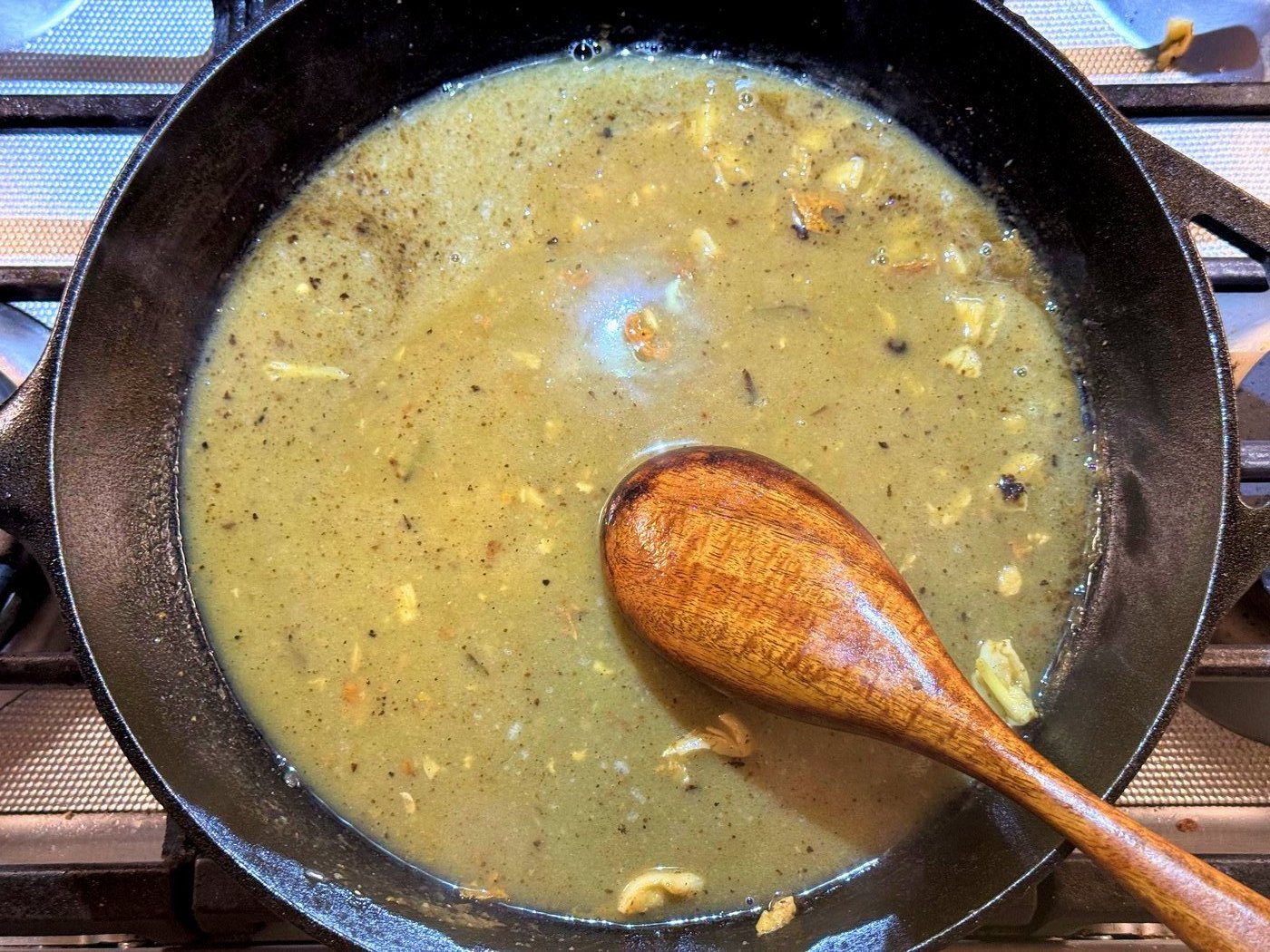
Move the chicken to a plate and pull out the rosemary sprig (the garlic cloves are SO GOOD, so I leave those in). Mash the softened butter and that little bit of flour together with a fork into a paste. Stir the lemon juice into the sauce, then whisk in the butter paste a little at a time and let it bubble gently for about a minute, until the sauce thickens and turns glossy. Taste it and add salt if it needs it, then slide the chicken back into the skillet, spoon the sauce over the top, and scatter the parsley on.
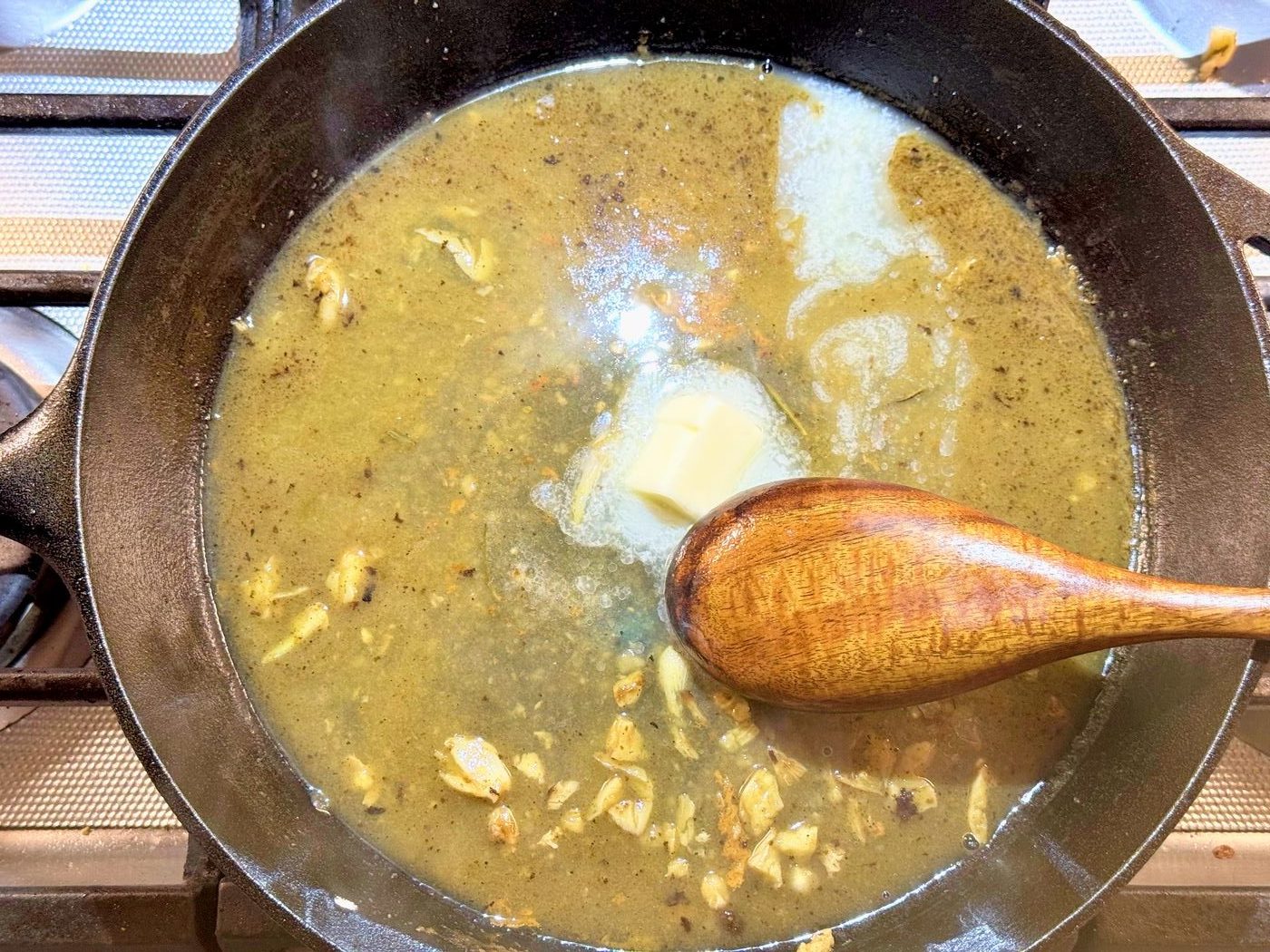
The reason we mash the flour into the butter first is that the butter coats each bit of flour, so it melts into the sauce smoothly instead of clumping. Dry flour stirred straight into a hot sauce tends to clump.
Troubleshooting Your Pan Sauce
Why is my sauce too thin?
Leave the chicken on the plate and simmer the sauce a few more minutes before you add the butter. You can also mash a little extra flour into the butter paste. It thickens a little more as it cools, too.
What if the sauce reduces too much?
Just add a splash of stock or water and stir. It’s very forgiving.
Why does my sauce taste too sour?
Lemons vary a lot in how much juice and tartness they have. Start with half the juice, taste, and add more. A little extra butter softens it if you overshoot.
Can I Make Chicken Scarpariello with Breasts or Bone-In Thighs?
Yes. For chicken breasts, slice them in half horizontally into thin cutlets so they cook as fast as thighs, and pull them at 165°F, since breasts dry out quickly past that. (If breasts are what you have, my Marry Me Chicken is another one-skillet dinner built around them.) For bone-in, skin-on thighs, brown them skin side down, then finish them in the sauce in a 400°F oven for about 20 to 25 minutes, the way the older restaurant versions do, before you add the lemon and butter on the stovetop.
Storage and Reheating
Keep leftovers in an airtight container in the fridge for 3 to 4 days (here’s my guide to storing leftovers for the best results). Reheat gently in a covered skillet over medium-low with a splash of stock, or in the microwave at half power, until hot all the way through.
Chicken Scarpariello FAQs
Is chicken scarpariello spicy?
This version isn’t. The heat in most recipes comes from the hot cherry peppers, and the lemon version leaves those out.
Does the alcohol cook out?
Most of it does while the wine reduces and simmers, but not all of it. If that matters for your family, use the stock-and-vinegar swap.
Can I make it ahead?
Yes. It reheats well, and the sauce is just as good the next day. Add the fresh parsley after reheating.
Chicken Scarpariello Recipe
Equipment
- 12-inch cast iron or heavy skillet
- instant-read thermometer
Ingredients
- 1 to 1 1/2 lb boneless, skinless chicken thighs , trimmed
- 3/4 tsp table salt plus more to taste
- 1/4 tsp black pepper
- 1/2 cup all-purpose flour for dredging
- 2 tbsp olive oil
- 4 garlic cloves smashed and peeled (or 2 tsp jarred minced garlic)
- 1 small fresh rosemary sprig about 3 inches (or 1/4 tsp dried rosemary, crushed)
- 1/3 cup dry white wine such as Chardonnay, Pinot Grigio, or Sauvignon Blanc
- 1 cup chicken stock low-sodium if store-bought
- 2 tbsp lemon juice fresh if possible
- 1 1/2 tbsp unsalted butter softened
- 1 tsp all-purpose flour for the sauce
- 1 1/2 tbsp parsley chopped fresh, if possible
Instructions
- Pat the chicken thighs dry. Season both sides with the salt and pepper, then dredge in the flour and shake off the excess.
- Heat the olive oil in a 12-inch cast iron or heavy skillet over medium-high until shimmering. Add the thighs smooth side down without crowding (work in two batches if needed). Cook without moving until golden and they release easily, 3 to 4 minutes. Flip and cook the other side until golden, 3 to 4 minutes more. Transfer to a plate.
- Reduce the heat to medium. Pour off all but about a tablespoon of fat. Add the smashed garlic and rosemary and cook, stirring, until fragrant and just starting to turn golden, about 1 minute. (If using jarred garlic, cook only 30 seconds.)
- Add the wine and scrape up the browned bits from the bottom of the pan. Simmer until reduced by about half, 2 to 3 minutes. Add the chicken stock.
- Return the chicken and any juices to the pan and spoon the sauce over it. Simmer gently, uncovered, spooning sauce over the chicken every few minutes, until the thighs reach at least 165°F (175°F is ideal for thighs) and the sauce has thickened slightly, 6 to 10 minutes. If the sauce gets too thick before the chicken is done, stir in a splash of stock.
- While the chicken simmers, mash the softened butter and the sauce flour together with a fork into a smooth paste.
- Transfer the chicken to a plate and remove the rosemary sprig. Stir the lemon juice into the sauce, then whisk in the butter paste a little at a time. Simmer gently, whisking, until the sauce thickens and turns glossy, about 1 minute. Taste and add salt if needed.
- Return the chicken to the skillet, spoon the sauce and garlic over it, and sprinkle with parsley.
Nutrition
Notes
How to Trust This Recipe
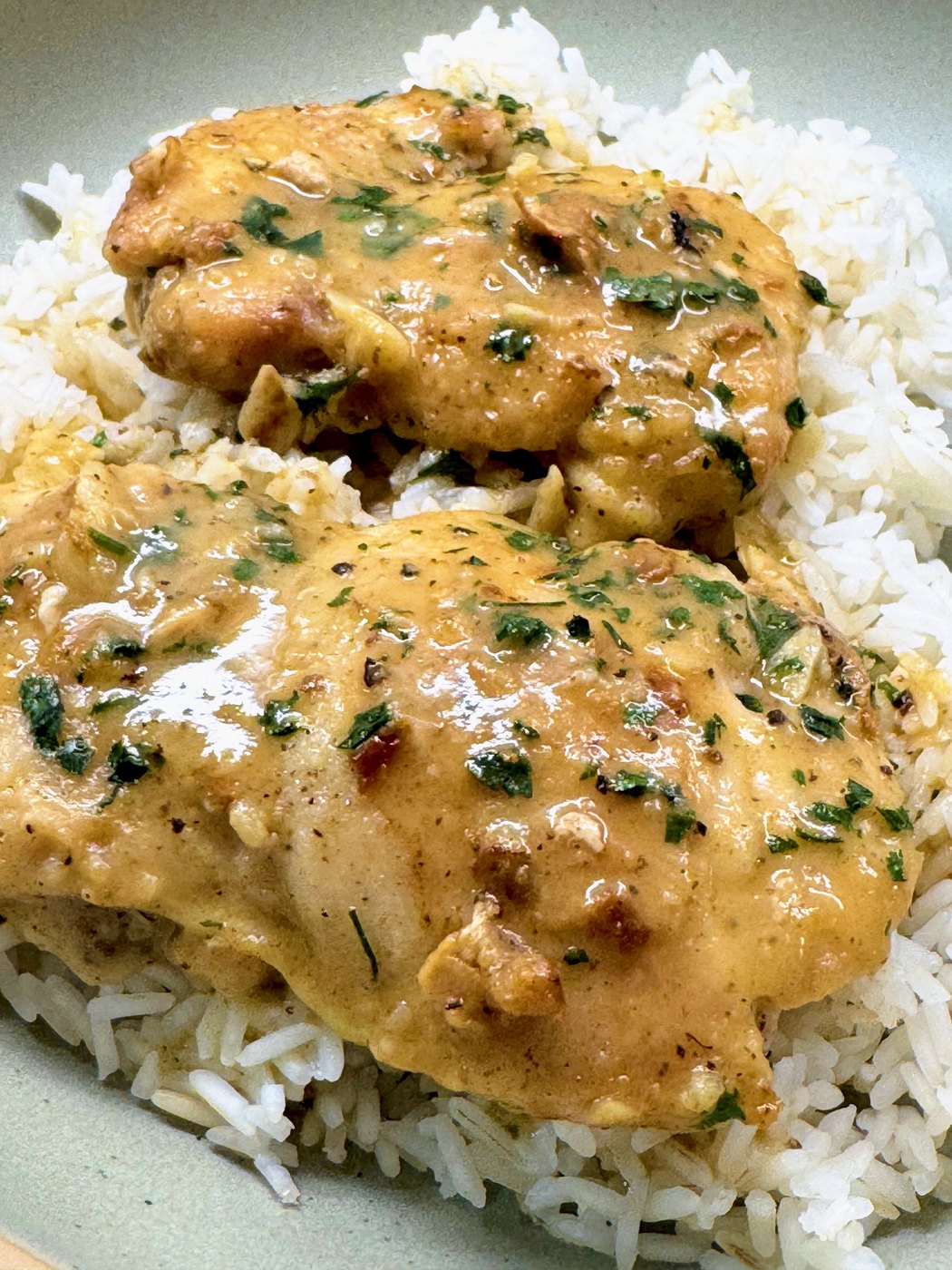
Is it real, or not? That’s the question these days, right? If you’re new here, you may need reassuring. To help you feel confident that this is real food made by a real person in a real kitchen, I like to take and share a special unedited photo at the end of my posts. This is a photo of my bowl of chicken scarpariello over white rice with green beans on the side, on the counter in my kitchen, with no retouching … this is real life food, just the way we ate it for dinner.
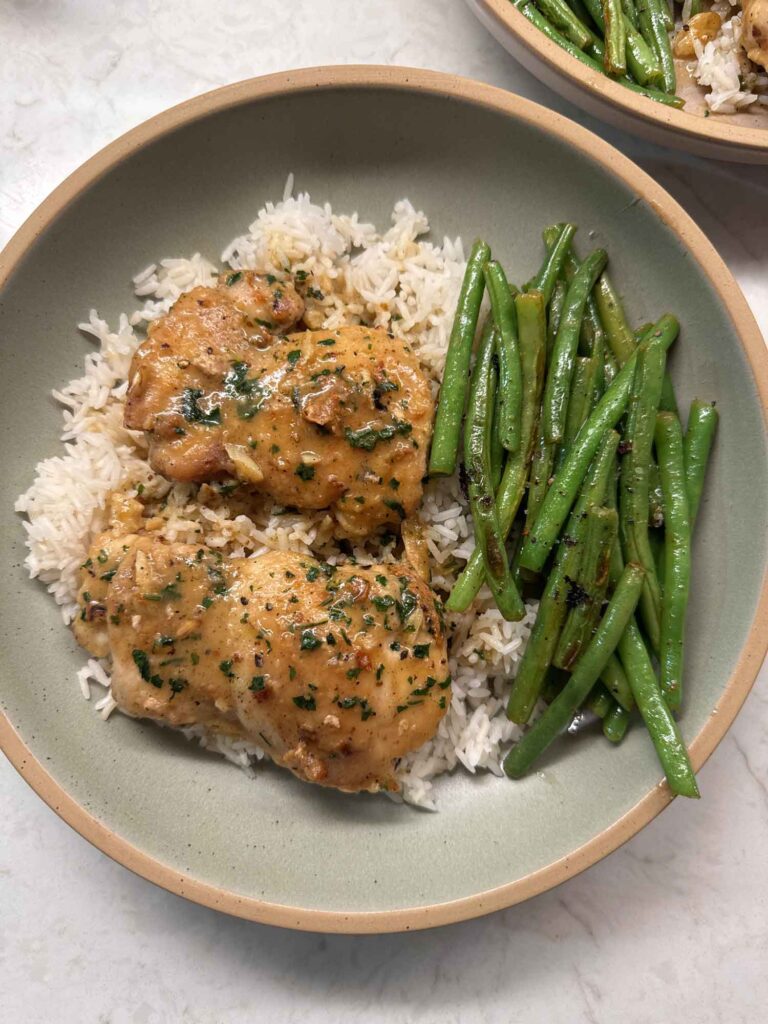
The above photo was taken with ProofMode, which attaches Content Credentials (the C2PA standard) to the image, so anyone can check that it’s a real photo taken by my iPhone on my farm on a particular date and place. You can download the proof files here and learn how to verify them.
Looking for another cozy chicken dinner? My Easy Chicken & Dumplings is SO GOOD on a chilly night.
Happy cooking!
Love,
Jennifer
Tried this recipe?
Tap the stars in the recipe card to leave a quick rating. Your rating helps other home cooks know this recipe works in a real kitchen, not just mine.
And as a thank-you for your feedback, you will receive a free printable copy of my Maker Home Companion Cookbook, featuring my most popular recipes, each one formatted on a SINGLE, easy-to-use page, a perfect kitchen companion for easy meal prep. Click here to learn more about this cookbook and how you can get your copy!




Meet Jennifer
Jennifer cooks and experiments in the kitchen at Maker Farm, where she focuses on simple pantry cooking, homemade staples, and practical recipes that make everyday meals easier. Over the years she has tested many ways to make cooking simpler and more dependable, and shares the methods that work best in her own kitchen, occasionally showing them on her Heart to Home at Maker Farm vlog.