

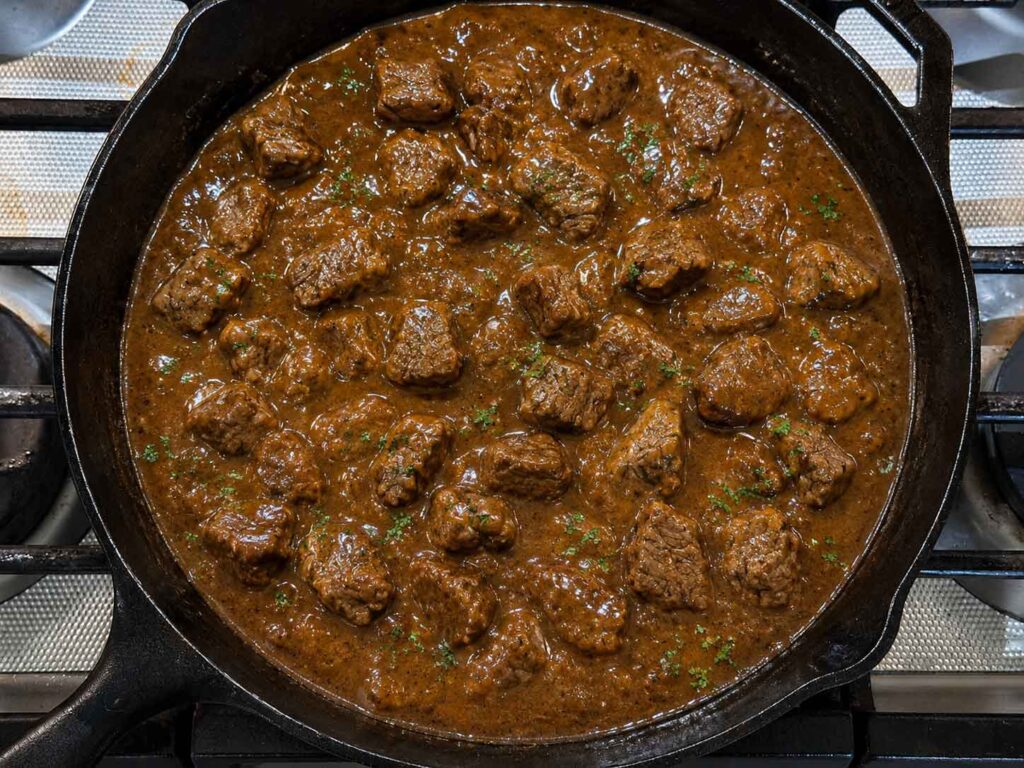
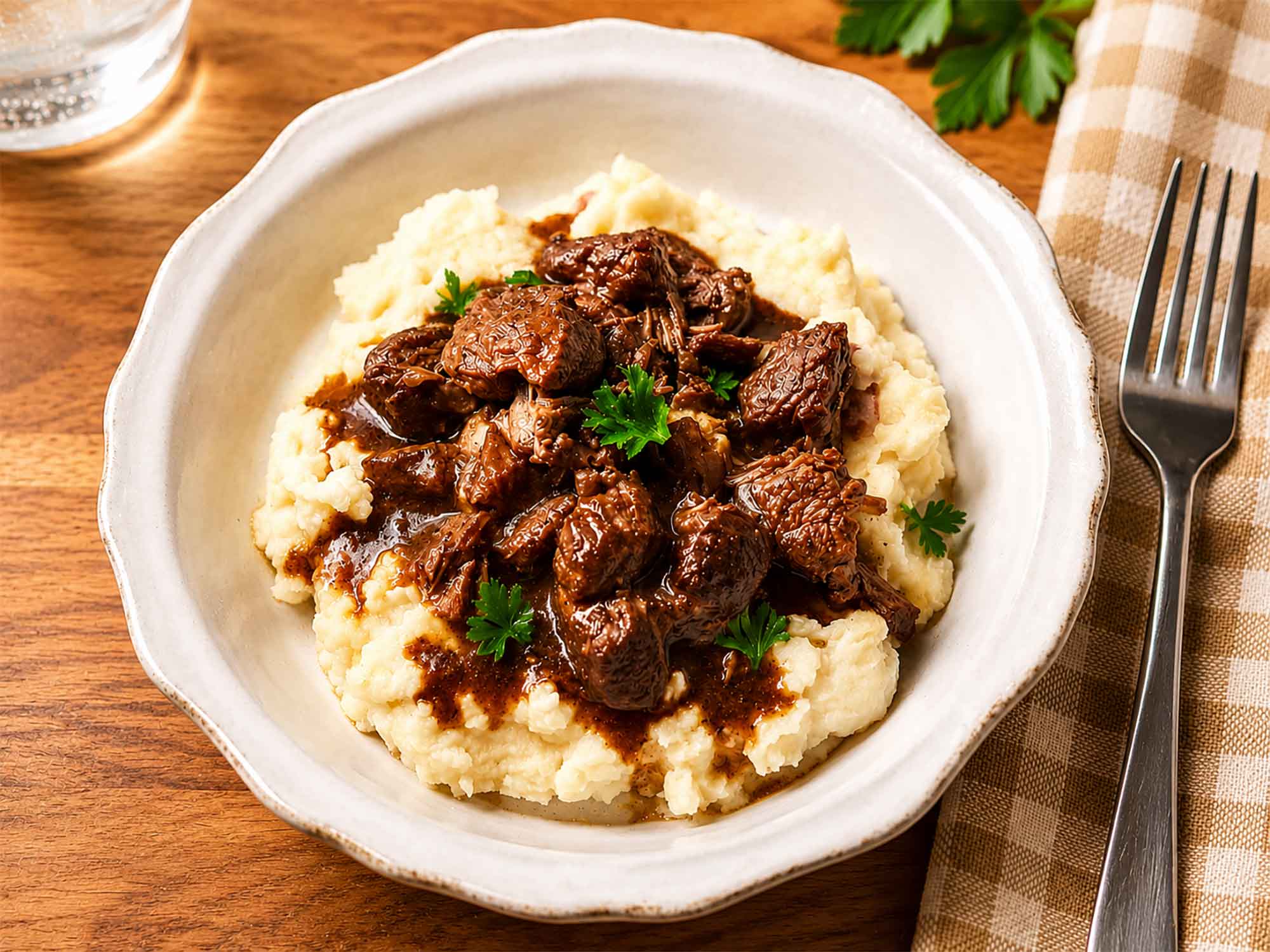
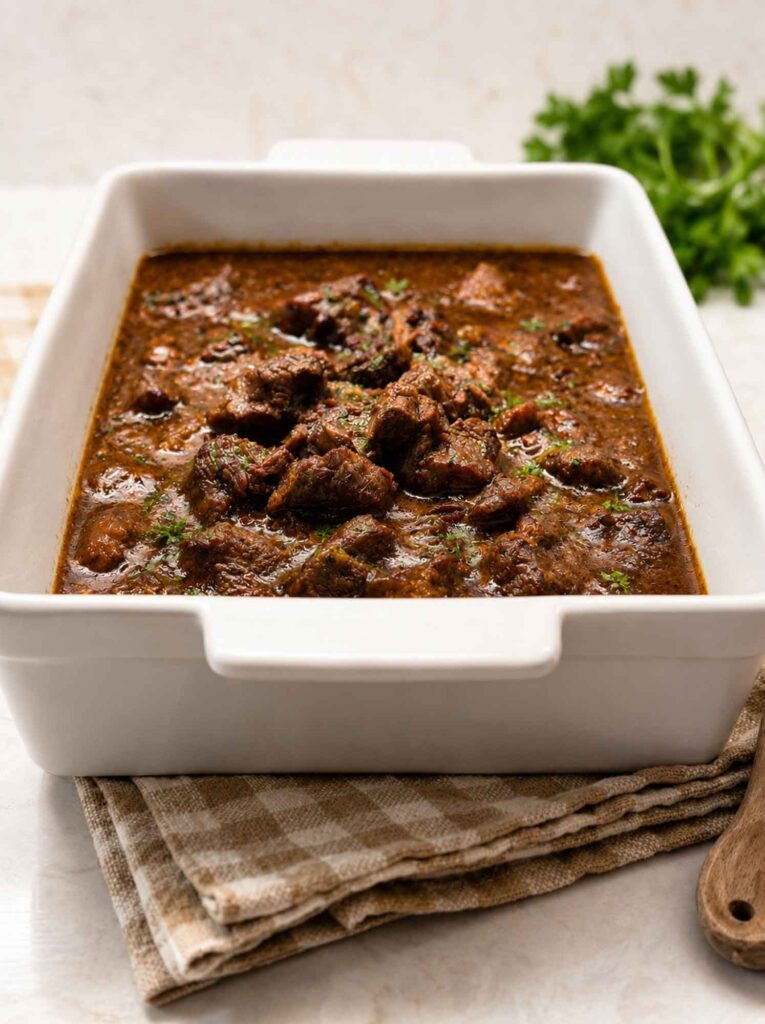
These beef tips cook up tender in a rich brown gravy (no packet needed). Make them on the stovetop for dinner tonight or let the slow cooker do the work. Perfect over mashed potatoes, rice, or noodles.
BEEF TIPS At A Glance
Prep
15 min
SIMMER
20 min
Total
35 min
Serves
6
Pan
Large pot or slow cooker
What it tastes like: Hearty, savory, rich bites of beef that melt in your mouth, each wrapped in a warm gravy hug filled with the umami flavors of onion, garlic, and red wine.
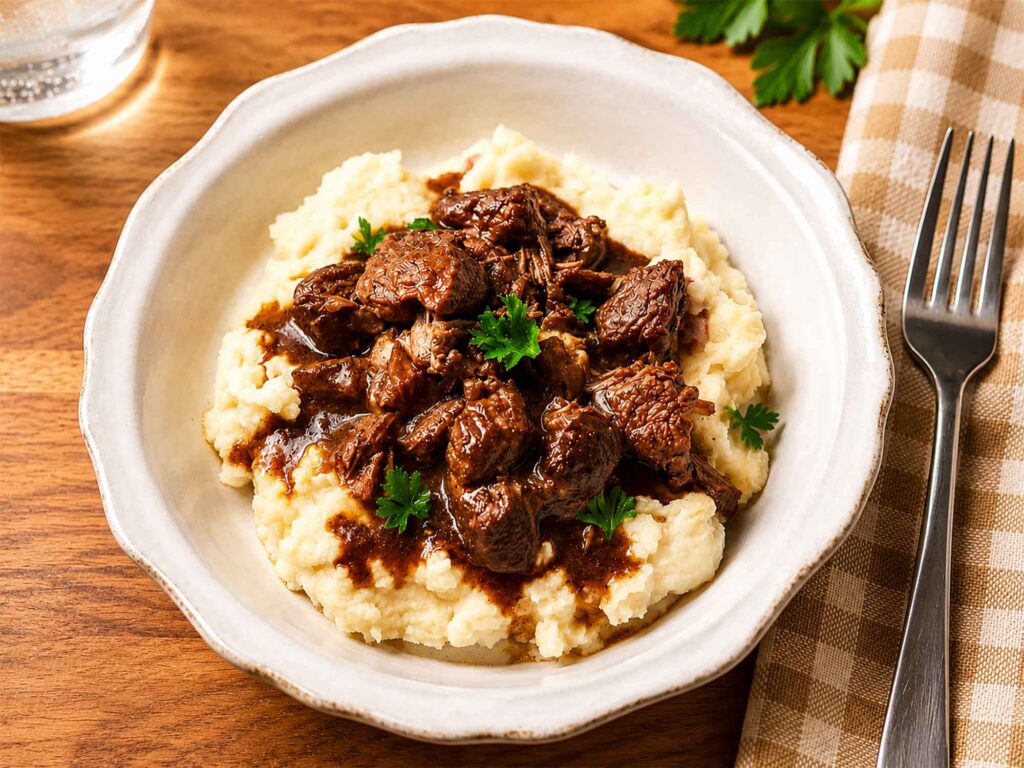
Greg is a solid meat and potatoes guy, so we’ve made just about every variation of “steaks and spuds” over the years (like skirt steak and Salisbury steak), and these beef tips are one of the very best meaty meals! You get all the cozy, slow-cooked flavor of a pot roast, but in tender bite-size pieces. Best of all, you can use a variety of different cuts of beef for this dish, and it’s a great way to use your meat in a new way.

Want to Save This Recipe?
Enter your email below and we’ll send it straight to your inbox! Plus you’ll get new recipes each week!
What Cut of Meat are Beef Tips?
Back in the day, I thought “beef tips” were a specific cut of meat, but the term really just means bite-sized chunks of beef, and usually from the sirloin, tenderloin, or chuck roast. Here’s a handy diagram.
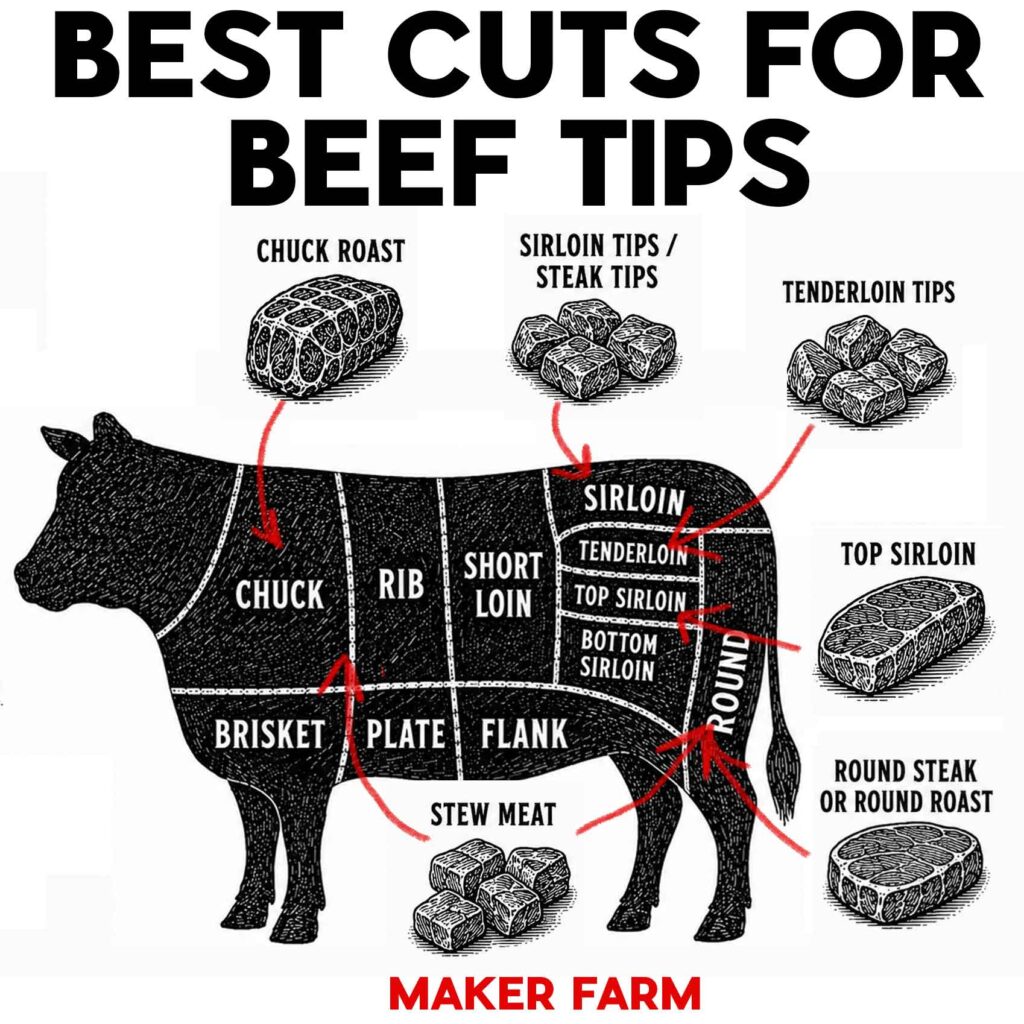
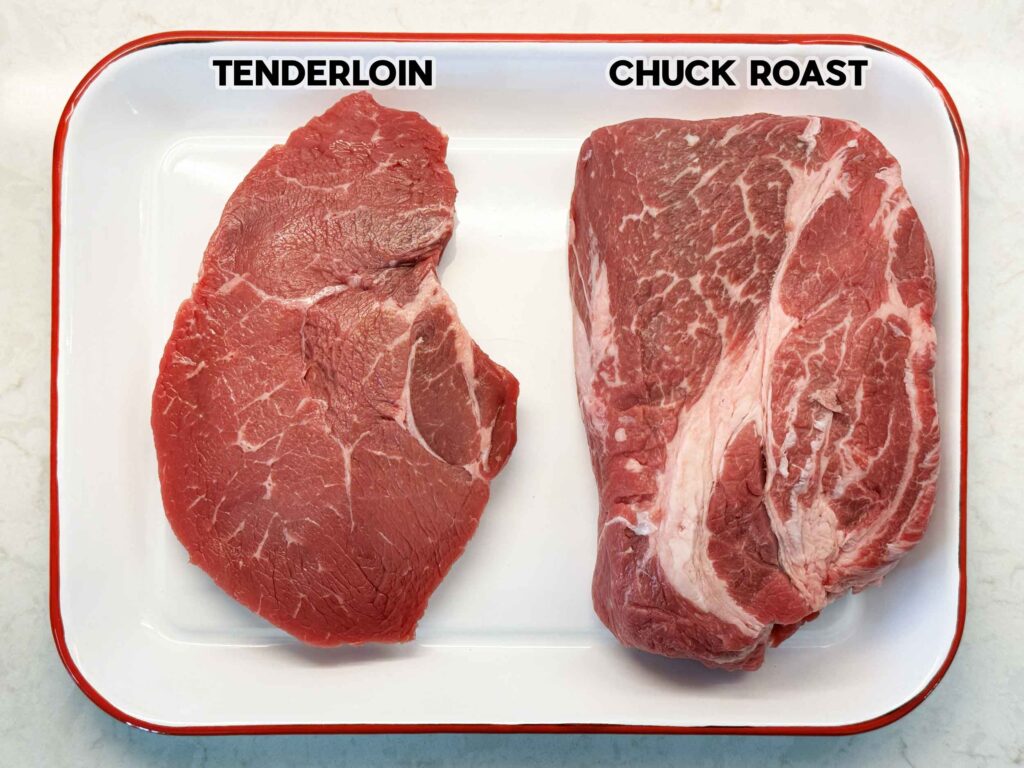
Tenderloin tips
This is very tender and cooks quickly, but it is usually more expensive and almost too delicate for a slow cooker gravy recipe. This is my choice for when I want a quick skillet of beef tips.
Chuck roast
This is my favorite for slow cooker beef tips. It has enough fat and connective tissue to become tender and flavorful when cooked low and slow. It is best for the crockpot, Dutch oven, or long stovetop simmering.
Stew meat
This cut is convenient because it is already cut up, but it can be a mix of different tougher cuts. It works well for slow cooking, but the pieces may cook unevenly depending on what is in the package.
Top sirloin
This is a good choice for quicker beef tips. It is leaner and more tender than chuck, but it should not be cooked for hours or it can become dry. Best for a faster stovetop version.
Sirloin tips / steak tips
These are often used for beef tips, but the label can vary by store. They are usually best for a shorter cook time, not an all-day slow cooker recipe.
Round steak or round roast
This can work, but it is leaner and can be tougher. It needs gentle cooking and enough gravy to keep it from tasting dry. I would not choose this first unless it is what you already have.
Kitchen Tip

If you have a different cut of meat and need an idea for how to use it, try an easy steak marinade … it makes the meat so tender and tasty!
Are Beef Tips and Stew Meat the Same Thing?
Not always. Store-labeled ‘stew meat’ is usually tougher cuts; it works great in the slow cooker but can be chewy on the stovetop unless simmered longer.
How to Make Beef Tips and Gravy
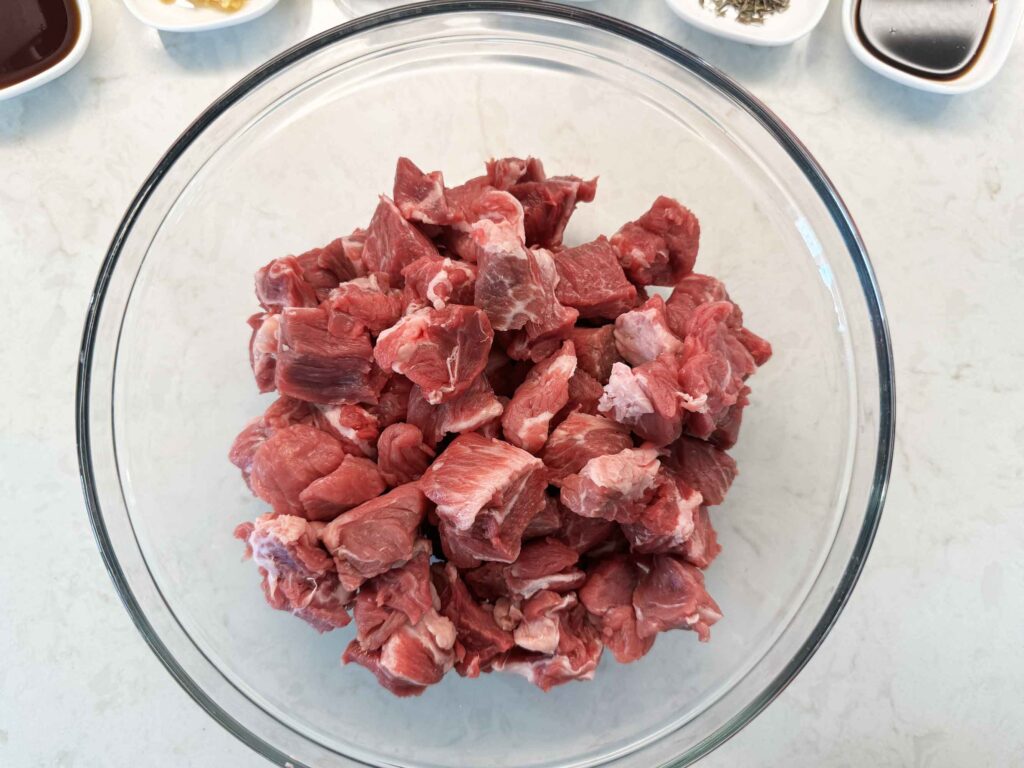
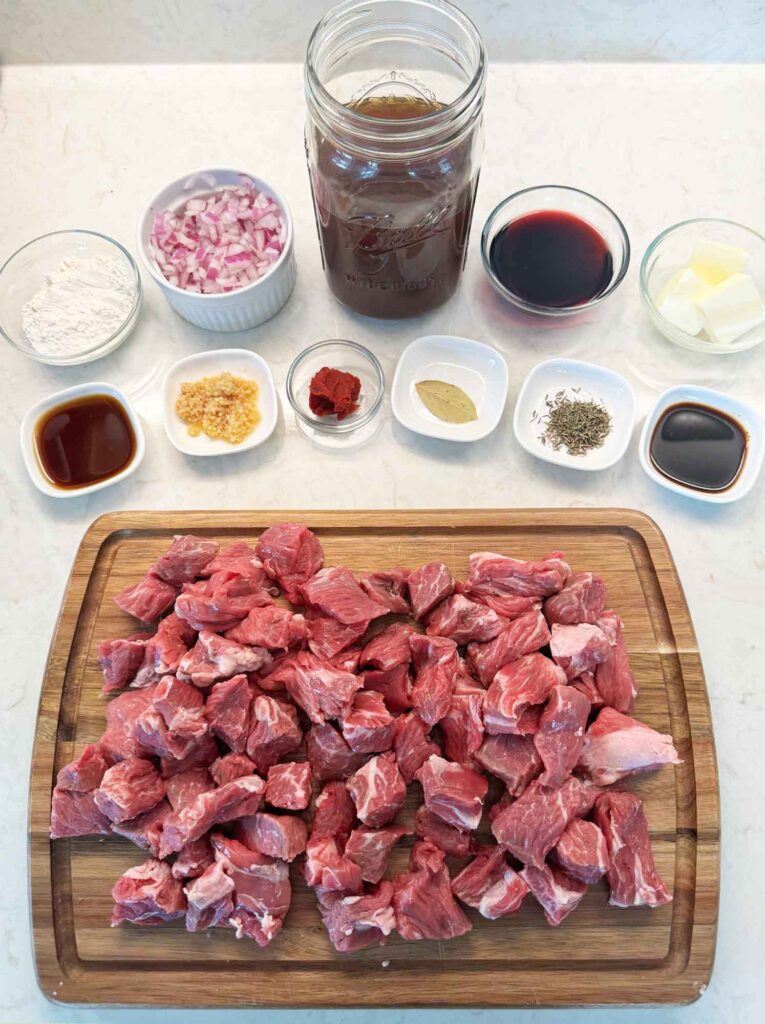
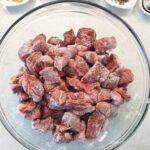
Step 1: Start by patting the beef dry with paper towels, then cut into bite-size pieces. Trim away any large pieces of hard white fat, silver skin, or tough connective tissue. You do not need to remove every little streak of marbling, as those small bits help keep the beef tender and add flavor as it cooks.
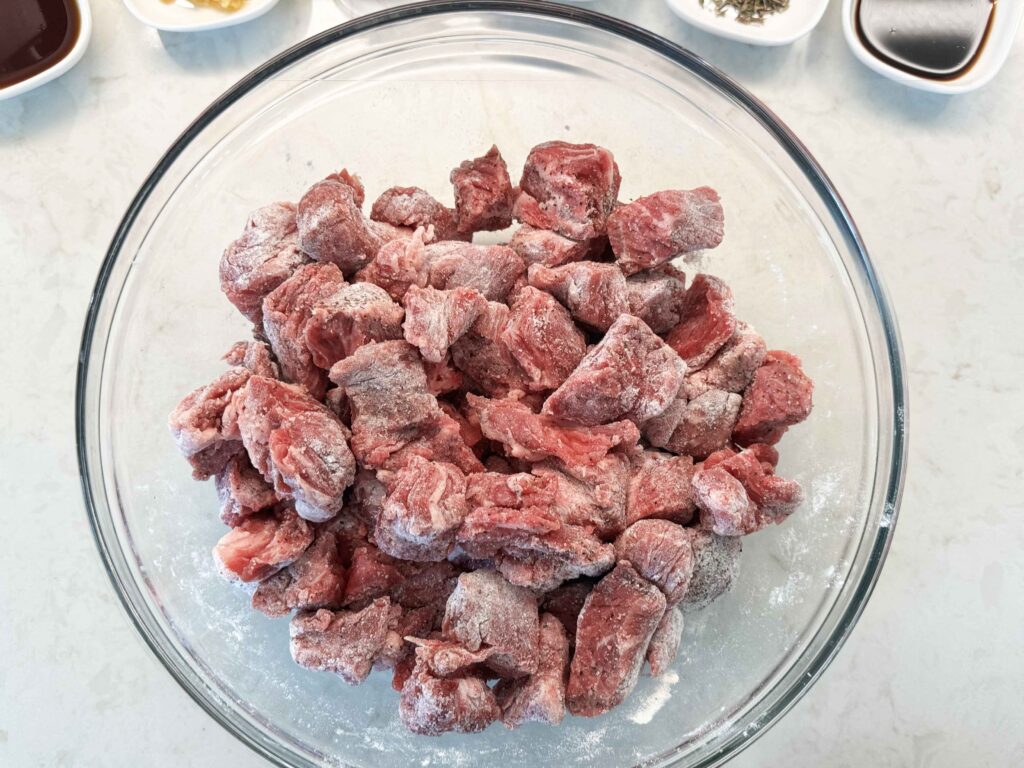
Step 2: Toss the beef with salt, pepper, and flour. The beef should look lightly coated, not heavily breaded. This thin flour coating helps the pieces brown and gives the gravy a little body as it cooks.
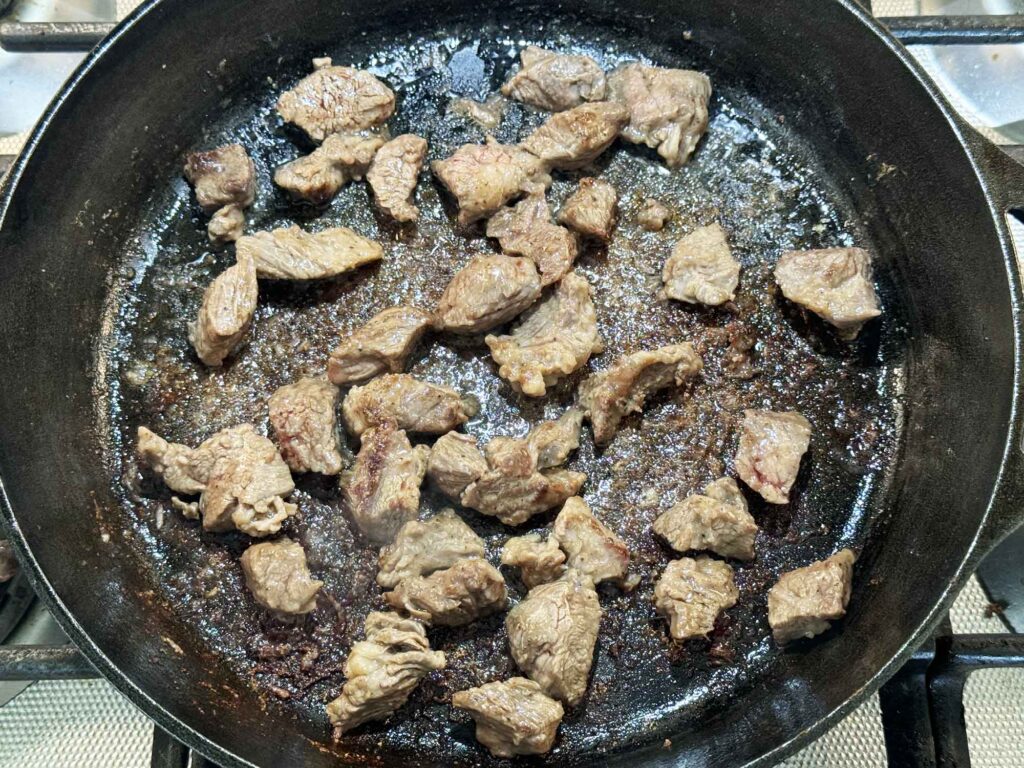
Step 3: Brown the beef in batches. This step is worth the extra few minutes because the browned bits on the bottom of the pan are what give the gravy its deep, savory flavor. The beef does not need to cook through at this point, you are just looking for a dark golden-brown crust on the outside. If the pan starts looking watery instead of sizzling, the beef is probably too crowded. Remove some pieces and brown them in smaller batches.
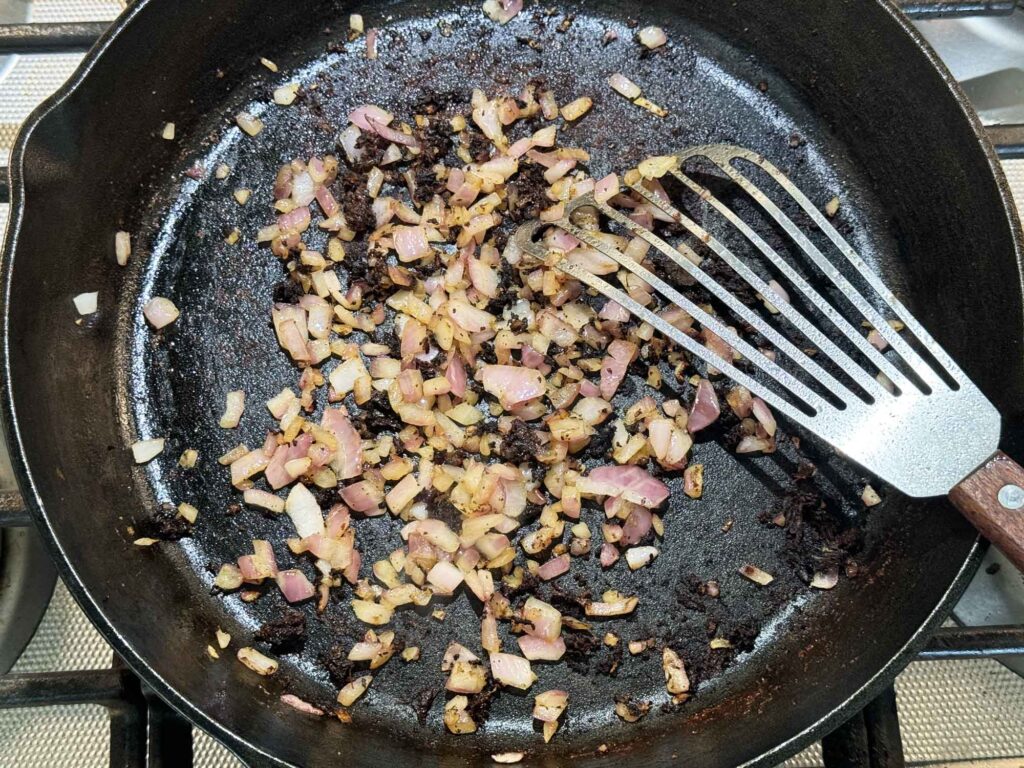
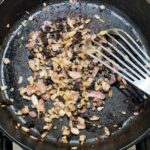
Step 4: Cook the onion in the same pan until it softens and starts to pick up the browned bits. Add the garlic near the end so it does not burn.
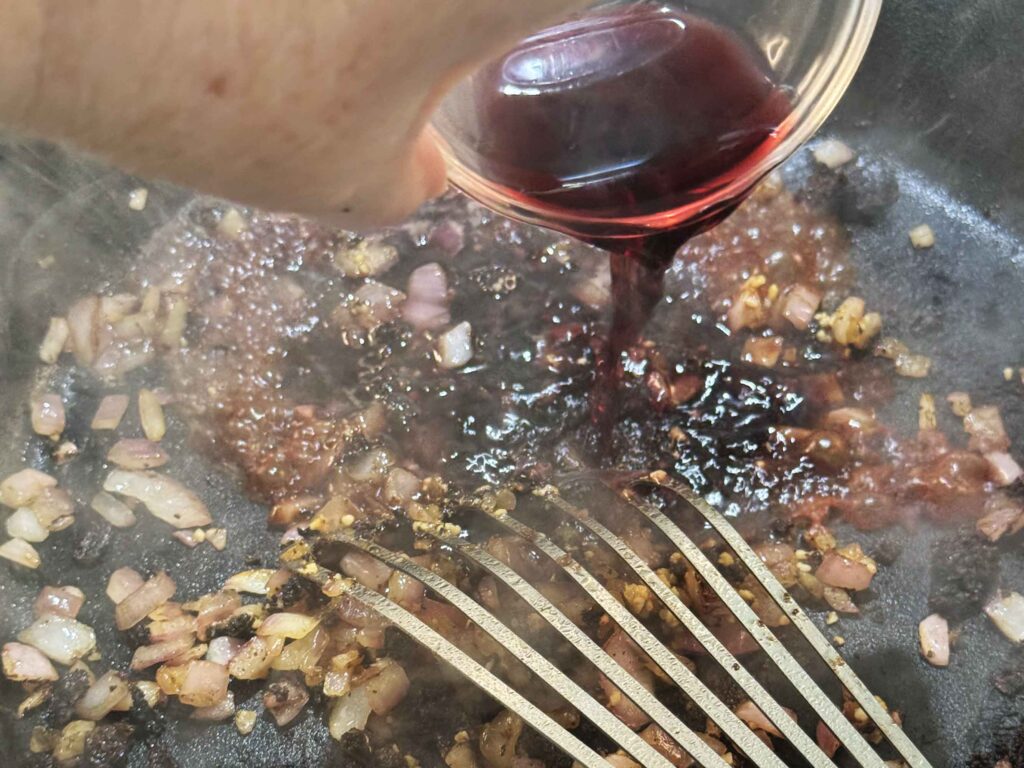
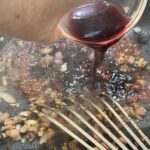
Step 5: Deglaze. When the onion smells sweet and savory and the garlic is fragrant, pour in the dry red wine (or broth if you’re using that instead). As the liquid bubbles, scrape the bottom of the pan to loosen all those flavorful bits. Let it simmer until it reduces slightly and smells rich instead of sharp.
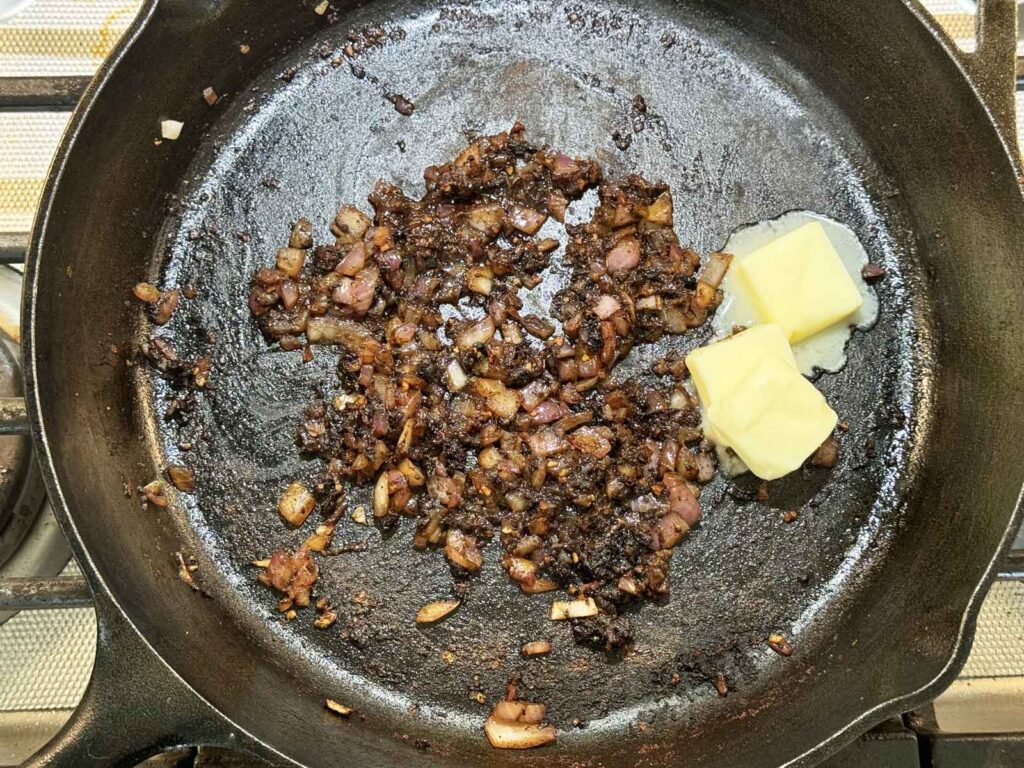
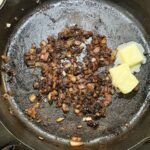
Step 6: Add the butter and flour to make the gravy base. Stir it for a minute or two so the flour is fully mixed in and lightly cooked. It should look like a thick, glossy paste coating the onions. If it looks dry or clumpy, keep stirring and add the broth slowly in the next step.
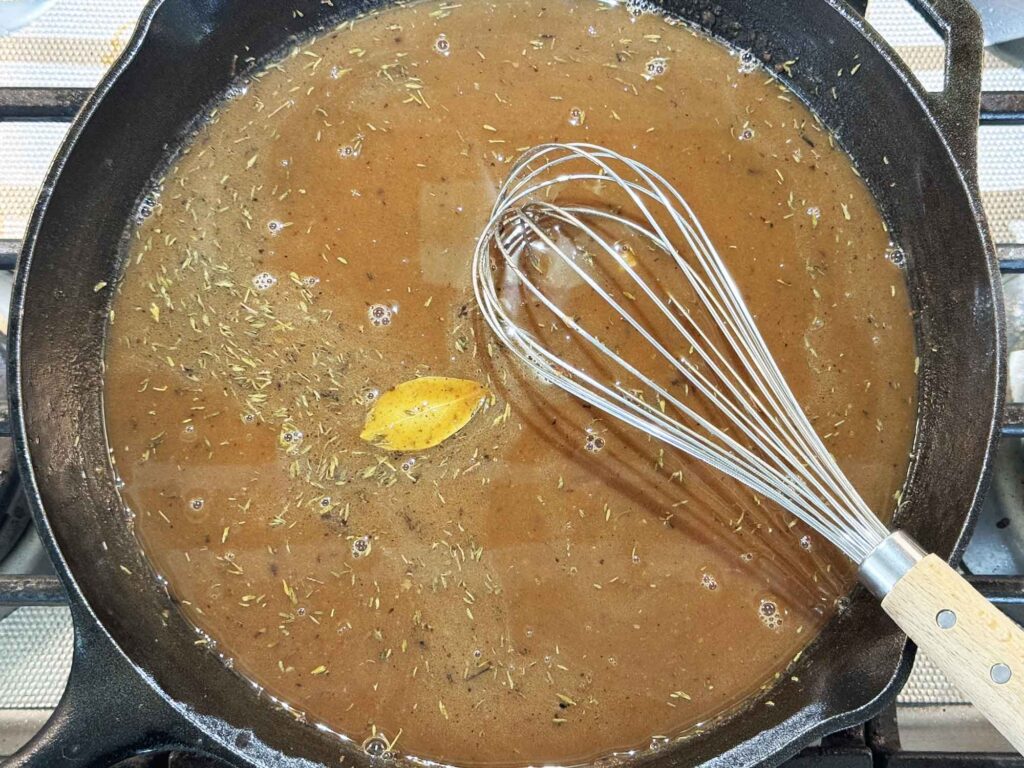
Step 7: Slowly whisk in the beef broth, then add the Worcestershire sauce, tomato paste, thyme, and bay leaf. The gravy may look a little thin at first, but it will gain flavor as it cooks with the beef. If you are using a slow cooker, pour this gravy mixture over the browned beef in the slow cooker. If you are cooking on the stovetop, return the beef and any juices to the pot.
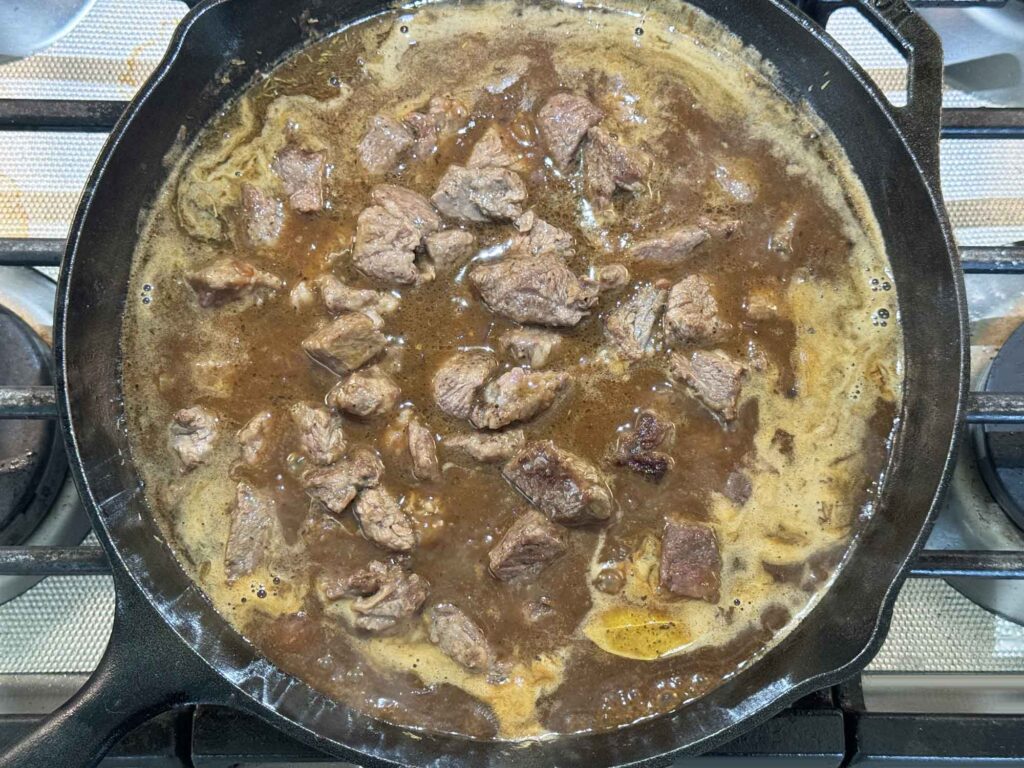
Step 8: Cook until the beef is fork-tender. The beef is done when a piece easily pulls apart with a fork and no longer feels chewy or bouncy. If the beef still seems tough, it usually just needs more time. Chuck roast becomes tender after the connective tissue has had enough time to break down.
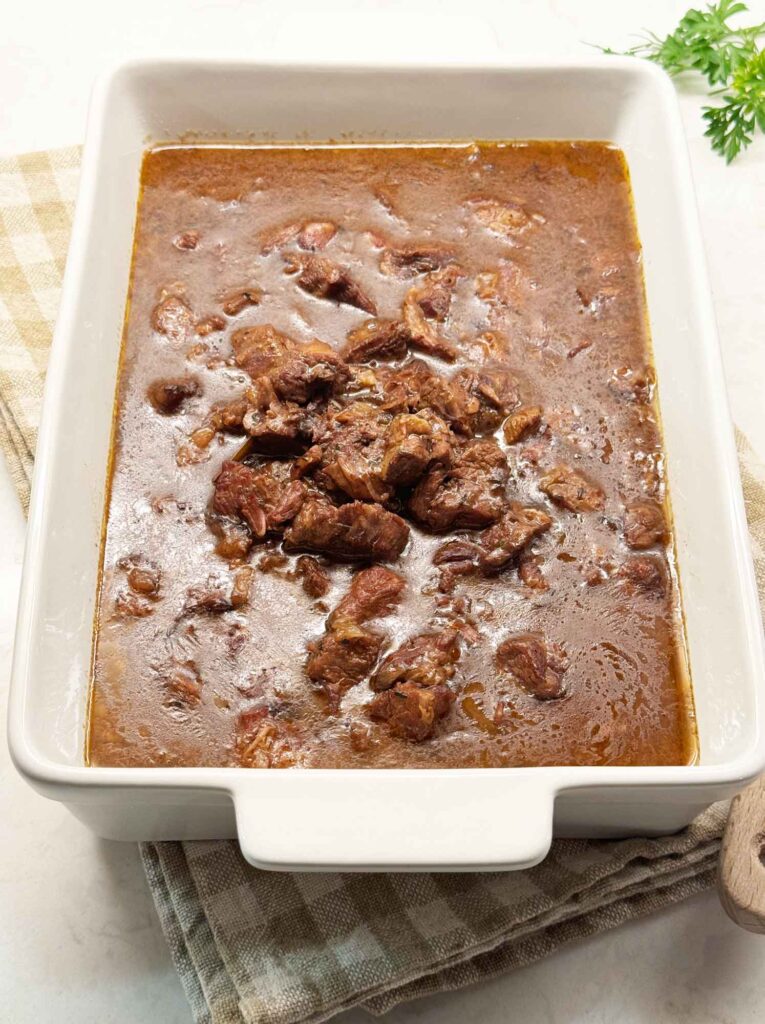
Step 9: After cooking, remove the bay leaf and skim off any large pools of fat from the top of the gravy. If you let it cook a bit, you may see a skin of fat form over the surface and it’s then easier to remove. A little fat adds richness, but too much can make the gravy taste greasy. Taste the gravy and adjust with more salt, pepper, or a small splash of Worcestershire sauce if it needs more savory flavor.
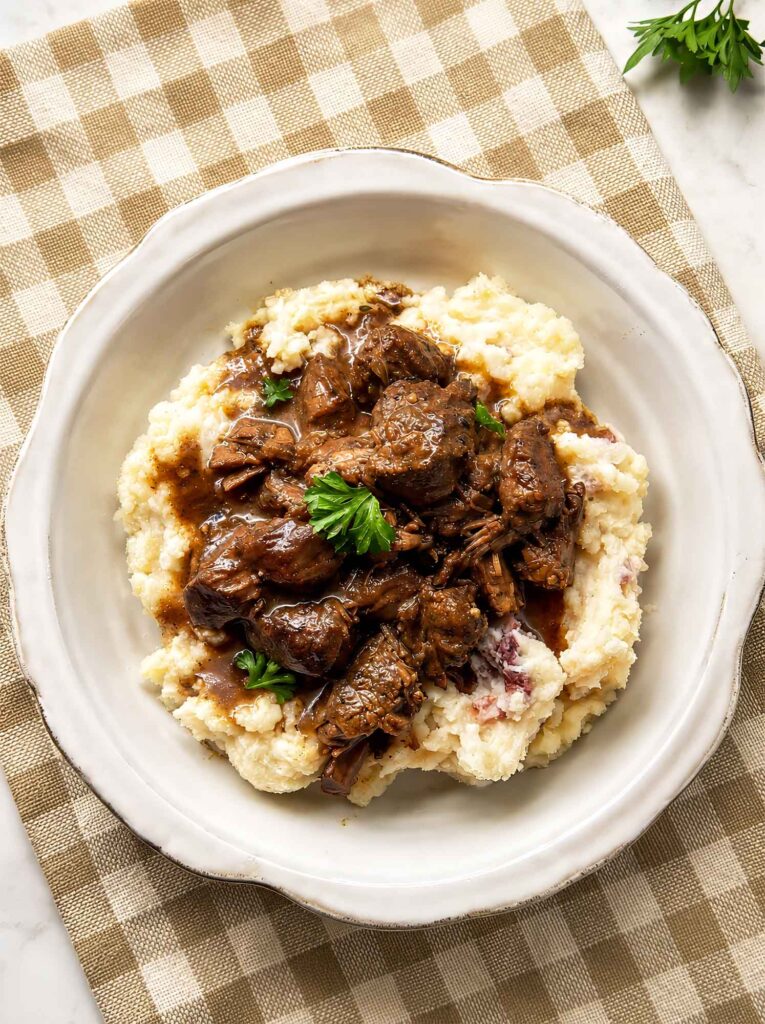
Step 10: Allow the gravy to cool, and it will thicken as it does. After cooling, check the consistency. If it is too thin, simmer uncovered 5–10 minutes or add a slurry of 1 tablespoons of cornstarch + 1 tablespoon of water. If it is too thick, whisk in warm broth 1–2 tablespoons at a time.
Serve over mashed potatoes, noodles, or rice.
Crockpot Method
To make beef tips and gravy in a crockpot, brown the beef first, then use the same skillet to cook the onion and garlic, deglaze with red wine, and build the gravy before pouring everything over the beef in the slow cooker.
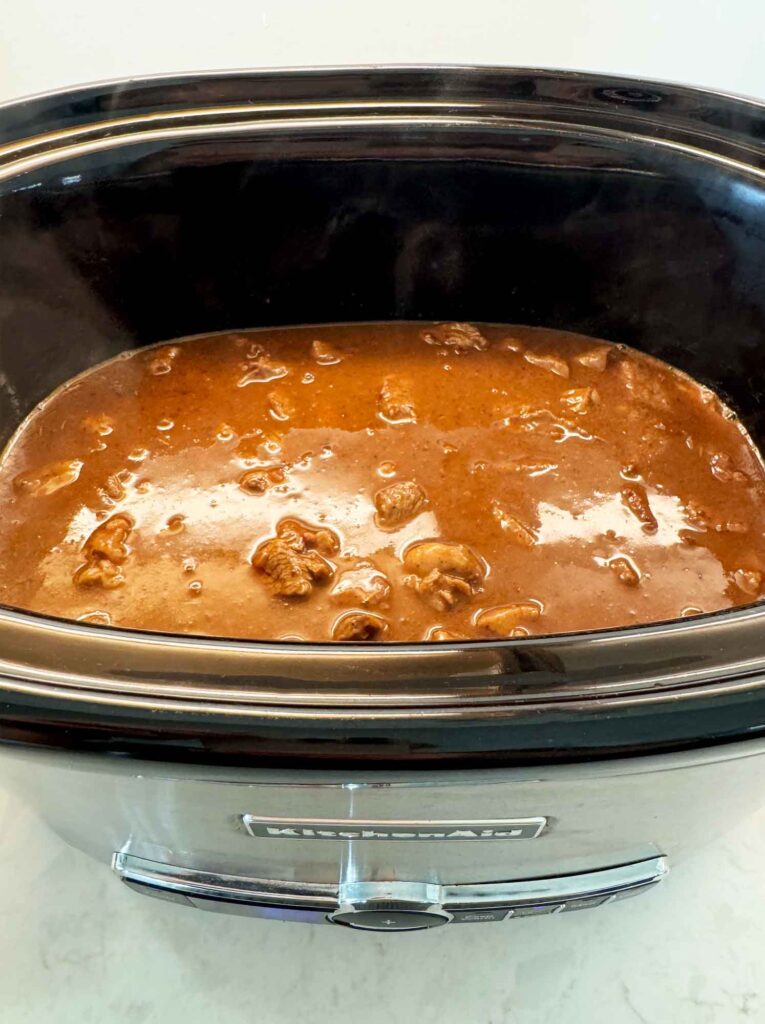
Chuck roast and stew meat do best with a long, slow cook, about 7–8 hours on LOW or 3 1/2–4 1/2 hours on HIGH, until the beef is fork-tender. Round steak or round roast can also be slow cooked, but because it is leaner, check it closer to 6–7 hours on LOW so it does not dry out. Top sirloin, steak tips, and tenderloin tips are more tender cuts and are better for a quicker stovetop version; if you use them in the slow cooker, cook just until tender, about 2–3 hours on LOW, and avoid an all-day cook.
The beef is done when it no longer feels chewy and a piece pulls apart easily with gentle pressure from a fork. If the gravy looks a little glossy on top, skim off the larger pools of fat before serving. If the beef is still tough, keep cooking.
My Best Tips for Tender Beef and Rich Gravy
The best beef tips start with the right cut of meat. For a slow cooker or long stovetop simmer, I like chuck roast because the fat and connective tissue break down as it cooks, making the beef tender and flavorful. If the beef still tastes chewy, it usually needs more time, not less. Keep the heat low and gentle so the beef has time to soften without drying out.
For the richest gravy, do not skip the browning step. Searing the beef creates those dark browned bits on the bottom of the pan, and those bits are the foundation of the gravy flavor. If the beef starts steaming or releasing a lot of liquid, the pan is too crowded. Brown it in smaller batches and let each piece get good color before moving on.
A splash of dry red wine adds depth, but the gravy also gets a lot of flavor from small savory boosters. Worcestershire sauce gives the gravy that classic beefy flavor, while a little soy sauce adds saltiness and depth without making it taste like soy sauce. If your gravy tastes a little weak, you can add a small amount of beef bouillon or beef base, but taste first so it does not become too salty.
For even more depth, you can sauté mushrooms with the onions until they are browned, then continue with the recipe. They add an earthy, savory flavor to the gravy. If you do not want mushroom pieces in the finished dish, finely chop them so they melt into the sauce, or skip them entirely. A little fresh thyme, a bay leaf, or a pinch of dried thyme also helps the gravy taste more rounded and homemade.
If you want a darker, more old-fashioned-looking gravy, a small splash of browning sauce, such as Kitchen Bouquet, can deepen the color. I don’t do this personally, as it is optional and mostly for appearance, but if you want to do it, start with just a little. The gravy should taste rich, savory, and balanced, not overly salty or sharp.
Serving Suggestions
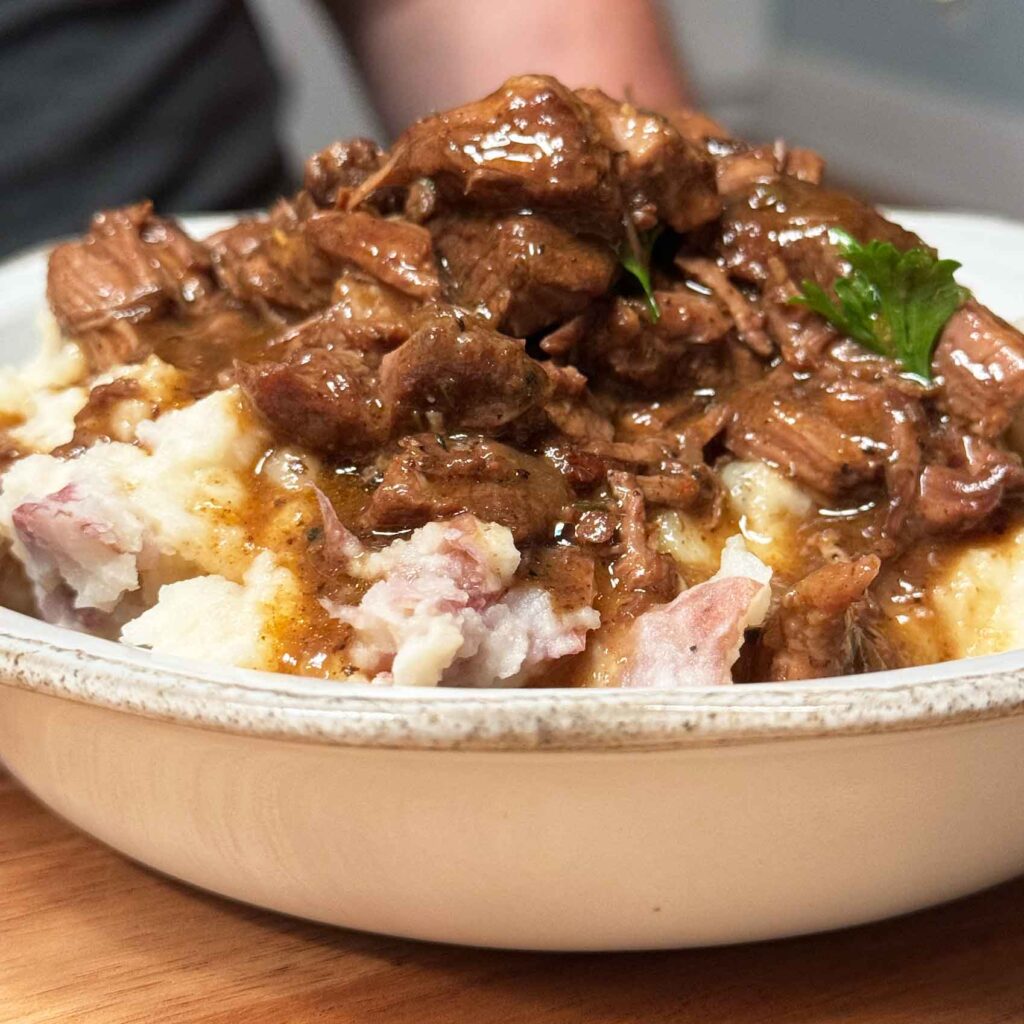
Beef tips and gravy are classic comfort food, so I like to serve them over something that can soak up all that rich, savory gravy. Mashed potatoes are our favorite, but there are plenty of easy ways to turn this into a filling family dinner.
Here are some of the best sides to serve with beef tips and gravy:
- Mashed potatoes: the classic choice, and perfect for catching all that loose, flavorful gravy.
- Egg noodles: a great option if you want this to feel like an old-fashioned beef and noodles dinner.
- White rice: simple, budget-friendly, and especially good if you like extra gravy.
- Buttered noodles: easy, cozy, and kid-friendly.
- Biscuits: split them open and spoon the beef tips and gravy right over the top.
- Roasted green beans: a simple green vegetable helps balance the richness of the gravy.
- Glazed carrots: the sweetness of carrots pairs nicely with the savory beef.
- Side salad: a crisp salad is a good lighter side if you are serving this over potatoes or noodles.
- Old-Fashioned Brown Beans: a hearty homestyle side if you want an extra-filling dinner.
- Potato Salad: especially nice if you are serving the beef tips for a Sunday supper or casual family meal.
- Coleslaw: the cool crunch is a nice contrast to the warm beef and gravy
For the most classic plate, serve the beef tips over creamy mashed potatoes with a green vegetable on the side. For an easier weeknight meal, spoon them over egg noodles or rice and add a quick salad or coleslaw.
Storage, Reheating & Make-Ahead
Beef tips and gravy store very well, and the flavor may even get better after a day in the refrigerator. Let the beef and gravy cool slightly, then transfer it to an airtight container. Store leftovers in the refrigerator for 3–4 days. If you served the beef tips over mashed potatoes, noodles, or rice, I recommend storing those separately so they do not soak up all the gravy.
Freezing
Beef tips and gravy can be frozen for up to 3 months. Freeze the beef and gravy by itself, not over potatoes, rice, or noodles, for the best texture. Let it cool completely, then place it in a freezer-safe container or bag. Thaw overnight in the refrigerator before reheating.
Reheating
Reheat beef tips and gravy gently on the stovetop over low to medium-low heat, stirring occasionally, until hot. Add a splash of beef broth or water if the gravy has thickened too much in the refrigerator. Avoid boiling it hard, because high heat can make the beef seem tougher and may cause the gravy to separate.
You can also reheat individual portions in the microwave. Cover loosely and heat in short intervals, stirring between each one, until warmed through. 2-3 minutes works well for us.
Make-Ahead Tip
This is a great make-ahead meal because the beef has time to soak up more flavor as it sits. If making it ahead for dinner the next day, cook the beef tips and gravy, cool, and refrigerate. Before reheating, skim off any hardened fat from the top, then warm gently and serve over fresh mashed potatoes, egg noodles, or rice.
Recipe Help & FAQ
Can I make beef tips and gravy ahead of time?
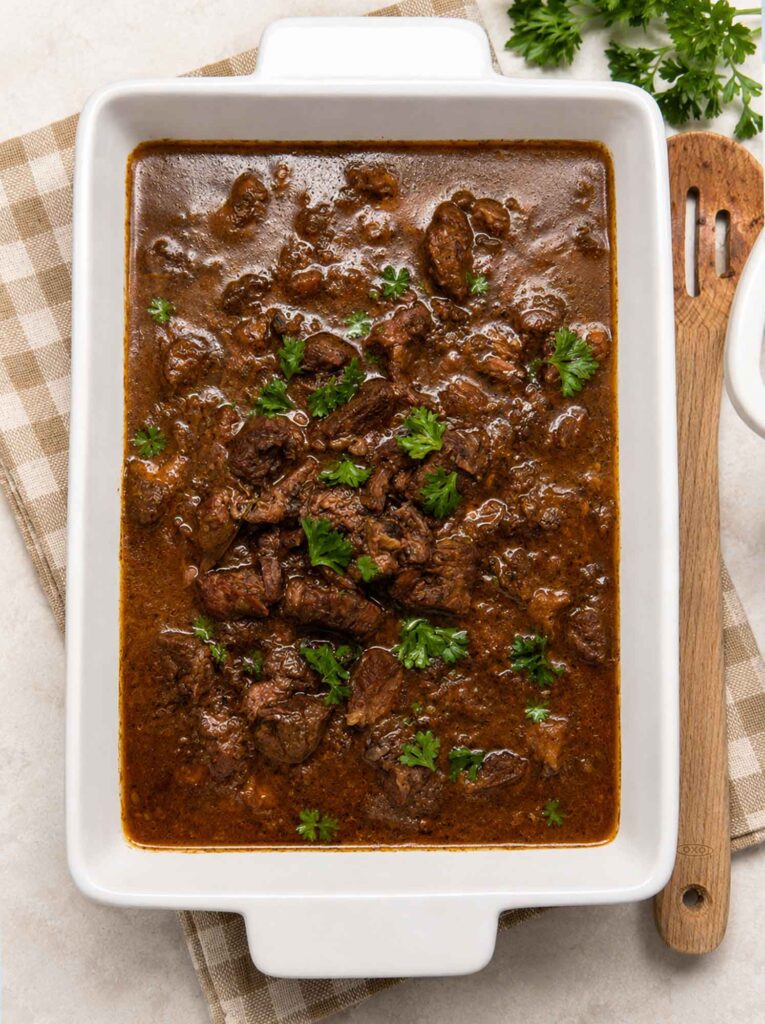
Yes. Beef tips and gravy are a great make-ahead meal because the flavor gets even better after the beef sits in the gravy. Cook the recipe as directed, let it cool, and refrigerate it in an airtight container for up to 3–4 days. Reheat gently on the stovetop with a splash of beef broth or water if the gravy has thickened.
Why is my beef still tough?
If you are using chuck roast, stew meat, or round, tough beef usually means it needs more time. These cuts become tender when they cook low and slow long enough for the connective tissue to break down. Keep cooking until a piece of beef pulls apart easily with a fork.
What can I use instead of red wine?
Use an extra 1/2 cup beef broth in place of the wine. To replace a little of the acidity and depth from the wine, add 1 teaspoon apple cider vinegar, red wine vinegar, or lemon juice. It will not taste exactly the same, but it will still make a rich, savory gravy.
What if my gravy is too thin?
This gravy is meant to be loose and spoonable, especially for serving over mashed potatoes, noodles, or rice. If you want it thicker, stir together 2 tablespoons cornstarch and 2 tablespoons cold water, then add it to the hot gravy and cook until thickened. You can also use a butter-flour paste made with 2 tablespoons softened butter and 2 tablespoons flour.
What if my gravy is too thick?
Add a splash of beef broth or water and stir until the gravy loosens to your liking. Add just a little at a time so you do not thin it too much.
Can I make beef tips and gravy in the oven?
Yes. After browning the beef and making the gravy in a Dutch oven, cover it and bake at 300°F for about 2 to 2 1/2 hours, or until the beef is fork-tender. Check once or twice and add a splash of broth if the gravy reduces too much.
Do I have to skim the fat?
If you use chuck roast, some fat may rise to the top of the gravy. You do not need to remove every bit, but I recommend skimming off any large glossy pools before serving so the gravy tastes rich instead of greasy. If you make the recipe ahead, the fat will harden in the refrigerator and be easy to lift off before reheating. Not all cuts of meat will produce fat, so don’t worry if this does not seem needed.
Beef Tips & Gravy Recipe
Equipment
- 1 large pot or skillet
- 1 whisk
Ingredients
Beef
- 2 pounds beef tips chuck roast, stew meat, tenderloin, top sirloin, or round steak cut into 1-inch pieces
- 1 1/2 teaspoons salt
- 1/2 teaspoon black pepper
- 2 tablespoons all-purpose flour
- 2 tablespoons oil or butter for browning
Gravy
- 1 medium onion finely chopped
- 3 cloves garlic minced
- 1/2 cup dry red wine
- 3 tablespoons butter
- 3 tablespoons all-purpose flour
- 2 1/2 cups beef broth
- 1 tablespoon Worcestershire sauce
- 1 teaspoon soy sauce optional but recommended
- 1 teaspoon tomato paste optional but recommended
- 1/2 teaspoon dried thyme
- 1 bay leaf
- Salt and pepper to taste
Instructions
- Season the beefPat the beef dry with paper towels. Toss it with the salt, pepper, and flour.
- Brown the beefHeat the oil or butter in a large skillet or Dutch oven over medium-high heat. Brown the beef in batches, turning to get color on several sides. Do not crowd the pan. If using a slow cooker, transfer the browned beef to the slow cooker.If cooking on the stovetop, transfer the browned beef to a plate.
- Cook the onion and garlicReduce the heat to medium. Add the onion to the same pan and cook for 4–5 minutes, scraping up some of the browned bits from the bottom. Add the garlic and cook for about 30 seconds.
- Deglaze with winePour in the red wine. Stir and scrape the bottom of the pan to loosen all the flavorful browned bits. Simmer for 3–5 minutes, or until the wine has reduced by about half.
- Make the gravy baseAdd the butter. Once melted, sprinkle in the flour and stir for 1–2 minutes, until the flour is fully mixed in and lightly cooked.Note: If you are using a slow cooker, transfer the gravy base to the slow cooker once this step is complete.
- Add the broth and seasoningsSlowly whisk in the beef broth, a little at a time, until smooth. Stir in the Worcestershire sauce, soy sauce if using, tomato paste if using, thyme, and bay leaf.
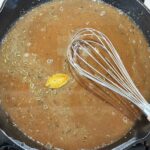
- Cook the beefFor the slow cooker: Pour the gravy mixture over the browned beef in the slow cooker. Cover and cook on LOW for 7–8 hours or HIGH for 3 1/2–4 1/2 hours, until the beef is fork-tender.For the stovetop: Return the browned beef and any juices to the pot. Bring the gravy to a gentle simmer, then reduce the heat to low and cover.If you're using top sirloin or steak tips: simmer for 20–35 minutes, until tender.If you're using chuck roast or stew meat: simmer for 1 1/2 to 2 hours, or until fork-tender.

- Finish the gravyRemove the bay leaf. Taste and adjust with more salt and pepper as needed. For extra richness, stir in 1 tablespoon butter at the end. If the gravy tastes a little dull, add a small splash of Worcestershire sauce or apple cider vinegar. If you prefer a thicker gravy, stir together 2 tablespoons cornstarch with 2 tablespoons cold water, add it to the pot or slow cooker, and cook until thickened.
- ServeServe the beef tips and gravy over mashed potatoes, egg noodles, rice, or biscuits.
Nutrition
Notes



Meet Jennifer
Jennifer cooks and experiments in the kitchen at Maker Farm, where she focuses on simple pantry cooking, homemade staples, and practical recipes that make everyday meals easier. Over the years she has tested many ways to make cooking simpler and more dependable, and shares the methods that work best in her own kitchen, occasionally showing them on her Heart to Home at Maker Farm vlog.
These turned out amazing! I had stew beef in the freezer and wanted a warmer weather meal… these were perfect. So tender and flavorful. Certainly going on our meal rotation.
Excellent! Thank you for the feedback, Linda!