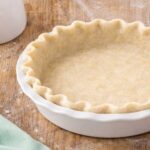
Easy Pie Crust Dough Recipe
Here's what you need to make one single standard 9-inch single crust. For a 10-inch pie, increase the recipe by about 25% for a single crust and about 50% for a double crust.
Servings 6
Calories 232kcal
Equipment
- 1 whisk
- 1 Rolling Pin
- 1 plastic wrap
- 1 pie dish I recommend a ceramic pie plate, as glass can shatter in the oven
Ingredients
- 1 1/4 cups all-purpose flour
- 1/2 teaspoon granulated sugar (white sugar)
- 1/2 teaspoon salt only use this if you're using unsalted butter
- 1/2 cup cold butter unsalted or salted, either is okay
- 3-6 tablespoons ice water
Instructions
- Step 1: Prep Your ButterCut your cold butter into small cubes and put them in the freezer for about 30 minutes before you start. You want that butter as cold as possible without being completely frozen solid. This step makes a real difference, so don't skip it.
- Step 2: Mix Your Dry IngredientsIn a large mixing bowl, whisk together the flour, sugar, and optional salt if you're using it. This takes maybe thirty seconds, but it ensures everything is evenly distributed before you add the butter.
- Step 3: Cut in the ButterTake your cold butter cubes and add them to the flour mixture. Using a fork and a knife, or a pastry cutter if you have one, start cutting the butter into the flour. You're aiming for pea-sized pieces. This will take a few minutes, and your arms might get a little tired, but keep going. You'll see the mixture start to look crumbly and the butter will break down into small bits coated with flour. It's a bit of a workout, but it's also kind of satisfying in a hands-on, old-fashioned way. If you have a food processor, you could use that on a gentle pulse.
- Step 4: Add the Ice WaterHere's where you need to pay attention. Add the ice water one tablespoon at a time, using a fork to gently pull the dough together into a crumbly pile. You might need three tablespoons, you might need six... it depends on your flour, your humidity. Add just enough water so the dough starts to come together. It should look shaggy and hold together when you press it, but it shouldn't be wet or sticky.
- Step 5: Form and Chill the DoughTurn the pie dough out onto a clean surface and bring it together with your hands. If you're making more than one crust, divide the dough now. Wrap each portion in plastic wrap and flatten it into a disc. This disc shape makes it easier to roll out later. Pop the wrapped dough into the refrigerator for at least two hours. I know waiting is hard, but this is important because chill time lets the gluten relax and the butter firm back up, which means a more tender, flakier crust.
- Step 6: Roll Out the DoughWhen you're ready to use your dough, take it out of the refrigerator immediately before. Flour a clean surface and your rolling pin. Unwrap the dough and place it on your floured surface. Roll dough from the center outward, turning the dough as you go. Your goal is to get it about ¼ inch thick. I flip my dough over several times while I'm rolling to keep it from sticking, and I add a little more flour to the surface and rolling pin as needed.If the dough feels too hard and resistant when you first take it out, or just sort of breaks away from itself, don't panic. Keep working with it gently, and as it warms up just a bit, it will become more pliable. If it's too soft or sticky, pop it back in the refrigerator for a few minutes to firm up.
- Step 7: Use Your Beautiful CrustOnce your dough is rolled out, you can transfer it to your pie pan, trim the edges with a knife, crimp them however you like (with fingers or the tines of a fork), and fill it with whatever your heart desires. Note: If you are using this pie crust for blind baking (baking it empty or partially baked for a filling like quiche or cream pie), use a fork to poke holes (dock) the bottom of the pie crust, as this allows steam to escape, preventing puffing and sogginess. But, if you're using this crust for liquid fillings like pumpkin, fruit, or chicken pot pie, where the filling itself holds the crust down, do not poke or dock it as holes would let the filling leak through. For a double-crust pie, repeat the rolling process with your second disc of dough. For a single-crust pie like a quiche or a pot pie, you're already done with the hard part.Baking guidance: Follow your pie recipe’s bake temperature and time. For blind baking, use pie weights (or dry beans/rice on top of parchment paper) to weigh the crust down and prevent puffing, then continue baking as needed for your filling.
Notes
Refrigerate wrapped dough discs up to 3 days. Freeze up to 3 months. Thaw overnight in the fridge before rolling. If a blind-baked crust softens, re-crisp in a hot oven for a few minutes before filling.
Nutrition
Calories: 232kcal | Carbohydrates: 20g | Protein: 3g | Fat: 16g | Saturated Fat: 10g | Polyunsaturated Fat: 1g | Monounsaturated Fat: 4g | Trans Fat: 1g | Cholesterol: 41mg | Sodium: 197mg | Potassium: 32mg | Fiber: 1g | Sugar: 0.4g | Vitamin A: 473IU | Calcium: 9mg | Iron: 1mg
